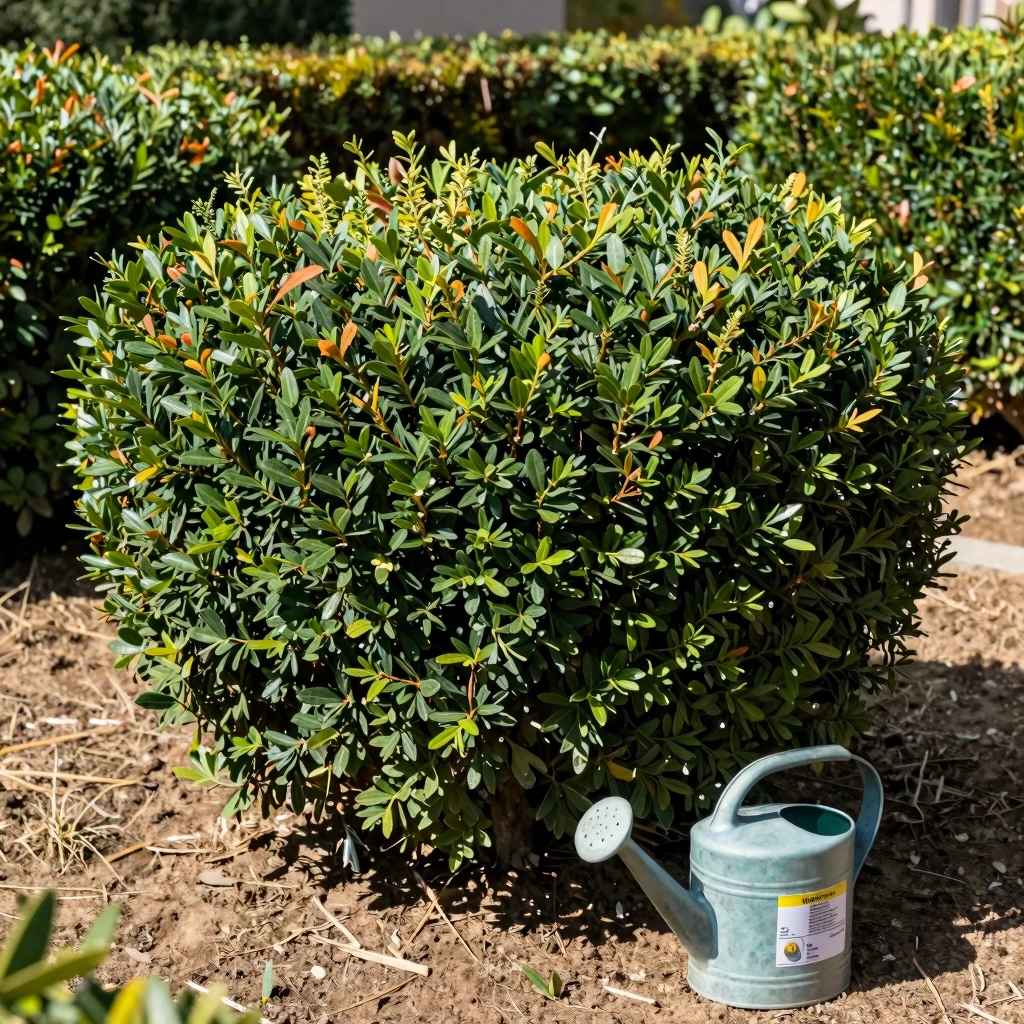
Are Boxwoods Drought Tolerant? Watering Guide For Beginners
It’s that moment when you look at your garden, especially during a dry spell, and wonder about your plants. Do they need a drink? Are they tough enough to handle the heat?
Boxwoods are popular for a reason. They give your yard that neat, classic look year-round. But, when the rain stops, a big question pops up: are boxwoods drought tolerant?
Let’s figure this out together.
Boxwoods are not truly drought-tolerant plants, especially when young or newly planted. While established boxwoods can survive short dry periods, they perform best with consistent moisture. Extreme drought can lead to leaf browning, wilting, and increased susceptibility to pests and diseases. Regular watering is key for healthy, vibrant boxwoods.
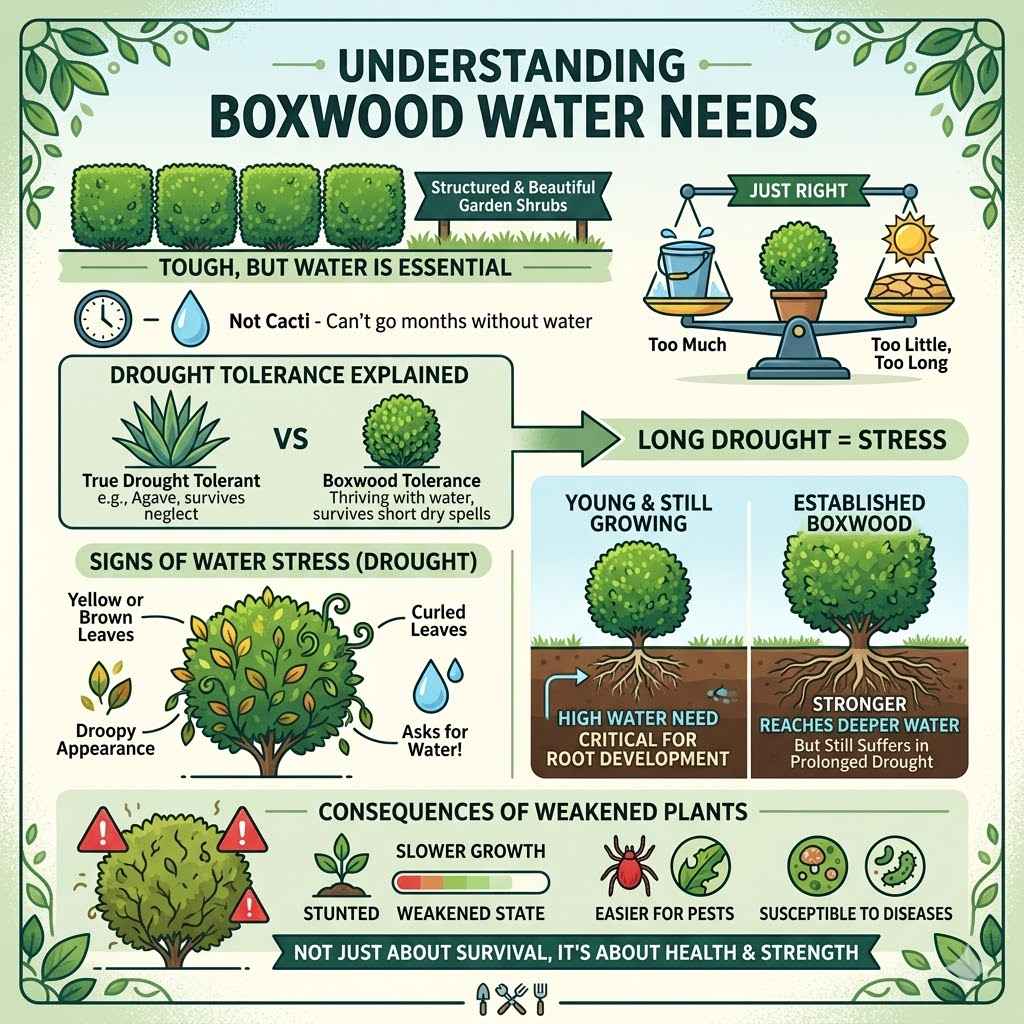
Understanding Boxwood Water Needs
Boxwoods are beautiful shrubs. They give gardens a structured look. Many people think they are super tough.
They are tough, but water is still very important for them. They are not like cacti that can go months without a drop. Think of them as plants that like things to be just right.
Not too much water, but definitely not too little, especially for too long.
When we talk about “drought tolerant,” we mean plants that can go a long time without water and still be okay. They might not look their best, but they will survive. Boxwoods can survive for a short time without much water.
But, if the dry weather lasts a long time, they will show signs of stress. This stress can make them look bad and even hurt them.
The main issue with boxwoods and lack of water is how it affects their leaves. They can start to turn yellow or brown. The leaves might curl up.
The whole plant can look droopy. This is a clear sign that the plant is not happy. It is asking for water.
This is especially true for young boxwoods that are still growing their roots deep into the soil.
Established boxwoods, the ones that have been in the ground for a few years, are a bit stronger. Their roots go deeper. They can find water that newer plants can’t reach.
But even these tough guys will suffer if there is no rain for weeks on end. They might not die, but they won’t look as good. Their growth might slow down.
They can become weaker.
A weakened boxwood is an open door for problems. Pests like spider mites love dry, stressed plants. Diseases can also take hold more easily.
So, even if a boxwood survives a dry spell, it might be more prone to other issues afterward. This is why understanding their water needs is not just about keeping them alive, but keeping them healthy and strong.
My Own Boxwood Battle with Dry Weather
I remember one summer vividly. We had a heatwave that seemed to go on forever. Not a drop of rain for almost a month.
I had just planted a row of little boxwood shrubs the spring before. They were doing so well. I was so proud of my neat little hedge.
Then the heat hit. I was so busy with work, I admit I kind of forgot to water them as much as I should have. I thought, “They’re small, they’ll be fine for a bit.” Oh, how wrong I was.
One evening, I walked outside to check on them.
My heart sank. The tips of the leaves on almost every single boxwood were turning a sickly brown. They looked crispy.
The whole row just sagged. It looked like they were giving up. I felt a pang of panic mixed with guilt.
I had let my beautiful new plants suffer.
That night, I went out with the hose. I gave them a really good, long soak. The next few days were tense.
I watched them closely. Slowly, very slowly, the green started to come back to some of the leaves. But the brown, crispy tips stayed.
It took the rest of the summer and a lot of careful watering to get them looking halfway decent again. It was a hard lesson. Boxwoods need water, even if they are not in a desert.
Boxwood Watering: Key Facts at a Glance
When to Water: Check the soil. Water when the top inch or two feels dry.
How Much: Water deeply. Let the water soak in well. Don’t just sprinkle the surface.
When Not to Water: Avoid watering in the hottest part of the day. Early morning is best.
New Plants: Young boxwoods need more frequent watering than older ones.
Signs of Trouble: Yellowing or browning leaves, wilting, or dry, brittle foliage mean they need water.
Why Boxwoods Need Water (Even If They Seem Tough)
So, why do these shrubs seem so sturdy, yet still crave water? It all comes down to how plants work. Plants need water for many jobs.
It’s like their lifeblood. They use water to make their food through something called photosynthesis. Without enough water, this process slows down.
This means the plant can’t make energy to grow or stay healthy.
Water also helps plants stand up tall. It keeps their leaves and stems firm. This is called turgor pressure.
When a boxwood doesn’t get enough water, its cells lose this pressure. That’s when you see the leaves start to droop or wilt. It’s the plant’s way of saying it’s thirsty.
Another big reason is nutrient transport. Plants absorb nutrients from the soil. Water acts like a tiny truck.
It carries these nutrients from the roots all the way up to the leaves. If there’s no water, or not enough, these nutrients can’t get where they need to go. This makes the plant weak over time.
For boxwoods, their leaves are always exposed to the air. They lose a little bit of water through their leaves all the time. This is called transpiration.
It’s how they cool down. In dry weather, they lose water faster. If they can’t take up enough water from the soil to replace what’s lost, they get into trouble quickly.
Think about it this way. If you were running on a hot day, you’d sweat a lot. You’d need to drink water to keep going.
Boxwoods are doing the same thing. They are always working, growing, and staying green. They need to replenish the water they lose.
This is why the stage of the plant matters. A brand-new boxwood is like a baby. It needs a lot of help and consistent care.
Its roots are small and haven’t spread out much. It can’t reach deep into the soil for water. It relies almost entirely on you to provide it.
An older, established boxwood is like an adult. It has a big root system. It can find water more easily.
But even adults need more food and water when they are working hard, like during a hot summer.
The Impact of Drought on Boxwood Health
When boxwoods don’t get enough water, the effects are visible. They can show signs of stress in several ways. The most common one is leaf discoloration.
Leaves might start to turn yellow. This is a sign that the plant is not getting enough nutrients. Or they might turn brown and crispy, especially at the tips.
This is direct damage from lack of water.
Wilting is another big clue. The leaves will droop. The whole shrub can look sad and lifeless.
This happens because the plant cells don’t have enough water to keep them firm. It’s like a balloon losing air; it deflates.
Another subtle but serious issue is slow growth. Boxwoods are often chosen for their ability to hold a shape and grow steadily. When they are stressed by drought, their growth slows way down.
They might not put out new leaves. They might not get taller or wider.
This lack of water can also make boxwoods more vulnerable. Like I mentioned before, pests love a weakened plant. Spider mites are a common enemy of boxwoods.
They thrive in dry, hot conditions. They suck the sap from the leaves. This further stresses the plant.
If your boxwood has spider mites, a lack of water might be a major reason why.
Diseases can also become a problem. Fungal diseases can attack boxwood roots or leaves. A healthy, well-watered plant has a better defense system.
A stressed plant is an easy target. This is why consistent watering is not just about survival, but about prevention of other issues.
Sometimes, severe drought can even lead to the death of a boxwood. If the soil stays dry for too long, the roots can dry out and die. Once the roots are gone, the plant cannot recover.
It’s a slow process, but it can happen, especially if you don’t notice the signs of stress early on.
It is also important to consider the type of boxwood. Some varieties are more robust than others. But even the toughest ones have limits.
They are all woody shrubs that need a certain amount of moisture to thrive. They are not succulents or desert plants.
When Your Boxwood Says “Thirsty!” (Signs of Drought Stress)
- Leaf Color Change: Leaves turn yellow or brown, especially at the tips.
- Wilting: The whole shrub looks droopy. Leaves and stems are limp.
- Dry, Brittle Foliage: Leaves feel dry and break easily.
- Slowed Growth: The plant stops growing or grows very little.
- Leaf Drop: Leaves may start to fall off, even green ones.
When to Water Your Boxwoods
Figuring out when to water is key. It’s not a set schedule for every boxwood. It depends on the weather, the soil, and the age of your plant.
The best way to know is to check the soil. Stick your finger about two inches down into the soil near the base of the plant. If it feels dry, it’s time to water.
If the soil feels moist, leave it be. Overwatering can be just as bad as underwatering. Too much water can lead to root rot.
This is a serious problem where the roots decay. It can kill the plant. So, always check first.
That simple finger test is your best friend.
Consider the weather. If it’s very hot and dry, you’ll need to water more often. If you’ve had some rain, you might not need to water for a while.
Even in cooler weather, if it’s dry and windy, plants can lose moisture faster.
Newly planted boxwoods are your top priority. They need more consistent watering. Aim to keep the soil around them evenly moist, but not soggy.
You might need to water them every few days at first, depending on the conditions. As they establish, you can water less often.
Established boxwoods can go longer between waterings. But during a prolonged dry spell, even they will need a good drink. Don’t wait until the leaves start to turn brown and crispy.
Try to water before they reach that point of serious stress.
A good way to think about it is to water when the plant needs it, not just because it’s a certain day. Your garden is a living thing. It tells you what it needs if you pay attention.
The soil is the main indicator for boxwoods.
Watering Frequency Guide (General)
Newly Planted Boxwoods (First Season): Check soil every 2-3 days. Water when top 1-2 inches are dry.
Established Boxwoods (2+ Years): Check soil every 4-7 days. Water when top 2 inches are dry.
Hot, Dry Weather: Check soil more often, potentially daily for new plants.
After Rain: Skip watering. Check soil in a few days to see if it dried out.
How to Water Boxwoods Effectively
It’s not just when you water, but how you water that makes a big difference. The goal is to get water down to the roots. Boxwood roots spread out, so you need to water the entire area around the plant, not just right at the stem.
When you water, do it deeply. This means letting the water run slowly for a good amount of time. You want the water to soak down several inches into the soil.
This encourages the roots to grow deeper, which makes the plant stronger and more resilient. A quick sprinkle on the surface doesn’t do much good. The water evaporates quickly or doesn’t reach the main root zone.
Using a soaker hose or drip irrigation system is a great way to water. These systems deliver water slowly and directly to the soil around the plant. This minimizes water loss through evaporation.
It also helps keep the leaves dry, which can prevent some diseases.
If you are using a hose, try to water at the base of the plant. Aim the water at the soil. Avoid spraying water directly on the leaves, especially in the evening.
Wet leaves overnight can encourage fungal growth.
The best time to water is in the early morning. This gives the plants a chance to drink up the water before the heat of the day. It also allows any moisture that gets on the leaves to dry off during the day.
Watering in the evening can leave leaves wet for too long.
Avoid watering during the hottest part of the day. The water can evaporate too quickly. Also, water droplets on leaves in intense sun can act like little magnifying glasses and scorch the foliage.
So, morning is really the best bet.
Mulching is another excellent practice. Applying a layer of mulch, like wood chips or shredded bark, around the base of your boxwoods can help a lot. Mulch helps the soil retain moisture.
It also keeps the soil cooler. This reduces stress on the roots. It also helps suppress weeds that compete for water and nutrients.
When you mulch, keep it a few inches away from the trunk of the boxwood. You don’t want the mulch to touch the bark directly. This can lead to rot and other problems.
A good mulch layer, about 2-3 inches deep, is usually perfect.
Smart Watering Techniques for Boxwoods
- Deep Watering: Let water soak in for a long time to reach deep roots.
- Target the Roots: Water the soil around the plant, not the leaves.
- Morning is Best: Water early in the day to avoid evaporation and leaf disease.
- Use Drip or Soaker Hoses: Efficiently delivers water to the root zone.
- Mulch is Your Friend: Conserves moisture, keeps soil cool, and reduces weeds.
Boxwood Drought Tolerance: Fact vs. Myth
There’s a common idea that boxwoods are tough as nails and can handle anything. This is partly true, but it’s also where myths start. Let’s look at what’s real and what’s just wishful thinking.
Boxwood Drought Tolerance: Myth vs. Reality
Myth: Boxwoods are completely drought-proof and never need watering.
Reality: While established boxwoods are quite hardy, they are not desert plants. They need consistent moisture, especially in hot, dry periods, to stay healthy and prevent stress.
Myth: If a boxwood looks a little dry, it will bounce back on its own without any help.
Reality: Some wilting can be recovered from. However, prolonged drought can cause permanent damage, like brown foliage and weakened health, making them susceptible to pests and diseases.
Myth: All boxwood varieties are equally drought tolerant.
Reality: While most boxwoods share similar needs, some varieties might be slightly more tolerant of dry conditions than others. However, none are truly “drought-proof.”
The truth is, boxwoods are considered moderately tolerant once established. This means they can survive short periods of dryness better than many other plants. They have a good root system that helps them find water.
But “tolerant” does not mean “immune” to drought.
The real issue is how long the dry period lasts and how extreme the conditions are. A week without rain in mild weather is different from a month of 90-degree days with no rain. The latter will stress even established boxwoods.
The biggest myth is that you can just ignore them during dry spells. This is dangerous advice. It leads to stressed plants.
These stressed plants are then more likely to suffer from other problems. It becomes a cycle of poor health.
Also, remember that a plant’s “drought tolerance” often refers to its ability to survive, not to thrive. A plant that is surviving in drought conditions often looks unhappy. It won’t grow well.
Its leaves might be duller. It won’t have that lush, full look that boxwoods are known for.
For many of us, we grow boxwoods for their beauty and structure. We want them to look good. If you want a boxwood that looks its best, you need to give it adequate water, especially when nature isn’t cooperating.
It’s about proactive care, not just reactive measures when it’s almost too late.
Real-World Scenarios: When Drought Hits
Let’s talk about real-life situations where boxwoods might face drought. Imagine you live in a region that’s known for its hot summers. Maybe the Southwest, or parts of California, or even just a particularly dry summer in the Northeast.
These are places where drought is a common concern for gardeners.
In these areas, boxwoods planted in full sun will need much more attention. Full sun means they are exposed to direct sunlight for most of the day. This heats up the soil and makes the leaves lose water faster.
If you have a boxwood hedge lining a sunny driveway, that’s a prime spot for drought stress.
Another scenario is when boxwoods are planted in containers or raised beds. These types of plantings dry out much faster than in-ground gardens. The soil in pots is exposed to air on all sides, and it doesn’t have the same insulating effect as the ground.
So, a boxwood in a large pot might need watering daily during hot weather, even if its in-ground neighbors are fine.
Think about clay soil versus sandy soil. Clay soil holds water for a longer time. Sandy soil drains very quickly and dries out fast.
If your boxwood is in sandy soil, you’ll need to check and water more often during dry spells than if it’s in heavy clay.
Consider the age of the shrub. A new boxwood planted in the spring will need consistent watering throughout its first summer. If that summer is dry, you’ll be watering it frequently to help it establish its root system.
An older, mature boxwood that has been in the ground for ten years might tolerate a few weeks of dryness better, but it still won’t look its best.
Sometimes, people think they are watering enough, but they aren’t. They might be watering for short bursts. Or they are watering only the surface.
This doesn’t help the roots. This is a common mistake that leads to plants appearing to be watered but still suffering from drought.
It’s also about observation. If you see your boxwood leaves starting to curl inwards, or the color looking a bit dull, that’s a sign. Even if it hasn’t been that long since the last rain, it might be thirsty.
The best gardeners are the ones who are out there looking at their plants regularly.
Common Places Boxwoods Face Drought
Full Sun Locations: Direct sun heats the soil and increases water loss.
Containers & Raised Beds: These dry out much faster than in-ground plantings.
Sandy Soils: These soils drain quickly and retain less moisture.
Newly Planted Shrubs: Young plants have less developed root systems.
Windy Areas: Wind can dry out foliage and soil rapidly.
What This Means for You: Your Boxwood’s Well-being
So, what should you take away from all this? If you love your boxwoods and want them to look great, you can’t ignore their water needs, especially when it’s dry.
When is it normal? It’s normal for established boxwoods to survive short dry spells without severe damage. They might look a little less vibrant, but they’ll bounce back. It’s also normal for newly planted boxwoods to need frequent watering during their first year, especially in dry conditions.
This helps them grow strong roots.
When should you worry? You should worry if you see significant browning or crisping of the leaves. If the entire plant looks droopy and doesn’t perk up even after watering. If the soil stays dry for more than a week in warm weather, even for established plants.
And definitely worry if you see signs of pests like spider mites, as drought often makes them worse.
Simple checks you can do: The finger test is your number one tool. Stick your finger two inches into the soil. If it’s dry, water.
Look at the leaves. Are they starting to curl or look dull? That’s a sign to check the soil.
Feel the soil. Is it hard and dry, or moist and crumbly? These simple checks tell you a lot.
If you live in an area with frequent dry spells, you might consider planting drought-tolerant groundcovers around your boxwoods. This helps keep the soil shaded and moist. Or ensure your boxwoods are in a spot that gets some afternoon shade if possible.
This reduces their stress.
Ultimately, it’s about balance. Boxwoods don’t like to sit in soggy soil. But they also don’t like to dry out completely for long periods.
The goal is to keep their soil consistently moist, not wet, especially during hot and dry times. This proactive approach will keep your boxwoods looking their best and healthiest.
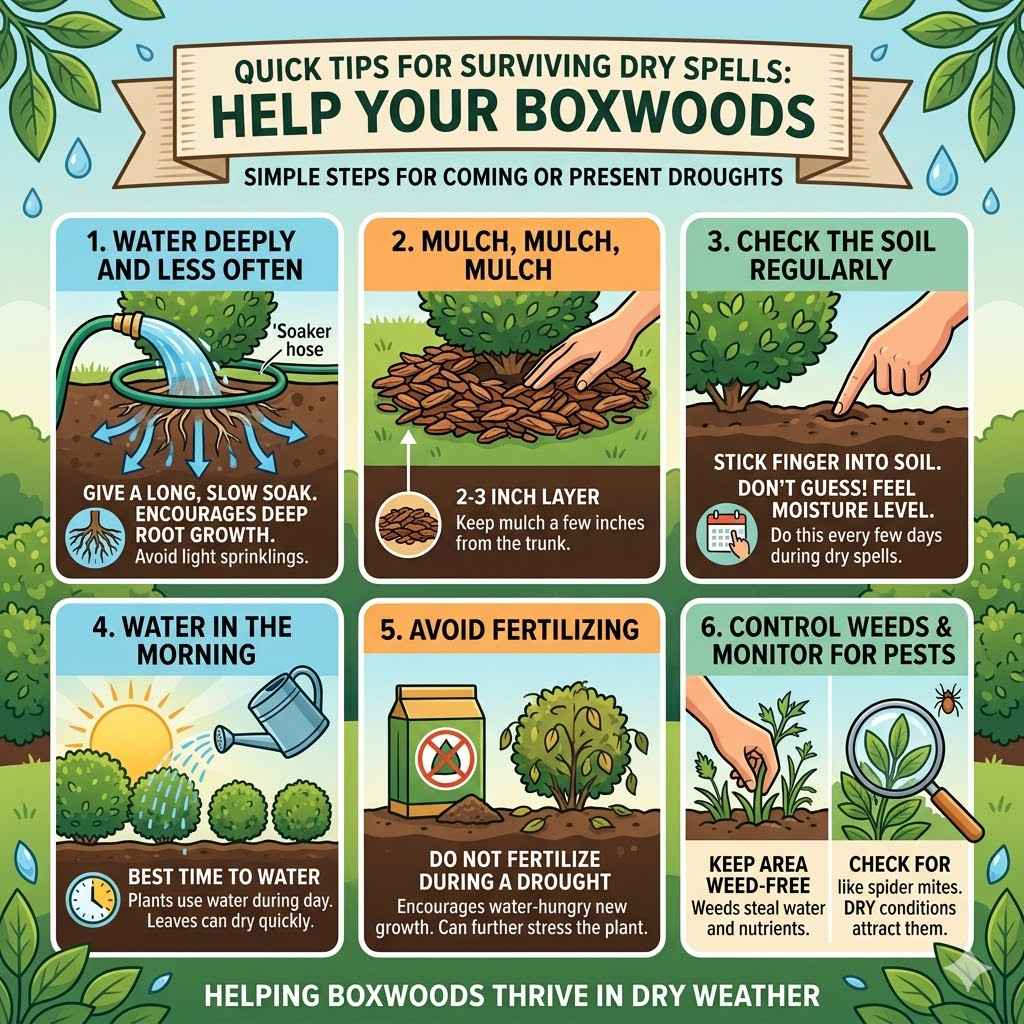
Quick Tips for Surviving Dry Spells
If you know a dry spell is coming or is already here, here are some simple things you can do to help your boxwoods:
1. Water Deeply and Less Often: Instead of light sprinklings, give your boxwoods a long, slow soak. This encourages deep root growth.
2. Mulch, Mulch, Mulch: Add a 2-3 inch layer of organic mulch around the base of your boxwoods. Keep it a few inches from the trunk.
3. Check the Soil Regularly: Don’t guess. Stick your finger into the soil to feel the moisture level.
Do this every few days during dry spells.
4. Water in the Morning: This is the best time to water. It lets the plants use the water during the day and allows leaves to dry.
5. Avoid Fertilizing: Do not fertilize boxwoods during a drought. Fertilizing encourages new growth, which needs more water, and can stress the plant further.
6. Control Weeds: Weeds steal water and nutrients from your boxwoods. Keep the area around them weed-free.
7. Monitor for Pests: Dry conditions can bring out pests like spider mites. Check your plants often for signs of infestation.
Frequently Asked Questions about Boxwood Watering
Are boxwoods considered drought tolerant?
Established boxwoods have some drought tolerance and can survive short dry periods. However, they are not truly drought-proof and perform best with consistent moisture, especially young plants or during extended hot, dry weather.
How often should I water my boxwood in hot weather?
In hot weather, check the soil every 2-3 days. Water deeply when the top inch or two of soil feels dry. Newly planted boxwoods will need more frequent watering than established ones.
What are the signs that my boxwood needs water?
Signs include yellowing or browning leaves, wilting, dry and brittle foliage, and slowed growth. If the leaves start to curl inward, that’s also a sign of thirst.
Can I overwater my boxwood?
Yes, overwatering can be very harmful. It can lead to root rot, where the roots decay. Always check the soil moisture before watering to ensure it’s actually needed.
Does mulch help boxwoods during a drought?
Yes, mulch is very beneficial during dry spells. It helps the soil retain moisture, keeps the roots cooler, and reduces water loss from evaporation.
Should I fertilize my boxwood if it’s dry?
No, it’s best to avoid fertilizing boxwoods during a drought. Fertilizing encourages new growth, which requires more water and can further stress the plant.
Final Thoughts on Boxwood Hydration
Keeping your boxwoods healthy through dry spells is about understanding their needs. They aren’t desert plants, but they can be managed with thoughtful watering. Pay attention to the soil, the weather, and your plants themselves.
With a little care, your boxwoods will stay lush and beautiful, no matter the weather.