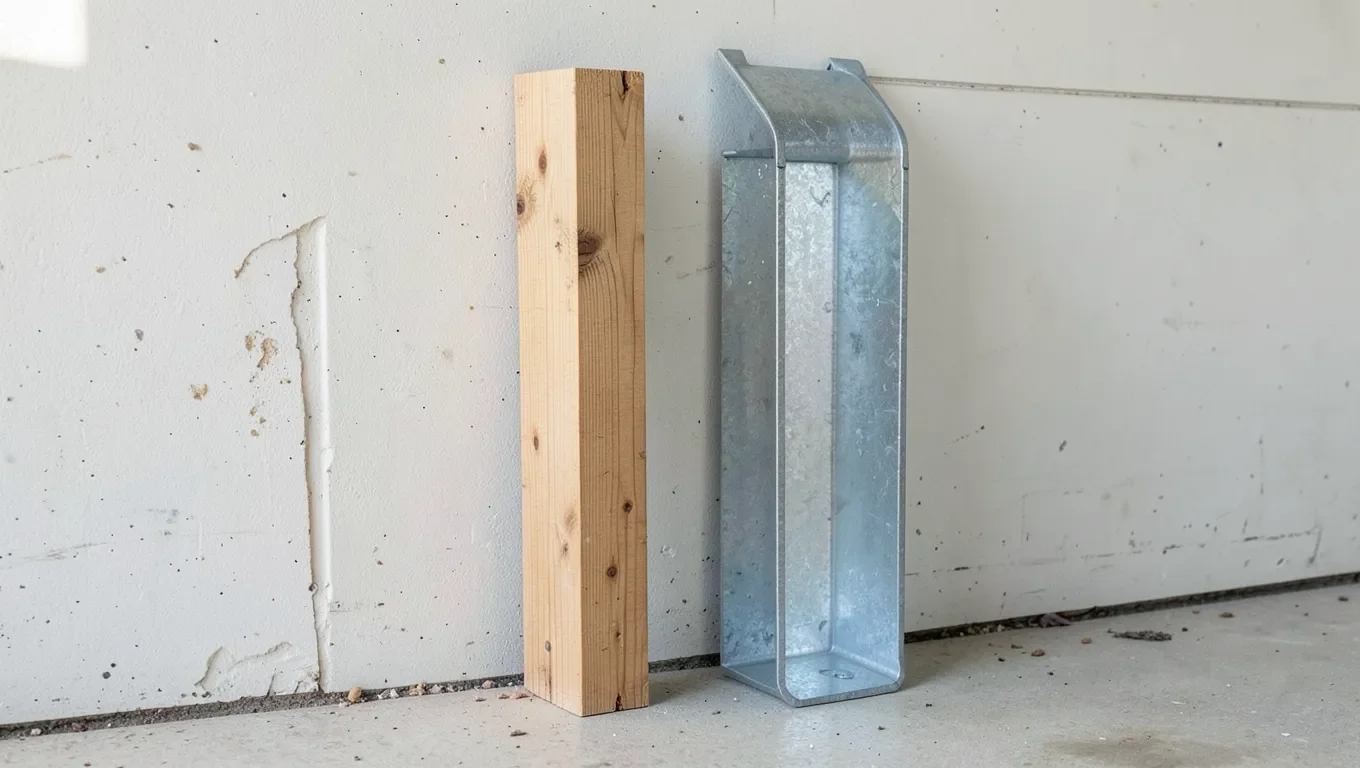
Metal Studs vs Wood Studs Cost: Which Is Actually Cheaper
If you’re framing a wall and pricing out materials, the sticker shock usually goes the same way: wood looks cheaper at the lumber yard, then someone mentions that steel studs don’t warp, rot, or catch fire, and suddenly you’re not sure anymore. The honest answer is that “cheaper” depends on whether you’re pricing the stud itself, the labor to install it, or what you’ll spend on repairs a decade from now.
This guide breaks down what actually drives the price of each material, where the real cost differences show up, and – since most people reading a woodworking site are framing with wood already – what tool you’ll want on hand either way.
Wood Stud Costs: Why They’re Still the DIY Default
Best Nailer for Wood-Stud Framing
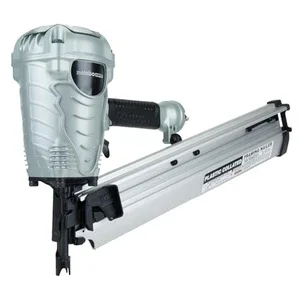 |
Metabo HPT NR90AES1 Framing Nailer – $159 If you’re sticking with wood studs (the more common choice for DIY framing), this is the tool that makes the labor side of the cost equation actually work in wood’s favor.
|
Wood studs have been the residential framing standard for so long that most lumber yards, crews, and inspectors are built around them. Pine and fir 2x4s and 2x6s are typically priced per piece or per linear foot, and that price moves more than almost any other building material – lumber futures can swing double digits in weeks based on mill capacity, tariffs, or a bad wildfire season. A handful of factors decide what you’ll actually pay:
- Lumber market swings: Supply and demand, mill closures, and even weather events can move prices week to week in a way steel rarely does.
- Grade: Select structural lumber costs more than standard construction grade, which is fine for most stud walls.
- Species: Spruce-pine-fir (SPF) is usually the budget option; Douglas fir runs a bit higher but is stronger.
- Moisture content: Kiln-dried lumber resists warping better than air-dried but often costs slightly more.
- Region: Freight distance from the mill affects local pricing more for lumber than for steel, which ships more efficiently in bulk.
The upside that doesn’t show up on a receipt: wood is what most crews already know. Standard saws, a nail gun, and basic fasteners are all you need, so labor tends to be predictable even with a less experienced crew. The downside is the same one carpenters have dealt with forever – wood can rot, warp, twist, or attract pests if it isn’t protected, and any of those can turn into a repair bill years after the wall is closed up.
What Actually Drives Metal Stud Pricing
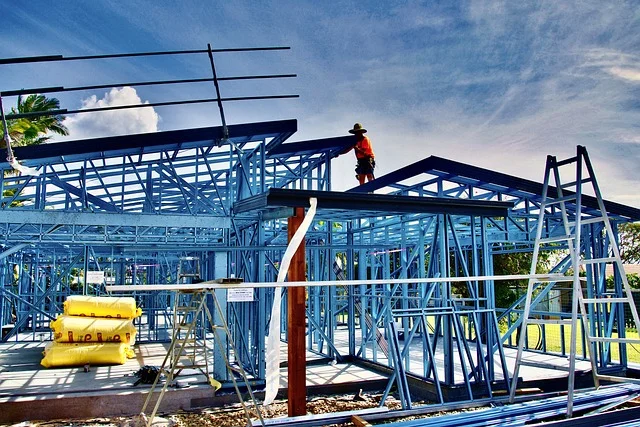
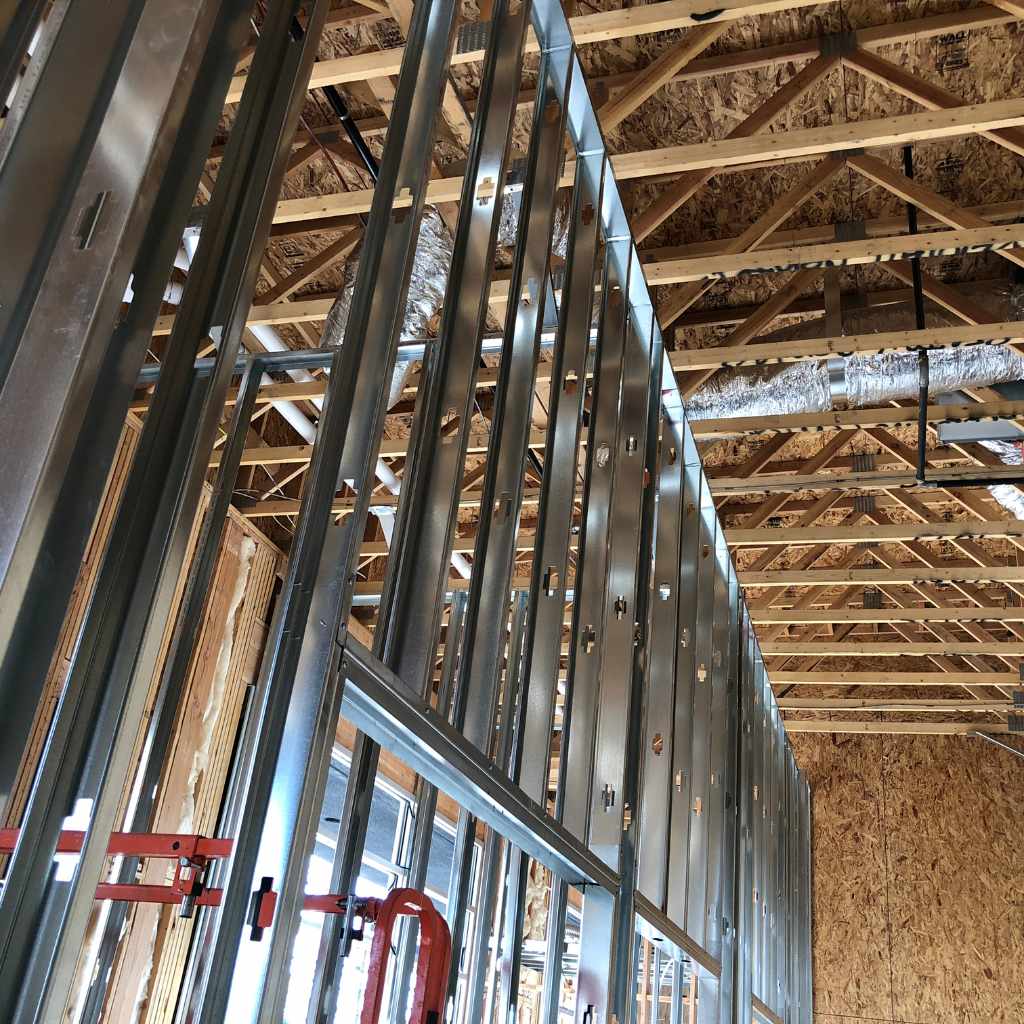
Metal studs are cold-formed galvanized steel, and their price is driven by weight, gauge, and length rather than a commodity futures market the way lumber is. That’s the main reason contractors who’ve been burned by a lumber price spike start looking at steel: it’s not always cheaper, but it’s more predictable from one order to the next.
On a straight material basis, steel studs usually cost a bit more than wood per linear foot. What changes that math:
- Gauge: A lower gauge number means thicker, stronger, and pricier steel. Interior partition walls typically use 25 or 27 gauge; load-bearing commercial applications use heavier gauges.
- Coating: Galvanized steel is standard for corrosion resistance and is what you’ll find at most suppliers.
- Profile size: Steel studs come in the same nominal widths as wood (2×4, 2×6 equivalents) so they slot into standard wall assemblies.
- Pre-punched options: Studs with pre-cut knockouts for wiring and plumbing cost a little more per piece but can save real time for the electrician and plumber.
Material Cost, Side by Side
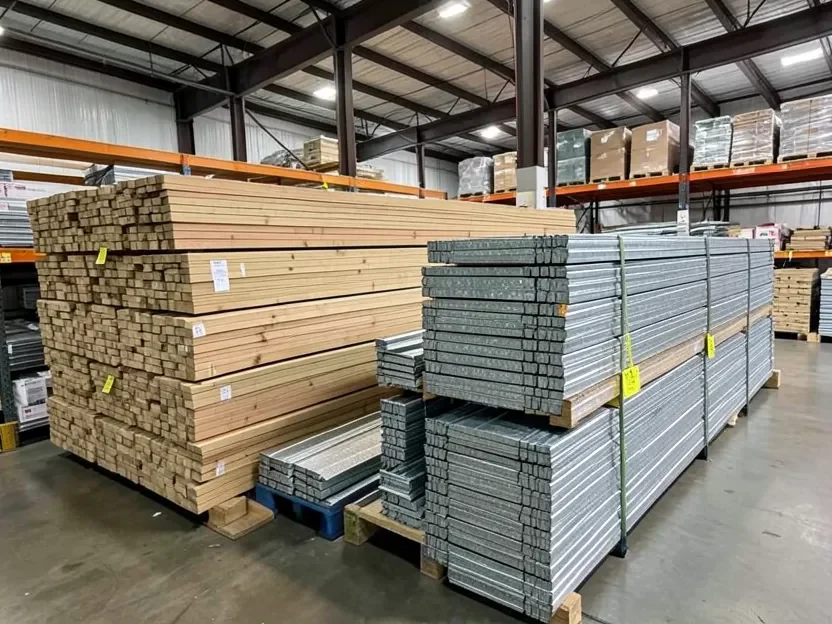
Because lumber prices move so much, any dollar figure here is a snapshot, not a guarantee – always get a current quote before budgeting a real project. As a general sense of where things have sat recently: standard wood 2×4 studs have typically run somewhere around $1 to $2 per linear foot for material, with total lumber costs (grade and species dependent) ranging roughly $1.50 to $3.50 per linear foot. Comparable 25-gauge metal studs have generally landed around $1.50 to $2.50 per linear foot. Installed labor for either material commonly adds another $2 to $4 per linear foot, and in many markets that labor rate doesn’t differ much between the two – the real labor gap shows up in speed and crew familiarity, covered next.
In practice, that puts wood slightly ahead on raw material cost in most common residential scenarios, with metal closing the gap – or pulling ahead – once you factor in durability, precision, and reduced callbacks.
Labor and Tools: Where the Real Cost Gap Shows Up
Labor is usually the biggest line item in any framing budget, and it’s also where wood and metal diverge the most for a DIYer or small crew.
Wood studs go up fast because almost every carpenter and framer already knows the process. You’re cutting with a circular or miter saw and fastening with a framing nail gun or hand nails – tools most home shops already own or can rent cheaply. There’s no learning curve, which keeps labor costs lower and more predictable on smaller residential jobs.
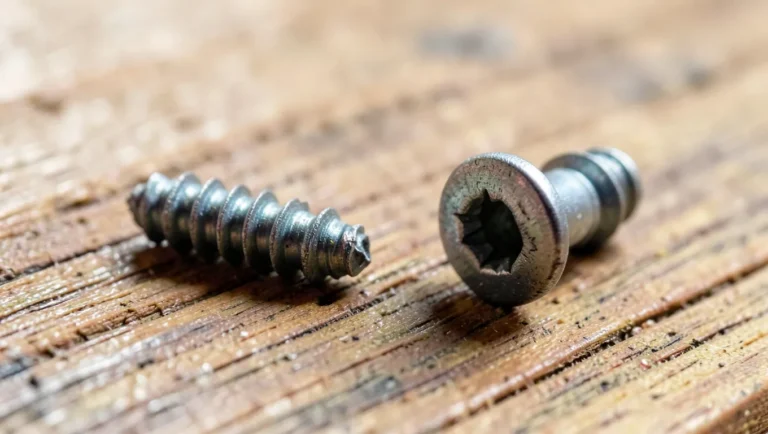
Metal studs require a different toolkit and a different technique, and this is the part a wood-focused DIYer tends to underestimate. You can’t nail into steel – you need self-tapping screws (usually pan-head or bugle-head Type S screws) driven with a screw gun fitted with a depth-sensing nose piece, sometimes called a dimpler. That attachment stops the screw right when it seats flush, because steel studs are thin enough that a standard drill/driver will strip the hole or drive the screw in crooked before you can react. Metal snips or an aviation shear replace the saw for cutting studs and track to length. None of this is difficult to learn, but it is a real, separate skill set – budget a bit of trial-and-error time (and a few ruined screws) the first time you frame a wall in steel.
Once a crew is past that learning curve, metal framing can actually move faster on repetitive runs: studs are dead straight out of the bundle, so there’s less time spent sorting through a lumber pile for a piece that isn’t crowned or twisted, and less squaring-up afterward.
Long-Term Costs: Durability, Fire, Pests, and Moisture
The sticker price is only half the picture. Steel doesn’t rot, warp, twist, or feed termites, which is exactly why commercial builders lean on it for interior partitions – fewer callbacks, fewer surprises years later. Wood, left unprotected in a damp basement or a termite-prone region, can turn a “cheaper” wall into an expensive repair.
Fire resistance
Steel studs are non-combustible, which can matter for code compliance in certain assemblies and, in some cases, for insurance pricing. Wood is combustible unless treated, though fire rating in a real wall assembly depends heavily on the drywall and insulation used, not the stud alone.
Pests and moisture
Termites and moisture are the two things that turn a wood wall’s low upfront cost into a long-term liability. Metal is immune to both, which is why it shows up so often in basements, bathrooms, and other damp-prone spaces even in otherwise all-wood homes. Termite activity in particular is a good reason to consider metal for a specific problem wall rather than the whole house.
Weight and handling
Metal studs are noticeably lighter than a comparable wood stud, which matters more than it sounds like on a multi-story job – less physical strain, easier material handling, and in some cases lower costs to move materials up floors.
When Metal Studs Actually Make Sense
Metal framing genuinely earns its keep in a specific, narrower set of situations than the marketing around it suggests:
- Non-load-bearing interior partition walls – this is metal’s real home turf. Basement offices, closets, and non-structural interior walls are exactly where residential metal framing shows up most, since it avoids the engineering and code complications that come with using steel in a load-bearing or exterior wall.
- Moisture or termite-prone areas – basements, bathrooms, and regions with heavy termite pressure, where wood’s long-term repair risk outweighs its lower material cost.
- Large, repetitive commercial-style runs – long straight partition walls where speed and consistency compound the labor savings.
- You already own the tools – if a screw gun with a dimpler attachment and metal snips are already in your toolbox, the labor-cost gap narrows a lot.
What it’s not typically the right call for: exterior load-bearing walls on a standard residential build. That’s still almost always wood or engineered lumber, both because of cost and because most residential framing crews, inspectors, and building codes are built around wood-frame construction.
When Wood Studs Remain the Better Choice
For most of what a home-shop woodworker or DIYer actually builds, wood still wins:
- Small residential projects and additions where familiarity and speed with standard tools keep labor costs down.
- DIY projects without specialized tools – no screw gun with a dimpler, no metal snips, no extra trip to the tool rental counter.
- Load-bearing walls in a standard residential build, where wood framing is the default that most codes, crews, and inspectors expect.
- Budget-conscious projects where the lowest upfront material cost matters more than multi-decade durability.
Local Pricing and Suppliers
Everything above is a general trend, not a quote. Actual prices for both materials depend heavily on your region and supplier – freight distance from a lumber mill or steel service center, local demand, and even which big-box store versus independent yard you’re buying from can shift the numbers more than the national averages suggest. Use our lumber calculator for framing to estimate stud counts and material needs for your specific wall dimensions, then get quotes from at least two suppliers for both materials before you commit to one.
Frequently Asked Questions
Are metal studs more expensive than wood studs for framing a small shed?
For a small shed, wood is typically the more cost-effective choice. Material cost is usually lower, and there’s no need for a screw gun with a dimpler attachment or metal snips if you’re doing it yourself.
What is the biggest advantage of using metal studs over wood studs?
Resistance to moisture, pests, and fire. Metal studs won’t rot, won’t feed termites, and won’t warp or twist over time, which lowers the odds of a costly repair years after the wall is finished.
If I’m building a wall for a home office, which stud type is better for soundproofing?
Both work well when paired with the right insulation and drywall. Soundproofing performance comes mostly from the whole wall assembly – insulation type, drywall layers, and sealing gaps – rather than from the stud material itself.
Can I use standard nails to attach drywall to metal studs?
No. Drywall on metal studs needs self-tapping drywall screws, not nails. A standard nail won’t grip thin-gauge steel, and hammering into it risks bending the stud flange.
How does the weight of metal studs compare to wood studs?
Metal studs are generally lighter than a wood stud of comparable structural strength, which can make handling easier and reduce physical strain during installation, especially on multi-story jobs.
Bottom Line
On raw material cost, wood studs usually come out a little cheaper, and that gap widens further in wood’s favor once you factor in how much easier they are for a DIYer or a crew without metal-framing experience to install. Metal studs cost more upfront in most cases, but they make that back over time in a damp basement, a termite-prone region, or any wall where dead-straight, low-maintenance framing matters more than shaving a few dollars off the material bill.
For most residential DIY framing – especially load-bearing walls – wood remains the practical default: cheaper tools, a shorter learning curve, and a crew (even if that crew is just you) that already knows how to work with it. Save metal for the specific spots where its durability actually solves a real problem, like a partition wall in a basement or a moisture-prone room.
If you’re pricing out an entire structure rather than comparing individual stud costs, see our full steel-frame vs. wood-frame cost breakdown for real per-square-foot ranges on complete builds.
Sponsored / affiliate links. As an Amazon Associate I earn from qualifying purchases. I may earn additional commission from eligible campaigns.