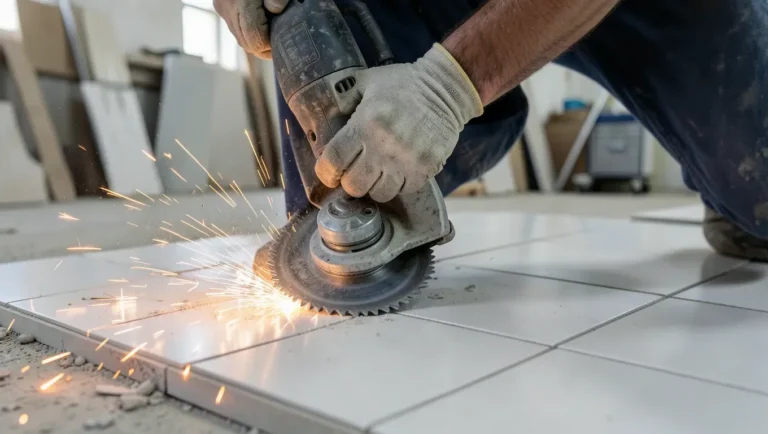
Belt Sander vs Random Orbital Sander
Use a belt sander first when you need to remove stock fast, knock down cupped boards, or flatten severe highs; switch to a random orbital sander for safer finish prep and final leveling; use both in sequence when speed comes first and scratch control comes second. Pick the wrong tool, and you can dish edges, leave deep scratches, or burn through veneer and thin parts. This guide compares Belt Sander, Random Orbital Sander, and sheet orbital sanding by task, failure risk, and the best order to use them.
| Decision factor | Belt Sander | Random Orbital Sander | Winner |
|---|---|---|---|
| Stock removal speed | Very high on flat stock; continuous abrasive belt removes a lot of wood fast | Lower removal rate; better for controlled sanding | Belt Sander |
| Finish quality | Leaves coarse scratches that need follow-up sanding | First choice for a super-smooth surface; fewer visible swirl marks than a regular orbital sander | Random Orbital Sander |
| Damage risk | Higher; can gouge, dish, and round edges if pressure lingers | Lower; still needs control, but it is the safer finishing tool | Random Orbital Sander |
| Corner and edge access | Poor on inside corners and close edges | Better on edges, but cannot sand internal corners like a sheet orbital sander can | Random Orbital Sander |
| Best fit for rough surfaces | Leveling glued panels, rough boards, heavy paint removal | Final sanding, lighter removal, cleanup after belt work | Belt Sander |
What is the core trade-off?
The trade-off is simple: a belt sander gives you speed, and a random orbital sander gives you more control at the end of the job. Once the workpiece is close to flat and the heavy defects are gone, the safer choice shifts to the random orbital sander or a sheet orbital sander for corners.
Damage risk starts as soon as the abrasive stays in one place too long. On flat boards that matters less than on veneer, edge-banding, or a thin face layer, where a few seconds of aggressive sanding can cut through the surface.
Motion matters
A belt sander uses a continuous abrasive belt. That makes it aggressive on broad, flat surfaces, which is why it is the tool for removing a lot of wood fast on flat stock.
A random orbital sander moves with orbit plus rotation. That motion is why it is used for smoothing and finishing, and why it leaves no swirl pattern in normal use the way a regular orbital sander can.
Size and reach
Common handheld belt sizes are 3 x 18 inches and 3 x 21 inches. Random orbital sanders commonly use 5-inch or 6-inch hook-and-loop discs. A sheet orbital sander uses a rectangular pad and sheet abrasive, which helps it reach internal corners and edges better than a random orbital sander.
That difference matters on casework, frames, and trim. If the task needs corner access, the sheet sander is the better orbital style; if the task needs cleaner field sanding, the random orbital sander is the safer finish tool.
How do the three sanders differ?
Belt Sander, Random Orbital Sander, and sheet orbital sander are not interchangeable. They overlap on some jobs, but each one fails in a different way when pushed outside its strength.
Belt sander behavior
The belt sander’s main purpose is removing a large amount of material quickly. It is best on flat surfaces, and it is the strongest choice for leveling glued panels and rough boards, but it is difficult to control and can gouge work.
Random orbital sander behavior
The random orbital sander is more versatile than a belt sander. It removes less material, but it is the first choice for a super-smooth surface and is recommended for the final pass before stain or paint.
Sheet orbital sander behavior
The sheet orbital sander is a finishing sander for a smooth surface finish. It can sand internal corners, but it removes material more slowly and may still leave swirl marks if you lean on it or stay in one place.
Which sander fits each woodworking task?
The safest pick depends on task severity. Heavy removal calls for a belt sander first; final smoothing calls for a random orbital sander; corner work often calls for a sheet orbital sander instead of either of the other two.
| Task | Belt Sander | Random Orbital Sander | Sheet Orbital Sander | Recommended grit sequence |
|---|---|---|---|---|
| Leveling glued panels | Best first pass | Cleanup pass | Corner cleanup | 80/120 then 150/180 |
| Rough boards with mill marks | Best first pass | Finish pass | Not first choice | 80/100 then 120/150 |
| Heavy paint or varnish removal | Best for heavy removal on sound substrate | Use for lighter removal and cleanup | Edge cleanup only | 60/80 then 120/150 |
| Veneer or plywood faces | High risk; avoid unless only a tiny amount must come off | Preferred choice with light pressure | Good for edges and corners, not aggressive removal | 150 then 180/220 |
| Furniture final sanding | Only if earlier work left heavy scratches | Preferred finish tool | Useful for corners and profiles | 120/150 then 180/220 |
| Tabletop or workbench cleanup | Start if high spots are present | Follow for surface refinement | Use on edges and inside corners | 80/120 then 180/220 |
| Painted trim and edge work | Too aggressive for most trim | Better for controlled stripping | Best at corners and edges | 120 then 180/220 |
| Finish between coats | Not a good choice | Use only with very light pressure | Often the safer handoff for corners | 180 then 220 |
Say your glued tabletop has one high glue ridge and a few broad proud spots. A belt sander can knock down the ridges quickly, but the safer sequence is to stop as soon as the field is close, then switch to a random orbital sander so you do not create a hollow in the center.
Suppose a cabinet side is plywood with a thin face veneer. Start with the random orbital sander, not the belt sander, because the face layer can sand through very quickly. A light 150 grit pass, followed by 180 or 220, is far less risky than aggressive stock removal.
When should I use a belt sander instead of a random orbital sander?
Use a belt sander instead of a random orbital sander when the job is defined by removal, not refinement. It is the better first tool for rough lumber, leveling glued panels, stripping thick coatings from sound flat stock, and knocking down large high spots before a cleaner sanding pass.
Do not use it as a cure for twist. A twisted board is a milling problem, not a sanding problem, and sanding one face hard enough to chase twist can leave the board thinner, uneven, and still out of true.
Start with the belt sander when the surface is far off
If the surface has heavy machine marks, a thick coating, or high spots that stand clearly above the rest, the belt sander earns the first pass. It removes the defects quickly, then the random orbital sander handles the scratches left behind.
Switch away from the belt sander as soon as the job changes
As soon as the work is close to flat, the belt sander becomes the risky choice. That is the point where scratch control matters more than removal rate, and the random orbital sander or sheet orbital sander should take over.
Can a random orbital sander remove paint?
Yes, a random orbital sander can remove paint, but it is the better choice for lighter stripping and cleanup, not for heavy buildup. A belt sander is the stronger first-pass tool when the coating is thick and the substrate is flat enough to tolerate aggressive removal.
Older painted surfaces can contain lead, and belt sanders create dust faster than other handheld sanders. On pre-1978 homes, use a lead-safe workflow, keep dust controlled, and rely on a HEPA vacuum rather than an open shop-vac bag.
Dust control changes the result
Dust extraction affects finish quality as well as cleanup. Use the dust bag or vacuum hookup that fits the tool, and on random orbital sanders align the hole pattern in the disc with the pad or the extraction path drops off.
With poor dust control, abrasive loading rises and the surface can scratch more unevenly. The tool still works, but the finish often looks rougher and you spend longer clearing the work.
Will a belt sander ruin veneer or plywood?
It can, yes. Veneer and plywood faces are thin, and a belt sander can sand through them quickly because its removal rate is high and its cut is less forgiving than a random orbital sander.
On these surfaces, minimal pressure matters. If you must sand a plywood face, start with the random orbital sander and stop as soon as the surface is clean enough for the next grit.
What grit sequence should I use after belt sanding?
After belt sanding, move through a coarse to fine sanding sequence without skipping too many grits. A common rule of thumb is 120/150/180/220 after the belt sander has already removed the rough material, though the exact starting point depends on how deep the scratches are.
Inspect between grits. If you can still see the previous scratch pattern, do not jump ahead yet; the next finer grit only polishes the old marks instead of removing them.
- Choose the coarsest grit that removes the belt scratches.
- Sanding with the grain where possible, clear the dust.
- Inspect the surface under raking light.
- Move to the next grit only when the prior scratches are gone.
- Finish with 180 or 220 for stain or finish prep.
Choose Belt Sander if… / Choose Random Orbital Sander if…
Choose Belt Sander if the job is heavy stock removal, the surface is broad and flat, the coating is thick, or you need to level glued panels and rough boards before cleanup. It is the better first tool when speed matters more than surface quality.
Choose Random Orbital Sander if the surface is already close to flat, the wood is veneer-faced or plywood, the next step is stain or finish, or you want lower risk while removing the last scratches. It is also the better default for furniture sanding.
Use both in sequence when the work starts rough and ends visible. Belt first, random orbital second, with a sheet orbital sander where corners or edges need access that the random orbital pad cannot reach.


Which sander should I buy first for woodworking?
Buy a random orbital sander first if you only want one sander for general woodworking. It is the safer finish tool, more versatile than a belt sander, and useful for sanding before stain, between prep steps, and on surfaces where a belt sander would be too aggressive.
Buy a belt sander first only if your projects regularly start with rough lumber, heavy stripping, or leveling glued panels. That is a narrower need, but it is the one place where the belt sander clearly leads.
Is a belt sander better than an orbital sander?
For removal, yes. For finish quality, no. A belt sander is better when the task is to remove a lot of wood fast on flat surfaces, while a random orbital sander or sheet orbital sander is better when the goal is a cleaner surface with less risk.
If the question is about furniture, the answer leans toward the random orbital sander because furniture usually demands controlled sanding rather than aggressive material removal.
Is an orbital sander better than a sheet sander?
If by orbital sander you mean a random orbital sander, it is usually better for broad finish work, while a sheet orbital sander is better for internal corners and edge-adjacent areas. The random orbital sander is often the safer general finishing tool, while the sheet sander can handle some corners that a random orbital may not reach.
That is why the two tools often appear together in a shop. One covers the main field, and the other cleans the places the pad cannot reach well.
Can a random orbital sander reach corners?
It can reach near corners, but not internal corners. The round pad helps on edges and open faces, yet the pad shape leaves a gap in inside corners that a sheet orbital sander can reach better.
For cabinet interiors, frames, and tight profiles, use the random orbital sander on the field and switch to the sheet sander for the corner work.
What is the difference between a belt sander and a random orbital sander?
The belt sander uses a continuous abrasive belt for aggressive stock removal, while the random orbital sander uses orbit plus rotation for smoothing and finishing. The belt sander is faster and riskier; the random orbital sander is slower and safer for final prep.
That difference explains most task choices. Heavy removal favors the belt sander, final sanding favors the random orbital sander, and thin surfaces shift the choice even farther toward the random orbital tool.
Frequently asked questions
Is a belt sander better than an orbital sander for furniture?
Usually not for the final stages. Furniture work often involves edges, veneered faces, and visible surfaces, so a random orbital sander is the safer default and a sheet orbital sander is useful for corners. A belt sander belongs only at the roughest stage.
Sponsored / affiliate links. As an Amazon Associate I earn from qualifying purchases. I may earn additional commission from eligible campaigns.
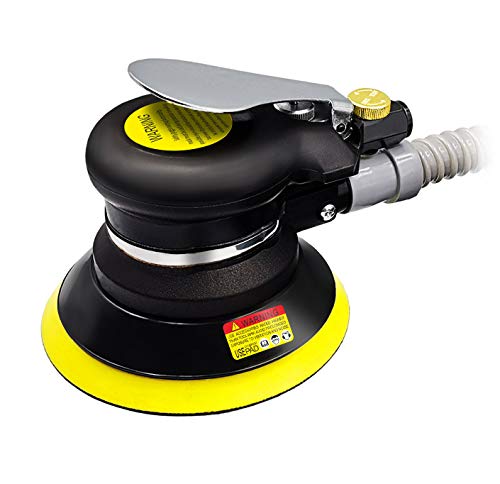 Air Random Orbital Sander, 5"6"Vacuum Air Sander, Dual Action Pneumatic Sander include5 inch 6 Inch Pads and sandpaper, Polisher for Car or Metal (Self-Vacuum)
 6" Random Orbit Air Sander, Air Palm Random Orbital Sander, Professional Pneumatic Palm Sander, Speed Adjustable Pneumatic Sander for Rust Removal, Sanding and Fine Polishing, Lightweight Low Noise