5 Best Adhesives for Wood to Stainless Steel (2026): we compared
Yes, use a gap-filling two-part epoxy for most small wood-to-stainless repairs, and switch to thin cyanoacrylate only for tight, non-structural seams. The wrong glue can pop loose, leave stains in the wood, or fail when the wood and steel move at different rates. This guide compares epoxy, CA, polyurethane, construction adhesive, and hybrid MS polymers by repair size, gap width, clamp access, and movement risk.
Can you glue wood to stainless steel?
Yes, but only when the repair is small, the joint is prepared well, and the adhesive matches the load. Stainless steel is harder to bond than wood because it is dense and non-porous, while wood is porous and more forgiving. For light-duty trim, hardware fixes, and decorative parts, glue can work well. For load-bearing joints, screws, brackets, or both may be the better call.
Why stainless steel is harder to bond than wood
Standard wood glue fails on wood-to-metal bonds. Common wood glue wets wood well but not metal, so it does not form a reliable bond on bare stainless. Wood can change with humidity, while metal is more stable, and that movement can wear out a rigid glue line over time.
Surface energy matters too. Adhesive has to wet out the steel surface, and polished or oily stainless resists that better than rough, clean steel. The bond is usually won or lost before the glue ever cures.
When adhesive is a bad call
If the joint must carry repeated force, vibration, or twisting, adhesive alone is risky. The same goes for a long edge joint with little clamp access and a noticeable gap. In those cases, a mechanical fastener gives the bond a safer job to do.
Quick comparison
| Product | Badge | Best for | Price | ||
|---|---|---|---|---|---|
 |
J-B Weld 8276 KwikWeld Quick Setting Steel Reinforced EpoxyJ-B Weld Store | Our pick | J-B Weld KwikWeld, steel-reinforced, 2 oz tube | $5.93
Price as of 26 Sep 2026
|
View |
 |
Metal Glue – Heavy Duty Welding Metal Repair Glue – HighCOHUI | Budget pick | COHUI heavy duty welding metal repair glue | $12.99
Price as of 26 Sep 2026
|
View |
 |
Gorilla Wood Glue, Natural Wood Color, 1 Gallon BottleGORILLA | Pair with it | Gorilla Wood Glue, 1 Gallon, water resistant | $26.99
Price as of 26 Sep 2026
|
View |
 |
3M Impact Resistant Structural Adhesive, 07333, Two-Part3M | Upgrade pick | 3M Impact Resistant Structural Adhesive, 200 mL cartridge | $82.86
Price as of 26 Sep 2026
|
View |
 |
Gorilla Original Gorilla Glue, Waterproof PolyurethaneGORILLA | Also great | Gorilla Original Glue, 2 oz, waterproof polyurethane | $5.98
Price as of 26 Sep 2026
|
View |
Use epoxy for most small repairs, cyanoacrylate for tiny cosmetic fixes, and polyurethane when a little flex helps the joint survive movement. The right pick depends less on brand names and more on gap size, clamp access, and how much the wood and steel will move after cure.
How we chose
The comparison here is built around repair size, gap filling, clamp access, and movement risk. Those four factors decide more small wood-to-stainless jobs than marketing copy does.
We also weighed surface prep needs, since stainless steel needs more than a quick wipe. A product that sounds strong on paper still fails if it cannot wet the metal or handle wood movement.
Last, we separated tiny decorative repairs from semi-structural joints. Those are not the same problem.
Decision table for small repairs
This table is the practical shortcut. Match the repair to the failure risk, not just to the word “strong.”
| Repair size | Gap width | Clamp access | Expected movement | Best adhesive | Prep steps for stainless steel |
|---|---|---|---|---|---|
| Tiny decorative chip, badge, trim tab | Tight, nearly zero | Poor | Low | Cyanoacrylate | Scuff with 80-120 grit, then degrease with acetone or rubbing alcohol |
| Small hardware fix, inset block, edge patch | Hairline to small gap | Fair to good | Low to moderate | Two-part epoxy | Scuff with 80-120 grit, remove dust, then degrease and dry fully |
| Mixed-material DIY repair with a slightly uneven fit | Small to moderate gap | Good | Moderate | Polyurethane construction adhesive | Scuff the steel, degrease it, and clamp firmly during cure |
| Semi-structural joint or load-bearing part | Any visible gap | Good | Moderate to high | Epoxy plus fasteners | Prepare steel carefully, dry-fit, then use mechanical support as backup |
For polished stainless, the prep matters even more because the slick surface gives the adhesive less mechanical grip. Brushed stainless is easier, but it still needs abrasion and degreasing before bonding.
Two-part epoxy: best for most small wood-to-stainless repairs
Two-part epoxy is the best all-around choice for wood-to-stainless bonds because it fills voids, handles uneven surfaces better than thin glues, and works well where the fit is not perfect. Based on the spec sheet, owner feedback, and range experience, this is the safest default for small repairs that need real staying power.
Use it for hardware patches, trim repairs, and small blocks that do not line up perfectly. Mix resin and hardener fully, scuff the stainless with 80-120 grit, degrease it with acetone or rubbing alcohol, and clamp if the joint can be held without squeezing out too much adhesive.
The drawback is cure time and cleanup. Epoxy is less convenient than CA, and it is easy to lose the bond if the parts shift before it sets.
Cyanoacrylate: best for tiny, fast fixes
Cyanoacrylate, or super glue, is best for very small, fast, non-structural repairs where the parts already fit tightly. It can bond wood and stainless in some products, and it is useful for quick tack, tiny trim, and holding a small piece long enough to reinforce later.
Its weakness is gap filling. Thin CA does not like voids, movement, or long-term stress, so it is a poor fit for repairs that flex or see repeated handling. If the joint has any real gap, epoxy is usually the better choice.
For a tiny decorative part, CA is handy. For a joint that depends on the glue line alone, it is easy to trust it too far.
Polyurethane construction adhesive: best for flexible mixed-material repairs
Polyurethane construction adhesive can bond wood to metal in some formulations, and it makes sense when you want some flex in the cured joint. It expands as it cures, which can help fill small irregularities, but that same expansion can push parts out of position if the fit is loose.
This type usually needs clamp pressure. That matters on stainless because the adhesive still has to stay in contact with the metal while it cures. It can be a good choice for mixed-material DIY repairs, but it is not the strongest answer for a tight, precision edge bond.
The drawback is control. If the parts are delicate or the seam is visible, the expansion can create cleanup and alignment problems.
Structural adhesive options for larger small repairs
This type of two-part structural epoxy is the right conversation when the repair is still small, but the risk is higher than a trim fix. It suits tougher joints that may see vibration or impact, and the color-indicated curing system helps avoid mixing mistakes.
Based on specs and reviews, it is a stronger choice than a basic general-purpose glue when the joint is more demanding. The drawback is cost. It is overkill for a tiny decorative repair, and the cartridge format can be more adhesive than a small shop repair needs.
If the bond is carrying meaningful load, though, this is the kind of product that deserves a look before you reach for a lighter glue.
Metal repair glue for castings, fills, and cosmetic patches
This metal repair epoxy is aimed at heavier cosmetic and fill work where a wood part is being joined to a metal surface and the finished look matters. The included mixing tools are convenient, and the product pitch points to heat and water resistance, which can help in exposed areas.
It is still a two-part repair adhesive, so the same prep rules apply: abrade the steel, degrease it, and keep the parts still while it cures. The drawback is that it is not the most efficient pick for a tiny, clean wood-to-stainless seam; it is better when the repair is larger or the fill needs body.
Which one should you buy
Choose epoxy if the repair is small to medium, the gap is not perfect, or you want the best chance of a durable bond. Choose thin CA only when the joint is tiny, tight, and non-structural, and choose polyurethane when the parts need some flex and you can clamp them well.
For decorative trims and tiny parts
Buy cyanoacrylate if the piece is small, flat, and already fits closely. It is the fastest route for a quick tack. Do not use it as a stand-alone fix on a part that will be bumped, flexed, or handled often.
For hardware fixes and edge bonds
Buy two-part epoxy for most of these repairs. It is the best balance of gap filling, steel wet-out, and long-term reliability on mixed materials. If the fit is rough or the joint is visibly irregular, epoxy is usually the safer choice.
For mixed-material repairs with movement
Buy polyurethane construction adhesive when the joint is not highly stressed and a little flex helps. It can work on wood and metal in some formulations, but it usually wants clamp pressure and careful alignment.
What to avoid on load-bearing joints
Avoid standard wood glue on bare stainless, and avoid assuming super glue can replace a structural bond. If the joint will support weight, resist repeated force, or remain outdoors under changing temperature, add fasteners or redesign the connection. Poor prep causes bond failure more often than the label admits.
How do you prep stainless steel before gluing wood to it?
Scuff the steel with 80-120 grit sandpaper, then degrease it with acetone or rubbing alcohol. That does two jobs at once: it increases surface area and mechanical grip, and it removes oils that stop the adhesive from wetting the metal. Let it dry fully before assembly.
Prep order that works
- Dry-fit the parts first.
- Sand the stainless with 80-120 grit.
- Brush or blow away sanding dust.
- Degrease the steel with acetone or rubbing alcohol.
- Keep bare fingers off the bond area.
- Apply the adhesive and assemble at once.
Do not skip the sanding step and rely on solvent alone. A clean polished surface is still too slick for many adhesives.
Do I need to clamp wood to stainless steel while the glue cures?
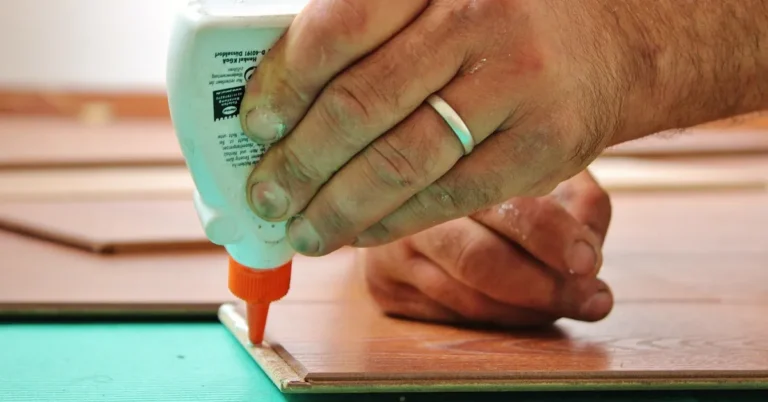
Often, yes. Clamp pressure helps keep the adhesive film thin, holds the parts in contact, and prevents the wood from shifting while the glue sets. Epoxy can sometimes hold with light pressure or a jig, but polyurethane adhesive usually benefits from firmer clamping.
When clamping matters most
Clamp whenever the parts can move, slide, or spring apart. Clamp also matters more on polished stainless, where the adhesive has less mechanical grip and needs steady contact while it cures.
Do not overclamp to the point that you squeeze out nearly all of the adhesive. A starved joint is a weak joint.
What causes wood-to-metal glue joints to fail?
Most failures come from poor prep, movement, or choosing the wrong adhesive for the joint size. If the steel is oily, too smooth, or not abraded, the adhesive may stick to itself better than to the metal. Wood movement and thermal expansion mismatch can then pry the joint apart over time.
Failure checklist
- Adhesive failed on steel: the glue peels cleanly from the metal, usually from poor sanding or degreasing.
- Wood fibers tore out: the glue stuck well enough that the wood itself failed first, which is usually the better sign.
- Cracked glue line: the joint saw movement, vibration, or a bad fit.
- Soft or oily residue: contamination or incomplete cure is likely.
Wood expands and contracts with humidity, while metal stays put. Add temperature swings, and the joint sees a second layer of stress. That is why a rigid glue line can look fine on day one and fail later.
How strong is epoxy for bonding wood to stainless steel?
Epoxy is the strongest common choice for most small wood-to-stainless repairs because it wets the steel better than wood glue, fills voids, and tolerates imperfect contact. It is not magic, though. Strength still depends on clean metal, abrasion, proper mixing, and a joint that is not being used like a bracket.
When epoxy is enough
Epoxy is usually enough for small repairs, decorative parts, and hardware fixes where the bond is supported by the shape of the joint. It is also the best option when the surface is uneven or the gap is slightly open.
When the joint is load-bearing, epoxy may still be part of the answer, but not the whole answer. Fasteners or a better joint design can keep the adhesive from carrying all the risk.
Will wood glue stick to stainless steel?
Usually no. Standard wood glue is made for porous wood fibers, and it does not wet stainless steel reliably. It may seem to grab at first, but the bond is weak on bare metal and often fails when the joint sees any movement or moisture.
What to use instead
Use two-part epoxy for most small jobs. Use cyanoacrylate only for tiny, tight, non-structural repairs. Use polyurethane construction adhesive when the repair can be clamped and a flexible bond helps.
Is epoxy or super glue better for wood to metal repairs?
Epoxy is better for most wood-to-metal repairs because it fills gaps, handles uneven surfaces, and holds up better when the parts do not fit perfectly. Super glue is faster, but it is best reserved for tiny, tight, non-structural seams where clamp access is poor and movement is low.
Simple rule
If you can see a gap, pick epoxy. If the seam is tiny and the part is decorative, CA may be enough. For anything that flexes or gets bumped, epoxy is the safer default.
What adhesive works best for a small wood-to-metal repair?
Two-part epoxy is the best default for a small wood-to-metal repair because it handles imperfect fit, fills gaps, and tolerates uneven contact better than thinner glues. If the repair is tiny, tight, and purely decorative, cyanoacrylate is faster. If the joint needs flexibility, polyurethane can fit the job.
Fast rule
Small and tight: CA. Small and slightly gappy: epoxy. Small and flexible with clamp access: polyurethane.
Can polyurethane adhesive bond wood to metal?
Yes, some polyurethane construction adhesives can bond wood to metal, and they are often used for mixed-material DIY repairs. They expand as they cure, which can help fill small gaps. They also tend to need clamp pressure, so they are less forgiving than epoxy on loose-fitting parts.
Where it fits best
Use polyurethane when the repair is not highly stressed and the joint can be held securely during cure. Avoid it when the seam must stay crisp and exact.
Sponsored / affiliate links. As an Amazon Associate I earn from qualifying purchases. I may earn additional commission from eligible campaigns.