Best Rug Pads for Hardwood Floors (2026): we compared
Choose a felt-and-natural-rubber rug pad around 1/4 inch thick for many area rugs. Use thinner, low-profile rubber pads under flatweaves and runners, and avoid PVC or latex-backed pads on sensitive finishes. Bad pad choices can leave residue, trap grit, and make doors drag or rugs creep. This guide compares non-slip, non-marking pad constructions for hardwood floors, plus fit, thickness, and finish-safe buying rules.
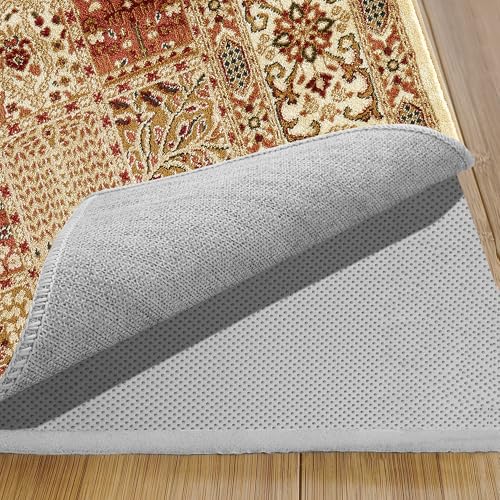
Top pick: the Veken felt-and-silicone cushioned pad is the best all-around fit for most hardwood floors because it combines 1/4-inch cushioning with a grip layer that balances hold, comfort, and everyday finish safety.
Quick comparison
| Product | Badge | Best for | Price | ||
|---|---|---|---|---|---|
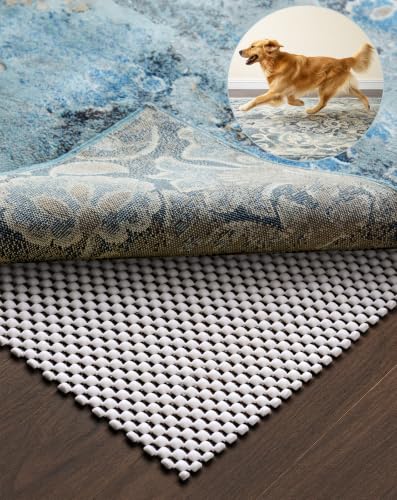 |
Veken Non Slip Rug Pad Gripper for Hardwood Floors, StrongVeken | Budget pick | 2×3 ft · Non-slip grip · Trim-to-fit | $5.39
Price as of 14 Oct 2026
|
View |
 |
Veken Non Slip Cushioned Rug Pad Gripper, Felt and SiliconeVeken | Our pick | 5 ft round · 1/4 inch thick · Silicone backing | $42.99
Price as of 14 Oct 2026
|
View |
 |
HOMBYS Ultra-Thick 0.6" Memory Foam Rug Pad 5×7 ft,HOMBYS | Upgrade pick | 5×7 ft · 0.6 inch memory foam · Waterproof | $64.99
Price as of 14 Oct 2026
|
View |
 |
Mohawk Home Felt Rug Pad 8′ x 10′ – 1/4 Inch Thick CushionMohawk Home | Pair with it | 8×10 ft · 1/4 inch thick · Felt only | $55.38
Price as of 14 Oct 2026
|
View |
 |
Non Slip Rug Pad Gripper for Hardwood Floors, 6×9 FT AntiMZKOCCR | Also great | 6×9 ft · Eco-safe · Cut-to-size | $18.99
Price as of 14 Oct 2026
|
View |
Use this page as a construction guide first, not a brand ranking. Start with rug type, finish sensitivity, and the space under nearby doors before you pick a pad.
A thin pad can be safer than a thick one in a hallway. A thicker pad can work better under an area rug in a sitting room, where comfort matters more than door swing.
📊 The best overall pad is rated 9.2. Source: Best Non Slip Rug Pads For Hardwood Floors.
How we chose
We compared the listed pads on four practical criteria: grip on hardwood without sticky residue, thickness and clearance fit, finish sensitivity, and trimability for real-world rug sizes and shapes.
We also weighted use case. A runner needs different construction than a plush area rug, and a glossy polyurethane finish needs more caution than a durable, older floor finish.
Finally, we considered maintenance. Pads that are easy to lift, vacuum, reposition, and replace age better than pads that trap dust or creep at the edges.
Veken Non Slip Cushioned Rug Pad Gripper: best for most area rugs
This is the best all-around choice for area rugs on hardwood floors when you want both cushion and hold. It is listed at 1/4 inch thick, uses silicone backing, and is rated 9.2 in the supplied data, which makes it the strongest general-purpose pick here for comfort plus traction.
It fits living rooms, bedrooms, and other spaces where you want the rug to feel softer underfoot without turning the pad into a door-clearance problem. The felt-and-silicone build is also the most natural match for larger area rugs that need a stable base.
The main drawback is thickness. A 1/4-inch cushioned pad can interfere with low door sweeps, tight thresholds, or furniture with very little clearance. If you need a hallway pad or a doorway rug, a thinner option is safer.
Veken Non Slip Rug Pad Gripper for Hardwood Floors: best for runners and grip-first setups
This is the simplest grip-first option in the list. It uses non-slip grip, an open-grid design, and trim-to-fit construction, and it is rated 9.0. That combination makes it a practical choice when hold matters more than cushioning.
It suits runners, smaller rugs, and areas where airflow matters because the open grid can help with vacuuming and reduce moisture trapping under the rug. It is also a better fit than cushioned pads when you are working around door clearances.
The tradeoff is comfort. This is not the pad to choose if you want a soft, padded feel under a large rug in a seating area. Its 2×3 ft format also means you may need to piece together coverage or size carefully for larger rugs.
Mohawk Home Felt Rug Pad: best for cushioning under larger rugs
This felt-only pad is the cushioning specialist. It is listed at 1/4 inch thick and is rated 8.5, which places it below the best overall and best-value options, but still makes sense when softness and insulation matter more than maximum grip.
It works best under area rugs that already have enough weight or texture to stay put, especially in rooms where you want to reduce hard-feel underfoot and soften sound. Felt is also useful when you want a pad that can be trimmed to shape without dealing with a sticky underside.
The drawback is that felt alone does not lock a rug to the floor as securely as a rubber-backed or dual-surface construction. On smooth hardwood, especially under lighter rugs, it may need to be paired with a rug style that already resists shifting.
HOMBYS Ultra-Thick 0.6" Memory Foam Rug Pad: best for maximum cushion
This is the comfort-first pick. Its 0.6-inch memory foam construction is far thicker than the other options here, so it is the one to consider if you want a softer step and more sound dampening than a standard 1/4-inch pad can provide.
It may suit a low-traffic sitting area or a room where the rug is mainly about comfort. The waterproof backing is useful in spaces where spills are a concern, and the easy-trim format gives you room to fit unusual rug dimensions.
The downside is obvious: thickness. A 0.6-inch pad is a poor match for doorways, runners, and places where you need a low profile. It is also not the best starting point for delicate finish concerns if the rug will move often, because a thick pad can create more edge stress and fit issues.
MZKOCCR Non Slip Rug Pad Gripper for Hardwood Floors: best for airflow and easy cleaning
This open-grid pad is the most flexible middle-ground choice. It is sold as a cut-to-size, eco-safe, odor-free underlay and is rated 8.8, with the open structure making it a useful fit for people who want airflow and easier vacuuming under the rug.
It works well when you want a pad that is less insulating than felt and less bulky than a cushioned option. The 6×9 ft size also makes it a practical option for common rug dimensions, especially if you need broad coverage without buying an oversized pad.
The main drawback is that open-grid pads can feel less cushioned than felt-based constructions. If you want a softer step under a dining room rug or a bedroom rug, this is not the most comfortable choice.
Natural rubber backing: best for grip without marks
Natural rubber is the key material to look for when you want traction on hardwood without the sticky feel of adhesive-backed products. On finished wood, it can grip well while staying non-marking when the pad is truly labeled for hardwood use and kept clean beneath it.
That said, finish compatibility still matters. Glossy polyurethane, older finishes, and unknown sealers deserve more caution because residue risk is never zero, especially if heat, humidity, or dust build up under the pad over time.
A hardwood-safe rubber pad should avoid sticky transfer, discoloration, and scuffing. If a listing leans on adhesive instead of a clean-grip underside, skip it unless the product is explicitly rated for finished wood and residue-free removal.
What natural rubber does better than sticky backing
Natural rubber creates friction rather than relying on glue. That helps the pad stay put under a rug while still allowing repositioning when you lift it to clean or adjust the layout.
Sticky-backed products can be a poor fit for finished hardwood because they may transfer residue, especially at the edges where the rug flexes. A rubber-backed pad is usually the safer starting point for a home with a polyurethane finish.
Felt + rubber dual-surface pads: best for area rugs?
Yes, for most area rugs this is the most balanced construction. Felt adds cushion, keeps the rug from feeling flat, and helps protect the floor from abrasion, while the rubber layer adds hold so the rug does not creep every time someone turns or pivots on it.
Use this type under medium and larger area rugs in living rooms, bedrooms, and family spaces. It is the clearest answer when you want one pad to handle comfort, stability, and everyday floor protection.
Skip it when the rug sits under a low-clearance door or when the rug is a runner in a narrow hall. The extra thickness can become a problem before the grip advantage matters.
When to avoid extra thickness
If a door already clears by a small margin, a 1/4-inch pad can be enough to cause rubbing. That is why thickness should be matched to the room first, then cushion second.
For a light flatweave rug in a hallway, a thinner grip pad is usually the better construction. The rug stays flatter, and the edges are less likely to catch at thresholds.
Low-profile and runner pads: best for doors and hallways?
Yes. Low-profile rug pads are the right choice when clearance is tight, especially under runners, entry mats, and rugs placed near doors. A common practical benchmark is roughly under 1/4 inch, and the low-profile pick here is 1/8 inch thick.
That thinner build keeps the rug flatter and reduces the chance that a door will drag. The low-profile option in this list is also marketed as a reversible design, which can improve usable life when one side starts to show wear.
Choose this style for hallways, kitchens, and entryways where a bulky cushion would create a trip or clearance issue. If the rug needs more softness than grip, step up to a thicker area-rug pad only if the door and threshold allow it.
Runner and doorway fit checks
Measure the space under the door, not just the rug size. A pad that is fine in a bedroom can fail at a front entry where the door sweep sits lower and the rug gets more foot traffic.
Suppose a 2’6" x 8′ runner sits in a hallway with a tight closet door. A 1/8-inch pad is much more likely to work than a cushioned pad that adds edge lift near the jamb.
Choosing the right rug pad by use case
Use this table to match construction to rug type, finish sensitivity, clearance, and traffic. The goal is not the grippiest box claim. It is the best fit for the room, the floor, and the rug itself.
| Scenario | Rug type | Finish sensitivity | Door-clearance limit | Traffic level | Best fit | Avoid | Why |
|---|---|---|---|---|---|---|---|
| Living room area rug | Medium or large area rug | Medium to high | Usually moderate | Moderate | Felt + rubber dual-surface pad | Sticky adhesive backing | Cushion plus grip is the best balance for daily use on finished wood. |
| Flatweave rug | Low-pile or flatweave | High | Tight | Moderate | Low-profile natural rubber pad | Thick foam pads | Thin construction keeps the rug flat and lowers door-rubbing risk. |
| Runner in a hallway | Runner | High | Tight | High | 1/8-inch reversible low-profile pad | 1/4-inch or thicker cushioned pad | Runners need hold without bulk, especially near doors and turns. |
| Entryway rug | Small rug or mat | Medium | Very tight | High | Open-grid grip pad | Memory foam pad | Open grid helps airflow and cleanup while staying lower profile. |
| Bedroom rug | Plush or medium-pile area rug | Medium | Moderate | Low to moderate | Cushioned felt-rubber pad | Very thin grip-only pad | Comfort matters more here, and extra cushion reduces hard-step feel. |
| Older or delicate finish | Any rug that may shift often | Very high | Depends on room | Low to moderate | Hardwood-safe natural rubber or felt-rubber pad | Unknown latex or adhesive backing | Safer materials reduce residue, discoloration, and finish stress. |
A common mistake is using a cushioned felt pad under a wool runner on sealed oak, even though it can still slide and leave pressure marks on the finish. A 1/4-inch cushioned pad may be ideal under a bedroom rug, then become a problem under a hallway runner the same day.
Another common issue is pad creep caused by dust. Even a good pad will slide more if the floor beneath it is dirty, the rug is undersized, or the pad is trimmed too large and presses against the rug edge.
Which one should you buy

Start with the room, then the rug, then the finish. If you want one dependable option for most area rugs, pick the Veken cushioned felt-and-silicone pad. If your rug is a runner or doorway piece, choose the 1/8-inch low-profile style instead.
Pick by budget next. The Veken open-grid grip pad is the low-cost, grip-first choice, while the Mohawk felt pad is a stronger value when comfort matters more than maximum hold. The HOMBYS foam pad belongs only where extra softness is the main priority.
For finish-sensitive floors, avoid anything with unknown sticky backing. Natural rubber and felt-rubber constructions are the safer starting point for polyurethane finishes, while older or delicate floors deserve the thinnest pad that still controls movement.
Trim and maintenance checklist
- Measure the rug and cut the pad slightly smaller on every side so the edge stays hidden.
- Use scissors for trim-to-fit pads and cut custom shapes around furniture legs or unusual rug corners.
- Vacuum under the rug and pad area during routine cleaning to remove grit that can abrade the floor.
- Lift and reposition the rug periodically so trapped dust does not compact into the finish.
- Check for residue, discoloration, or scuffing after moving the rug, especially on glossy or older finishes.
- Replace the pad if it becomes brittle, compressed, or loses grip at the corners.
For cost framing, the lowest-priced grip pads are usually best for smaller rugs or temporary placements, while felt-rubber pads offer better value on larger rugs because they cover more area with one installation. The right buy is the one that fits the room without forcing a compromise on clearance or finish safety.
Frequently asked questions
What rug pad is best for hardwood floors without leaving marks?
A natural-rubber or felt-and-rubber rug pad is usually the best starting point for hardwood because it grips without relying on sticky adhesive. Look for hardwood-safe, non-marking backing and avoid pads that do not clearly state residue-free compatibility, especially on glossy polyurethane or older finishes.
Are felt and rubber rug pads safe for hardwood floors?
Usually yes, when the pad is labeled for hardwood and the backing is residue-free. Felt protects against abrasion, and rubber adds traction. The caution is finish sensitivity: delicate, unknown, or older sealers need more care than a newer polyurethane floor with a stable topcoat.
What thickness should a rug pad be for hardwood floors?
About 1/4 inch works well for many area rugs because it balances cushion and stability. For runners, doorways, and tight thresholds, thinner pads are safer, and the low-profile option here is 1/8 inch. Thicker pads add comfort but can create clearance problems.
How do I keep an area rug from slipping on hardwood floors?
Choose a pad with real grip, not just cushion. Natural rubber, dual-surface felt-rubber, or an open-grid non-slip pad can help hold the rug in place, but the rug should also be large enough for the space and the floor beneath it must be clean.
Do rug pads protect hardwood floors from scratches?
They help reduce abrasion and movement-related wear, but they do not prevent every scratch. A pad cannot compensate for grit trapped under the rug or for a rug that is too small and slides across the same area repeatedly. Regular vacuuming still matters.
How do I trim a rug pad to fit my rug?
Measure the rug, then cut the pad slightly smaller than the rug on all sides so the edge stays hidden. Scissors work for most trim-to-fit pads, and custom shapes can be cut for corners, runners, or odd floor layouts. Keep the fit neat, not tight.
Sponsored / affiliate links. As an Amazon Associate I earn from qualifying purchases. I may earn additional commission from eligible campaigns.