Best Humidity Level for Hardwood Floors (2026): Research Shows
Keep indoor relative humidity between 35% and 55% for hardwood floors, with 45% to 50% as a steady target; below that, boards shrink and gap, and above that, they swell and cup. Stay outside that range and you may see noisy floors, lifted edges, finish damage, or repairs. This guide maps common floor symptoms and humidity readings to the most likely cause and the next adjustment step.
Quick comparison
| Product | Badge | Best for | Price | ||
|---|---|---|---|---|---|
 |
TempPro TP50 Digital Hygrometer Indoor Thermometer RoomTempPro | Our pick | Digital hygrometer · DRY/COMFORT/WET · tabletop or magnetic | $10.99
Price as of 3 Nov 2026
|
View |
 |
AcuRite Wireless Digital Indoor Thermometer and HygrometerAcuRite | Also great | Wireless hygrometer monitor · indoor temp and humidity · easy display | $12.99
Price as of 3 Nov 2026
|
View |
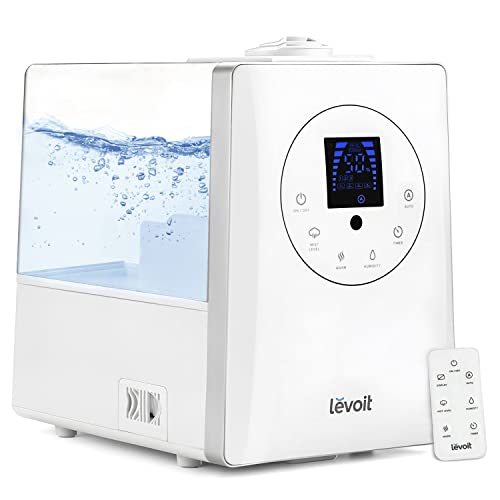 |
Levoit Humidifiers for Bedroom Large Room HomeLevoit | Also great | Whole-room humidifier · warm and cool mist · built-in sensor | $99.99
Price as of 3 Nov 2026
|
View |
 |
Frigidaire 50 Pint Dehumidifier with Built-In PumpFrigidaire | Pair with it | 50-pint dehumidifier · built-in pump · portable basement use | $298.00
Price as of 3 Nov 2026
|
View |
 |
AprilAire 500 12-gal. Whole-House Small Bypass EvaporativeAprilaire | Upgrade pick | Whole-house humidifier · automatic digital control · installation kit | $372.43
Price as of 3 Nov 2026
|
View |
Use the table to match your current reading to the most likely floor reaction. TempPro TP50 is the best first buy for most homes because it gives you a quick humidity reading before you decide whether to remove moisture or add it.
How we chose
The picks here are limited to tools that help you act on humidity, not guess at it. The main filters were current humidity display, daily high and low tracking, automatic control where relevant, and a fit for either adding or removing indoor moisture.
We also favored products that fit common homeowner use cases: a low-cost room monitor, a wireless monitor, a portable dehumidifier, and whole-room or whole-house humidifiers for winter dryness. The goal is a practical setup, not a pile of duplicate devices.
One more point mattered: each pick had to support a clear next step. If your floor is gapping, you need to know whether the room is too dry. If it is cupping, you need to know whether excess moisture is still present.
Humidity action table
| Indoor RH reading | Likely floor response | Visible symptom | Immediate homeowner fix |
|---|---|---|---|
| Below 35% | Wood loses moisture and shrinks | Gapping between boards, surface cracks, noisier movement | Add moisture with a humidifier, check for furnace-driven dryness, and raise RH toward 35%–55% |
| Winter heating drops RH below 30% | Fast drying increases shrinkage stress | New gaps at seams, cracking at the finish, slightly cupped boards flattening as they dry unevenly | Run a humidifier, check readings in each room, and slow the temperature swing |
| 35%–55% | Most stable zone for hardwood performance | Few visible moisture-related changes if temperature stays steady | Hold the range steady, and keep checking with a hygrometer |
| Above 55% | Wood absorbs moisture and expands | Cupping, swelling, boards that feel tight or lifted at the edges | Use a dehumidifier, inspect AC output, and cut indoor moisture from showers, cooking, and damp basements |
| Summer humidity stays high in living areas or basements | Expansion and stress across the plank width | More pronounced cupping, swollen seams, buckling risk near damp rooms | Run a dehumidifier and confirm the worst room, not just the main thermostat zone |
| Solid hardwood | Usually needs tighter moisture control | Gapping in dry months, cupping in damp months | Monitor several rooms and keep RH aligned with manufacturer guidance and room conditions |
| Engineered hardwood | Tolerates swings a bit better, but still reacts | Less movement than solid wood, though cupping or gaps can still appear | Keep the same RH target, but watch for faster correction after a spike or dry spell |
TempPro TP50: best for a budget room check
If you want the fastest answer to “is the room too dry or too damp?”, this is the simplest place to start. The TempPro TP50 shows temperature and humidity with a DRY/COMFORT/WET status, so you can translate a reading into action without digging through menus.
It is a good fit for homeowners who need one monitor in the main living area, especially if the floor problem changes with the seasons. Its daily highs and lows help you catch overnight winter dryness or afternoon summer spikes.
The drawback is obvious: it only tells you what the air is doing in one spot unless you move it. In homes with basements, upstairs bedrooms, or separate HVAC zones, you may need a second monitor elsewhere.
AcuRite 00613: best for wireless monitoring
This model fits a homeowner who wants to keep an eye on humidity from a more convenient display point. The wireless setup is useful when you want the monitor away from the floor or out of the way of daily traffic.
It is practical when you need a second reference room, such as a basement near a dehumidifier or an upstairs room that dries out faster in winter. The display shows current temperature and humidity and tracks highs and lows, which helps connect symptoms to a pattern.
The tradeoff is that it is still a monitor, not a fix. You will still need a humidifier or dehumidifier once the readings tell you which direction the room is drifting.
Levoit 6L humidifier: best for dry winter air
Choose this when winter heat is pushing indoor RH too low and you need active moisture addition in a larger room. Its built-in sensor and automatic mode make it a sensible choice when dry air is recurring, not a one-day problem.
The size and control range are useful for homes where the floor problem is gapping or surface cracks during heating season. Whole-room output helps when one portable unit has to cover a main living area.
The drawback is upkeep. Humidifiers need regular cleaning so standing water does not become a place for biofilm or bacteria, and that matters just as much as the humidity setting.
Frigidaire 50-pint dehumidifier: best for damp rooms
This is the right direction when your reading stays high and the floor is showing cupping, swelling, or early buckling risk. A dehumidifier is the better response when the house feels muggy, the basement reads high, or summer weather keeps pushing RH above the safe band.
The built-in pump helps if water removal is awkward, and the unit is better suited to rooms that need sustained moisture reduction rather than brief cleanup. It is especially relevant when the wood symptoms point to added moisture rather than age or wear.
The drawback is size and placement. A portable dehumidifier is a room tool, not a whole-house cure, so you may still need separate monitoring in the worst zone.
Aprilaire 500: best for whole-house control
Pick this if your home dries out every winter and a portable humidifier is not enough to stabilize the whole house. The automatic digital control is the main advantage, because hardwood floors react best when the room does not swing hard from one day to the next.
It fits larger homes that need moisture added across several rooms, not just one bedroom or office. That matters when floors on upper levels gap while the basement stays more stable.
The drawback is installation. This is not a simple plug-in fix, and it makes the most sense when the dry-air problem is persistent enough to justify a whole-house setup.
What humidity readings mean for hardwood floors
A reading below 35% RH usually means the air is dry enough to pull moisture from the boards. That is the zone where gapping, shrinkage, and surface cracks become more likely. A reading above 55% RH points the other way: the wood is taking on moisture, which raises the risk of cupping, swelling, and buckling.
For most homes, the practical target is 35%–55% RH, with 40% to 45% often treated as an especially stable band for hardwood moisture content. Some guidance allows 30% to 50%, but a tighter middle range is easier to hold through normal seasonal changes.
Temperature still matters. Many guides keep indoor temperature between 68°F and 74°F, and rapid changes can worsen checking and cracks even when RH looks acceptable on paper.
Below 30% RH
This is the dry-air warning zone. If the reading is below 30% RH, the floor is much more likely to shrink, separate at the seams, and develop tiny finish cracks. The next step is usually a humidifier, plus a check of furnace output and the driest rooms in the house.
30%–50% RH
This range is the common target many homeowners are trying to hold. It usually keeps hardwood stable enough for normal seasonal movement, especially when temperature stays steady and the floor has already acclimated to the home. Room differences still matter, so one reading is not enough.
Above 50% RH
Once readings rise above 50% RH, watch the floor more closely for edge lift and swelling. The problem often starts before visible damage becomes severe, so a dehumidifier is the logical next step if the room stays damp. If the reading climbs above 55% RH, the risk rises further.
When is humidity too low?
Humidity is too low when the floor begins to separate at the seams, sound hollow, or show surface checking. The most common pattern is winter heating that drives indoor RH down below 35%, and sometimes below 30%. That is when wood loses moisture faster than it can hold shape.
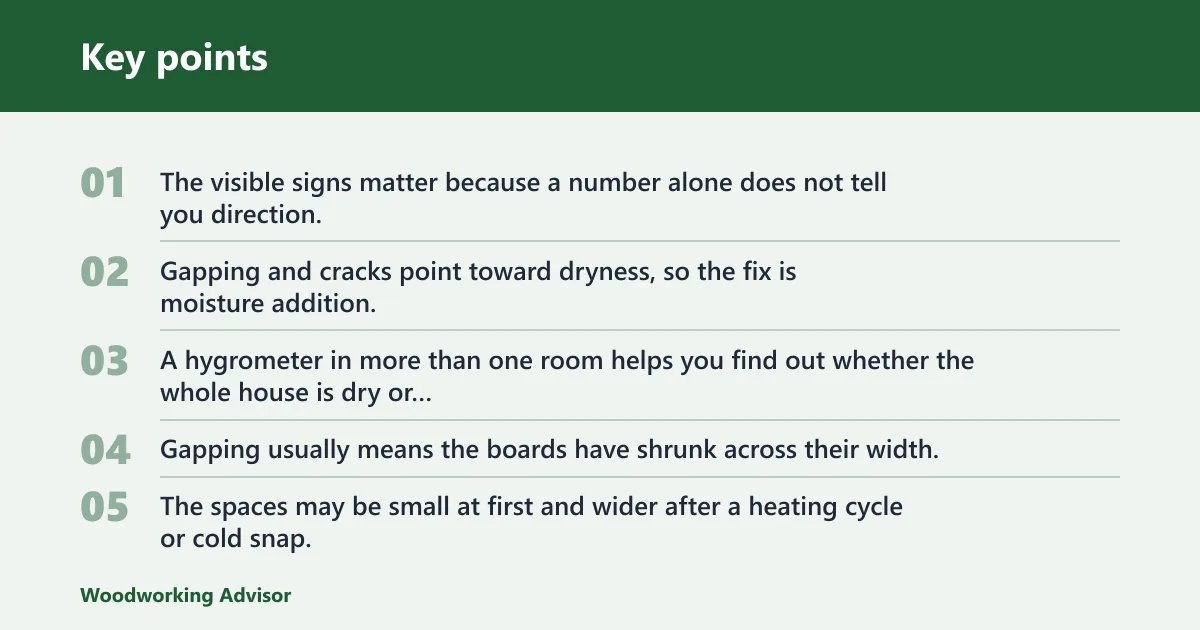
The visible signs matter because a number alone does not tell you direction. Gapping and cracks point toward dryness, so the fix is moisture addition, not more cooling or more air movement. A hygrometer in more than one room helps you find out whether the whole house is dry or just one zone.
Gapping and shrinkage
Gapping usually means the boards have shrunk across their width. The spaces may be small at first and wider after a heating cycle or cold snap. If the gaps appear after furnace use starts, dry indoor air is the first thing to check.
Checking and cracks
Checking shows up as small surface cracks, often worse when temperature drops and RH stays low. It is one reason rapid swings matter, especially in homes that warm up fast during the day and cool quickly at night. Steady conditions reduce that stress.
How to add moisture safely
Run a humidifier and watch the room reading until it moves back toward the target band. Whole-home units are often preferred when the whole house is dry, but a portable unit can help in one living space. Keep it clean so standing water does not become a hygiene problem.
When is humidity too high?
Humidity is too high when the floor starts to swell, cup, or feel tight at the seams. The warning sign is often a reading above 55% RH, especially in summer or in a basement. Moisture enters the wood and the edges rise before the center does.
That symptom pattern matters. Cupping usually points to excess moisture in the room or below the floor, while buckling means the movement is more severe and the floor may be under real stress. Do not wait for a single board to become a bigger problem.
Cupping and swelling
Cupping means the edges rise above the center of the board. It is one of the clearest signs that humidity is too high or that moisture is coming from below the floor assembly. If the problem begins during humid months, a dehumidifier is the first correction step.
Buckling risk
Buckling is the more serious end of the high-moisture range. It can follow swelling when boards cannot expand freely. If the floor is lifting or visibly warped, reduce moisture quickly and check for leaks, failed AC performance, or a damp basement below the room.
How to remove moisture safely
Run a dehumidifier, especially in humid climates or during summer. Check the reading in the dampest room, not only at the thermostat. If one zone is much wetter than the rest, that room may need direct drying before the whole house stabilizes.
Solid vs engineered hardwood: which reacts less?
Engineered hardwood usually tolerates moisture swings better than solid hardwood, but neither type is immune. Solid hardwood often needs tighter control, with interior moisture content commonly around 6%–9%. Engineered wood is often cited around 7%–12%, but it still should match the room’s in-use conditions.
The key issue is not only what the floor is made of, but whether the air and wood moisture stay aligned. A floor that is acclimated to the room usually moves less than one installed before it matched the home. That is why humidity control matters during and after installation.
Moisture content targets
Wood moisture content should track room conditions. If the house is dry, the floor dries; if the house is humid, the floor absorbs moisture. Matching indoor RH with the floor’s condition matters more than chasing a single number without checking the actual symptom.
Acclimation and room conditions
Acclimation helps the floor settle into the home before it is asked to live through seasonal changes. Even then, sudden HVAC shifts can still move the wood. A warm home that suddenly loses heat, or a cool home that suddenly gains humidity, is more likely to show movement.
Where each floor type needs closer monitoring
Solid hardwood deserves closer attention in rooms with bigger seasonal swings. Engineered hardwood still needs monitoring near basements, sunrooms, and upper floors where humidity changes faster. A room-by-room reading is the safest way to tell whether the floor or the house is drifting.
Which humidity control setup should you use?
Use a humidifier when winter heating pushes RH too low and the floor begins to gap or crack. Use a dehumidifier when RH stays high and the floor shows cupping, swelling, or buckling risk. If you do not know which direction the room is moving, start with a hygrometer first.
Say your 1,200-square-foot home has a heated main floor at 28% RH and an upstairs bedroom at 35% RH. The main floor is the problem, so a humidifier in that zone makes sense first. Suppose the basement reads 62% RH in July while the living room sits at 52% RH; the basement needs the dehumidifier.
When to choose a humidifier
Choose a humidifier when the indoor reading stays below 35% RH, especially in winter. A whole-home model is the better choice when several rooms are dry at once. Keep the unit clean, because moisture left sitting in a tank or reservoir can create biofilm and bacteria.
When to choose a dehumidifier
Choose a dehumidifier when RH stays above 55% RH or when summer weather pushes the house into a damp range. It is the right tool when the symptom is cupping, not gapping. If the floor is already lifting, stop treating it like a comfort problem and treat it like a moisture problem.
Room-by-room monitoring plan
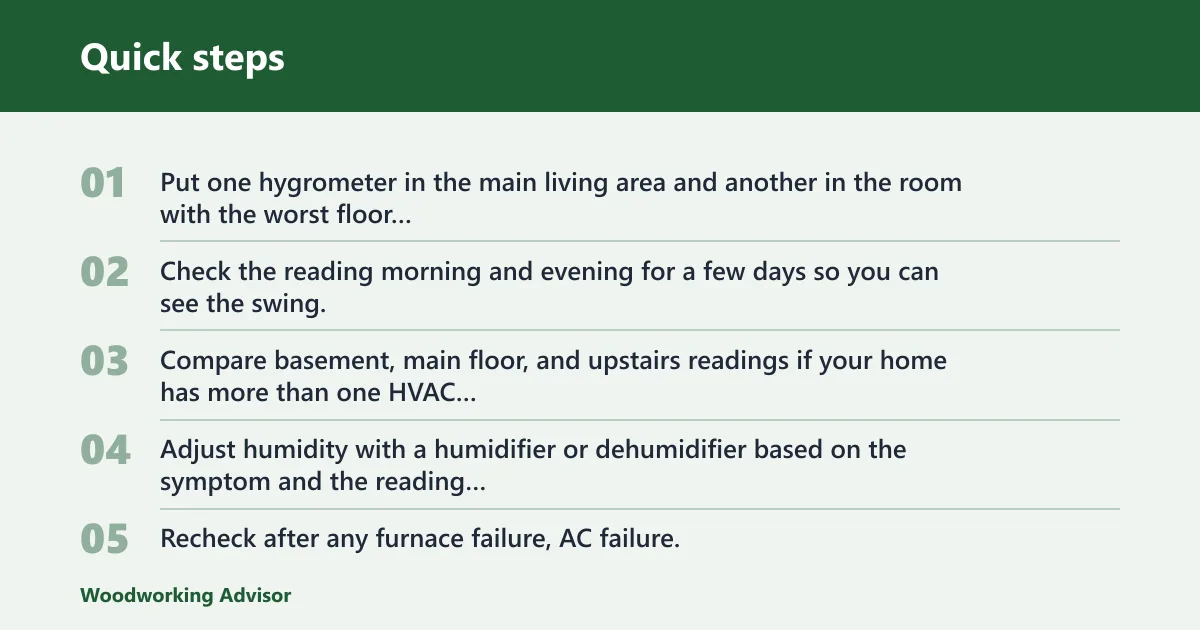
- Put one hygrometer in the main living area and another in the room with the worst floor symptom.
- Check the reading morning and evening for a few days so you can see the swing, not just the average.
- Compare basement, main floor, and upstairs readings if your home has more than one HVAC zone.
- Adjust humidity with a humidifier or dehumidifier based on the symptom and the reading together.
- Recheck after any furnace failure, AC failure, or weather change that shifts indoor conditions fast.
Which one should you buy?
If you need the cheapest first step, buy the TempPro TP50. It gives you a fast read on whether the floor problem is dry air or excess moisture, and that is the decision most homeowners need first.
If you want a second monitor in another zone, choose the AcuRite 00613. Use it when one room reads differently from the rest of the house.
If the issue is dry winter air, start with the Levoit humidifier. If the issue is damp summer air or basement moisture, start with the Frigidaire dehumidifier. If the whole house dries out every winter, the Aprilaire whole-house unit is the strongest long-term option.
A common first-timer mistake is buying a humidifier because the floor is gapping, then discovering the main problem was only one over-dry room near a supply vent. Another is assuming any cupping board means the whole floor is ruined, when the first fix is often to lower RH and watch whether the boards flatten as conditions stabilize.
Frequently asked questions
What humidity should my house be for hardwood floors?
Keep indoor relative humidity between 35% and 55% for hardwood floors, with 40% to 45% often treated as a steadier middle range. Below that, boards can shrink and gap. Above that, they can swell, cup, and in worse cases buckle.
What humidity for hardwood floors
The most common target is 30% to 50% RH, while other guidance uses 35% to 55% RH. For day-to-day homeowner use, the practical aim is to stay in the middle of that overlap and avoid sharp jumps. Symptom checks matter as much as the number.
Does humidity affect wood floors?
Yes. Wood absorbs and releases moisture from the air, so indoor humidity changes its size and shape. Dry air pulls moisture out and can create gaps or cracks. Damp air pushes moisture in and can create cupping, swelling, and buckling risk.
What is the best humidity level for hardwood floors?
A steady indoor RH of 40% to 45% is often presented as ideal for stable hardwood moisture content. Many homeowners will do well anywhere between 35% and 55% if the temperature stays steady and the room does not swing quickly between dry and damp.
Best humidity level for hardwood floors in winter
In winter, the goal is usually to keep RH from falling below 35%, and especially below 30% during heating season. A humidifier is the usual fix when furnace heat dries the air. If gaps are opening, the room is too dry.
Best indoor humidity level for hardwood floors
The best indoor humidity level for hardwood floors is the range that keeps the wood stable in your home, usually 35% to 55% RH. If your reading sits in that band and the floor looks flat, you are likely in the right zone. If not, adjust by symptom.
Sponsored / affiliate links. As an Amazon Associate I earn from qualifying purchases. I may earn additional commission from eligible campaigns.