Unstained Deck Over Winter: What Happens to Bare Wood
An unstained deck can often survive one winter, but repeated wetting, snow cover, and freeze-thaw cycles can contribute to checking, cupping, and fastener issues; soft, split, or spongy boards may indicate repairs are needed. Ignored damage can spread into rot and turn a spring refinish into board replacement. This article separates harmless weathering from winter damage and shows what to inspect once the snow melts.
What winter does to bare deck boards
Unfinished wood deck boards take on snow, ice, and meltwater directly. Without a finish, the wood absorbs moisture through its pores, which is why winter weather can fade boards, raise grain, and move them toward warping or cracking instead of leaving only a surface stain.
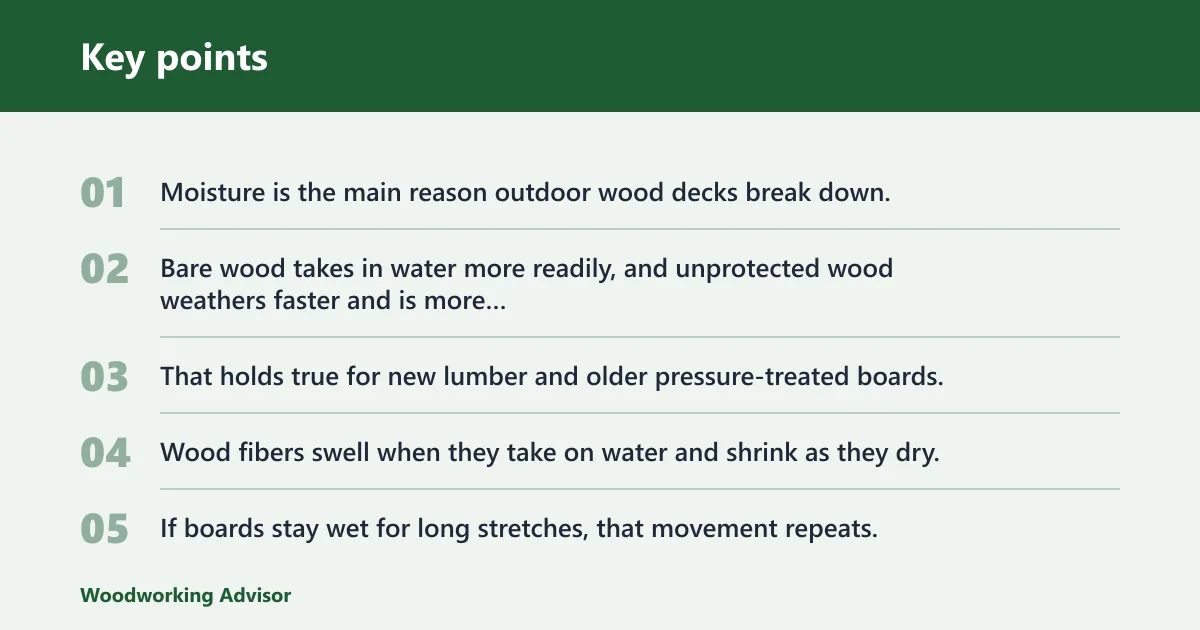
Moisture is the main reason outdoor wood decks break down. Bare wood takes in water more readily, and unprotected wood weathers faster and is more prone to rot and mildew. That holds true for new lumber and older pressure-treated boards.
Why unfinished wood absorbs moisture faster
Wood fibers swell when they take on water and shrink as they dry. If boards stay wet for long stretches, that movement repeats. Over time, repeated wetting and drying opens the surface, loosens fasteners, and gives mold and mildew a better place to settle.
Snow is a winter hazard because it acts like water on the deck surface. Prolonged snow exposure can fade a deck, especially when the finish is worn thin, and without stain or sealer wood can turn a worn gray color over time. Gray alone is not failure.
Cosmetic graying versus structural damage
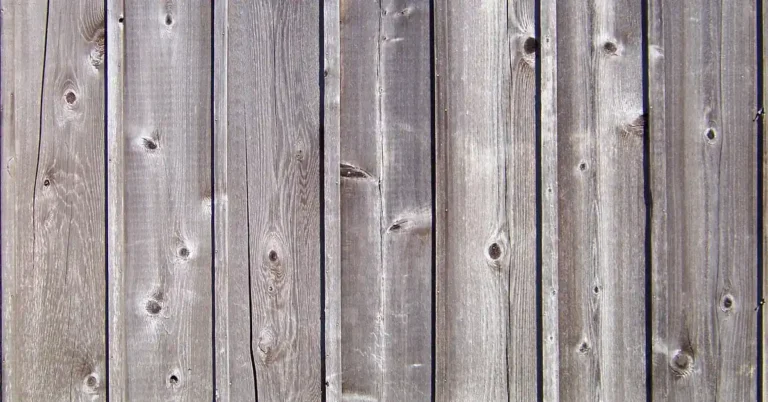
A gray patina on bare wood is usually cosmetic. It means the surface has weathered. Structural damage is different: soft spots, lifting boards, wide checks, splintering, and rusted fasteners point to more than color change.
Hairline cracks can be a normal part of aging, but warping is undesirable. If the board still feels solid, drains normally, and holds fasteners, the gray surface may be tolerable until spring sealing. If it flexes, cups, or feels punky, treat it as damage.
How pressure-treated boards differ from untreated boards
Pressure-treated lumber holds up better than untreated wood, but it still needs maintenance and is not immune to winter weathering. Treatment slows decay; it does not stop moisture uptake, surface checking, or fastener corrosion.
That difference matters on older decks. A pressure-treated deck may tolerate bare exposure longer than untreated pine, yet dirty, poorly drained, or shaded sections still trap moisture and can develop mold, mildew, and rot if winter stays wet.
Can an unstained deck warp or crack in winter?
Yes. Freeze-thaw cycles can expand trapped moisture and stress wood fibers until boards bow, warp, and sometimes crack. Small surface checks may be normal aging, but movement that changes the board shape, lifts edges, or opens wider splits is a warning sign, especially after repeated temperature swings.
How freeze-thaw cycles stress wood fibers
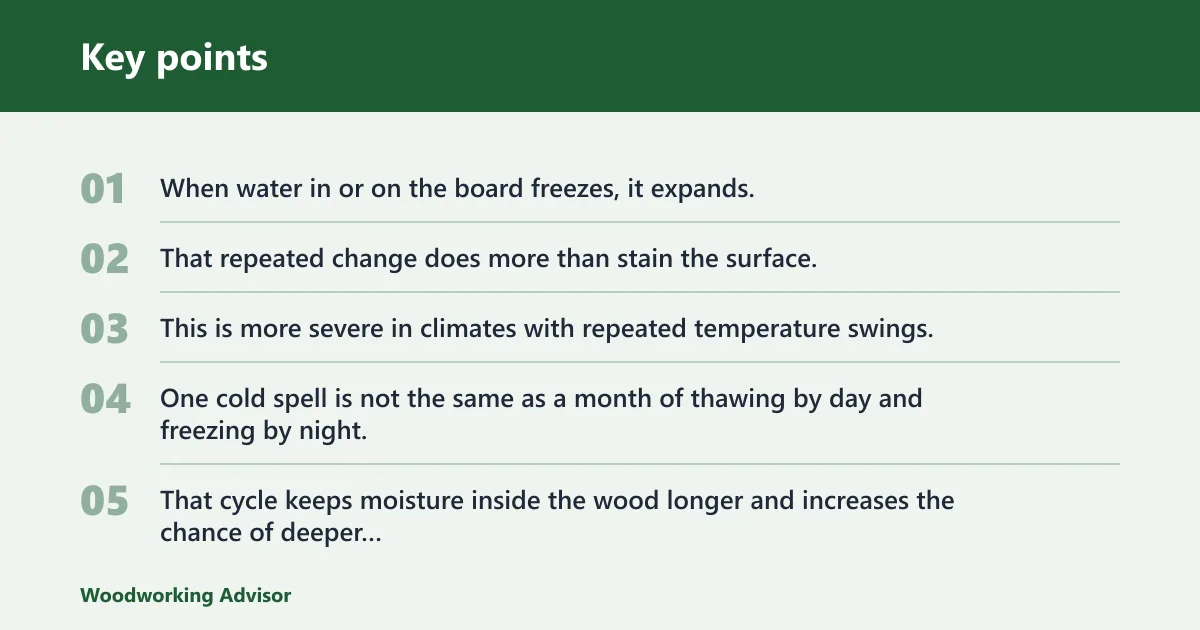
When water in or on the board freezes, it expands. When it thaws, it moves again. That repeated change does more than stain the surface; it can force the board to swell and shrink in place, which is how a flat board starts to cup, bow, or split.
This is more severe in climates with repeated temperature swings. One cold spell is not the same as a month of thawing by day and freezing by night. That cycle keeps moisture inside the wood longer and increases the chance of deeper checking.
When checking is normal and when it is not
Fine checking along the grain can appear on aging boards and may stay shallow for years. It becomes more concerning when checks deepen, connect, or turn into splinters that catch a shoe or reveal soft wood underneath.
Suppose a 12-foot board looks gray and has a few hairline cracks near the edge. That can be normal weathering. If the same board now has a raised middle, split ends, and loose screws, winter moisture has likely moved from surface wear into a repair issue.
Signs that boards are moving or lifting
Look for edges that no longer sit flat, fasteners that have popped up, and seams that opened more than they did in fall. Uneven gaps often mean the board has taken on and released moisture unevenly.
Also check for cupping, where the edges rise higher than the center, and bowing, where the board curves along its length. Those changes can start as cosmetic movement and end as a trip hazard or a board that needs replacement.
Snow, meltwater, and ice on bare wood
Snow, meltwater, and ice matter for different reasons. Light snow mainly adds moisture. Heavy drifts add weight and keep the deck wet longer. Standing meltwater is often more damaging than dry snow because it can soak into the wood. Ice is both a slip hazard and a water-damage problem.
Light snow versus heavy drifts
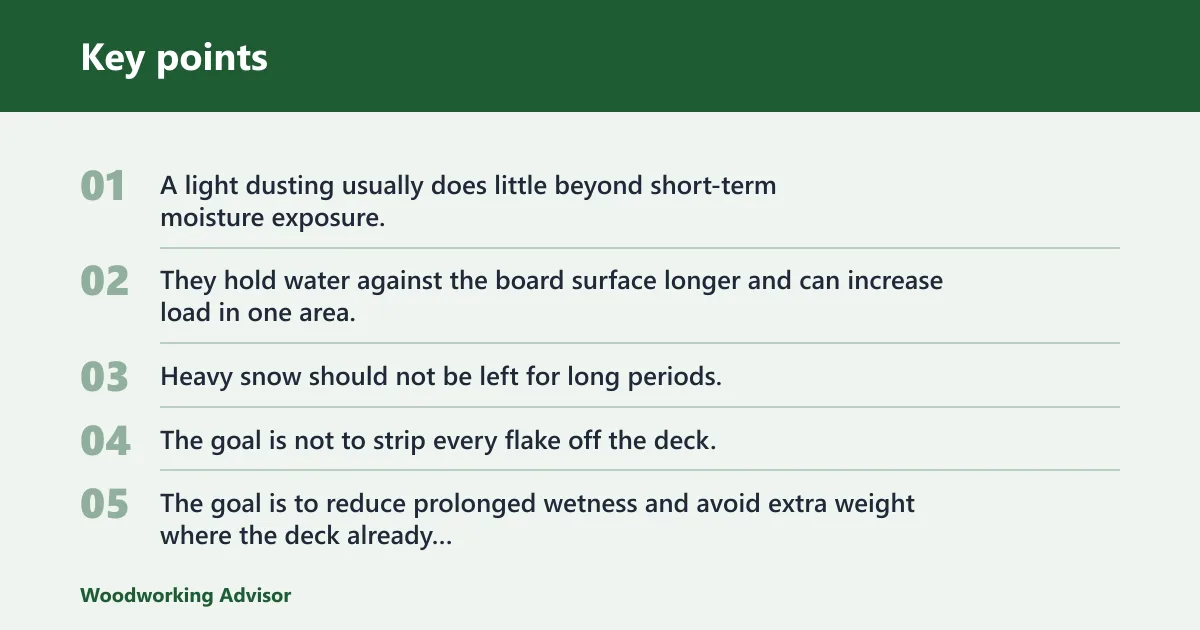
A light dusting usually does little beyond short-term moisture exposure. Piles and drifts are different. They hold water against the board surface longer and can increase load in one area, especially where rail posts, stairs, or furniture legs create uneven stress.
Heavy snow should not be left for long periods. The goal is not to strip every flake off the deck. The goal is to reduce prolonged wetness and avoid extra weight where the deck already sees less drainage.
Why standing meltwater is a bigger problem than dry snow
Dry snow on a cold deck is a temporary cover. Meltwater is liquid water that can seep into pores, end grain, fastener holes, and cracks. That is why melting snow can seep into wood and create warping.
Dirty decks and clogged gaps trap that water longer. If drainage is poor, meltwater lingers after the rest of the surface has dried, which raises the chance of mildew, softening, and freeze-thaw damage during the next cold snap.
How ice buildup affects both safety and the deck surface
Ice buildup is both a water-damage issue and a slip hazard. It can hold moisture against the wood surface, and once it locks into cracks or around fasteners, it keeps those areas wet longer than loose snow would.
Use non-scratching tools if you need to remove it. Avoid scraping that cuts into bare fibers. A sharp edge may clear ice fast, but it can leave gouges that weather faster than the rest of the board.
Bare wood triage table
This table separates winter conditions that are usually tolerable from those that need action. Use it to decide whether you can leave the deck alone for now, clear it carefully, or plan for a close spring inspection.
| Winter condition | Likely effect on bare wood | What to do now | Spring inspection priority |
|---|---|---|---|
| Light snow dusting | Short-term moisture only; usually cosmetic if it melts quickly | Leave it if the deck is not slippery and drainage is open | Low: check for surface graying and loose fasteners |
| Packed snow | Longer wet contact and more weight on the surface | Remove carefully with a broom or soft push tool | Medium: look for cupping, raised edges, and fastener movement |
| Repeated thaw/refreeze | Expands trapped moisture; can bow, warp, and crack boards | Keep gaps clear so meltwater can drain; inspect after each cycle | High: check for checking that has opened, warping, and lifted boards |
| Standing meltwater | Soaks into pores and speeds mildew, rot, and warping | Improve drainage, clear debris, and remove anything blocking runoff | High: inspect for soft spots, dark staining, and board movement |
| Ice buildup | Slip hazard and trapped moisture against the wood surface | Remove with a non-scratching tool; avoid metal scraping | High: check for surface gouges, cracks, and rust around fasteners |
Unstained deck over winter checklist
Use this quick check after snowmelt. If you fail any item, the deck needs closer inspection before stain or sealer goes on.
- Rot: Pass if the wood feels firm; fail if it feels soft, spongy, or crumbly.
- Warping: Pass if boards remain flat; fail if they cup, bow, or lift at the edges.
- Splintering: Pass if the surface is smooth enough to walk on; fail if fibers lift or splits catch your hand.
- Fastener rust: Pass if screws and nails stay sound; fail if heads are rusted, loose, or pulling up.
Should you remove snow from an unstained deck?
Usually yes, but only when removal will do less harm than leaving it. For light snow, a broom is safer than a shovel because it is less likely to scrape the wood. If the snow is thin and the deck drains well, leaving it alone can be better than scraping the surface.
When a broom is the better tool
A broom is preferred over a shovel for small amounts of snow because it is less likely to scrape the wood. Use it for loose accumulation, especially on newer or drier boards where the surface can scratch easily.
Picture a back porch with a half-inch dusting after an overnight flurry. A broom clears it without cutting fibers. A shovel may seem quicker, but one drag can leave long scrape marks that hold dirt and moisture later.
When leaving a light layer alone is safer
If the snow is very light, the deck is not icy, and temperatures are cold enough that the layer is unlikely to melt and refreeze during the day, leaving it alone may be the gentler choice. Less handling means less chance of scarring the wood.
That changes when the layer turns slushy or gets packed by foot traffic. At that point, the moisture stays on the surface longer and the risk shifts from cosmetic snow cover to freeze-thaw damage.
Why shovels can scratch unfinished boards
Metal shovel edges can gouge bare wood, especially on old boards that already have raised grain. Those gouges can hold water, grit, and mildew, which makes the next season harder on the deck.
If a shovel is the only tool available, keep it raised slightly off the surface and avoid prying at ice. The safest approach is still a broom or a non-scratching snow pusher for bare decking.
How long can a deck stay unstained?
There is no single safe time limit. The answer depends on species, drainage, climate, sun exposure, and whether the boards are pressure-treated. Without stain or sealer, wood can turn gray over time, and moisture-driven wear happens faster in wet, shaded, or poorly drained locations.
What the absence of finish changes in winter
A deck finish, stain, or sealant acts as a moisture barrier and helps slow UV damage and weathering. It does not make the deck waterproof, but it reduces how quickly water enters the wood and how fast the surface degrades.
Most home decks need re-staining every 2-4 years. If a deck has gone past that window, winter exposure is more likely to leave it with dull color, rough grain, and deeper water entry.
How climate and drainage change the timeline
Dry, sunny climates are less punishing than areas with repeated snow, rain, and freeze-thaw cycles. Good drainage helps, too. Boards that dry between storms last longer than boards that stay damp under planters, mats, or trapped debris.
Older gray boards may still be serviceable if they are solid and drain well. New unfinished lumber, by contrast, can move quickly if it sits through a wet winter without any barrier on top.
When bare boards need sealing after winter
If the deck comes through winter with only cosmetic graying, sanding and sealing in spring may be enough. If you find wide checks, soft spots, or raised grain that keeps splintering, repair those areas first and then refinish the sound wood.
A common first-timer mistake is waiting until midsummer to fix a deck that sat wet all winter. By then, a small surface problem may have become a loose board, a rusted screw, or a repair that takes longer than a simple refinish.
How to spot real damage in spring
Start where water sits longest: between boards, around fasteners, near stairs, and at the ends of boards. Spring inspection should separate cosmetic wear from damage that needs repair, replacement, or sealing before the next wet season.
Pass-fail checklist for rot, warping, splintering, and rusted fasteners
- Probe soft-looking spots with a screwdriver tip. Firm wood passes. Soft, crumbly wood fails.
- Look across each board from one end. A flat board passes. Cupping, bowing, or twist fails.
- Run a hand lightly over the surface. Smooth grain passes. Raised fibers and splinters fail.
- Check screw and nail heads. Tight and intact fasteners pass. Rust, lifting, or movement fail.
- Inspect seams and end grain. Small checks pass if they stay shallow. Open splits or loose ends fail.
Where to look first after snowmelt
Check the shaded side first, then any area under planters, mats, or snow piles. Those spots stay damp longer and are more likely to show mildew, dark staining, or early decay.
Also inspect railing posts, stair treads, and board ends. These locations collect water and often show the first signs of fastener rust or hidden movement.
When to repair, replace, or refinish
Refinish sound boards that are weathered but still firm. Repair isolated loose fasteners and small surface issues. Replace boards that are soft, split through, or warped enough to create a trip hazard.
If more than one of those problems shows up in the same area, the issue is no longer just winter weathering. That is a sign to evaluate drainage, ventilation, and the deck’s overall condition before the next cold season.
Frequently asked questions
What happens to an unstained deck over winter?
An unstained deck usually weathers, fades, and dries with a gray patina, but winter can also push moisture into the wood and start warping or checking. The surface may look only aged at first, yet repeated wetting, snow cover, and freeze-thaw cycles can create deeper damage if drainage is poor.
Can bare wood deck boards warp or crack in winter?
Yes. Freeze-thaw cycles can expand trapped moisture and stress wood fibers until boards bow, warp, and sometimes crack. Hairline checks can be normal aging, but boards that lift, cup, or split more deeply are moving from cosmetic wear into structural concern.
Will snow damage an unfinished wood deck?
Snow itself is mainly a moisture source, not an instant destroyer. Light snow is often tolerable, but packed piles and long exposure keep the boards wet longer and add weight. The bigger risk comes when snow melts into the wood and then freezes again.
Does freezing and thawing hurt bare deck wood?
Yes. Freeze-thaw cycles are one of the main winter stresses on bare wood because they expand and contract trapped moisture. That movement can bow boards, open checks, and loosen fasteners. Repeated swings are harder on the deck than one cold spell.
How long can a deck go without stain or sealer?
It depends on the wood species, drainage, climate, sun exposure, and whether the boards are pressure-treated. Most home decks need re-staining every 2-4 years, but a bare deck can still gray and weather sooner if it stays wet or shaded for long stretches.
Is it safe to use salt or de-icer on bare wood decking?
Salt de-icers are often discouraged on wood decks because they can be harsh on wood fibers and finishes. They may solve the ice problem, but they can create a separate surface problem. Use non-scratching removal methods first, and treat de-icers as a last resort, not a default fix.
Does unfinished wood turn gray if left outside all winter?
Yes. Without stain or sealer, wood can turn a worn gray color over time, and winter exposure speeds that weathering. Gray alone does not mean the board has failed. Treat it as cosmetic unless you also find softness, warping, splintering, or rusted fasteners.
Sponsored / affiliate links. As an Amazon Associate I earn from qualifying purchases. I may earn additional commission from eligible campaigns.