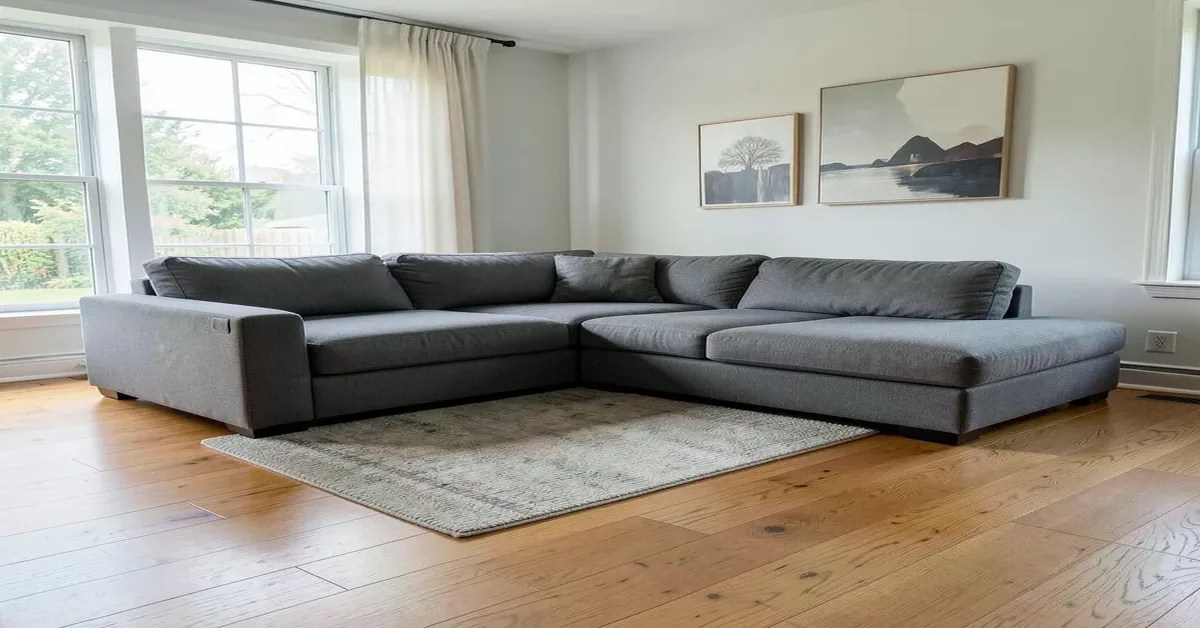
How to Keep a Sectional From Sliding on Hardwood Floors (9 Fixes That Work)
Isn’t it frustrating when your sectional slides every time you sit down? Hardwood floors are beautiful, but they can make furniture stability a real challenge.
Here’s the part most articles skip: the fix isn’t about how heavy your sectional is — it’s about how much rubber-to-floor contact area its feet actually have. A heavy sectional on hard plastic glides slides just as easily as a light one, which is why swapping the feet themselves usually beats anything you place under them.
Imagine trying to relax or entertain guests, only to find your couch slipping away under you. It’s not just annoying; it can also be a safety hazard. But what if there’s a way to keep your sectional exactly where you want it, without damaging your pristine floor?
You’re about to discover simple, effective methods that will transform your living space into a cozy, slip-free zone. Say goodbye to constant readjustments and hello to a stable, stylish home. Ready to secure your sectional once and for all? Let’s dive in!
Non-slip Pads
Best Grip Pads for Hardwood
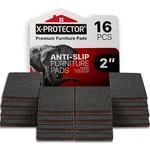 |
X-PROTECTOR Non-Slip Furniture Pads (16-Pack) – $9.99 These self-adhesive rubber grippers are the fastest fix from the Non-slip Pads section above — no tools, no drilling.
|
A rubber non-slip pad works by compressing slightly against the wood grain’s microscopic texture, which raises the friction coefficient between leg and floor far above what bare wood-on-wood or plastic-on-wood contact gives you — that’s the actual mechanism, not the adhesive backing, which mostly just keeps the pad from wandering out from under the leg. Most come in sheets you cut to size rather than pre-cut circles, which matters for oddly-shaped sectional feet like angled glides or wide bases; trace the actual leg bottom onto the sheet before cutting rather than guessing at a round shape.
The felt-and-rubber hybrid pads (felt on one side for hardwood, rubber on the other for tile or vinyl) are worth the slightly higher price over pure rubber if you’re not sure the sectional will stay on the same floor type forever — pure rubber can occasionally leave a faint discoloration on light-colored hardwood finishes over many months of contact, where a felt-hardwood pairing doesn’t.
Furniture Grippers
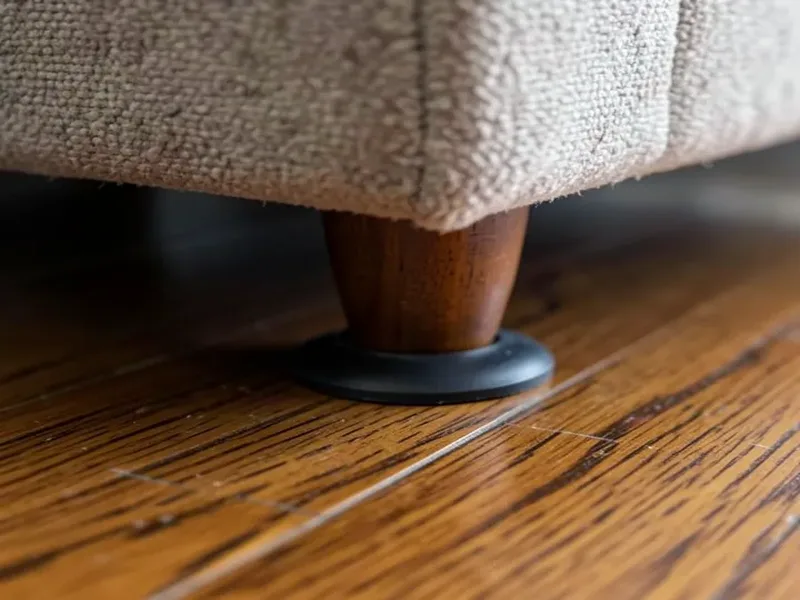
Grippers differ from generic non-slip pads mainly in shape and dedicated fit — they’re usually pre-molded to cup around a specific leg profile (round, square, or tapered) rather than a flat sheet you cut down, which gives more consistent contact on legs that aren’t perfectly flat-bottomed.
The step people skip is cleaning the leg bottom with rubbing alcohol before applying the gripper — furniture legs pick up floor wax, dust, and skin oils over time, and any of those on the surface will keep the adhesive from bonding fully, so the gripper peels off within days instead of lasting. Press each one firmly for a full 30 seconds after applying, since the adhesive needs sustained pressure to fully contact the surface, and give it a few hours before putting the sectional’s full weight back on it if you want the strongest hold on hardwood floors.
Rug Placement
A rug alone rarely stops sliding on its own — it’s the rug pad underneath that does the actual gripping, since most rug backings are nearly as slick against hardwood as the sectional’s own feet. Natural rubber rug pads grip better and last longer than PVC ones, and they’re worth the extra cost: PVC pads can off-gas plasticizers over time that leave a sticky or discolored residue on a hardwood finish, something a natural rubber pad doesn’t do.
Size the rug so all the sectional’s legs sit at least a few inches in from the rug’s edge, not right at the border — legs positioned too close to the edge can walk off the rug entirely during normal use, putting you right back to bare wood contact under one or two feet while the rest of the sectional stays anchored.
Adhesive Strips
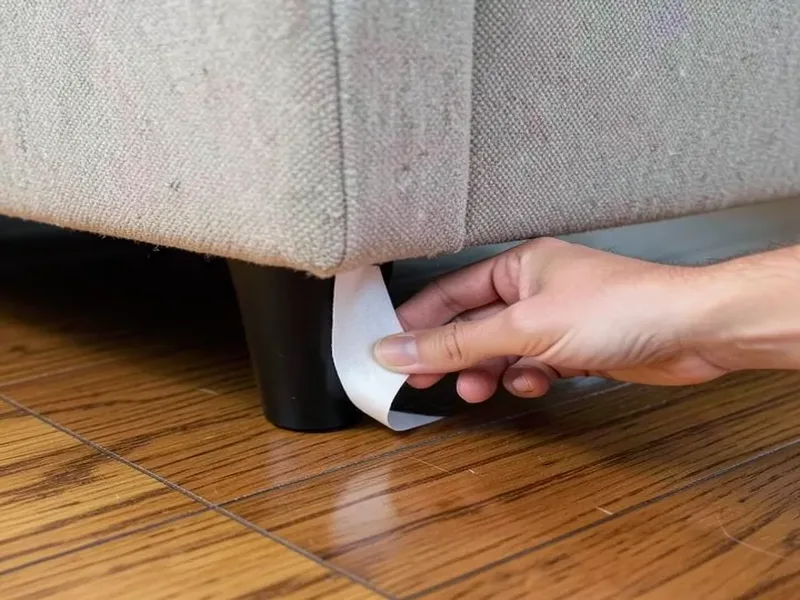
Double-sided adhesive strips are the most permanent-feeling option on this list, and that’s both their strength and their risk — unlike a pad that just sits under the leg, a strip actually bonds to the floor’s finish. Test any strip on a hidden corner of the floor first and leave it a full day before committing to the visible spots, since some adhesives that are perfectly safe on tile or vinyl can pull the finish (not just the wax layer, the actual sealed coating) off certain hardwood floors when removed.
Foam-core mounting strips grip better than thin plastic-backed ones because the foam compresses slightly and conforms to minor irregularities in both the leg bottom and the floor surface, where a thin strip only contacts at a few high points. Expect 3-6 months of reliable hold before dust and normal foot traffic degrade the adhesive enough to need replacing — check the corners of each strip occasionally rather than waiting for the sectional to start sliding again.
Floor Wax
This is worth correcting directly: standard buffed paste wax actually makes hardwood more slippery, not less — that glossy, low-friction surface is exactly what a buffed wax finish is designed to produce, which is the opposite of what you want under sectional feet. If you want to stay in the wax family, look specifically for a floor wax formulated with a matting or anti-slip additive, which some commercial floor-care lines make for exactly this situation; a generic high-gloss floor wax will work against you here. For most homes, the pads, grippers, or rug pad approaches above solve the sliding problem more reliably and without the risk of over-buffing your finish into an even bigger slip hazard.
Adjustable Feet
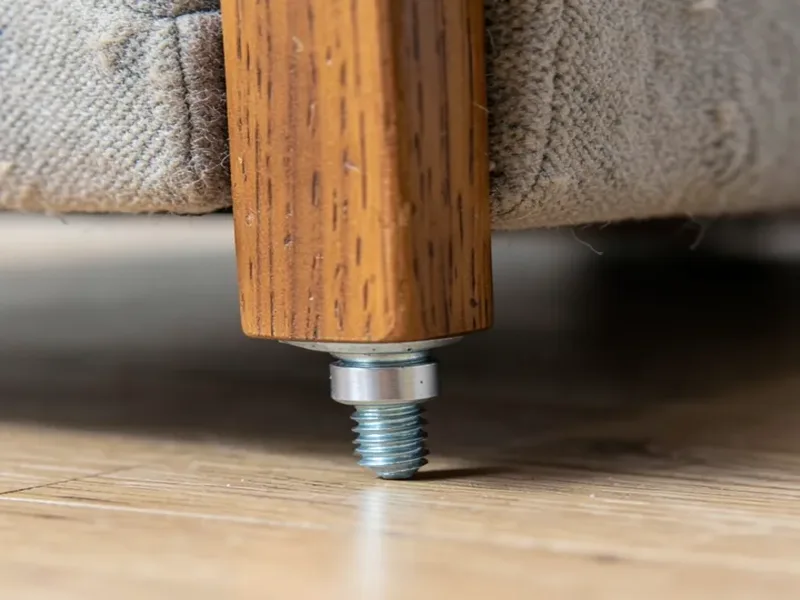
Sliding is sometimes a symptom of an unlevel sectional rather than a slippery floor on its own — if one leg sits even slightly higher than the others, the sectional rocks fractionally with every sit-down, and that rocking motion is what walks it across the floor over weeks, not a single dramatic slide. Screw-in adjustable glides let you dial each leg to the exact same height, which stops the rocking at its source. Pair a felt-tipped glide with the height adjustment rather than a hard plastic or metal one; felt adds meaningful friction on its own, on top of fixing the level issue, and it’s available as a drop-in replacement at most furniture stores and hardware stores.
Sectional Arrangement
How you arrange a sectional changes how much it actually needs to slide in the first place. Pushing the back and one end against a wall or corner removes two of the four directions it could travel, so any grip solution you add only has to hold against the remaining direction of movement — usually just forward, from people pushing back into the cushions as they sit.
An L-shaped or U-shaped sectional benefits from a rug sized to its full footprint rather than separate small pads under each section, since a single rug ties the pieces together and keeps them from drifting apart from each other over time, not just away from their original spot on the floor.
Regular Maintenance
A layer of dust and pet hair under sectional legs acts almost like ball bearings, letting the feet slide across the floor with far less resistance than clean wood-on-wood contact — so a quick sweep or vacuum under the legs every couple of weeks does more for slip prevention than most people expect from something that simple. Check any grip solution you’ve added on the same schedule, since pads and grippers wear out or lose adhesion gradually rather than failing all at once, and a half-worn pad can feel fine until the exact moment weight shifts wrong. Trimmed pet nails matter here too, less for the sliding itself and more because long nails scratch the finish in the same spots the sectional keeps sliding into, compounding both problems together.
Professional Solutions
Most sliding sectionals are solved by one of the DIY fixes above, but a couple of situations call for bringing in a flooring professional instead: if the sectional only slides in one specific spot on an otherwise stable floor, that’s often a sign of an uneven subfloor rather than anything about the furniture itself, and no amount of pads or grippers fixes a floor that isn’t level underneath. Combining two approaches — felt glides plus a rug pad, for instance — also solves stubborn cases that resist any single method on its own, since each addresses a slightly different part of the friction problem.
Frequently Asked Questions
How Do I Stop My Couch From Sliding On Hardwood Floors?
Place rubber pads under the couch legs to increase grip. Use furniture grippers for added stability on hardwood floors. Consider a rug to reduce sliding. Secure the couch by attaching non-slip strips to the bottom. Regularly check and adjust the solutions for effectiveness.
How To Prevent Sectional Pieces From Sliding?
Use non-slip pads or rubber grips under sectional feet. Connect sections with furniture clips or brackets. Arrange on a non-slippery rug.
Is It Okay To Put A Rubber Mat On A Wood Floor?
Yes, you can use a rubber mat on a wood floor. Ensure it has a non-abrasive backing to prevent scratches. Regularly check for moisture build-up to avoid damage. Rubber mats provide protection and cushioning, enhancing floor longevity. Always choose high-quality mats designed for hardwood surfaces.
What Can I Put On The Feet Of My Couch To Keep It From Sliding?
Use rubber pads or furniture grippers on couch feet to prevent sliding. These solutions offer grip and protect floors.
Conclusion
The fix that actually works comes down to maximizing rubber-to-floor contact area under each leg, whether that’s a pad, a gripper, a rug pad, or a felt glide — not the weight of the sectional or how hard you push it into place. Start with the cheapest option (adhesive pads) and combine methods if a single fix doesn’t fully solve it; between the options above, most sliding sectionals on hardwood are a permanent fix away, not a recurring chore.
Sponsored / affiliate links. As an Amazon Associate I earn from qualifying purchases. I may earn additional commission from eligible campaigns.