Walnut vs Black Walnut Wood: 6 Kinds Sold as Walnut
In the United States, walnut lumber almost always means black walnut (Juglans nigra), also sold as American walnut. But the same word is stamped on English, Claro, Peruvian and African boards, and “Brazilian walnut” is really ipe. This guide decodes six walnut labels with Janka hardness, weight, shrinkage and dust-safety data so you buy the wood you actually want.
Walnut vs Black Walnut: What the Label Actually Means
Best Black Walnut Sample Pick
|
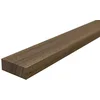
Black Walnut Lumber Boards, 3/4 x 4 x 24 in, Pack of 2, $34.89 Labels and photos can only tell you so much, as the comparison table below shows. Two kiln-dried black walnut boards let you hold real stock next to whatever the yard calls walnut and compare color, weight and grain yourself before you buy in bulk.
As an Amazon Associate we earn from qualifying purchases. |
Black walnut is a species. Walnut is a trade name. At a US lumberyard, a board marked walnut will almost always be black walnut, a native of the eastern United States that the Wood Database lists under both “black walnut” and “American walnut.” The trouble starts when you shop online, buy from a specialty dealer or read a flooring ad, because the word covers wood from several unrelated trees.
Here is what the label can mean:
- Black walnut (Juglans nigra): the standard American furniture walnut.
- English walnut (Juglans regia): the tree behind the grocery-store walnut, also grown for lumber and veneer.
- Claro walnut (Juglans hindsii): a California and Oregon species that is also sold as California black walnut.
- Peruvian walnut (Juglans species): a tropical walnut from Mexico, Central and South America.
- African walnut (Lovoa trichilioides): not a walnut at all but a relative of mahogany.
- Brazilian walnut: a flooring-trade nickname for ipe, also not a walnut.
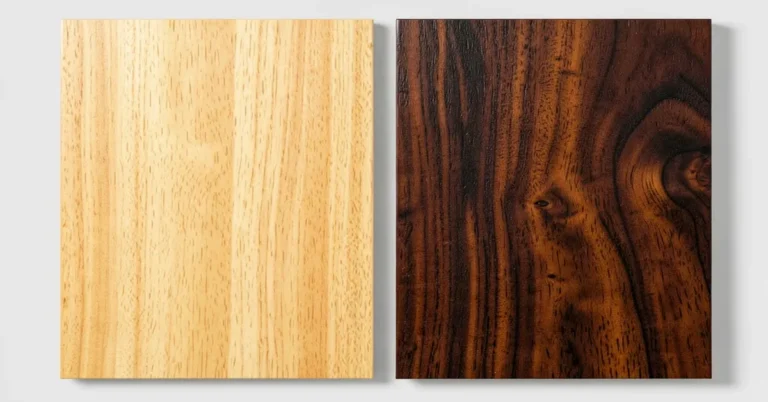
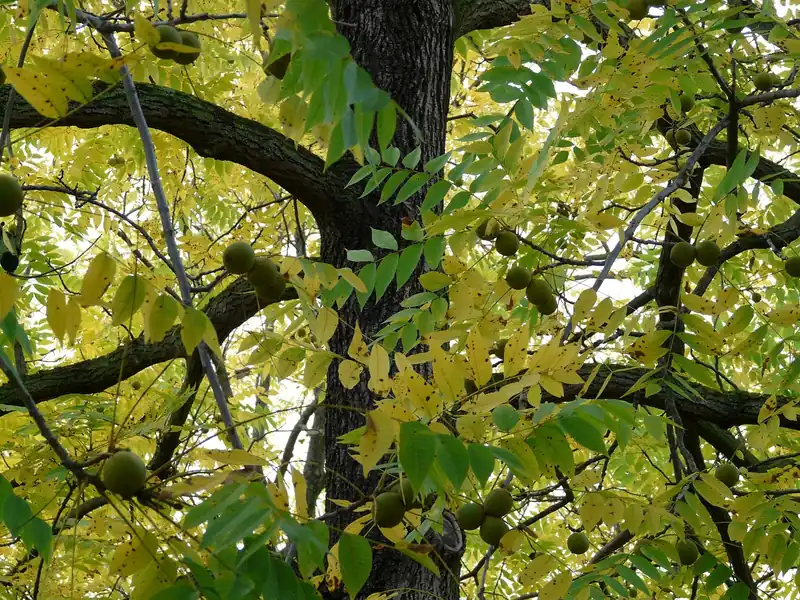
One myth is worth correcting early. Black walnut is not black. Its heartwood ranges from pale brown to dark chocolate brown, sometimes with a gray, purple or reddish cast, and the sapwood is pale yellow-gray to nearly white. If you are matching a color rather than a species, see our guide to what color walnut wood really is.
This page is about the buying decision. If you are trying to identify a living tree by its leaves and bark, our black walnut tree vs. walnut tree comparison covers field identification.
Six Walnuts Compared: Janka, Weight and Shrinkage
The numbers below come from the Wood Database entries for each species. Janka hardness measures the force in pounds-force (lbf) needed to embed a steel ball into the wood, and tangential shrinkage is how much a flat-sawn board narrows between green and oven-dry.
| Sold as | Species | Janka (lbf) | Dried weight (lbs/ft3) | Tangential shrinkage | Heartwood look |
|---|---|---|---|---|---|
| Black / American walnut | Juglans nigra | 1,010 | 38 | 7.8% | Pale to dark chocolate brown |
| English walnut | Juglans regia | 1,220 | 40 | 7.5% | Similar browns, gray or purple cast |
| Claro walnut | Juglans hindsii | 1,130 | 40 | 6.4% | Browns, sometimes marbled near graft lines |
| Peruvian walnut | Juglans spp. | 960 | 37 | 7.5% | Darker, often purplish, with light streaks |
| African walnut | Lovoa trichilioides | 940 | 34 | 5.9% | Golden yellow to reddish brown |
| Brazilian walnut | Handroanthus (ipe) | 3,490 | 65.5 | 7.1% | Reddish to olive or blackish brown |
Source: Wood Database species profiles for black, English, Claro, Peruvian, African walnut and ipe.
What the Numbers Change in Your Shop
Run the percentages against black walnut at 1,010 lbf and the six labels split into three groups. English walnut is about 21 percent harder and Claro about 12 percent harder, so they behave like black walnut with slightly more resistance to dents. Peruvian (about 5 percent softer) and African walnut (about 7 percent softer) are close enough that most hand and machine settings carry over. Ipe is in another category: at 3,490 lbf it is roughly 3.5 times harder than black walnut and about 1.7 times heavier per cubic foot.
That gap has real consequences. The Wood Database describes ipe as a difficult wood that dulls cutting edges and is hard to glue properly, which is why it is mostly used in single-piece applications such as decking planks. A cabinet-door glue-up that works in black walnut will not behave the same way in a board sold as Brazilian walnut.
Shrinkage matters for tabletops and panels. A 10 inch wide flat-sawn black walnut board loses about 0.78 inch of width from green to oven-dry at 7.8 percent tangential shrinkage, while Claro at 6.4 percent loses about 0.64 inch. Real seasonal movement in a heated house is a small fraction of those totals, but the species ranking is the same, so leave expansion room in solid-wood tops. Our walnut vs oak comparison shows how walnut stacks up against the other common furniture hardwood.
How to Tell Walnut Types Apart Before You Buy
A photo of a finished board will not settle it. These checks work at the yard or on delivery day:
- Ask for the botanical name. A seller who says Juglans nigra is selling black walnut. A plain “walnut” at a US yard is almost certainly black walnut, but online listings are less predictable.
- Smell a fresh cut. The Wood Database notes that black walnut has a faint, mild odor when worked, shared by most Juglans species except butternut. African walnut has a cedar-like scent instead.
- Check the grain pattern. African walnut often has interlocked grain and ribbon-stripe figure on quartersawn faces, similar to sapele. Claro cut near a graft can show colorful marbling.
- Look for streaks and waste. Peruvian walnut can carry extensive light-colored streaks that increase waste, so order extra.
- Pick the board up. Ipe is far heavier than any true walnut: 65.5 lbs/ft3 against 38 for black walnut means a board of the same size weighs about 1.7 times as much.
Why the odor test works: per the Wood Database, the mild odor of Juglans species can be used to separate true walnut from unrelated walnut lookalikes. Source: Wood Database, Black Walnut
Which Walnut Should You Buy?
Match the label to the job:
- Furniture, cabinets and tabletops in the US: black walnut. It is widely available and the Wood Database praises its good working characteristics, rich color and good dimensional stability.
- Figured gunstocks and turning blanks: Claro walnut, which the Wood Database says is highly sought after for these uses in curly or marbled grades. Plain Claro is usually only slightly more expensive than black walnut. See our Claro walnut vs black walnut guide for a full comparison.
- Veneer work: English walnut, which the Wood Database says is sometimes only seen in veneer form. Our page on burled walnut wood explains the figured grades.
- Imported look at a mid-range price: Peruvian walnut, which is darker and more purplish, though it can come with extensive streaks and waste.
- Flooring labeled walnut: check the species. African walnut is seldom seen as lumber in the US except as flooring planks, and Brazilian walnut flooring is ipe, which is much harder to cut and fasten.
- A walnut color on pine or plywood: that is a finish, not a species. See dark walnut vs espresso stain if you are choosing between stain colors.
If you are buying in volume, our guide on how to buy wood in bulk covers grades and measuring. Black walnut is rarely stained because the natural color is the point, so a clear oil or varnish is the usual finish.
Walnut Dust, Shavings and Safety
Every true walnut and several lookalikes deserve basic dust protection. The Wood Database reports black walnut, English walnut and other Juglans species as sensitizers. Reactions are usually eye and skin irritation and severe cases are uncommon, but repeated exposure is the reason to wear a respirator and use dust collection when sanding. African walnut has been reported to cause skin, eye and respiratory irritation.
Black walnut also produces juglone, the compound that can stunt nearby plants, so keep fresh black walnut sawdust and chips out of vegetable beds and garden mulch. Our guide to whether walnut trees are poisonous covers juglone in detail, and the burning question has its own page: is burning black walnut wood toxic. Never use black walnut shavings as horse bedding; veterinary sources warn that they can poison horses.
If You Meant the Nuts, Not the Wood
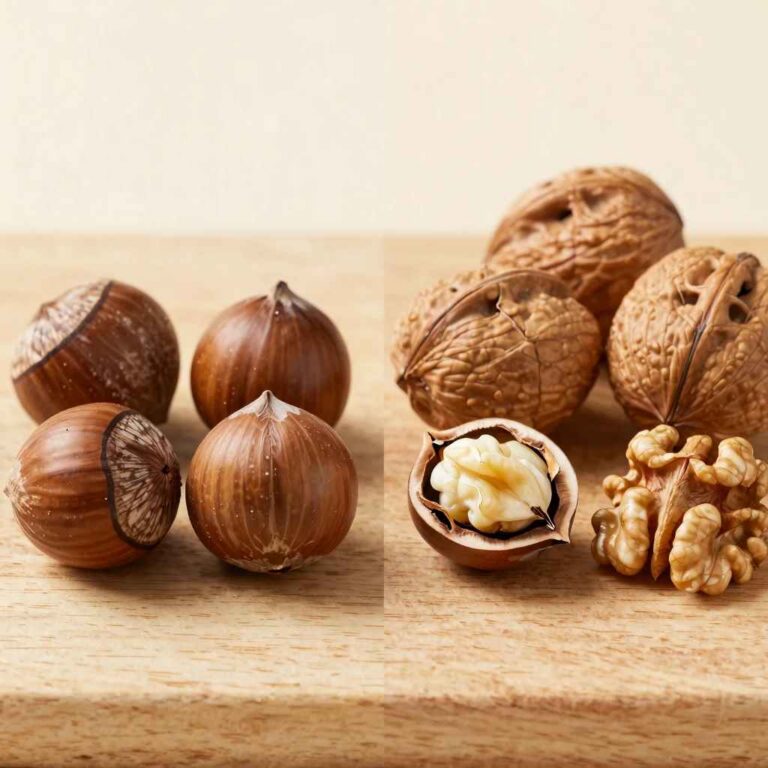
Many searches for walnut vs black walnut are about food. The walnuts sold in grocery stores come from English walnut (Juglans regia), per the Wood Database. Black walnut nuts are a separate product from the grocery-store walnut. Our page on whether black walnuts are edible covers the nut side of the tree.
Frequently Asked Questions About Walnut and Black Walnut
Is walnut the same as black walnut?
In the United States, usually yes. Plain walnut lumber is almost always black walnut (Juglans nigra), which the Wood Database also lists as American walnut. But the word is also used for English walnut, Claro walnut, Peruvian walnut and African walnut, so ask the seller for the species name or botanical name if it matters.
Is American walnut the same as black walnut?
Yes. American walnut is a trade name for black walnut (Juglans nigra), the eastern North American species. Claro walnut (Juglans hindsii) from California and Oregon is also sold as California black walnut, so check the botanical name if you need the eastern species specifically.
Is Brazilian walnut real walnut?
No. Brazilian walnut is a halo name that flooring dealers use for ipe (Handroanthus), which is not related to true walnut in the Juglans genus. Ipe has a Janka hardness of about 3,490 lbf compared with about 1,010 lbf for black walnut, so it saws, sands and glues very differently.
Is African walnut real walnut?
No. African walnut (Lovoa trichilioides) is more closely related to mahogany than to walnut. It is golden yellow to reddish brown with a cedar-like scent, a Janka hardness of about 940 lbf, and interlocked grain that can tear out when planed.
Is black walnut more expensive than regular walnut?
It depends on what regular means. Per the Wood Database, black walnut is priced high for a domestic hardwood, plain Claro walnut runs slightly higher, English walnut is rather expensive and often sold only as veneer, and Peruvian walnut costs more than domestic walnut but is mid-range for an import.
Is black walnut actually black?
No. Black walnut heartwood runs from pale brown to dark chocolate brown, sometimes with gray, purple or reddish tones, and its sapwood is pale yellow-gray to nearly white. The name refers to the tree and its dark brown heartwood, not to a black board.
Is walnut dust harmful?
It can be. Black walnut, English walnut and other Juglans species are reported as sensitizers, most often causing eye and skin irritation, and severe reactions are uncommon. Wear a dust mask or respirator when sanding or machining walnut and use dust collection, as the Wood Database recommends for all wood dust.
Bottom Line
Treat walnut as a trade name and black walnut as the species. In the US the two are normally the same board, but online listings and flooring ads can mean English, Claro, Peruvian or African walnut, or even ipe. Ask for the botanical name, check the Janka and weight against the table above, and wear a dust mask when you cut it.
Sponsored / affiliate links. As an Amazon Associate I earn from qualifying purchases. I may earn additional commission from eligible campaigns.