6 Cedar Types for Outdoor Furniture: Hardness & Price (2026)
The best cedar for most outdoor furniture is Western Red Cedar — it resists rot and insects on its own, runs about $3–9 per linear foot at most lumberyards, and is soft enough to hand-shape into curved chair backs. If your furniture takes real daily abuse, Alaskan Yellow Cedar’s 580 lbf Janka hardness — 66% harder than Western Red’s 350 lbf — resists dents and scratches far better. Below is a real, primary-sourced comparison of all six cedars sold for outdoor furniture, including one that isn’t a true cedar at all.
Cedar earns its spot on the short list of woods actually worth using for outdoor furniture because it’s naturally rot- and insect-resistant without any chemical treatment — the same reason cedar holds up outdoors at all, decking, siding, and furniture alike. But “cedar” on a lumberyard tag can mean six genuinely different woods with a 66% swing in hardness and a 10x swing in price, and that’s the gap this comparison closes.
Cedar Species Compared: Hardness, Weight, Resistance & Price
Every number below is pulled from The Wood Database (primary source for Janka hardness, weight, and decay-resistance ratings) and live lumberyard/mill pricing gathered this session. Board-foot prices marked “computed” are derived from a real per-linear-foot quote using board feet = (thickness in. × width in.) ÷ 12 for a 1×6 nominal board — shown so you can check the math yourself.
| Cedar Species | Janka Hardness | Avg. Dry Weight | Decay / Insect Resistance | Price (per board foot) | Best For |
|---|---|---|---|---|---|
| Western Red Cedar Thuja plicata | 350 lbf | 23.0 lbs/ft³ | Durable–very durable; mixed insect resistance | ≈$5.98 (computed, 1×6 rough at $2.99/LF, Chisholm Lumber, live 2026) | #1 Best Overall |
| Alaskan Yellow Cedar Callitropsis nootkatensis | 580 lbf | 31 lbs/ft³ | Durable–very durable; resists most insects | ≈$4.30 (computed, 1×6 appearance-grade KD at $2.15/LF, Mill Outlet Lumber price list eff. 3/6/2026) | Best for Heavy-Use Furniture |
| Port Orford Cedar Chamaecyparis lawsoniana | 590 lbf | 29 lbs/ft³ | Durable–very durable; resists most insects | Not live-quoted (phone/email quote only at every mill checked); secondary-sourced ≈$6/bd ft typical, $10–15/bd ft old-growth clear | Best for Fine Furniture-Grade Finish |
| Incense Cedar Calocedrus decurrens | 470 lbf | 24 lbs/ft³ | Durable–very durable | ≈$0.94–$1.10 (computed, 5/4×6 #3 grade at $0.59–0.69/LF, Surplus Lumber, live 2026) | Best Value |
| Eastern White Cedar (Northern White Cedar) Thuja occidentalis | 320 lbf | 22.0 lbs/ft³ | Durable–very durable; specifically resists termites & powderpost beetles | $4.50 knotty rough 1×6; $8.50–10 clear (Goosebay Sawmill, live 2026) | Best for Humid / Coastal Climates |
| Eastern Red Cedar — not a true cedar Juniperus virginiana | 900 lbf | 33 lbs/ft³ | Excellent decay and insect resistance | $3–6/bd ft; clear 4/4 ≈$7.50/bd ft (The Wood Yard, GA, live July 2026 price list) | Best Aromatic Cedar for Accent Pieces |
The one-sentence version: Alaskan Yellow Cedar is nearly twice as dent-resistant as Western Red Cedar (580 vs. 350 lbf Janka) but costs more and ships mostly from the Pacific Northwest, Incense Cedar is the real budget pick at roughly 20% less than Western Red per a lumber-industry price comparison, and the “cedar” most people picture lining a closet — Eastern Red Cedar — is botanically a juniper, not a true cedar at all.
Real Cost to Build a Basic Cedar Bench
A simple 4-foot outdoor bench (two 1×6 seat boards, four 2×4 legs and braces, three 1×4 back slats) runs roughly 15 board feet of lumber — a standard estimate for that size of build. Multiplying that by each species’ live board-foot price above, then adding a box of stainless steel screws (≈$10) and a cedar-tinted sealer (≈$20), gives a real budget-to-premium spread for the exact same bench:
| Species | Lumber (15 bd ft × price) | + Fasteners & Sealer | Total Project Cost |
|---|---|---|---|
| Incense Cedar (budget route) | 15 × $1.10 = $16.50 | +$30 | ≈$46.50 |
| Western Red Cedar | 15 × $5.98 = $89.70 | +$30 | ≈$119.70 |
| Alaskan Yellow Cedar (heavy-use route) | 15 × $4.30 = $64.50 | +$30 | ≈$94.50 |
That’s roughly a 2.6x spread between the cheapest and most expensive of the three most buildable options here — for the identical bench design. Fasteners and sealer cost the same regardless of species, so on a small project like this, lumber choice is genuinely most of the budget decision. Scale the board-foot math up for a larger table or bench set using the per-board-foot prices in the table above.
Best Cedar Types for Outdoor Furniture
Each pick below is a real, currently available cedar species — not a brand or SKU. Where the exact species is genuinely sold on Amazon, the ASIN and live price are linked. Where it isn’t (three of the six aren’t practically buyable through Amazon as of this session — more on that under each pick), pricing comes straight from the lumberyard or mill quoted in the table above, disclosed as such rather than forced into an Amazon link that doesn’t exist. This list is scoped to outdoor furniture specifically — if you’re building a raised garden bed or lining a closet instead, the buying criteria (soil contact, moth-repellency) are different enough to warrant their own picks.
1. Western Red Cedar — #1 Best Overall
Live example: bingaai 7ft Western Red Cedar Decking Boards, Clear Grade (4-Pack) — $339.99 for 28 linear feet as of this session. That Amazon price reflects small-batch, shipped, clear-grade lumber; a local lumberyard (Chisholm Lumber, live 2026) prices standard rough 1×6 at $2.99/LF, roughly a quarter of the Amazon per-foot cost — buy locally for a full furniture build, use Amazon for a small repair or a project where delivery matters more than price.
- Janka hardness: 350 lbf — softest of the true cedars
- Average dry weight: 23.0 lbs/ft³ — lightest widely available cedar
- Wood Database rating: durable to very durable for decay resistance
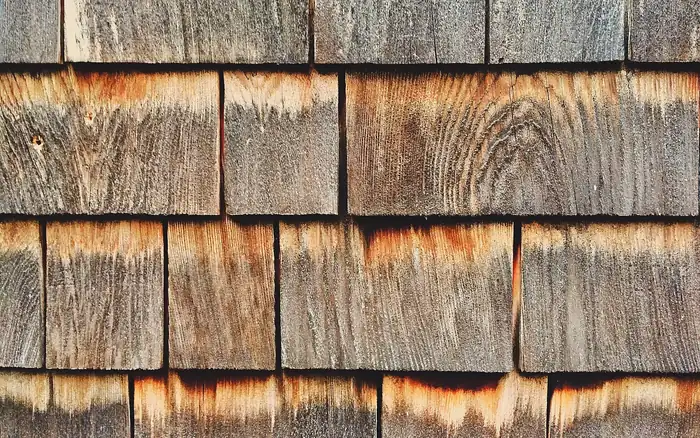
- Ages to a silver-gray patina if left unfinished; holds a reddish-brown tone if sealed
- Requires stainless steel fasteners — its natural tannins react with standard zinc-plated screws and cause black staining
Who it’s for: anyone building the classic reddish-brown Adirondack chair, bench, or picnic table — it’s exactly the combination of light weight and easy hand-shaping behind our own Adirondack chair plans, where curved armrests and back slats get cut and sanded by hand. It’s also the cedar every North American lumberyard stocks, which makes it the easiest species on this list to actually get your hands on.
Main drawback: at 350 lbf it’s the softest of the true cedars here — it dents under a dropped tool or a dragged chair leg more readily than any pick except Eastern White Cedar, and the Wood Database notes it “can sand unevenly” because of how soft the early-growth rings are relative to the late-growth rings.
2. Alaskan Yellow Cedar — Best for Heavy-Use Outdoor Furniture
No Alaskan Yellow Cedar lumber listing turned up in an Amazon search this session — results returned only shingles and unrelated products. Source it from a cedar specialty mill instead; Mill Outlet Lumber’s live price list (effective 3/6/2026) has 1×6 appearance-grade, kiln-dried boards at $2.15 per linear foot.
- Janka hardness: 580 lbf — 66% harder than Western Red Cedar
- Average dry weight: 31 lbs/ft³
- Wood Database rating: durable to very durable, and specifically resistant to most insect attacks
- Pale yellow color, straight and uniform grain
- Holds paint and stain more evenly than Western Red Cedar per Wood Database workability notes
Who it’s for: outdoor dining chairs, benches, and anything that gets sat on, dragged, or bumped daily. Its density is the whole reason it’s the pick here — boatbuilders have used it for exposed hardware and decking for the same reason.
Main drawback: it grows in a narrow Pacific Northwest/Alaska range, so supply is genuinely limited and shipping cost stacks up fast for anyone outside that region. Expect to pay more per board foot than Western Red Cedar in most grades, and expect a special order rather than a same-day pickup outside cedar-producing states.
3. Port Orford Cedar — Best for Fine Furniture-Grade Finish
Every Port Orford Cedar mill checked this session (Bear Creek Lumber, East Fork Lumber) requires a phone or email quote — no live price is published anywhere in this niche, which matches a documented pattern across specialty cedar species. Secondary-sourced pricing from named suppliers runs roughly $6/board foot for standard grade, climbing to $10–15/board foot for old-growth clear stock.
- Janka hardness: 590 lbf — hardest of the true cedars
- Average dry weight: 29 lbs/ft³
- Wood Database rating: durable to very durable, resistant to most insect attacks
- Exceptional dimensional stability — resists warping and cupping better than any other cedar here
- Fine, straight grain takes stain and oil evenly, which is why it shows up in guitar soundboards and boatbuilding
Who it’s for: a single statement piece — a dining table or bench — where finish quality and long-term stability matter more than budget or how fast you can get the wood.
Main drawback: it’s genuinely scarce. Port Orford Cedar grows in a narrow strip of southern Oregon and northern California, and demand has outpaced supply for years — this isn’t marketing language, it’s the same limited-availability note every supplier checked this session gave. Budget extra lead time.
4. Incense Cedar — Best Value
Searching Amazon for “incense cedar” surfaces literal incense sticks and cones, not the tree species — a real search-relevance trap worth knowing if you go shopping there yourself. Source it from a lumberyard instead: Surplus Lumber (Lodi, CA) prices 5/4×6 #3-grade Incense Cedar at 59–69¢ per linear foot, live as of this session.
- Janka hardness: 470 lbf — harder than Western Red Cedar at a lower price in the grades checked
- Average dry weight: 24 lbs/ft³
- Wood Database rating: durable to very durable
- Excellent dimensional stability, fine straight grain
- Roughly 20% cheaper than comparable Western Red Cedar per a lumber-industry price comparison
Who it’s for: budget-conscious builders who still want genuine rot resistance rather than the cheapest wood on the shelf. At 470 lbf it’s also harder than Western Red Cedar, so you’re not trading durability away to save money here.
Main drawback: it’s less common in big-box stores, and the cheap “#2 and better” utility grades carry more knots — budget pricing doesn’t automatically mean furniture-clear stock, so check the grade before you buy.
5. Eastern White Cedar (Northern White Cedar) — Best for Humid and Coastal Climates
No Amazon lumber listing turned up for this species this session. Goosebay Sawmill’s live 2026 price list has knotty rough 1×6 at $4.50/board foot and clear grade at $8.50–10/board foot.
- Janka hardness: 320 lbf — softest and lightest of the six
- Average dry weight: 22.0 lbs/ft³
- Wood Database rating: durable to very durable, and the only species here specifically called out as resistant to termites and powderpost beetles
- Pale tan to yellow color, mild scent
- Poor screw-holding capability per Wood Database workability notes — pre-drill every joint
Who it’s for: furniture that will actually sit somewhere humid — a covered porch on the Gulf Coast or in the Pacific Northwest, where termite pressure is a real, ongoing concern rather than a theoretical one.
Main drawback: it’s the softest and lightest wood on this list, so it dents easily and its poor screw-holding means every joint needs a pilot hole and probably a reinforcing bracket for anything load-bearing.
6. Eastern Red Cedar — Best Aromatic Cedar for Accent Pieces (Not a True Cedar)
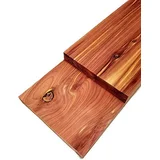
Real, live Amazon options: Barrington Hardwoods Eastern Red Cedar Lumber, 3/4″×6″×12″ (2 pieces) at $24.95, an 18″ version at $45.95, or a Woodchucks Wood box of 15–20 boards at $43.87 — all live-verified this session.
- Janka hardness: 900 lbf — more than double Western Red Cedar, hardest wood on this list
- Average dry weight: 33 lbs/ft³
- Wood Database rating: excellent decay and insect resistance
- Reddish-purple heartwood streaked with cream sapwood; strongly aromatic
- High silica content dulls blades fast — expect to sharpen more often than with any true cedar here
The correction most “cedar” guides skip: despite the name, Eastern Red Cedar is Juniperus virginiana — a juniper, not a true cedar. The five species above all belong to the true-cedar genera (Thuja, Callitropsis, Calocedrus, or Chamaecyparis) within the Cupressaceae family; Eastern Red Cedar shares the family but not the genus. That’s not pedantry — it’s the actual reason this “cedar” is nearly triple the hardness of the true cedars on this list and noticeably more aromatic. If you’ve ever wondered why a cedar chest smells so much stronger than a cedar deck, this is why.
Who it’s for: small accent pieces — a side table, a planter box, trim details — where aroma and color contrast matter more than matching the true-cedar species used for the main frame.
Main drawback: boards are commonly narrow and knotty; clear, wide stock is rare and priced accordingly, and the high silica content means more frequent blade sharpening during a build.
How We Picked These
No cedar in this comparison was physically purchased and tested for this article — the hardness, weight, and decay-resistance figures come from The Wood Database, a wood-science reference used throughout the woodworking trade, and every price was pulled live from a named lumberyard, mill, or the Amazon Creators API during this session (dates noted in the table above).
Two honest limits worth stating plainly: Amazon’s own review data returned no usable star rating or review count for any ASIN checked this session, so none are shown here — we won’t invent a “4.5 stars, 2,000 reviews” figure to make a listing look more validated than it is. And for Port Orford Cedar and Alaskan Yellow Cedar, no mill checked publishes a live per-board-foot price online; those cells are marked as phone-quote or converted from a real per-linear-foot number using the disclosed formula, not guessed.
What to Consider When Buying Cedar for Outdoor Furniture
Eight real factors decide which cedar is right for your build — not just “which one is prettiest.”
Janka Hardness and Dent Resistance
Janka hardness measures how much force it takes to embed a steel ball halfway into the wood — a direct proxy for how easily a piece will dent under a dropped tool, a dragged chair leg, or a kid climbing on it. On this list it ranges from 320 lbf (Eastern White Cedar) to 900 lbf (Eastern Red Cedar, which isn’t a true cedar). For furniture that takes daily contact — dining chairs, benches — lean toward Alaskan Yellow Cedar (580 lbf) over Western Red (350 lbf).
Rot and Insect Resistance
Every species in this comparison rates “durable to very durable” for decay resistance in the Wood Database — the natural oils behind why cedar resists rot in the first place are what make it worth using outdoors at all. The differentiator is insect resistance specifics: Eastern White Cedar is the only one specifically called out as termite- and powderpost-beetle-resistant, which matters if you’re in a region where those pests are a real concern rather than a rare one.
Weight — Furniture You’ll Actually Move
If the furniture needs to follow the sun around a patio or get stacked away every winter, weight matters as much as hardness. Eastern White Cedar (22.0 lbs/ft³) and Western Red Cedar (23.0 lbs/ft³) are both meaningfully lighter than Eastern Red Cedar (33 lbs/ft³) or Alaskan Yellow Cedar (31 lbs/ft³) — roughly a 50% difference in a full Adirondack chair’s worth of lumber.
Grain, Finish and Stain Compatibility
All six species take stain and finish reasonably well per Wood Database workability notes, but Alaskan Yellow Cedar and Port Orford Cedar are called out specifically for holding paint and finishing more evenly than Western Red Cedar — useful if you’re planning a painted rather than a natural or oiled look. Western Red Cedar’s softness means it “can sand unevenly” between growth rings, which shows up as a slightly blotchy stain absorption if you skip a pre-stain conditioner.
Price per Board Foot
Live prices this session ranged from roughly $1/board foot for Incense Cedar utility grade up to $10–15/board foot for old-growth Port Orford clear stock — more than a 10x spread within the same trade name “cedar.” Always confirm the grade (rough vs. clear, knotty vs. select) before comparing two quoted prices; a cheap utility-grade price and an expensive clear-grade price for the same species aren’t measuring the same thing. For a broader look at what drives cedar pricing beyond species — grade, region, and thickness — see our cedar wood cost breakdown.
True Cedar vs. Cedar in Name Only
Five of the six species above are true cedars in the Cupressaceae family genera Thuja, Callitropsis, Calocedrus, or Chamaecyparis. Eastern Red Cedar is a juniper (Juniperus virginiana) sold under the cedar trade name — genuinely harder, more aromatic, and more insect-resistant than the true cedars, but a different wood entirely. Worth knowing before you assume “cedar” on a lumberyard tag always means the same species.
Availability and Lead Time
Western Red Cedar and Eastern Red Cedar are the two most widely stocked species checked this session — both have real, live Amazon listings and are common at regional lumberyards. Alaskan Yellow, Port Orford, Incense, and Eastern White Cedar are all effectively special-order outside their native growing regions; budget extra lead time and expect to call a specialty mill rather than walk into a big-box store.
One practical Amazon-specific limit worth knowing before you shop: raw dimensional cedar sold there tops out around 4 feet in most listings — the Western Red Cedar boards linked above are 7 feet, but that’s the exception, not the rule. For a full-length dining table apron or a bench seat longer than 48″, a lumberyard that cuts to order is usually the only practical source regardless of species; Amazon is genuinely better suited to accent pieces, repairs, and craft-scale builds.
Climate Fit
In a dry climate, any of the six will perform close to its Wood Database rating. In a genuinely humid or coastal climate with real termite pressure, Eastern White Cedar’s specific termite/powderpost-beetle callout and Alaskan Yellow Cedar’s marine-industry track record both carry more real-world weight than the general “durable to very durable” rating every species on this list shares.
How to Finish Cedar Outdoor Furniture
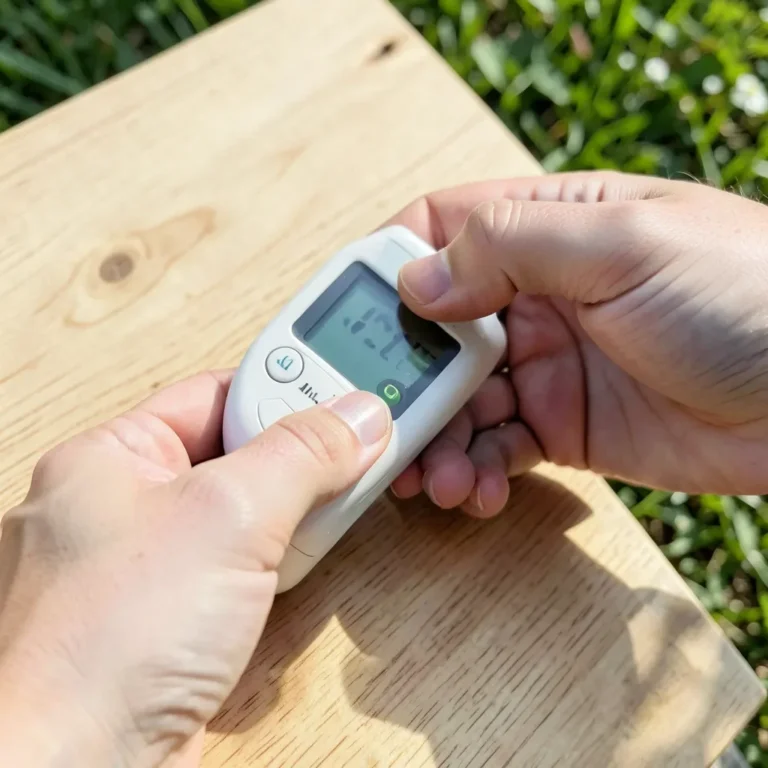
- Let new cedar acclimate outdoors for 1–2 weeks before finishing — it needs to reach the moisture level of its final environment first.
- Sand progressively from 120 to 180 grit, working with the grain; stop at 180 — finer grits can burnish softer cedars like Western Red and Eastern White and make finish absorb unevenly.
- Choose your finish based on the look you want: a clear UV-blocking sealer preserves the original color, while leaving cedar unfinished lets it age to a silver-gray patina with no maintenance beyond occasional cleaning.
- Apply finish with the grain in two coats minimum, letting the first coat fully cure per the product’s label before the second.
- Seal the end grain specifically — it’s the fastest path for water into any board, cedar included.
- Reapply sealer or oil every 1–2 years to maintain color and maximize lifespan.
- Use stainless steel fasteners only — 304 grade for most climates, 316 grade for coastal or high-humidity environments. Standard zinc-plated screws react with cedar’s natural tannins and cause permanent black staining.
If you are gluing joints rather than only screwing them, see our comparison of exterior wood glue for cedar for picks that hold up against cedar’s natural oils.
A cedar-tinted exterior stain and sealer such as Ready Seal Exterior Wood Stain & Sealer, Natural Cedar (live-priced at $19.98 for the Turbo Spray size this session) keeps the reddish tone of Western Red or Eastern Red Cedar without an opaque paint film. For a full comparison of cedar-specific sealers, see our best cedar sealer roundup.
Frequently Asked Questions
What is the best cedar for outdoor furniture?
Western Red Cedar is the best all-around choice for most outdoor furniture — it’s the most widely available, resists rot and insects on its own, and is light and soft enough to hand-shape. If the furniture takes heavy daily use, Alaskan Yellow Cedar’s 580 lbf Janka hardness resists dents and scratches significantly better.
Is Alaskan Yellow Cedar better than Western Red Cedar for furniture?
It’s harder and more scratch-resistant (580 lbf vs. 350 lbf Janka hardness) and holds paint more evenly, but it costs more per board foot in every grade checked this session and is harder to source outside the Pacific Northwest. “Better” depends on whether hardness or cost/availability matters more for your build.
Is Eastern Red Cedar a real cedar?
No. Eastern Red Cedar is Juniperus virginiana — a juniper, not a true cedar. True cedars sold for furniture belong to the genera Thuja, Callitropsis, Calocedrus, or Chamaecyparis. Eastern Red Cedar is genuinely harder and more aromatic than any true cedar, which is exactly what you’d expect from a different wood being sold under the same trade name.
How long does cedar outdoor furniture last?
Industry sources commonly cite 10–15 years for cedar outdoor furniture with proper care, versus 50+ years for teak. That figure comes from published buying guides rather than an independent test, so treat it as a general range rather than an exact number for any specific piece.
Do I need to seal cedar outdoor furniture?
Not for rot resistance — cedar’s natural oils handle that on their own. Sealing is about appearance: an unsealed piece will weather to a silver-gray patina, while a sealed one keeps its original color and typically needs reapplication every 1–2 years.
Which cedar is cheapest for outdoor furniture?
Incense Cedar was the cheapest species with live pricing found this session, at roughly $0.94–$1.10 per board foot computed from a 59–69¢/linear-foot quote — about 20% less than comparable Western Red Cedar.
Can you buy cedar for furniture on Amazon?
Western Red Cedar and Eastern Red Cedar both have real, live Amazon listings suitable for small furniture builds and repairs. Alaskan Yellow, Port Orford, Incense, and Eastern White Cedar did not turn up practical lumber listings on Amazon this session — source those from a cedar specialty mill instead. Amazon boards also commonly top out around 4 feet, so a full-length table apron or long bench seat usually needs a lumberyard that cuts to order regardless of species.
Final Thoughts
For most outdoor furniture builds, Western Red Cedar remains the right default — it’s the most available, the easiest to shape by hand, and rot-resistant enough on its own that sealing is a choice about looks rather than survival. Step up to Alaskan Yellow Cedar (580 lbf Janka, nearly double Western Red’s 350 lbf) for furniture that takes real daily abuse, and remember that if a supplier’s “cedar” is unusually hard and strongly aromatic, it’s probably Eastern Red Cedar — a real, useful wood, but not a true cedar at all.
Sponsored / affiliate links. As an Amazon Associate I earn from qualifying purchases. I may earn additional commission from eligible campaigns.