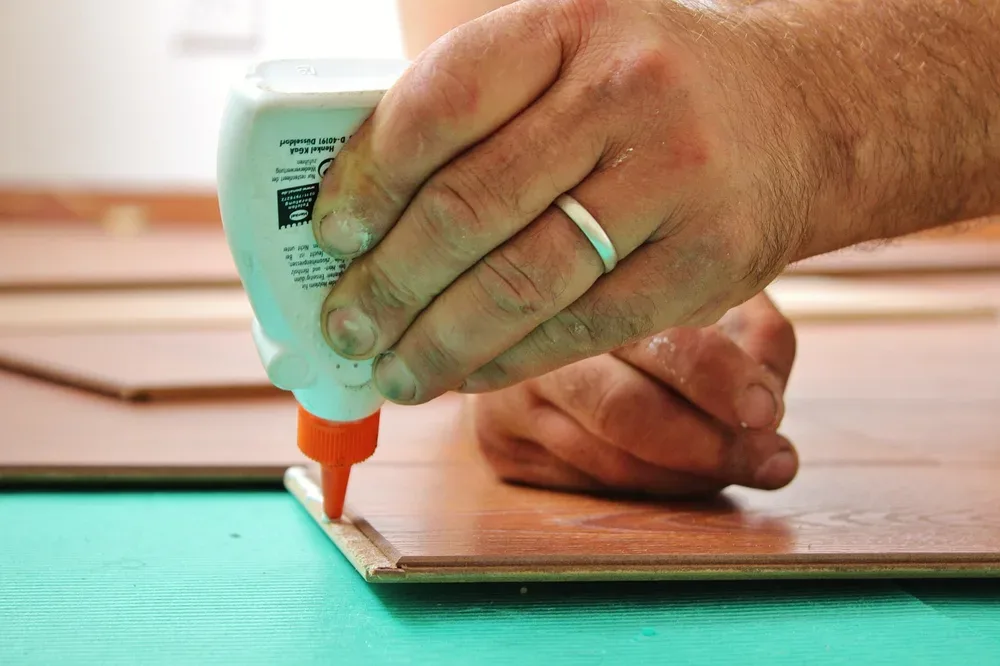
Liquid Nails vs Wood Glue for Furniture Assembly Guide
Use wood glue for any load-bearing wood-to-wood furniture joint; reserve Liquid Nails for non-structural attachment, gap-filling on misfit parts, or mixed materials where later disassembly matters less. Pick the wrong adhesive and the joint can end up weak, stubborn to repair, or messy to sand clean. This guide compares bond strength, cure, gap-filling, sandability, and repairability for common furniture joints and repairs.
This guide is part of our Wood glue essentials: types, uses, and cure times series.
Liquid Nails vs Wood Glue for Furniture Assembly
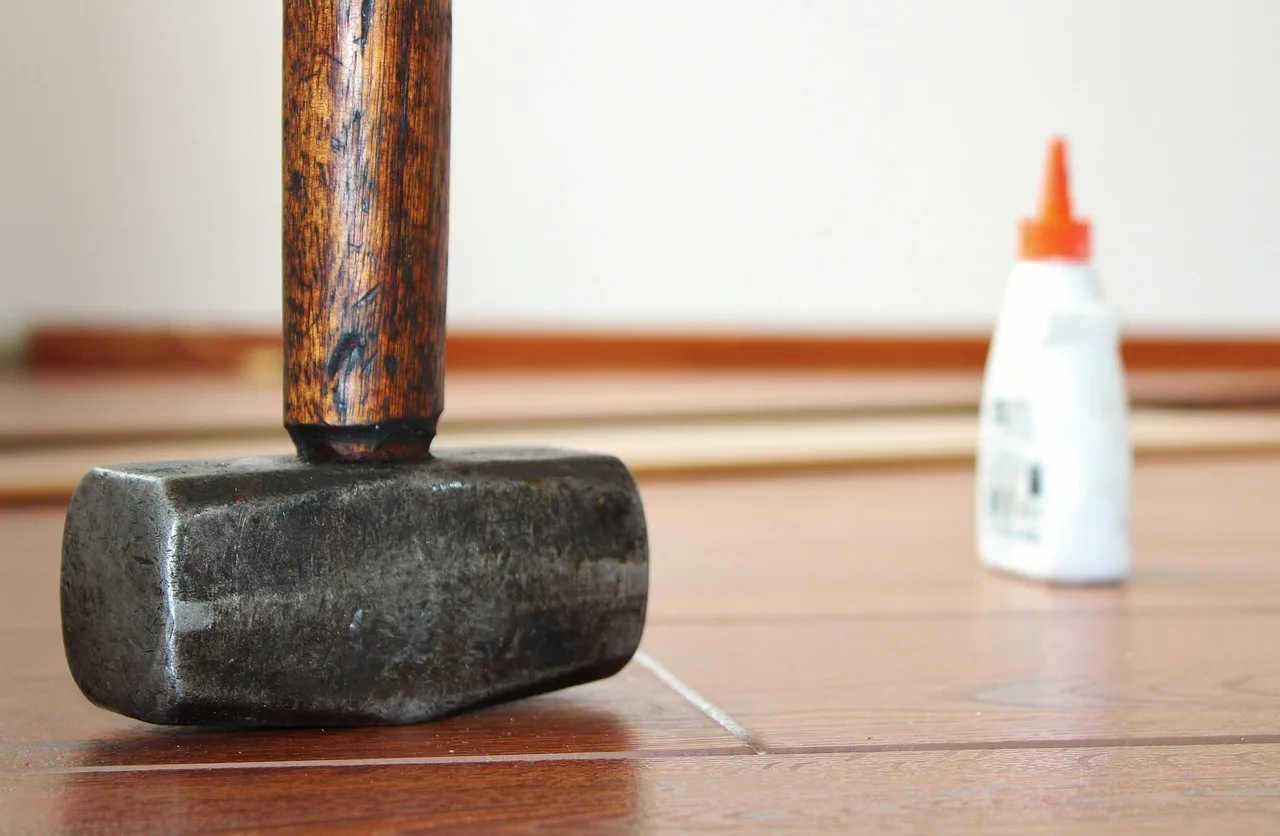


The trade-off is plain. Wood glue works best when the parts fit well and the joint must carry furniture loads. Liquid Nails is the better pick when the parts are uneven, mixed material, or the job is closer to holding trim, brackets, or repair patches than building a true wood joint.
| Decision factor | Liquid Nails | Wood Glue for Furniture Assembly | Winner |
|---|---|---|---|
| Structural wood-to-wood strength | Lower published wood-on-wood strength; LN-903 reaches 240 psi at full cure | Published wood-glue claims reach 4,000 psi on hard maple | Wood Glue for Furniture Assembly |
| Gap tolerance | Better on uneven surfaces and misfit parts | Best on tight-fitting joints | Liquid Nails |
| Sandability and refinishing | Flexible cured bond can make sanding and finishing harder | Rigid bond line sands and trims more cleanly | Wood Glue for Furniture Assembly |
| Cleanup | More difficult after cure | Water cleanup while wet | Wood Glue for Furniture Assembly |
| Clamp needs | More initial grab, but long cure window | Needs clamping; clamp time is 30 to 60 minutes | Depends on job |
| Mixed materials | Better for wood-to-metal, painted trim, laminate edges, and similar work | Best on wood-to-wood joints | Liquid Nails |
Structural wood-to-wood strength
For chair rungs, mortise-and-tenon joints, dowels, edge glue-ups, and panel glue-ups, wood glue wins. Published wood-glue figures are far higher on the hard maple test substrate used in ASTM D-905 block shear testing, and that matters because furniture joints are usually built to turn a well-fit wood bond into a long-term structural part.
Gap tolerance and fit
Liquid Nails has the edge when the parts do not fit cleanly. It can bridge minor voids and stick to uneven surfaces, while wood glue wants close contact between mating faces. That matters a lot in old furniture repair, where parts may be warped, painted, contaminated, or simply worn out.
Cleanup, sanding, and serviceability
Wood glue is easier to live with on finished furniture. Wet squeeze-out cleans with water, cured squeeze-out trims more predictably, and a rigid glue line is less likely to show through a finish. Liquid Nails cures more like a flexible adhesive mass, so sanding, scraping, and refinishing usually take more time and more care.
According to Liquid Nails Vs Wood Glue: Which Is Actually Stronger? — The article says wood glue reaches full strength in about 24 hours.
What wood glue does best
PVA and aliphatic resin on tight-fitting joints
Wood glue, usually PVA or aliphatic resin, is made for wood-to-wood work with good joint fit. It pulls parts together, makes a rigid bond line, and performs best when the joint surfaces meet closely instead of depending on the adhesive to fill space.
That is why it stays the default for furniture and cabinetry. It cures fast enough for shop work, typically has a clamp time of 30 to 60 minutes, and reaches full strength in about 24 hours.
Why rigid bond lines suit furniture loads
Furniture joints want stiffness, not rubbery movement. A rigid bond transfers load across the full mating surface, which is exactly what edge joints, dowels, and mortise-and-tenon joints are built to do. A flexible adhesive can work against that design by allowing movement where the joint should stay fixed.
Published strength examples
Titebond Original Wood Glue is listed at 3,600 psi, and the same family includes Titebond II at 3,750 psi and Titebond III at 4,000 psi. Titebond III is also described as ANSI/HPVA Type I waterproof, which makes it the better benchmark when outdoor furniture exposure is part of the job.
The point is not that every furniture part sees that exact load. The point is that wood glue, on a proper wood-to-wood fit, is built for a much stronger and stiffer bond than a general construction adhesive.
What Liquid Nails does best
Multi-material bonding and uneven surfaces
Liquid Nails construction adhesive is a caulk-tube adhesive for mixed-material jobs. It is useful where wood meets metal, laminate, painted trim, or a rough substrate that does not give wood glue the close contact it needs.
Its gap tolerance is the main advantage. On a misfit repair, that extra body can mean the difference between a usable attachment and a joint that never fully contacts the surfaces it is meant to hold.
Flexible cured bond and initial grab
Liquid Nails has more initial grab than wood glue, so it can hold parts in place before full cure. That helps on vertical or awkward assemblies where clamps are hard to set up.
After cure, though, it stays more flexible than wood glue. That flexibility helps on trim or mixed-material attachments, but it is usually a drawback in tight furniture joints that should behave as one solid piece.
Cure schedule and strength numbers
Liquid Nails Heavy Duty, also shown as LN-903, is listed at 150 psi on day one, 180 psi after 48 hours, and 240 psi at 7 days. The full cure schedule is 7 days, so the adhesive may feel set long before it reaches final performance.
That timeline matters in furniture repair. A chair seat or table apron handled too soon can shift before the adhesive reaches full bond.
How the strength numbers compare
What ASTM D-905 and hard maple mean
Wood-glue strength claims are often discussed in relation to ASTM D-905 block shear testing on a hardwood substrate, such as maple. That matters because hard maple is a demanding test substrate, and block shear gives a useful look at how the adhesive performs in a wood joint rather than in a generic bead test.
Liquid Nails numbers are not directly interchangeable with wood-glue block shear claims. PSI is only one part of the picture, and furniture fit, rigidity, sandability, and cleanup often matter more than a raw number printed on a label.
Benchmarks that matter in furniture work
Titebond Original at 3,600 psi is already a strong furniture adhesive. Titebond III at 4,000 psi gives an even higher benchmark, along with ANSI/HPVA Type I waterproof classification for outdoor-rated work.
By contrast, LN-903’s 240 psi full-cure figure shows why Liquid Nails is not the same kind of joint adhesive for wood furniture assembly. It can be the right product for attachment work, but it is not the first pick for structural wood joints.
Which adhesive fits each furniture joint?
Edge glue-up and panel glue-up
Use wood glue. These jobs depend on close-fitting wood-to-wood contact over a broad surface, and the adhesive should dry rigid so the panel machines, sands, and finishes like one piece.
Chair rungs, dowels, and mortise-and-tenon
Use wood glue. These joints are built to carry mechanical loads through tight contact, and they need a stiff bond that will not creep or stay rubbery after cure.
Veneer repair, painted trim, wood-to-metal brackets, and laminate
Liquid Nails belongs here more often than wood glue, especially when the surfaces are imperfect or the materials differ. It is more forgiving on uneven parts, but that forgiveness comes with a trade-off in sanding, cleanup, and later serviceability.
Decision matrix for common furniture scenarios

For furniture work, the best adhesive depends on whether the joint is structural or merely attached. The matrix below scores the common scenarios that cause the most confusion in the shop.
| Scenario | Strength | Sandability | Gap tolerance | Reversibility | Cleanup | Best pick |
|---|---|---|---|---|---|---|
| Tight edge joint | High with wood glue | High with wood glue | Low need | Better with wood glue while repairable | Easy with wood glue | Wood Glue for Furniture Assembly |
| Loose chair rung | Better with a fresh tight fit plus wood glue; poor fit weakens both | High with wood glue if joint is reset correctly | Moderate need | Wood glue is more serviceable | Cleaner with wood glue | Wood Glue for Furniture Assembly after proper repair |
| Veneer repair | Attachment only, not a load-bearing joint | Can be difficult with either adhesive | High need | Depends on substrate | Liquid Nails is harder to clean | Liquid Nails for limited non-structural patches |
| Wood-to-metal bracket | Enough for attachment, not a wood joint | Poor with wood glue | Moderate need | Serviceable if not permanent | Better with careful caulk-tube application | Liquid Nails |
| Painted trim | Attachment only | Limited after cure | Useful on uneven paint layers | Fair for future removal, though messy | Messier than wood glue | Liquid Nails |
| Laminate panel | Attachment only | Poor with wood glue | High need | Limited | Requires careful cleanup | Liquid Nails |
The matrix points to the same answer every time: the more a job behaves like a true wood joint, the more wood glue wins. The more it behaves like an attachment problem with imperfect surfaces, the more Liquid Nails makes sense.
Choose Liquid Nails if… / Choose Wood Glue for Furniture Assembly if…
Choose Liquid Nails if the parts are mixed material, badly fit, painted, or uneven; the job is non-structural; you need some gap tolerance; or the attachment will not be sanded, re-jointed, or taken apart later. It is also the better call when you need initial grab on a trim-style repair.
Choose Wood Glue for Furniture Assembly if the joint is wood-to-wood, load-bearing, tight-fitting, sanded after cure, or expected to be repaired cleanly later. It is the right adhesive for edge glue-ups, dowels, mortise-and-tenon joints, and most chair and table joinery.
If the old joint is contaminated with paint, wax, or failed adhesive, clean it back to sound wood before choosing anything. A poor fit is often the real problem, and no adhesive can make a sloppy structural joint behave like a good one.
Cost and scope matter too. Wood glue usually covers more joints per bottle because furniture assemblies use thin glue lines, while Liquid Nails disappears faster when the bead must span gaps or irregular surfaces. If the project is a full chair or table, the extra cure time and adhesive volume for Liquid Nails can become a real delay.
Can you mix Liquid Nails and wood glue in the same project?
Yes, but not in the same joint. Use wood glue on the structural wood-to-wood parts, then use Liquid Nails only on separate non-structural attachments, such as a bracket, trim strip, or misfit patch. Mixing them inside one joint is a poor habit because each adhesive wants a different fit, cure, and cleanup strategy.
What happens if I use Liquid Nails on a joint that needs clamping?
It may hold the pieces in place, but that does not make it the right adhesive for a true furniture joint. Liquid Nails can leave a softer bond line, harder-to-finish squeeze-out, and more visible residue after sanding. For a chair or table joint, that is usually the wrong trade.
Frequently asked questions
Is Liquid Nails stronger than wood glue for furniture assembly?
No. For tight wood-to-wood furniture joints, wood glue is the stronger and more appropriate adhesive. Liquid Nails Heavy Duty / LN-903 is published at 240 psi at full cure, while wood-glue claims reach 4,000 psi on hard maple under ASTM D-905 testing. Different job, different winner.
Can I use Liquid Nails instead of wood glue on a chair or table?
Only on non-structural attachments, not on the actual joinery. Chairs and tables rely on tight, load-bearing joints, and those belong to wood glue. Liquid Nails is better reserved for trim, brackets, patches, or mixed-material repairs where fit is poor and flexibility matters more than stiffness.
Which adhesive is better for wood-to-wood joints?
Wood glue is better for wood-to-wood joints, especially when the fit is tight. It gives a rigid bond line, cleans up with water while wet, sands better, and supports the way furniture joints are normally built. Liquid Nails is not the right substitute for that kind of joint.
How long does Liquid Nails take to fully cure compared to wood glue?
Wood glue typically reaches full strength in about 24 hours after a clamp time of 30 to 60 minutes. Liquid Nails takes 7 days to reach full cure, even though it has more initial grab. That cure gap matters if the project will be moved or loaded soon.
Does wood glue work better on tight joints than construction adhesive?
Yes. Wood glue is made for tight-fitting joints and performs best when the parts already fit well. Construction adhesive is better at bridging uneven surfaces and minor gaps, but that gap tolerance does not make it the better choice for a clean structural furniture joint.
When should I use Liquid Nails on furniture projects?
Use it on non-structural furniture tasks such as attaching painted trim, bonding wood to metal, holding a laminate panel, or filling a misfit repair where the surfaces are uneven. It belongs in the repair bin more often than the joinery bin.
Which glue is better for gaps in old furniture joints?
Liquid Nails is better when the joint is old, uneven, and missing clean wood contact. Wood glue still wins if the joint can be cleaned, fitted correctly, and clamped. If the gap is large enough that the parts no longer meet well, the real repair may be rebuilding the joint instead of gluing it as-is.
Is wood glue stronger than Liquid Nails on hard maple?
Yes. Wood-glue strength claims are often published on hard maple under ASTM D-905 block shear testing, and the numbers are much higher than Liquid Nails Heavy Duty / LN-903. That is one reason wood glue remains the standard for furniture joinery on sound wood parts.
Sponsored / affiliate links. As an Amazon Associate I earn from qualifying purchases. I may earn additional commission from eligible campaigns.