Chipboard vs MDF vs Plywood: Grades, Names and What to Buy
Chipboard is the cheapest and weakest of the three, MDF has the smoothest face for paint, and plywood is the strongest and best at holding screws. The part most guides skip is that the names and grade labels on the sheet decide whether a board is actually right for your job, and they are different in the UK and the US.
This guide decodes those labels. It covers what chipboard is called in each country, what the grade codes mean, what plywood’s bond class really promises, and a simple project chooser. For a head-to-head on price, see our MDF vs plywood price guide, and for a US-focused strength and cost comparison of the same three boards, see our particle board vs MDF vs plywood guide.
Quick Answer: Which Board for Which Job
Best Confirmat Screw Kit For Panels
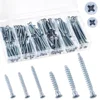 |
Swpeet 130-Piece Confirmat Screw Assortment Kit (M5 and M7, 6 sizes) Chipboard and MDF hold ordinary wood screws poorly, especially in the edges. Confirmat screws are the fastener made for exactly these boards, and one assortment covers most panel joints.
|
| Job | Best pick | Why |
|---|---|---|
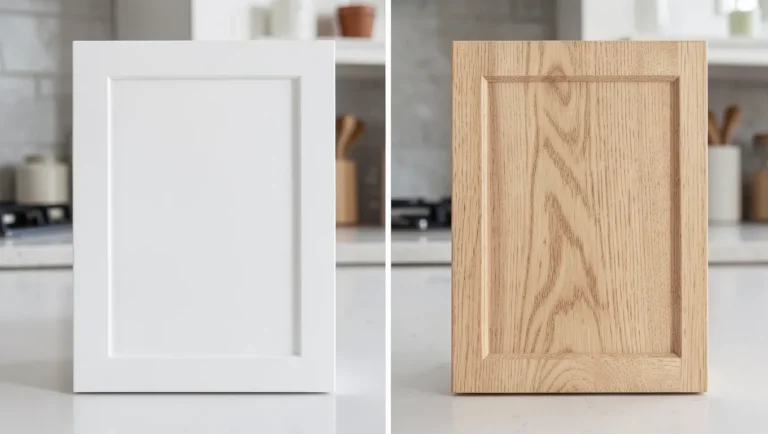
| Painted cabinet doors and trim | MDF | Fine, even face with no grain to show through paint |
| Cabinet carcasses in a dry room | Plywood or laminated chipboard | Plywood holds screws best; laminated chipboard is the budget option |
| Long loaded shelves | Plywood | Resists sagging better than the other two |
| Flat-pack furniture core | Laminated chipboard | Cheap, flat, and the laminate hides the rough face |
| Floors | Structural chipboard (P5 in the UK) or plywood | Standard chipboard and MDF are not floor grades |
| Jigs, templates and router patterns | MDF | Flat, stable and cheap enough to sacrifice |
| Stained or clear-finished work | Hardwood plywood | Only plywood has real grain on its face |
What Is Chipboard Called in the UK and the US?
In the UK, chipboard means the panel made of wood chips, shavings and sawdust pressed with resin. In the US, the same product is called particleboard, and the word chipboard is often used for thin paperboard instead. If a US product page says chipboard, read the description before you buy. Our chipboard durability guide covers how long it lasts in real use.
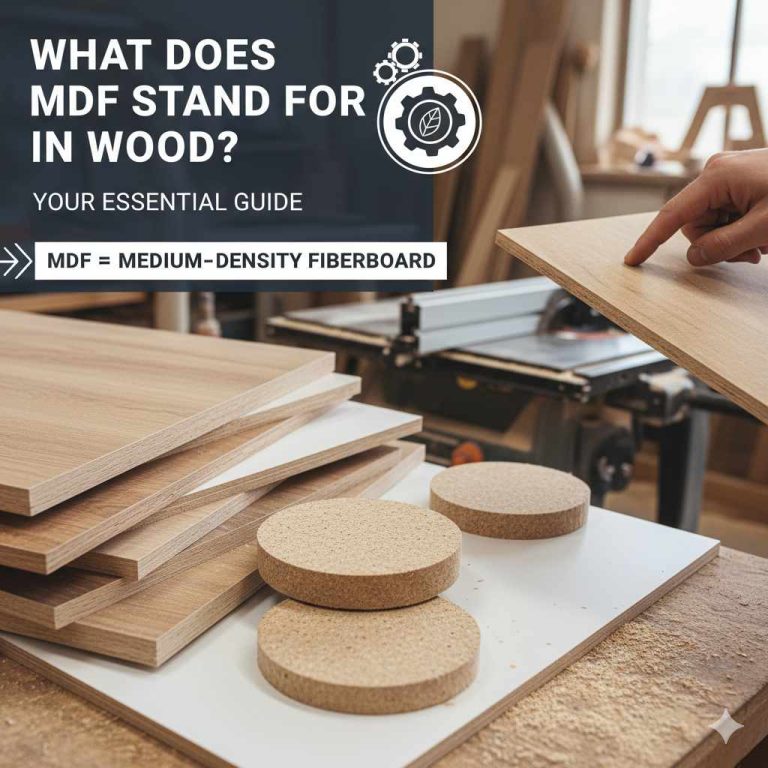
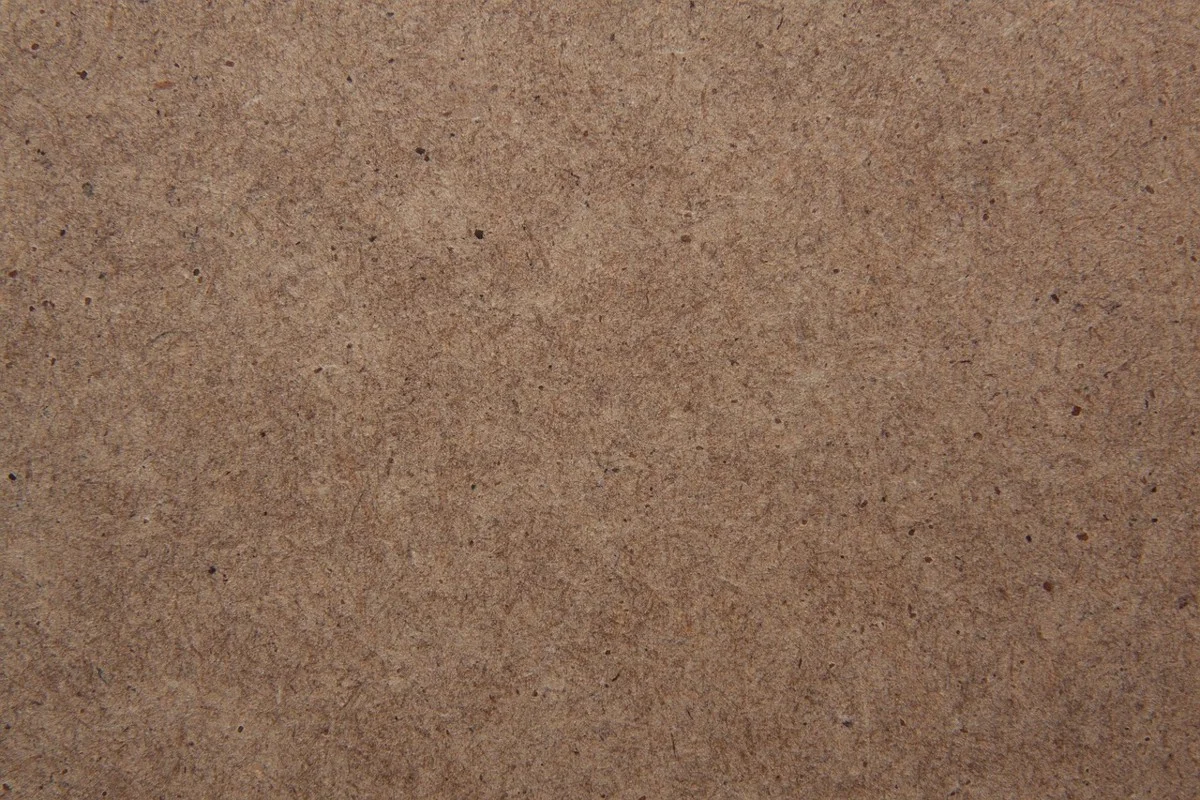
Density is a useful way to tell the three families apart. Particleboard is generally in the range of 500 to 800 kg per cubic meter, standard MDF is typically 600 to 800 kg per cubic meter, and plywood varies with the wood species used in its veneers. That overlap is why weight alone will not tell you which panel you are holding. Surface and edge will: chipboard shows visible chips, MDF is uniformly fine and brown, and plywood shows stacked veneer layers on its edge.
How to Read the Grade Codes on Each Board
This is the information gain most comparisons miss. Each board has a grading system, and the label matters more than the material name. Chipboard is graded to European standard EN 312 in the UK and Europe. That standard runs from P1 to P7, and the grades split by load and by moisture.
| Chipboard grade (EN 312) | Meaning | Where it fits |
|---|---|---|
| P2 | Interior fitments including furniture, dry conditions | Flat-pack furniture and shelving |
| P3 | Non load-bearing, humid conditions | Light fitments in damp rooms |
| P4 | Load-bearing, dry conditions | Structural use indoors where it stays dry |
| P5 | Load-bearing, humid conditions | The usual UK flooring grade |
| P6 and P7 | Heavy duty load-bearing, dry (P6) or humid (P7) | Demanding structural uses |
For P5, the standard requires modulus of rupture of at least 16 N per square millimeter and limits thickness swelling to 10 percent. That is why P5 flooring board survives a wet building site better than the general purpose board used in a bookcase. The US system is different: ANSI A208.1, developed by the Composite Panel Association, grades particleboard by density class (H, M and L) and by properties, with M2 among the common grades.
MDF is covered by its own standard, ANSI A208.2, and it also comes in moisture-resistant and fire-rated types that are usually tinted green or red. Plywood is graded differently again, by veneer grade and by bond class, which is where the biggest myth in this topic lives.
The CDX Myth: Plywood Bond Class Is Not Weatherproofing
Many people assume the plywood with an X in its stamp is exterior plywood. It is not. APA, the Engineered Wood Association, states that panels commonly called CDX are Exposure 1, not Exterior. Exposure 1 has a waterproof bond intended to survive moisture during construction delays, while Exterior is designed for repeated wetting and drying and long-term weather exposure.
APA also points out that bond classification does not protect against fungal decay. A waterproof glue line does not stop the wood itself from rotting. Compare that with chipboard and MDF, where the resin and fiber structure is what fails when water gets in. Even a moisture-resistant panel board needs its cut edges sealed. Our guide to sealing particle board walks through it.
Where Each Board Fails and How to Work Around It
Screw holding is the common weak point. In a North Carolina State University study of particleboard from five North American manufacturers, none of the tested boards reached the ANSI recommended value for screw withdrawal resistance, although most met the internal bond recommendation. In practice, that means chipboard edges strip easily. MDF behaves similarly at the edges. The fix is the right fastener and joint, not a bigger screw: confirmat screws, cam-and-dowel fittings, or glue and dowels. If an MDF hole is already stripped, see how to repair MDF screw holes.
- Chipboard: Chips out at edges and swells when wet. Buy it laminated, band the edges, and keep it dry.
- MDF: Swells at cut edges and gives off fine dust. Prime the edges, and read our notes on sanding MDF before painting and the right primer for MDF.
- Plywood: Voids and a rough edge on cheaper grades. Choose the face grade to suit the finish, and band the edge if it will show.
Dust and Safety When Cutting Panel Boards
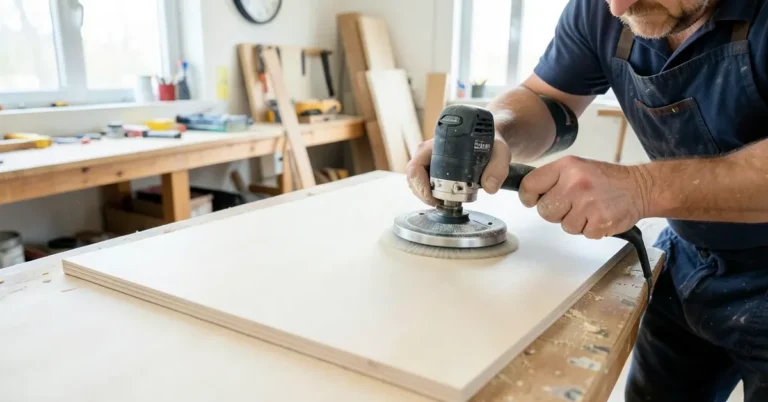
Cutting or sanding MDF releases a large quantity of very fine dust, and MDF products can emit formaldehyde and other volatile organic compounds for at least several months after manufacture. The resin binders in chipboard raise similar concerns. Wear a fitted respirator, cut outdoors or with dust extraction, and see what to do if you breathe in MDF dust. Do not rely on a paper dust mask for panel boards.
Which One Should You Buy?
If the piece will be painted and stay dry, buy MDF. If it must carry weight, take screws in its edges, or sit anywhere near moisture, buy plywood. If it is a budget carcass or flat-pack core that will be laminated and stay dry, chipboard is enough. When two of them look close, compare specific grades rather than material names, because a P5 chipboard floor panel can outperform a cheap, void-filled sheet of plywood in the right place. For a closer look at any pair, see our MDF vs chipboard comparison, chipboard vs plywood comparison, and MDF vs plywood comparison.
Frequently Asked Questions
Is chipboard the same as particle board?
Yes, for furniture and building panels. Chipboard is the common UK name and particle board is the common US name for the same product: wood chips and resin pressed into a sheet. In the US, the word chipboard is also used for thin paperboard, so check the product description.
Which is stronger, chipboard, MDF or plywood?
Plywood is the strongest and holds screws best because its veneer layers run in alternating directions. MDF is denser and stiffer than chipboard but has weak edge screw holding. Standard chipboard is the weakest of the three, though structural chipboard grades exist for flooring.
Is MDF or chipboard better for painting?
MDF, because its fine fiber face takes primer and paint smoothly. Raw chipboard has a coarse surface, so it is usually bought already laminated in melamine. Either way, prime the cut edges of MDF before you paint.
Can chipboard or MDF be used in a bathroom or kitchen?
Standard grades of both swell when they get wet, so keep them away from splash zones. If you must use a panel board there, look for a grade sold as moisture resistant, and seal every cut edge. Plywood with an Exposure 1 bond copes better with occasional moisture than either.
What does P5 mean on chipboard?
P5 is a grade in the European standard EN 312 for load-bearing chipboard used in humid conditions, and it is the usual flooring grade in the UK. It limits thickness swelling to 10 percent, so it is far more water tolerant than general purpose P2 board.
Is CDX plywood exterior plywood?
No. APA, the Engineered Wood Association, states that panels commonly called CDX are Exposure 1, not Exterior. Exposure 1 has a waterproof bond that survives construction delays, but it is not meant for long-term weather exposure.
Sponsored / affiliate links. As an Amazon Associate I earn from qualifying purchases. I may earn additional commission from eligible campaigns.