Best Scroll Saw for Woodworking: 7 Compared, Specs + Price (2026)
The DEWALT DW788 is the best scroll saw for woodworking for most people at $499: a 20-inch throat cuts a 40-inch panel to its centre, its double parallel-link arm is the least twitchy design in this group, and the blade changes without a tool. If you are buying your first saw, the $199 SKIL SS9503-00 is the smarter start — foot pedal, LED and keyless blade changes for a quarter of the price.
Seven current scroll saws are compared below on the four numbers that actually decide the purchase: published throat depth, the panel width that throat really allows, the blade system the saw locks you into, and today’s price per inch of capacity. Every figure comes from a manufacturer spec sheet, an owner’s manual or Amazon’s live buy box, checked on 2 August 2026. Where a maker does not publish a number, the cell says so rather than guessing.
Scroll Saw Comparison: Throat Depth, Real Panel Capacity and Cost
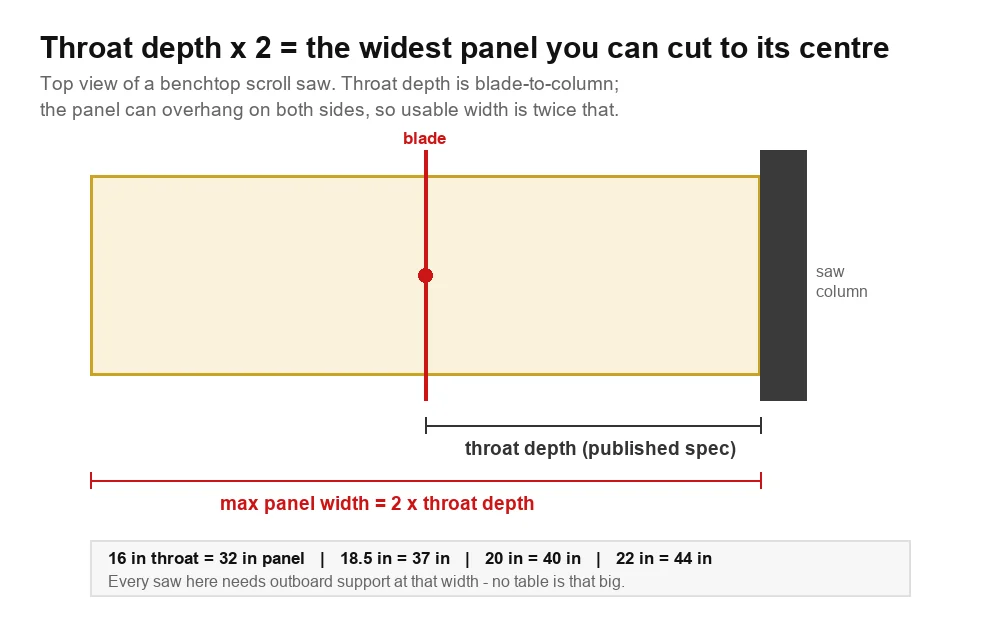
Throat depth is the headline number on every scroll saw box, and on its own it is close to useless. It measures blade to rear column. Because the workpiece hangs off both sides of the blade, the widest panel you can cut to its centre is twice that figure. A 16-inch saw is a 32-inch-panel saw. Nobody prints that on the carton.
The two derived columns below are ours. Max panel = 2 × published throat depth. Panel ÷ table = max panel width divided by the saw’s own longest published table dimension — a plain measure of how far past its own table each saw’s advertised capacity reaches. Cost per inch of throat = buy-box price ÷ throat depth. All three are arithmetic on the cited inputs in the same row, so you can check them.
| Scroll saw | Price (2 Aug 2026) | Throat depth (published) | Max panel to centre (2 × throat) | Table size (published) | Panel ÷ table | Cost per inch of throat | Verdict |
|---|---|---|---|---|---|---|---|
| DEWALT DW788 | $499.00 | 20 in | 40 in | 16 × 24 in cast iron | 1.7× | $24.95 | Best all-round balance of capacity, table area and low vibration |
| Bucktool 22-Inch | $344.00 | 22 in | 44 in | 27 × 13 in cast aluminium | 1.6× | $15.64 | Widest capacity here, and cheaper per inch than the DeWalt |
| JET JWSS-18B | $871.19 | 18.5 in | 37 in | 21-1/4 × 11-5/8 in steel | 1.7× | $47.09 | You are paying for build and dust control, not capacity |
| SKIL SS9503-00 | $199.00 | 16 in | 32 in | 16 × 10 in steel | 2.0× | $12.44 | Best beginner package; capacity is ordinary |
| WEN 3922 | $99.96 | 16 in | 32 in | 16-1/4 × 10 in | 2.0× | $6.25 | Cheapest capacity on the market by a wide margin |
| Proxxon DS 115/E | $192.84 | 11-13/16 in | 23-5/8 in | 6-19/64 in square die-cast | 3.8× | $16.33 | Throat figure is meaningless here — buy it for thin, fine work |
| Dremel MS20-01 Moto-Saw | $111.82 | 9.84 in | 19-5/8 in | Not published (clamp-on base) | — | $11.36 | A portable coping saw with a motor, not a bench scroll saw |
Two things fall out of that table that no scroll saw roundup we read mentions. First, not one of these seven saws has a table large enough to support the panel its own throat depth advertises. The best case is the DeWalt and the JET at 1.7×, and the worst is the Proxxon at 3.8×. Whatever saw you buy, a 30-inch-plus panel needs roller stands or an outfeed table on both sides, and the throat figure you paid for is only reachable with them.
Second, capacity and price are only loosely related. The Bucktool has the deepest throat in the group and costs $15.64 per inch of it; the JET has 3.5 inches less throat and costs $47.09 per inch, three times as much. That is not a criticism of the JET — you are buying a steel table, a published dust-extraction rating and a 5-year-class build — but it does mean “bigger throat” and “more expensive” are separate decisions.
Blade Systems Compared: What Each Saw Locks You Into
The second number that decides a scroll saw purchase, and the one beginners find out about too late, is the blade the saw will accept. JET’s own manual puts it more bluntly than any retailer will: a pin-end blade is one “that requires a pin to secure it to the saw. (These are not suitable for intricate fretwork.)” A plain-end (pinless) blade “slides into a clamp without need of a pin holder. These are preferred for delicate fretwork.” Interior cuts — threading the blade through a drilled hole in the middle of a pattern, the same manoeuvre that separates a scroll saw from a fret saw or coping saw — are far easier with a plain end, and the fine 2/0 and 3/0 blades that make lace-like work possible are only made plain-end.
| Scroll saw | Blade types accepted | Blade length | Blade change | Fine fretwork without an adapter? |
|---|---|---|---|---|
| DEWALT DW788 | Plain-end (pinless) | 5 in | Tool-free clamps; upper arm lifts to thread blades | Yes |
| Bucktool 22-Inch | Pinless (10, 15, 18, 20, 25 TPI plus 43 and 47 TPI spiral) | 5 in | Tool-free; upper arm locks in the raised position | Yes |
| JET JWSS-18B | Plain-end (pinless) | 5 in | 2-in-1 upper mechanism clamps and tensions in one step; tool-free lower holder | Yes |
| SKIL SS9503-00 | Pinless supplied; pin-end also accepted | Not published by SKIL | Keyless, with on-tool blade storage | Yes |
| WEN 3922 | Pinned and pinless | 5 in | Thumb-screw adapter; side panel flips open for access | Yes |
| Proxxon DS 115/E | Pin-end only | Standard pin-end | Free-swinging holder plus a quick tension-release lever for inside cuts | No — pin-end only |
| Dremel MS20-01 Moto-Saw | Pin-end, Dremel MS-series only | 3.8 in | Auto-tensioning quick-change lever | No — and standard 5 in blades do not fit |
Five of the seven take pinless blades, so five of the seven can do real fretwork out of the box. The two that cannot — the Proxxon and the Dremel — are both bought for reasons other than fretwork, but it is worth knowing before the box is open rather than after. If you already own a pin-end-only saw, an Olson AC49610 conversion kit adapts many 16-inch saws to plain-end blades; there is more on end types and TPI in our guide to scroll saw blades.
The Best Scroll Saws for Woodworking
Picks are ordered by how well they suit the widest group of woodworkers, not by price. Each award label describes the job the saw is genuinely best at, and each one names what the saw is bad at as plainly as what it is good at.
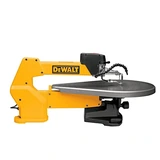
1. DEWALT DW788 — #1 Best Overall
#1 Best Overall
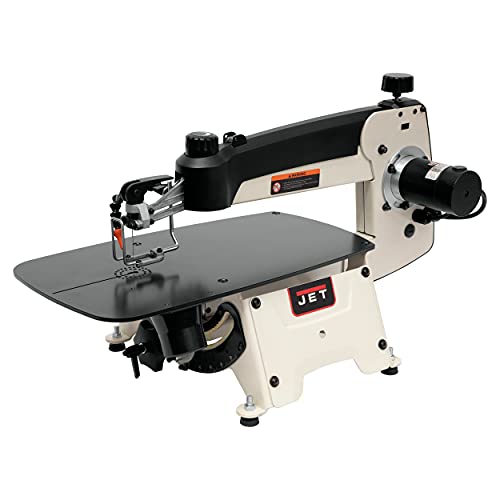
DEWALT DW788 20-Inch Variable-Speed Scroll Saw
$499.00 — Amazon buy-box, 2 Aug 2026
Check Price on Amazon- Throat depth: 20 in — a 40 in panel cut to its centre
- Speed: 400–1,750 SPM, electronic variable
- Cut capacity: 2 in depth of cut, 3/4 in stroke
- Table: 16 × 24 in cast iron, bevels 45° left and right
- Blades: 5 in plain-end (pinless), tool-free clamps
- Weight: 56 lb (DeWalt); Amazon’s listing says 66.1 lb — that is the shipping figure, and Woodcraft lists 68 lb shipped
The DW788 earns the top spot on its arm design rather than its spec sheet. It uses a double parallel-link arm, which keeps the blade perpendicular to the work through the whole stroke instead of swinging it through an arc. The practical result is that the machine sits still. In Wood Central’s hands-on review, John McAtee balanced a penny on the table and switched the saw on and off without the coin falling over. That is a crude test, but it is a repeatable one, and no reviewer has reported the same of any sub-$200 saw.
The 16 by 24 inch cast-iron table is also the largest surface in this group by area, and it bevels 45 degrees in both directions — the Bucktool and the JET tilt the arm instead and only manage 30 degrees one way. If you cut a lot of bevelled inlay or segmented intarsia, that symmetry saves re-clamping.
What owners rate
- Lowest reported vibration in the group, from the parallel-link arm
- Tool-free blade clamps and an upper arm that lifts to thread interior cuts
- Largest table area here, bevelling 45° both ways
- All controls — switch, speed dial, dust blower, tension lever — on the front of the upper arm
What they complain about
- The blade clamp is the single most-reported weak point; DeWalt technical support has acknowledged repeat complaints about the design
- Owners report the blade locking pin spinning without tightening and wingnut thread wear over time
- $24.95 per inch of throat — four times the WEN
- 56 lb, so it wants a dedicated bench or the optional DW7880 stand
Main drawback: the blade clamp. It works, but it is the part owners replace, and aftermarket clamp heads exist specifically because of it. Budget for one if you scroll daily.
Buy it if you expect to use a scroll saw most weeks for years and you want the machine you will not outgrow. Skip it if you are still deciding whether scrolling is your thing — $499 is a lot to find that out.
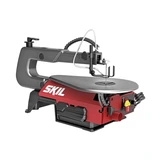
2. SKIL SS9503-00 — Best Scroll Saw for Beginners
Best Scroll Saw for Beginners
SKIL 1.2 Amp 16 in. Variable Speed Scroll Saw with LED Work Light (SS9503-00)
$199.00 — Amazon buy-box, 2 Aug 2026
Check Price on Amazon- Throat capacity: 16 in — a 32 in panel cut to its centre
- Speed: 550–1,650, electronic variable
- Table: 16 × 10 in steel, tilts 0–45° left
- Motor: 120V / 60Hz, 1.2 A, 3/25 HP
- Blades: three 18-tooth pinless blades supplied; keyless change; on-tool blade storage
- Extras: integrated LED work light, dust removal, foot pedal and on/off switch
If you are searching for the best scroll saw for beginners specifically, this is the one to buy, and the reason is the foot pedal. Being able to start and stop the blade without taking a hand off the workpiece is the difference between a controlled stop mid-curve and a lurch that wrecks the line. Almost nothing else at this price includes one. Pro Tool Reviews’ Kenny Koehler made the same point in his January 2023 hands-on test, and also confirmed the saw takes both pin-end and straight blades — which matters, because it means the cheap pinned blades in every hardware store fit it, and so do the fine pinless blades you will want six months later.
The keyless blade change and on-tool blade storage are the other beginner-facing details. New scrollers change blades constantly — wrong TPI, snapped blade, interior cut — and a saw that makes that a 20-second job instead of a hunt for an Allen key is a saw you keep using. Three years of warranty backs it up.
What owners rate
- Foot pedal keeps both hands on the workpiece — rare under $250
- Keyless blade change plus on-tool blade storage
- Takes both pin-end and pinless blades, so you are not locked in
- LED work light and a 3-year warranty
What they complain about
- The dust blower is fixed rather than adjustable, and several owners report it barely clears the line
- At roughly 25 lb it is light enough to move on the bench under load unless it is bolted down
- 16 in throat is ordinary — the WEN matches it for half the money
- SKIL does not publish blade length or a maximum cutting thickness
Main drawback: the dust blower. It is fixed in position and weak, so you will be blowing the line clear yourself or rigging a shop-vac nozzle.
Buy it if this is your first scroll saw and you would rather spend on usability than on capacity. Skip it if you already know you want fretwork-grade control — put the money towards the DeWalt instead.
Seen Aldi’s occasional Workzone scroll saw deal and wondered if it is worth it instead? Read our Aldi Scroll Saw Review for a closer look at that budget option.
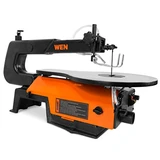
3. WEN 3922 — Best Scroll Saw Under $100
Best Scroll Saw Under $100
WEN 3922 16-Inch Variable Speed Scroll Saw with Easy-Access Blade Changes
$99.96 — Amazon buy-box, 2 Aug 2026
Check Price on Amazon- Throat depth: 16 in — a 32 in panel cut to its centre
- Speed: 550–1,600 SPM
- Cut capacity: 2 in at 90°, 9/16 in blade stroke
- Table: 16-1/4 × 10 in, tilts 0–45° left
- Blades: 5 in, pinned and pinless; thumb-screw adapter; three blades included
- Weight: 27.5 lb (WEN manual); Amazon’s listing says 24.87 lb
At $6.25 per inch of throat depth, the 3922 is the cheapest scroll saw capacity you can currently buy, and it is not a stripped-down machine: the manual confirms it accepts both 5-inch pin-end and pinless blades, tilts to 45 degrees, cuts a full 2 inches at 90 degrees, and sits on a cast-iron base. The flip-open side panel is a genuinely good idea — the lower blade holder is normally the awkward one to reach, and WEN simply put a door on it.
What you give up is refinement. Owners on Home Depot and Walmart consistently describe vibration that only settles once the saw is bolted to something solid, an intermittent high-pitched squeak, and pinless blades that can creep in the holder under tension. One reported snapping an ear off the lower blade holder; WEN replaced it under warranty without argument, which is the other half of the picture.
What owners rate
- Cheapest capacity here by a factor of two — $6.25 per inch of throat
- Takes pinned and pinless blades straight out of the box
- Flip-open side panel makes the lower blade holder reachable
- Cast-iron base, air pump, dust port and three blades included
What they complain about
- Vibrates and can walk unless bolted to the bench — the most consistent owner complaint
- Pinless blades reported slipping in the holder under full tension
- Random high-pitched squeak reported even when properly oiled
- The LED on WEN’s lit models vibrates enough to blur the line it is meant to light
Main drawback: it has to be bolted down. Treat the mounting bolts as part of the purchase, not an option, or you will blame the saw for your own wobble.
Buy it if you want to find out whether you enjoy scrolling for the price of a good router bit set. Skip it if your bench is a folding table — this saw needs mass under it.
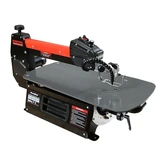
4. Bucktool 22-Inch Variable Speed Scroll Saw — Best Scroll Saw for Large Panels
Best Scroll Saw for Large Panels
BUCKTOOL 22-Inch Variable Speed Scroll Saw, 1/5 HP 1.3 A
$344.00 — Amazon buy-box, 2 Aug 2026
Check Price on Amazon- Throat depth: 22 in — a 44 in panel cut to its centre, the widest here
- Speed: 360–1,550 SPM
- Table: 27 × 13 in cast aluminium — the largest single dimension in the group
- Bevel: upper arm tilts 0–30° left and 0–45° right
- Blades: 5 in pinless; 15 and 18 TPI supplied, compatible with 10, 20, 25 TPI and 43/47 TPI spiral
- Blade change: tool-free; upper arm locks in the raised position for interior cuts
If your projects are clock faces, large intarsia panels, sign blanks or layered 3D scroll saw patterns, throat depth stops being a spec-sheet vanity number and starts being the constraint. The Bucktool has 2 inches more throat than the DEWALT and 3.5 inches more than the JET, for $155 and $527 less respectively. That works out at $15.64 per inch of throat depth, second only to the WEN.
The other feature worth the money is the upper arm that locks in the raised position. On most saws you hold the arm up with one hand while threading a blade through a pilot hole with the other; on this one the arm stays put. For a pattern with 60 interior cuts, that is not a small thing. The 27-inch table is also the widest here, which partly offsets the fact that a 44-inch panel still overhangs it by 1.6×.
What owners rate
- Widest capacity in the group at 22 in throat / 44 in panel
- $15.64 per inch of throat — cheaper capacity than the DeWalt
- Upper arm locks raised, so interior cuts are a one-handed job
- Accepts spiral blades up to 47 TPI as well as standard 5 in pinless
What they complain about
- Bucktool publishes a 71.87 lb gross weight but no net weight, so the bench load is unknown
- No published maximum cutting thickness — the one capacity figure that is missing
- Arm-tilt bevel means the table stays flat, which some scrollers dislike for repeat angles
- Much shorter service and spares track record than DeWalt or JET
Main drawback: the missing numbers. A manufacturer that will not publish net weight or maximum cut thickness is asking you to take capacity on trust, and those are exactly the two figures a buyer at this size needs.
Buy it if panel size is your actual constraint and you want it without paying JET money. Skip it if you need a documented spec sheet and a long parts history behind the machine.
5. JET JWSS-18B — Best Scroll Saw for All-Day Fretwork
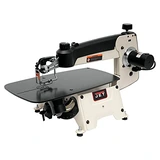
Best Scroll Saw for All-Day Fretwork
JET 18-Inch Variable-Speed Scroll Saw, 120V 1Ph (JWSS-18B)
$871.19 — Amazon buy-box, 2 Aug 2026
Check Price on Amazon- Throat capacity: 18-1/2 in per JET’s own manual — the box says 18 in, so you get half an inch more than advertised
- Speed: 400–1,550 SPM, 3/4 in stroke
- Table: 21-1/4 × 11-5/8 in steel, 1/4 in thick, slotted for blade changes
- Blades: plain-end (pinless) 5 in; 2-in-1 upper mechanism clamps and tensions in one step
- Dust: 2-1/2 in port with a published 300–350 CFM extraction recommendation
- Weight: 54 lb net; motor 1/16 HP (50 W), 1.3 A full-load
Two details in the JET manual explain the price, and neither is capacity. The first is the 1/4-inch-thick steel table: mass under the workpiece is what stops a saw resonating, and JET spent it there rather than on a bigger throat number. The second is that JET is the only maker in this group that publishes a dust extraction figure — 300 to 350 CFM at a 2-1/2 inch port. If you scroll for hours, the fine dust a scroll saw produces is the health issue, and a saw specified to a real CFM number can actually be plumbed into a collector.
The blade system is the other reason it belongs in a fretwork section. The upper mechanism clamps and tensions in a single motion, the lower holder is tool-free, and the arm is spring-loaded to lift 10 inches and stay there. That is a workflow built by people who expected the owner to change blades a hundred times a day. JET’s glossary is also unusually straight about what plain-end blades are for: they are “preferred for delicate fretwork.”
What owners rate
- 1/4 in steel table — the most mass under the work of any saw here
- Only saw in the group with a published dust extraction rating (300–350 CFM)
- One-motion clamp-and-tension upper mechanism; arm lifts 10 in and stays up
- Manual publishes a full spec table, including the 18-1/2 in real throat
What they complain about
- $47.09 per inch of throat — three times the Bucktool for less capacity
- The motor is 1/16 HP (50 W), the smallest published output here despite the highest price
- Arm tilt gives 45° right but only 30° left, and 45° left needs the dust port removed
- Thin stock availability — only two units were in stock at the buy box when we checked
Main drawback: the price per inch of capacity. Nothing about the JET is bad; it is simply the wrong purchase unless you value build quality and dust control over throat depth.
Buy it if you scroll for hours at a stretch, sell what you cut, and want a saw specified like a machine rather than a consumer tool. Skip it if you are comparing it on throat depth — on that measure it loses to a saw costing $527 less.
6. Dremel MS20-01 Moto-Saw — Best Scroll Saw for Small Spaces
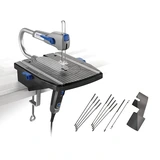
Best Scroll Saw for Small Spaces
Dremel MS20-01 Moto-Saw Variable Speed Compact Scroll Saw Kit
$111.82 — Amazon buy-box, 2 Aug 2026
Check Price on Amazon- Throat depth: 9.84 in (Dremel manual) — a 19-5/8 in panel cut to its centre
- Speed: 1,500–2,250 SPM no-load, variable
- Stroke: 0.31 in — less than half the DeWalt’s 3/4 in
- Weight: 2.4 lb, 0.6 A
- Blades: 3.8 in pin-end, Dremel MS-series only; auto-tensioning quick-change lever
- Mounting: fast-clamp base clamps to any bench; the saw head detaches for handheld coping
Every other saw here is a permanent bench installation weighing 24 to 56 pounds. The Moto-Saw weighs 2.4 pounds, clamps to whatever surface you have, and comes off again when you are done — and the head then detaches entirely so you can take it to a workpiece that is already fitted, which no bench saw can do. If your workshop is a corner of a flat or a shared garage, that is the whole argument.
Be clear about what you are giving up. The 3.8-inch blade length means Olson, Pegas and Flying Dutchman 5-inch blades physically do not fit; you are buying Dremel MS-series blades for the life of the tool. The blades are pin-end, which by JET’s own definition rules out intricate fretwork. And a 0.31-inch stroke moves far less blade through the cut than a 3/4-inch stroke, so it works thin stock and slows down badly in anything approaching an inch. For the same money the WEN gives you six more inches of throat and takes any 5-inch blade — if you have the bench for it.
What owners rate
- 2.4 lb and clamp-mounted — genuinely storable in a drawer
- Head detaches for handheld coping cuts on work that is already installed
- Auto-tensioning quick-change lever; no tools, no thumbscrews
- Widest top-end speed here at 2,250 SPM for plastics and laminates
What they complain about
- 3.8 in proprietary blades — standard 5 in scroll saw blades do not fit at all
- Pin-end only, so fine fretwork is off the table
- 0.31 in stroke and 0.6 A make heavy or thick stock slow going
- Smallest throat here at 9.84 in
Main drawback: the blade lock-in. You are buying into Dremel’s 3.8-inch pin-end range permanently, and it is the narrowest blade selection of any saw on this page.
Buy it if bench space, not capability, is your binding constraint. Skip it if you have a bench — the WEN 3922 is a real scroll saw for $12 less. Our guide to handheld scroll saws covers this category in more depth.
7. Proxxon DS 115/E — Best Scroll Saw for Miniatures and Model Work
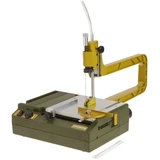
Best Scroll Saw for Miniatures and Model Work
Proxxon 37088 DS 115/E Scroll Saw
$192.84 — Amazon buy-box, 2 Aug 2026
Check Price on Amazon- Stroke rate: 150–2,500 per minute — the only saw here that goes below 400
- Cutting capacity: soft wood to 1-3/16 in, hard wood to about 25/64 in, plastic to about 5/32 in, non-ferrous metal to about 5/64 in
- Table: 6-19/64 in square, plane-milled die-cast aluminium
- Throat: 11-13/16 in (300 mm)
- Motor: 85 W, 110–120 V, toothed belt drive
- Blades: pin-end, in a free-swinging holder, with a quick tension-release lever for inside cuts
Proxxon is the only maker on this page that publishes cutting capacity per material instead of one optimistic softwood figure. That honesty is also the warning: hard wood capacity is about 25/64 of an inch, roughly a fifth of what the bench saws manage. This is not a general woodworking scroll saw and it does not pretend to be.
What it does that none of the others can is run at 150 strokes a minute. Every other saw here bottoms out at 360 to 550 SPM. For 1/32-inch aircraft ply, brass sheet, acrylic and circuit board — model railway, dollhouse, ship kit and instrument work — that low end is the difference between a cut and a melted, chipped mess. The quick tension-release lever is aimed at the same user: someone making dozens of interior cuts in a small part.
What owners rate
- Drops to 150 SPM — nothing else here goes below 360
- Published capacities for soft wood, hard wood, plastic and non-ferrous metal separately
- Quick tension-release lever built for frequent inside cuts
- Plane-milled die-cast aluminium table and toothed belt drive keep it quiet
What they complain about
- About 25/64 in in hardwood — a fifth of the bench saws’ 2 in
- The 6-19/64 in square table is smaller than a sheet of A5 paper
- Pin-end blades only, so fine fretwork blades are out
- Proxxon does not publish a weight for the US model
Main drawback: hardwood capacity. At roughly 3/8 of an inch it will not cut the stock most woodworking patterns are drawn for.
Buy it if your work is small, thin and often not wood at all. Skip it if you want to cut 3/4-inch pine — it is the wrong tool and no amount of patience fixes that.
How We Picked These Scroll Saws
Nobody at Woodworking Advisor put these seven machines on a bench. This is a specification and sentiment comparison, and it is worth saying so plainly, because a scroll saw roundup claiming seven machines were bench-tested in one sitting is claiming something that would take weeks. Here is exactly what went into it, so you can check any part of it yourself.
- Manufacturer spec sheets and owner’s manuals first. Throat depth, speed range, stroke, table size, bevel, blade type and weight were taken from DeWalt, SKIL, WEN, JET, Bucktool, Proxxon and Dremel documentation, not retailer listings. Two of those manuals contradicted the retail listing: JET’s manual gives an 18-1/2 in throat where the box says 18 in, and Amazon lists the DEWALT DW788 at 66.1 lb where DeWalt states 56 lb (Woodcraft lists 68 lb shipping weight, which is where the confusion comes from).
- Named third-party hands-on testing. Pro Tool Reviews’ Kenny Koehler tested the SKIL SS9503-00 on 13 January 2023 and confirmed its blade compatibility and the fixed dust blower. Wood Central’s John McAtee ran the balanced-penny vibration check on the DEWALT DW788. Where a claim in this article comes from someone else’s bench, it is attributed to them.
- Aggregated verified-buyer sentiment from Amazon, Home Depot and Walmart review sets plus the LumberJocks and Scroll Saw Woodworking & Crafts forums, used only for recurring, specific complaints — the WEN’s vibration and slipping pinless blades, the DW788’s blade clamp, the SKIL’s weak dust blower. One-off gripes were ignored.
- Live pricing and availability pulled from the Amazon Creators API on 2 August 2026, using buy-box price rather than list price. One model that appeared in earlier drafts, the Shop Fox W1872, was cut because its buy box showed a future availability date rather than stock.
- Unpublished numbers stay unpublished. Bucktool’s net weight, its maximum cutting thickness, SKIL’s blade length and Proxxon’s US weight are marked as not published rather than estimated.
The limitation to hold in mind: spec sheets do not tell you how a machine feels at 1,200 strokes a minute at midnight. They do tell you what will and will not fit, what blades you are committing to, and what you are paying per inch of capacity — and those are the decisions you cannot undo after the box is open.
What to Consider When Buying a Scroll Saw
Throat Depth: What the Number Actually Buys You
Throat depth is measured from the blade to the rear column, and it is the number the saw is named after — a “16-inch scroll saw” has a 16-inch throat. Because the workpiece hangs off both sides of the blade, the widest panel you can cut to its centre is twice that: 32 inches. If the cut only needs to reach a few inches in from an edge, the panel can be far wider still. Work out the deepest cut you actually need to make from the nearest edge, not the overall size of your project, and buy for that number.
| Throat depth | Panel to centre | Projects it comfortably covers | Saws in this comparison |
|---|---|---|---|
| 9.8–12 in | 19–24 in | Model and dollhouse parts, miniatures, small ornaments, thin non-ferrous and acrylic work | Dremel MS20-01, Proxxon DS 115/E |
| 16 in | 32 in | Ornaments, jigsaw puzzles, name signs, most beginner fretwork, small intarsia | WEN 3922, SKIL SS9503-00 |
| 18–20 in | 37–40 in | Clock faces, portrait fretwork, layered segmentation panels, mid-size intarsia | JET JWSS-18B, DEWALT DW788 |
| 22 in | 44 in | Full-width sign blanks, oversized portrait patterns, large intarsia scenes | Bucktool 22-Inch |
Table Size, and the Support You Will Need Anyway
This is the criterion the buying guides skip. Every saw in the comparison above advertises a panel capacity between 1.6 and 3.8 times larger than its own table. That is not a defect — a scroll saw table is never going to be four feet wide — but it does mean the advertised capacity is theoretical until you build outboard support. Two roller stands set at exactly table height, or a torsion-box outfeed panel, turn a 16-inch saw into something that can genuinely handle a 32-inch sign blank. Without them the panel tips, the blade wanders, and you blame the saw.
Pinned vs Pinless Blades — the Decision That Sticks
A pin-end blade has a small crossbar at each tip that drops into a notch; a plain-end (pinless) blade clamps flat. Pin-end blades are quicker to fit and much easier to find in a hardware store. They are also thicker, made in a far narrower range of sizes, and awkward to thread through a drilled hole for an interior cut — JET’s manual states outright that they are “not suitable for intricate fretwork.” There is a fuller breakdown of end types, tooth styles and TPI in our explainer on scroll saw blade types and sizes. A saw that takes both, like the WEN 3922 or the SKIL SS9503-00, is the safest choice if you are not sure yet which kind of work you will end up doing.
How Fast You Can Change a Blade
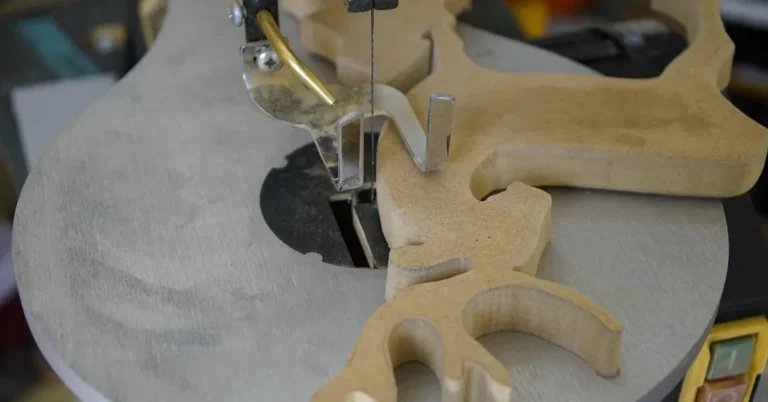
A pattern with forty interior cuts means forty blade removals and refits. On a tool-free saw that is roughly ten seconds each; with an Allen key and a fiddly lower holder it can be a minute, which turns a two-hour project into a three-hour one. Look for three specific things: a tool-free or keyless clamp at both ends (some saws are tool-free on top only), an upper arm that lifts and stays up on its own, and access to the lower holder without reaching under the table. The Bucktool’s locking raised arm and WEN’s flip-open side panel are both aimed squarely at this.
Speed Range, and Why the Bottom End Matters More
Every saw here has variable speed, so the top figure is close to meaningless — you will rarely use it. The bottom of the range is what varies and what counts. Slow speeds are for hardwood, for brass and acrylic that melt or chip when the blade heats up, and for the moment a tight corner needs control rather than pace. The bench saws bottom out between 360 and 550 SPM; the Proxxon drops to 150. If you cut anything other than wood, check the low end before the high one.

Vibration, Weight and Bolting the Saw Down
A scroll saw reverses a blade up to 1,750 times a minute, and every one of those reversals is a small shove. Two things absorb it: mass and arm geometry. The DEWALT’s 56 lb and its double parallel-link arm are why a penny can stand on its table while it runs; the WEN’s 27.5 lb is why owners describe it walking across an unbolted bench. The same geometry argument is why older parallel-arm machines such as the Delta 40-695 still hold their value. Weight is a fair proxy but it is not the whole story — the JET spends its mass on a 1/4-inch steel table specifically to damp the work rather than the frame. Whatever you buy, bolt it down. It is four holes and it changes the machine.
Bevel: Table Tilt vs Arm Tilt
Cheaper saws tilt the table and leave the arm level; the larger ones tilt the arm and leave the table flat. Tilting the table is simpler and usually gives a clean 0–45 degrees in one direction. Tilting the arm keeps the work flat, which is easier to hold, but the angles are often asymmetric — the JET gives 45 degrees right and only 30 left unless you remove the dust port, and the Bucktool is 45 right, 30 left. The DEWALT is the only saw here that bevels a full 45 degrees in both directions.
Dust Blower, LED Light and Foot Switch
These read like accessories and behave like core features. If sawdust sits on the cut line you cannot see the line, which is the entire job. Every saw here has a blower; the useful question is whether it is aimable. SKIL’s is fixed and reviewers found it weak, while the DEWALT’s is a flexible tube you can point. An LED helps if it is mounted on something that does not shake. A foot switch is the one genuine ergonomic upgrade — both hands stay on the work — and the SKIL is unusual in including one at $199.
Best Scroll Saw for Beginners: What Actually Matters at This Level
If you are shopping for the best scroll saw for beginners, the specs that dominate the marketing are the wrong ones to weigh. Throat depth almost never limits a first-year scroller, because first projects are ornaments, puzzles, name signs and small fretwork — a 16-inch saw handles a 32-inch panel and you will not approach it. What does limit you is friction: a blade change that takes five minutes, a blower that will not clear the line, a saw that hops on the bench, an arm you have to hold up with your third hand.
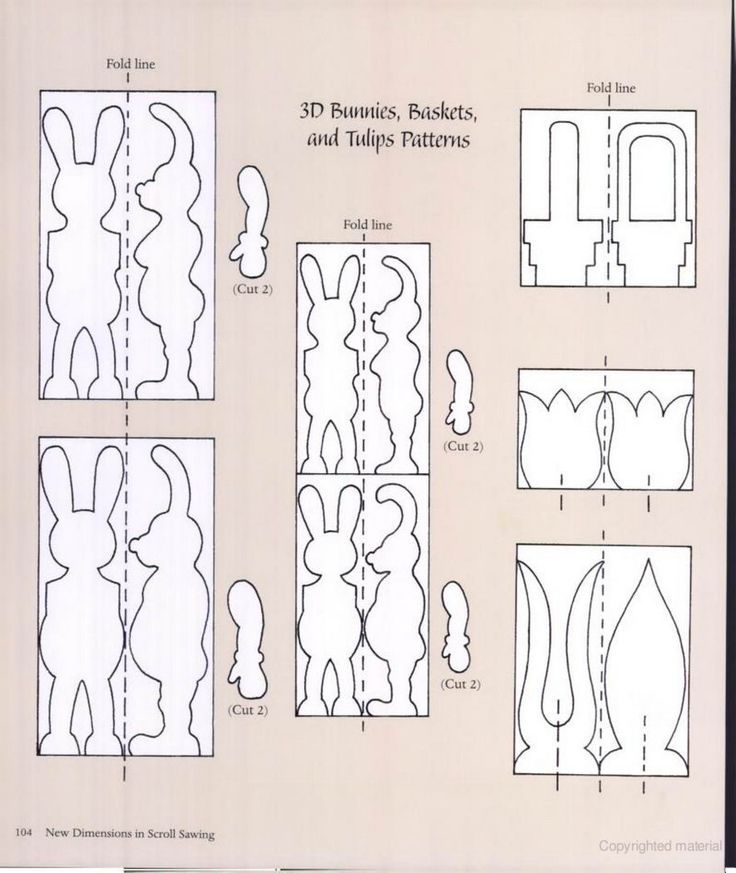
So the beginner priority order is blade-change speed first, then a foot switch or an easily reached power switch, then a saw that accepts both blade end types so you can buy blades anywhere while you learn, then mass or a bolt-down mounting, and only then throat depth. On that ranking the SKIL SS9503-00 at $199 wins, the WEN 3922 at $99.96 is the value answer if you will bolt it down, and the DEWALT DW788 is a saw to grow into rather than start on. Budget another $20–30 for a blade assortment on day one; the blades a saw ships with are rarely the ones your first project wants. Once you are cutting, our free Steve Good pattern catalogue is the largest source of beginner-friendly patterns online.
Price and Cost per Inch of Throat
Dividing the price by throat depth is the quickest way to see whether a saw is charging for capacity or for build quality. In this group the figure runs from $6.25 per inch on the WEN 3922 to $47.09 on the JET JWSS-18B — a 7.5-fold spread on the same measurement. That does not make the JET bad value, it makes it a different purchase: at the top of the range you are paying for a steel table, a rated dust port and a machine specified to be serviced. Below about $90 you are into single-speed and light-duty territory, which is the bracket the Black & Decker scroll saws occupy. Decide which of the two you are actually buying before you compare prices, because the two ends of this market are not competing with each other.
How to Set Up a New Scroll Saw and Make Your First Cut
Most first-cut disappointment is a setup problem, not a saw problem. These seven steps take about twenty minutes and remove nearly all of it.
- Bolt the saw to something heavy. Use the mounting holes in the base and fix it to a solid bench, or to a 3/4-inch plywood platform you can clamp down. This single step removes most of the vibration owners complain about.
- Check the table is square to the blade. Set the bevel to zero, stand a small engineer’s square on the table against the blade, and adjust the table stop until there is no light under the square. Factory zero stops are often out.
- Fit the right blade for the material. For 1/4-inch and thinner softwood or ply, use 15–20 TPI; for 1/4 to 3/4 inch hardwood, 10–15 TPI. Fit it with the teeth pointing down and towards the front.
- Tension the blade properly. Pluck it like a guitar string — it should give a clear note, not a dull thud. Under-tensioned blades wander and snap; that is the most common cause of a cut that will not follow the line.
- Set the hold-down foot just clear of the work. It should sit a hair above the surface, close enough to stop the workpiece lifting on the upstroke but not pressing hard enough to stop you steering.
- Start slow. Run at the bottom third of the speed range for your first cuts. Speed is easy to add once you can steer; it is very hard to recover a line at 1,600 SPM.
- Cut a scrap circle and a scrap square before the real pattern. Five minutes of practice on offcuts tells you how much the blade drifts and how far ahead you need to steer — on your project, that lesson costs you the project.
Frequently Asked Questions
What size scroll saw is best for beginners?
A 16-inch scroll saw suits almost every beginner. It cuts a panel up to 32 inches wide to its centre, which is far larger than typical first projects like ornaments, puzzles and name signs, and it costs between $100 and $200. Going to an 18 or 20-inch saw buys capacity most new scrollers never reach, and the money is better spent on a saw with faster blade changes and a foot switch.
Should beginners buy pin-end or pinless blades?
Buy a saw that takes both, then start with pin-end blades because they are quicker to fit and stocked everywhere, and move to pinless once you start doing interior cuts. Pinless blades are made in far more sizes and are the only option for fine fretwork — JET’s own manual states pin-end blades are not suitable for intricate fretwork. The WEN 3922 and SKIL SS9503-00 both accept either type.
What does throat depth mean on a scroll saw?
Throat depth is the distance from the blade to the frame at the rear of the saw, and it is the number the saw is named after. Because the workpiece overhangs both sides of the blade, the widest panel you can cut to its centre is twice the throat depth: a 16-inch saw handles a 32-inch panel, a 20-inch saw handles 40 inches. No scroll saw has a table large enough to support a panel that size, so plan on roller stands or an outfeed table.
How much should I spend on my first scroll saw?
Between $100 and $200 covers a saw good enough to learn on without hiding your mistakes behind poor equipment. The WEN 3922 at about $100 is the cheapest capable option provided you bolt it down, and the SKIL SS9503-00 at about $199 adds a foot pedal, LED light and keyless blade changes that genuinely reduce beginner frustration. Add $20 to $30 for a blade assortment, because the blades in the box are rarely the ones your first project needs.
Is variable speed really necessary on a scroll saw?
Yes, but for the low end rather than the high end. Slow speeds are what let you cut hardwood without burning, brass and acrylic without melting, and tight corners without overshooting the line. Every saw compared here has variable speed; what differs is how slow they go, from 550 SPM on the WEN and SKIL down to 150 SPM on the Proxxon DS 115/E.
Can a scroll saw cut metal?
Thin non-ferrous metal, yes, with the right blade and a slow speed. Proxxon rates the DS 115/E for non-ferrous metal up to about 5/64 inch and plastic to about 5/32 inch, and Dremel supplies a dedicated metal-cutting blade for the Moto-Saw. Steel, and anything approaching 1/8 inch, is a bandsaw or jeweller’s saw job. Use a fine metal-cutting blade, run at the bottom of the speed range, and sandwich thin sheet between scrap ply so it cannot flutter.
Why does my scroll saw vibrate and walk across the bench?
Almost always because it is not bolted down. A scroll saw reverses its blade up to 1,750 times a minute and a 25 to 30 lb machine has nothing like the mass to absorb that on its own. Fix it to the bench through the base mounting holes, or to a plywood platform you can clamp. After that, check blade tension — a slack blade adds its own vibration — and confirm the saw is sitting on all four feet on a flat surface.
Final Thoughts
The DEWALT DW788 at $499 is the best scroll saw for woodworking for anyone who expects to keep using one: 20 inches of throat, a 16 by 24 inch cast-iron table that bevels both ways, and a parallel-link arm that stays still enough to balance a coin on. If this is your first saw, buy the SKIL SS9503-00 at $199 for the foot pedal and the keyless blade changes, or the WEN 3922 at $99.96 if you will bolt it to a solid bench.
The one number to carry away is the one no box prints: throat depth doubles into panel width, and every saw here advertises a capacity between 1.6 and 3.8 times wider than its own table. Buy for the deepest cut you need to make from an edge, and budget for the roller stands that make the rest of that capacity real. If you want to see how the machines in this guide compare against the wider saw family, our guide to woodworking saws and how to choose between them puts scroll saws next to band saws, jigsaws and coping saws, and the benchtop scroll saw list covers a wider set of budget models than the seven ranked here.
Sponsored / affiliate links. As an Amazon Associate I earn from qualifying purchases. I may earn additional commission from eligible campaigns.