How to Identify Barn Wood Species: Grain, Rays & Endgrain Test
Barn wood species are told apart by grain pattern, weight, and pore structure — but color alone can’t separate oak from chestnut, since both show the same ring-porous grain to the naked eye. Guessing wrong can crack a tabletop or dull blades on wood too hard for the tools on hand. This guide covers the visual, weight, and 10x endgrain tests pros use, real density and hardness numbers for seven barn species, and when DNA testing is worth the cost.
Quick Answer
To identify barn wood species, compare grain pattern, color, and weight against known woods, then confirm with a 10x hand lens on the endgrain — oak and ash show open ring-porous pores, maple and birch show tight diffuse-porous grain. For high-value or disputed lumber, a wood-identification lab or DNA barcoding test gives a certain answer.
What Wood Species Were Barns Actually Built From?
Best Wood-ID Loupe Pick
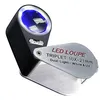
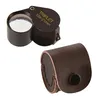
Gain Express 10X Triplet Loupe with LED Light
The same 10x magnification used for the endgrain test in this guide, with a built-in LED for reading pores in dim barns or workshops.
- Best for: Reading endgrain pore patterns to tell ring-porous from diffuse-porous wood
- Why we picked it: Triplet lens design stays sharp edge-to-edge, unlike single-lens loupes
- Main drawback: Small lens field means you examine a small area at a time
Compare more wood-ID loupe options
 Option 1 Nikon 10x Triplet Loupe
|
 Option 2 Ade Advanced Optics Triplet Loupe
|
 Option 3 Budget 10x LED Loupe
|
As an Amazon Associate we earn from qualifying purchases.
Most surviving barns date to the 1800s through the early 1900s, when builders used whatever strong, straight-grained timber grew nearby rather than shipping lumber in. That’s why the species found in reclaimed barn wood tracks regional forests: oak and chestnut dominate in the Appalachians and Northeast, pine and Douglas fir in the Midwest and West, and elm, hickory, and ash wherever hardwood forests were dense enough to spare timber for framing.
| Species | Why It Was Used | Still Common Today? |
|---|---|---|
| White oak | Strong, rot-resistant, holds joinery well | Yes — most common barn salvage |
| American chestnut | Straight, light, didn’t warp or shrink | Rare — largely wiped out by blight after 1904 |
| Eastern white pine | Fast-growing, easy to cut and plane | Yes — most common softwood salvage |
| Douglas fir | Long, straight beams for wide spans | Yes — common in Midwest/West barns |
| American elm | Interlocked grain resists splitting | Occasional — hard on saw blades |
| Hickory | Extreme density for posts and pegs | Occasional — mostly structural |
For a full side-by-side of every domestic species with photos and Janka numbers, our complete types of wood guide is a useful reference to keep open next to the piece you’re trying to identify.
How To Identify Barn Wood Species: The 5-Step Process
- Compare grain and color: Note whether the grain is bold and open (oak, ash) or fine and subtle (pine, maple), then check the color range against known reference photos in daylight, not under artificial light.
- Weigh and flex-test the board: Heavier, stiffer boards are usually a harder species — oak, maple, and hickory feel noticeably heavier for their size than pine, cedar, or fir.
- Check the cut marks: Curved, evenly spaced circular saw marks mean the board was milled after roughly 1870; straight marks from an up-and-down mill or an adze mean earlier, hand-cut lumber.
- Run the 10x endgrain test: With a jewelers loupe or hand lens, look at the cut end grain. Large pores banded in a ring at the edge of each growth ring mean a ring-porous wood (oak, ash, elm, chestnut); pores scattered evenly mean diffuse-porous (maple, birch); no visible pores at all, only faint resin lines, means a softwood (pine, cedar, fir, spruce).
- Confirm with an expert or DNA test if it matters: For high-value furniture stock, a legal dispute, or an insurance claim, send a sample to a wood identification lab instead of guessing — the cost is small next to what a wrong species call can cost on an expensive project.
Visual Inspection: Grain, Rays, and the Endgrain Test
Grain and color get you close, but they can’t always separate look-alike species. Oak and American chestnut are the classic mix-up: both are ring-porous, meaning the largest pores form a visible band at the start of each growth ring, so both can look similar at arm’s length on a weathered board.
The detail that actually separates them is the wood rays — the ribbon-like cells running perpendicular to the grain. In oak, the rays are wide enough to see with the naked eye as pale flecks or streaks, especially on quartersawn faces. In chestnut, the rays are so narrow they’re invisible without magnification. If you can see ray fleck without a lens, you’re looking at oak, not chestnut — a distinction most identification guides skip entirely.
According to The Wood Database’s identification guide, magnified examination of the endgrain is the single most conclusive visual technique available — more reliable than face-grain color or texture alone, because pore arrangement doesn’t change with weathering, staining, or fading the way surface color does.
Density and Janka Hardness by Species
Weight is a fast field test because density and hardness track closely in domestic wood. A board that feels surprisingly heavy for its size is almost never pine or cedar.
| Species | Density (lb/ft³) | Janka Hardness | Pore Type |
|---|---|---|---|
| White oak | 47 | 1,350 lbf | Ring-porous, wide rays |
| American chestnut | 28 | 540 lbf | Ring-porous, narrow rays |
| Shagbark hickory | 50 | 1,880 lbf | Ring-porous |
| Sugar maple | 44 | 1,450 lbf | Diffuse-porous |
| American elm | 35 | 830 lbf | Semi-ring-porous |
| Douglas fir | 32 | 620 lbf | Non-porous softwood |
| Eastern white pine | 25 | 380 lbf | Non-porous softwood |
📊 Shagbark hickory (1,880 lbf) is roughly 5x harder than eastern white pine (380 lbf) on the Janka scale — enough that a hand plane set fine for pine will barely scratch a hickory post. Source: The Wood Database, species property pages.
Cut and Saw Marks: Dating the Lumber
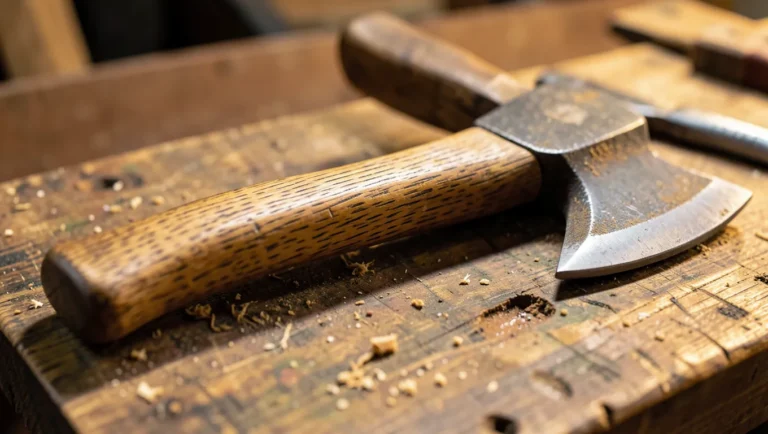
Saw marks narrow down age faster than grain alone. Hand-hewn timber, shaped with a broadaxe or adze, has uneven facets and shallow chop marks — typical of framing cut before circular sawmills spread widely in the 1870s. Straight, parallel marks running the length of a board come from an up-and-down muley saw, common through the mid-1800s. Curved, arcing marks that repeat at a consistent spacing mean a circular saw blade, which puts the lumber after roughly 1870 in most regions. Our sawmill vs. lumber mill guide covers how these milling methods differ if you want the full mechanical picture.
Chemical and Color Tests for Confusable Species
When grain and rays still leave two species in question — commonly red oak versus white oak — a simple color-reaction test can settle it. White oak’s heartwood extractives react to a drop of ferric chloride solution with a blue-black stain, while red oak shows little to no color change, because red oak lacks the tyloses that block its pores and give white oak its rot resistance. A UV blacklight test works the same way: several species fluoresce under blacklight in ways their visible-light color doesn’t predict, which helps separate species that look nearly identical in daylight. These tests take minutes and don’t require sending anything to a lab, but they only narrow down species within the same family — they won’t tell oak from chestnut, since neither reacts distinctively to ferric chloride.
DNA Barcoding: When Lab Testing Is Worth It
DNA barcoding compares short genetic sequences from a wood sample against a reference database to confirm species with certainty that visual and chemical tests can’t match. The USDA Forest Service’s Forest Products Laboratory is actively developing field-deployable DNA extraction methods specifically because closely related species — like the different Southern yellow pines — often can’t be told apart by wood anatomy alone. For barn wood identification, DNA testing is rarely necessary for a DIY project, but it matters for high-value antique furniture stock, timber fraud disputes, and enforcement cases involving protected or illegally logged species.
When to Call in a Wood Identification Expert
Bring in a professional when the species call affects money or safety — appraising a large reclaimed-wood lot, confirming a structural beam can carry a load, or settling an insurance or resale dispute. Local university extension offices and regional woodworkers’ guilds can often point you to someone who does wood identification professionally, and a short consultation is far cheaper than misjudging a species on an expensive project.
Preserving Barn Wood Once You’ve Identified It
Once you know the species, handle it accordingly — softwoods like pine dent and compress more easily during cleaning, while dense hardwoods like oak and hickory tolerate more aggressive brushing. Clean gently with a soft brush first, avoid harsh solvents that can strip the weathered patina that gives reclaimed wood its value, and store boards flat in a dry, humidity-stable space to prevent new warping. Our wood care and protection guide covers cleaning, pest defense, and repair in more depth, and if the identified wood is headed into furniture rather than flooring or paneling, how to care for antique wood furniture without damaging it is the next read.
Can a Phone App Reliably Identify Barn Wood?
Photo-based wood identifier apps are real and improving, using image recognition trained on grain and pore patterns rather than magic. They work best on a clean, freshly sanded, unfinished surface in good light — exactly the opposite of a weathered, painted, or heavily worn barn board. On reclaimed lumber, treat an app result as a starting guess to confirm with the grain, weight, and endgrain checks above, not a final answer, since finished, stained, or badly weathered surfaces are the cases where photo recognition is least reliable.
Common Mistakes When Identifying Barn Wood Species
- Confusing oak and chestnut on color alone: Both weather to a similar gray-brown; check ray visibility under a lens instead.
- Judging species only from a painted or stained face: Surface finish hides the true color and can mask grain; check a fresh cut or the underside of the board.
- Assuming all barn wood is oak: Pine and fir siding is far more common by volume than oak, which was usually reserved for structural framing, not boards.
- Skipping the weight test: A board that feels light for its size is very likely a softwood, no matter how dark it looks.
- Ignoring ash as an option: Ash was a common barn species in areas where it was locally abundant; our ash wood availability guide explains why it’s gotten harder to source new ash lumber since the emerald ash borer spread.
“The first time I pulled apart an old tobacco barn, I was sure every beam was oak — the color and the ring-porous grain both said so. It wasn’t until I put a loupe on the endgrain that I saw the rays were too fine to be oak. It was chestnut, cut before the blight wiped the species out. That one detail changed what the wood was worth and how I used it.”
Frequently Asked Questions
How Can I Identify Barn Wood Species?
Compare grain pattern, color, and weight against known species, then confirm with a 10x hand lens on the endgrain — ring-porous woods like oak, ash, and chestnut show a visible band of large pores, diffuse-porous woods like maple show pores scattered evenly, and softwoods like pine show no pores at all. For valuable or disputed lumber, a wood identification lab can confirm the species with certainty.
What Are The Common Types Of Barn Wood?
The most common barn wood species are white oak, American chestnut, eastern white pine, and Douglas fir, with elm, hickory, and ash appearing regionally. Oak and chestnut were typically reserved for structural framing, while pine and fir were used for siding and roof boards in much higher volume.
Why Is Barn Wood Species Important?
Species determines hardness, workability, and resale value, and getting it wrong can mean dulled tools, cracked joints, or an inaccurate appraisal. A misidentified chestnut beam sold as oak, or vice versa, can be off by hundreds of dollars in value on a large lot of reclaimed lumber.
How Do I Examine Barn Wood Closely?
Inspect a fresh cut or the underside of the board rather than a weathered, painted face, since finish and sun exposure hide true color and grain. Use a 10x jewelers loupe on the endgrain to check pore arrangement and ray width, and photograph the results before moving on, since side-by-side comparison is more reliable than memory.
What’s The Difference Between Ring-Porous And Diffuse-Porous Wood?
Ring-porous woods like oak, ash, elm, and chestnut concentrate their largest pores in a visible band at the start of each growth ring. Diffuse-porous woods like maple, birch, and cherry spread their pores evenly across the whole ring instead. Ring-porous woods tend to be stronger but more prone to cracking; diffuse-porous woods work and finish more smoothly.
Is Wormy Chestnut Valuable?
Yes. Wormy chestnut — American chestnut riddled with tunnels from the chestnut timber borer after the 1904 blight killed the trees — was once considered defective, but the worm holes are now a prized decorative feature in furniture, flooring, and trim. Because mature American chestnut can no longer be harvested, reclaimed wormy chestnut from old barns is one of the more valuable species a barn teardown can yield.
Conclusion
Grain and color get you a first guess, weight and saw marks narrow it down, and the 10x endgrain test settles most oak-versus-chestnut and hardwood-versus-softwood questions without a lab. Save DNA barcoding and professional appraisal for the cases where real money or safety is on the line. Start with a single board, run through the five steps above, and you’ll be identifying barn wood species with real confidence.
Sponsored / affiliate links. As an Amazon Associate I earn from qualifying purchases. I may earn additional commission from eligible campaigns.