How to Move Screw Holes Slightly (5 Methods That Hold)
Move a screw hole slightly by filling the old hole with wood filler, epoxy putty, or a glued dowel, then drilling the new hole at least 3 times the screw’s diameter away — closer than that and the wood can split. Rush the fill and the new hole tears out under load. This guide covers the fill-and-redrill method, offset brackets for hinges, and the drywall-specific fix.
Tools and Materials You’ll Need
Best Screw Hole Repair Pick
Pluggies Stripped Screw Hole Repair Kit (24 Pack)
Snap-off plastic plugs that expand to fill a moved or stripped hole — no wood filler, no overnight cure, no redrilling.
- Best for: Cabinet hinges, door hardware, and shelf brackets where you need a fix in minutes, not overnight
- Why we picked it: Skips the wait — wood filler and epoxy both need cure time before you can drive a screw, this doesn’t
- Main drawback: Not a true structural repair for large, load-bearing holes — a glued dowel still holds better long-term
Compare more screw hole repair options
 Option 1 Gulfmew Wood Anchor, 10 Pcs
|
 Option 2 3/8″ Wood Dowel Pins, 100-Pack
|
 Option 3 J-B Weld KwikWood Epoxy Putty Stick
|
As an Amazon Associate we earn from qualifying purchases.
Most of this list is stuff already in a shop drawer. The one item worth buying new is a stripped-hole repair kit if you’re dealing with more than one or two holes — it saves the cure-time wait that wood filler and epoxy both require.
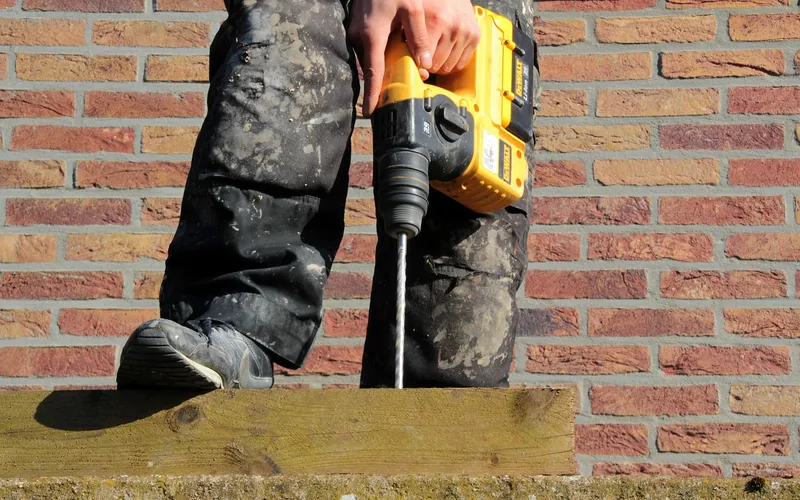
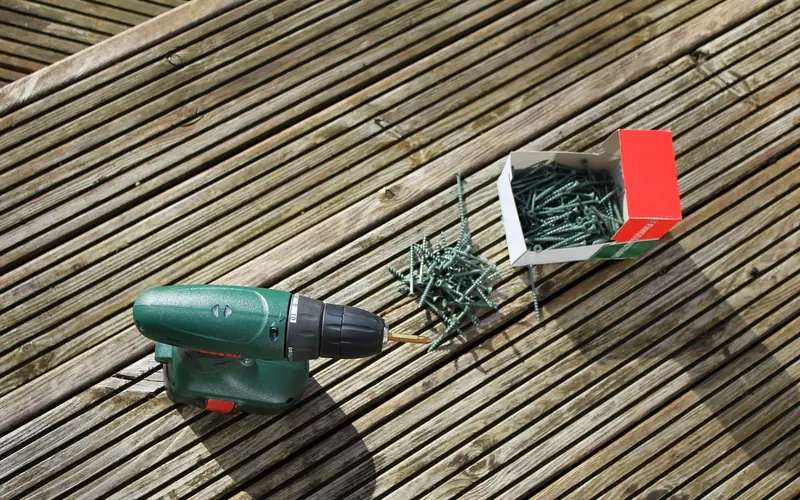
- Cordless drill and a bit set (a bit slightly smaller than the screw’s shank for pilot holes)
- Wood filler or 2-part epoxy putty
- Hardwood dowel pins (1/4″ and 3/8″ cover most hardware screws) or a stripped-hole repair insert
- 120–150 grit sandpaper
- Pencil or awl for marking the new location
- Tape measure or ruler
- Clamp to hold the workpiece steady
- Safety glasses
How Far Apart Should the New and Old Holes Be?
📊 Keep at least 3× the screw’s shank diameter between the new hole and the old one (or an edge). For a #8 screw (0.164″ shank) that’s roughly 1/2″ minimum; for a #10 screw (0.190″) closer to 5/8″. This is the standard wood-screw edge-distance rule used in framing and fastening — go tighter than that and you’re drilling into wood already weakened by the first hole.
Softwoods (pine, fir) need the full 3× spacing. Hardwoods (oak, maple) tolerate slightly closer — about 2.5× the shank diameter — because the denser grain resists splitting better. If your new hole location falls inside that minimum, fill and redrill straight through the old hole’s footprint instead of trying to sneak a second hole next to it.
Which Method Should You Use?
The right fix depends on hole size and how much load the screw will carry — a cosmetic hook holds fine with wood filler, but a cabinet hinge needs something stronger.
| Method | Best Hole Size | Redrill Needed? | Holding Strength |
|---|---|---|---|
| Toothpick + wood glue | Hairline to 1/16″ | Yes, after glue dries | Light duty only |
| Glued hardwood dowel | 1/8″ to 3/8″ | Yes, after glue cures | Strongest DIY option |
| Wood filler or epoxy putty | Up to 1/2″ | Yes, after it cures | Moderate — not structural |
| Stripped-hole repair insert | Matches existing screw | No — screws in immediately | Good, no cure wait |
| Offset bracket or hinge plate | Any — no filling | No | Depends on hardware, not the hole |
| Self-centering bit + whittled plug | 3/16″ to 1/2″ | Yes, after glue sets | Best for hinges specifically |
Method 1: Fill and Redrill (the Standard Fix)
This is the go-to method for most screw holes in wood — shelves, brackets, furniture hardware, anything that isn’t a hinge under constant stress. It works with either wood filler, epoxy putty, or a glued dowel; use the dowel if the hole is load-bearing.
- Fill the old hole: Pack wood filler or epoxy putty into the hole with a putty knife, or glue in a snugly-fitting hardwood dowel and tap it flush with a hammer.
- Let it cure fully: Wood filler and epoxy putty both need to cure completely before you drill into them — check the product label, most run 20 minutes to a few hours depending on humidity and fill depth.
- Sand flush: Once cured, sand the patch level with the surrounding surface using 120–150 grit sandpaper.
- Mark and drill the new hole: Measure and mark the new position, respecting the 3×-diameter spacing rule above, then drill a pilot hole with a bit slightly smaller than the screw’s shank.
- Test fit before final drive: Drive the screw partway and check alignment before seating it fully — it’s much easier to back out and adjust now than after the hardware is mounted.
Method 2: Moving a Hinge Screw Hole (Cabinets & Doors)
Hinge screws take repeated stress every time the door opens, so wood filler alone isn’t reliable here. The trade technique is a self-centering drill bit and a whittled hardwood plug — it holds up to daily use far better than filler.
Whittle a scrap hardwood dowel or a piece of poplar down until it fits snugly into the old hole with a few light hammer taps — friction alone should hold it without glue at first. Once it’s seated, add a dab of wood glue around the edge for a permanent bond, let it cure, then use a self-centering bit (sized to the new screw) to drill the new hole exactly where you need it — the spring-loaded tip keeps the bit from wandering off-center the way a standard bit can on a small hinge leaf.
For small adjustments — shifting a hinge back 1/16″ to 1/8″ toward the door jamb, which is the most common hinge fix — toothpicks and glue work fine instead of a full dowel, since the screw itself is small. And if you’re replacing the hinge screws while you’re in there, it’s worth checking cabinet screws vs. wood screws first — the wrong screw type is a common reason hinge holes strip out in the first place.
“In the shop, I don’t trust wood filler alone on anything that gets opened and closed every day, like a cabinet hinge. I glue in a scrap hardwood plug and let it cure overnight before redrilling — filler is fine for a cosmetic screw, but it’s not a structural fix.”
Method 3: Moving a Screw Hole in Drywall
Drywall doesn’t hold a screw on its own, so the fix is different from wood. For a minor shift, drill the new anchor hole in the new spot and spackle over the old one — no filling required before drilling since drywall doesn’t split like wood does. If the old hole is enlarged or stripped, step up to a larger anchor instead of trying to plug it. For a hole bigger than about 1/2″, cut a small drywall patch, screw it behind the opening as backing, and spackle over it before drilling the new anchor hole into solid backing instead.
Common Mistakes to Avoid
- Drilling before the filler cures: A pilot bit through half-dry filler just pushes it out of the hole instead of cutting through it — wait for the full cure time on the label.
- Ignoring the 3× spacing rule: A new hole drilled too close to the old one lands in wood that’s already been weakened, and it can split under the screw’s wedging force.
- Using filler on a load-bearing hole: Wood filler and epoxy putty resist light pressure fine, but they’re not a substitute for a glued dowel on hinges, brackets, or anything holding real weight.
- Skipping the pilot hole: Driving a screw straight into solid or patched wood without a pilot hole is the single most common cause of splitting, especially near an edge.
Frequently Asked Questions
Can you drill a new screw hole right next to an old one?
Not safely without spacing. Keep at least 3× the screw’s shank diameter between the new hole and the old one — about 1/2″ for a #8 screw. Closer than that and the wood between the two holes is too thin to resist splitting.
Does wood filler actually hold a screw?
Yes, for light duty. Wood filler and epoxy putty grip a screw well enough for shelves, hooks, and cosmetic hardware, but they’re not as strong as a glued hardwood dowel and shouldn’t be used alone on hinges or anything load-bearing.
How do you move a hinge screw hole without new hardware?
Glue a whittled hardwood plug into the old hole, let it cure, then drill the new hole with a self-centering bit sized to the screw. For a small shift of 1/16″ to 1/8″, toothpicks and glue work instead of a full dowel.
How do you move a screw hole in drywall?
Drill the new anchor hole in the new spot and spackle over the old one — drywall doesn’t need filling before drilling like wood does. If the old hole is enlarged, use a larger anchor instead of trying to plug it.
How far apart do old and new screw holes need to be?
At least 3 times the screw’s shank diameter for softwood, or about 2.5 times for hardwood. For a common #8 screw that’s roughly 1/2″ minimum spacing.
What’s the strongest way to fix a screw hole that moved?
A glued hardwood dowel, left to cure fully before redrilling. It holds up to repeated screw torque better than wood filler, epoxy putty, or toothpicks, which is why it’s the standard choice for hinges and other load-bearing holes.
Conclusion
Match the method to the hole: toothpicks and glue for hairline shifts, a dowel for anything load-bearing, filler or a repair insert for everything in between, and an offset bracket when you’d rather not fill a hole at all. Keep the 3×-diameter spacing rule in mind whichever method you pick, and let filler or glue cure fully before drilling — that’s the step most redrilled holes fail on.
For more shop techniques like this one, see our Woodworking Tips & Fixes guide. If you’re weighing which filler to buy, we’ve also reviewed Harbor Freight wood filler, and for bigger structural gaps see our guide to repairing wood rot with epoxy.
Sponsored / affiliate links. As an Amazon Associate I earn from qualifying purchases. I may earn additional commission from eligible campaigns.