How Long before You Can Stain Pressure Treated Wood: Expert Tips
Are you wondering when it’s the right time to stain your pressure-treated wood? You’re not alone.
Many homeowners face the same question after investing in pressure-treated wood for their decks, fences, or outdoor furniture. Staining too soon can lead to a patchy, uneven finish, while waiting too long might leave the wood vulnerable to the elements.
Getting the timing just right is crucial for both the appearance and longevity of your wood projects. We will reveal the perfect time to apply stain, ensuring your wood not only looks fantastic but also stands the test of time. We’ll share expert tips and tricks that will empower you to make the right decision, enhancing the beauty and durability of your wood. Stick with us, and you’ll discover the secrets to achieving a flawless finish that will leave your neighbors envious. Dive in to learn more about preserving and beautifying your pressure-treated wood with confidence.

Credit: rainonatinroof.com
Understanding Pressure Treated Wood
Pressure treated wood is wood that gets a special treatment. The wood is soaked in chemicals. These chemicals help fight bugs and rot. This makes the wood last longer. It is a strong choice for outdoor projects. Not all wood is treated the same way. Some woods get more chemicals. This depends on where the wood will be used.
Using pressure treated wood has many benefits. It is strong and durable. This wood can resist bugs. It does not rot easily. It’s great for outdoor furniture and decks. The treatment makes it last longer than regular wood. This means fewer repairs over time. It saves money in the long run.
Pressure treated wood is used in many places. It’s perfect for decks and fences. You can use it for garden beds. It is safe for outdoor furniture too. Playgrounds often use this wood. It stands up to weather and wear. This wood is also used in building docks. It is a versatile choice for many projects.

Credit: www.sand-stain.com
Reasons For Staining Pressure Treated Wood
Wood needs protection from rain and sun. These elements can damage it over time. Staining creates a shield for the wood. Water and sunlight cannot easily harm it. The stain helps keep the wood strong and safe.
Staining makes wood look beautiful. It brings out the wood’s natural color. The stain can make the wood look shiny or matte. Choose a color you like. The wood will look new and fresh.
Wood can rot if not protected. Staining helps stop this. The stain keeps moisture away. Rot and decay have less chance to happen. The wood stays strong for a long time.
Ideal Timeframe For Staining
Pressure treated woodneeds time before staining. Drying timeis crucial. Typically, wait 4 to 6 months. This ensures the wood is ready. Staining too soon can cause problems. The stain won’t stick well. Colors may not last. Waiting helps avoid these issues.
Several factors affect drying time. Weather is a big factor. Rainy days add more waiting time. Humidity slows down drying. The type of wood matters. Some woods dry faster. Others need more time. Always check the wood first.
Look for signs before staining. The wood should be light in color. It must feel dry to touch. If water beads on the surface, wait longer. The surface should absorb water. These signs show the wood is ready.
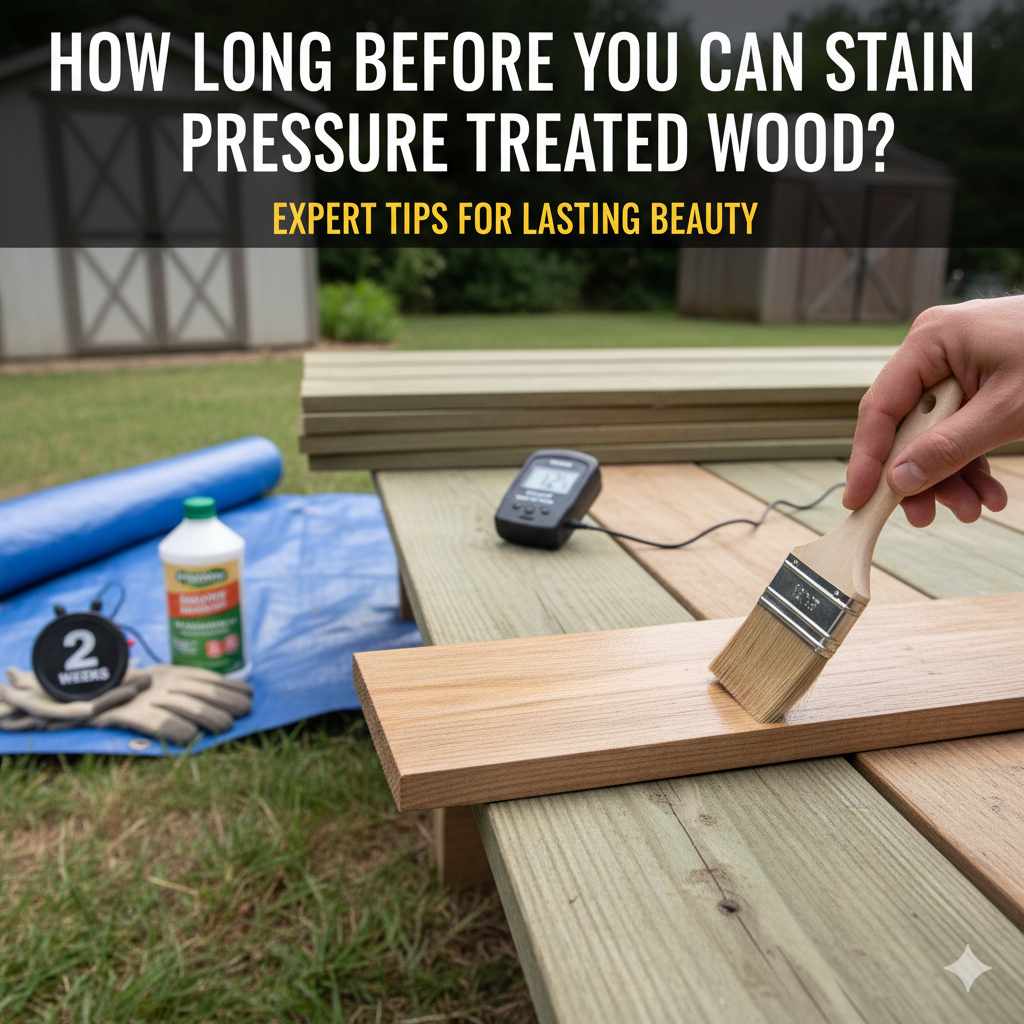
Use a moisture meterto test the wood. Check different spots. The moisture level should be below 15%. If higher, wait more days. Testing helps avoid mistakes. It ensures better staining results.

Credit: www.deckstainhelp.com
Expert Tips For Staining
Waiting for pressure treated wood to dry is crucial before staining. Typically, this takes around two to three months. Proper drying ensures effective stain absorption and long-lasting results.
Choosing The Right Stain
Pressure treated wood needs a good stain. Oil-based stains work best. They penetrate deeply into the wood. These stains protect against moisture and UV rays. Water-based stains are also available. They are easy to apply and dry quickly. Choose a stain that matches your wood’s color and texture.
Preparing The Wood Surface
Start with a clean surface. Remove dirt and dust. Sand the wood gently. This helps the stain to stick well. Check the wood’s moisture level. Dry wood stains better. Use a moisture meter if needed. Wait for the wood to dry completely.
Application Techniques
Use a brush for small areas. Rollers work for big surfaces. Apply the stain evenly. Do not miss any spots. Wipe excess stain with a cloth. Let the stain dry. A second coat may be needed for deep color.
Common Mistakes To Avoid
Pressure treated wood needs time to dry. Staining too early traps moisture. This can lead to peeling and cracking. Wood needs to dry for a few months. Testing the wood with water helps. If water beads up, wait longer. If it soaks in, it’s ready. Patience is key for a long-lasting finish.
Not all stains suit pressure treated wood. Oil-based stains work best. They penetrate deeply. Water-based stains might not last. They can wash away. Check the stain label. Make sure it’s suitable for treated wood. Proper stain choice ensures durability.
Preparing the surface is crucial. Dirt and grime prevent stain absorption. Clean the wood thoroughly. Use a brush and mild soap. Rinse well and let it dry. Sand rough spots for a smooth finish. Preparation ensures a beautiful, even stain.
Maintaining Stained Wood
Waiting at least 4-6 weeks before staining pressure-treated wood is crucial. This allows the wood to dry properly. Proper drying ensures the stain adheres well, offering lasting protection and enhanced beauty.
Regular Inspections
Check the wood often for signs of damage. Look for cracks or worn areas. These can cause problems later. If you see mold, clean it quickly. Staining helps protect the wood. But regular checks keep it safe.
Reapplication Guidelines
Stain the wood again every few years. Sun and rain can wear down the stain. A fresh coat can make it last longer. Follow the instructions on the stain. This ensures proper application.
Protective Measures
Use covers to shield the wood from weather. A tarp can keep rain off. Move furniture to avoid scratches. Avoid dragging heavy items across the wood. These steps help maintain the stain.
Frequently Asked Questions
What Happens If You Stain New Pressure Treated Wood Too Soon?
Staining new pressure-treated wood too soon traps moisture. This leads to peeling, uneven finish, and reduced longevity. Ensure proper drying time before staining for optimal results.
How Long Should Pressure-treated Wood Dry Before Staining?
Pressure-treated wood should dry for at least 2-3 months before staining. This ensures proper absorption and prevents blotchy finishes. Check moisture levels with a moisture meter; they should be below 15%. Drying time can vary based on climate conditions. Always follow manufacturer’s guidelines for best results.
How To Tell If Pressure Treated Wood Is Ready To Stain?
Check moisture level with a moisture meter; it should be below 15%. Water should bead on the surface. Ensure wood is light in color and not green. Staining is ideal when wood feels dry and warm. Test with a few drops of water to confirm readiness.
What Should Never Be Done With Pressure-treated Wood?
Avoid burning pressure-treated wood due to toxic chemicals. Don’t use it for cutting boards or food-related items. Avoid inhaling dust while cutting. Keep it away from water sources to prevent chemical leaching. Don’t dispose of it in regular trash; follow local disposal guidelines.
Conclusion
Staining pressure treated wood requires patience. Wait for it to dry properly. Moisture content should be low before staining. This usually takes several weeks or months. Check the wood by sprinkling water. If it absorbs quickly, it’s ready. Choosing the right time ensures a better finish.
Protects the wood and enhances its look. Proper timing also extends the wood’s life. So, be patient and test before staining. It’s worth the wait for a lasting, beautiful result. Enjoy your well-stained wood project.