Is Elm Good Firewood? Dutch, Red & Siberian Elm
Elm is worth burning if you can dry it long enough: red elm is the best all-around choice, Dutch elm is often similar, and Siberian elm is the easiest to split. Wet elm gums up chains, slows stove performance, and burns with more smoke and weaker coal beds. This guide compares Dutch elm, red elm, and Siberian elm for heat, coaling, splitability, drying, and stove use.
Where elm stands among common firewoods
Elm is usable firewood, but it sits in the middle of the pack. It can heat a house well enough, though it is often described as trailing oak, beech, hickory, and maple. The main drawbacks are hard splitting and slower seasoning after you cut it.
Where elm fits among common hardwoods
For heat per cord, elm is usually treated as average, not premium. The page figure for elm is about 20 million BTU per cord, which is solid output, but not a reason to pick it over better hardwoods if those are available in the same condition.
That matters because firewood value is more than heat. Wood that splits cleanly, dries faster, and leaves a denser coal bed can save labor and time even when the BTU gap looks small on paper.
Elm fibers tend to cling together, so it takes more effort to split and often more time to dry after splitting. If the wood is already dead and fairly dry, that improves its value. If it is green or in large rounds, it is a tougher choice.
Elm comparison table
| Category | Dutch elm | Red elm | Siberian elm |
|---|---|---|---|
| Splitting difficulty | Hard; stringy and interlocked | Hard; often very stringy | Usually the easiest of the three, but still not easy |
| Estimated seasoning risk | Moderate to high if rounds are large or wood is green | Moderate if split promptly; still slow in thick pieces | Moderate; lighter structure can help, but moisture still matters |
| Coal quality | Good | Very good | Fair to good |
| Smoke tendency | Moderate when dry; higher when wet | Moderate when dry; higher when wet | Moderate; wet wood smokes more |
| Best-use case | Mixed loads, shoulder-season heat, usable deadwood | Longer burns and coal support after proper drying | Quickly available firewood when split and dried in small pieces |
Decision rule: keep elm if it is already down, can be split into smaller pieces, and you can stack it for proper drying. Mix it with faster-drying hardwoods when you want steadier heat and a cleaner burn. Skip it when you have ready oak, beech, hickory, or maple in similar quantity and condition.
How Dutch, red, and Siberian elm differ
These elms do not behave the same in a stove. The BTU labels may look close, but burn behavior depends on density, moisture, and how the wood splits. That is why the practical ranking is not only about the number next to each species.
Dutch elm
Dutch elm often enters the firewood pile because disease leaves standing dead or fallen wood behind. Dead wood can be drier than fresh-cut elm, but that does not make it ready to burn by default. Check moisture before loading it into a stove.
When Dutch elm is dry and split reasonably small, it can be a useful mixed-load wood. It gives decent heat and useful coals, especially for shoulder-season fires where you want more than kindling heat but less than a full overnight load.
Red elm
Red elm is usually the strongest performer of the three for coaling. The listed figure on the page is 21.6 BTU, and it is the best all-around choice here when you care about usable heat and a lasting coal bed.
It still has the same basic elm problem: fibers do not separate easily. If you can get it split and dry it properly, red elm makes better stove wood than most people expect from a species with a reputation for being a hassle.
Siberian elm
Siberian elm is listed at 20.9 BTU on the page and is often the easiest to split of these three. That makes it useful when you need firewood fast or have a tree down that you can turn into stove-length pieces without fighting every round.
Its practical value is strongest when you can process it in smaller splits and dry it well. In large, wet rounds, it loses that advantage quickly. In a mixed stack, though, it can be a sensible source of shoulder-season heat.
How many BTUs does elm produce?
Elm is listed at about 20 million BTU per cord, but that number only helps if you compare it on the same basis as other wood. A cord is 8 x 4 x 4 feet, or 128 cubic feet. BTU per cord describes heat from a full stacked cord, not a loose pile.
Why species and moisture change usable heat
Those BTU figures are only useful when the wood is compared under similar conditions. Moisture changes what reaches the firebox. Wet wood spends energy boiling off water first, so the usable heat drops and smoke rises.
That is why a dry load of average elm can outperform a wetter load of a better hardwood in real use. The species matters, but moisture content matters more than many buyers expect.
How elm compares to oak
Elm can heat a house, but oak usually gives more predictable performance because it is easier to manage once seasoned. Oak is the better reference point when you want longer burns and a denser coal bed. Elm is acceptable when oak is not available, not when oak is an easy alternative.
Picture a split stack of elm and oak left for the same season. If both reach under 20 percent moisture, the oak will usually be the more dependable firewood. If the elm is split smaller and stacked with better airflow, it can narrow that gap, but not erase it.
Why elm is hard to split
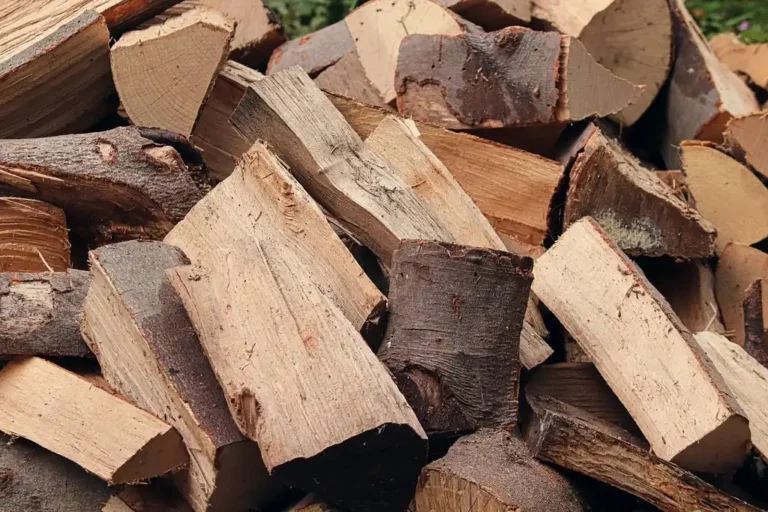
Elm is hard to split because the fibers do not separate easily. The grain is often stringy and interlocked, so the maul or wedge can bind instead of popping the round cleanly. That is the core reason many people avoid it.
Interlocked grain and stringy fibers
The problem shows up most in larger rounds and crotch sections. The outside may crack, but the fibers keep hanging together like rope. That means more force, more blade drag, and more failed splits than you usually get with cleaner-grained hardwoods.
Best splitting order and tool choice
- Split elm as soon as practical after felling or bucking.
- Start with the straightest rounds, not the knotty sections.
- Reduce big rounds to smaller splits before stacking.
- Use a strong maul or hydraulic splitter for stubborn pieces.
- Save crotches and twisted grain for a splitter if available.
A common first-timer mistake is stacking freshly cut elm logs whole and expecting them to season well before splitting them. That can make the wood tougher to open and can leave you with bulky pieces that dry slowly. Smaller splits dry faster and are easier to finish.
How long does elm take to dry?
Elm should be below 20 percent moisture before burning. Drying time depends on split size, airflow, stack height, and whether the wood was already dead or still green when cut. Elm is not a fast-drying firewood species, especially in larger pieces.
Moisture target below 20 percent
Seasoned firewood should be below 20 percent moisture because that level burns more efficiently, smokes less, and reduces creosote risk. Wet wood creates more smoke and more chimney deposits, so a moisture reading matters more than the label on the pile.
Stacking, airflow, and split size
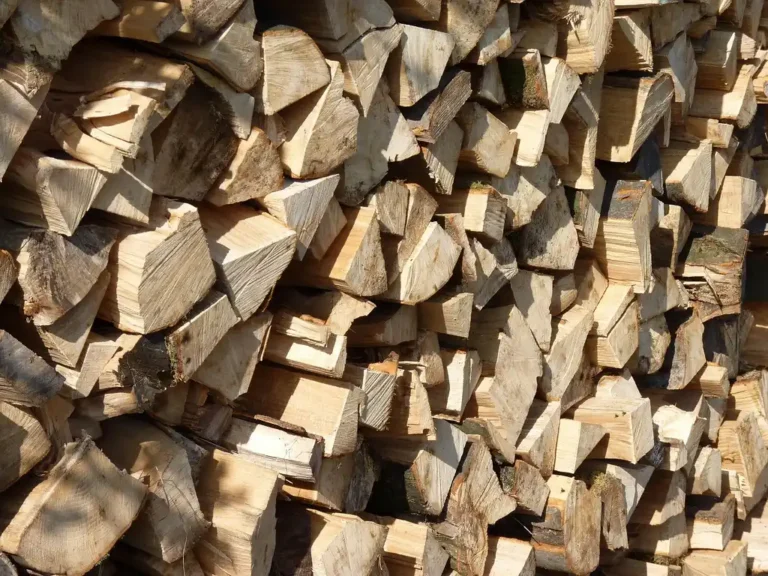
Split elm small enough for airflow to reach the interior. Stack it off the ground, with open sides to the wind, and avoid packing the row too tightly. A single loose row dries better than a cramped pile.
Dead elm from Dutch elm disease may already be dry enough to help, but it still needs a moisture check. Dead standing wood can look ready and still hold enough water in the core to burn poorly.
Suppose you have a 16-inch elm round that has sat downed for months. The outside may look cracked and gray, but the inside can still read too wet. Once split into smaller pieces and stacked with airflow, that same wood becomes much more useful.
Does elm smoke or create creosote?
Dry elm produces moderate smoke, but wet elm can smoke a lot more. Creosote risk is driven mostly by moisture, not by elm alone. Wet, smoldering fires send more unburned material into the chimney and raise the chance of buildup.
Wet wood, smoke, and chimney buildup
Creosote is a chimney hazard because it can accumulate and later ignite. Elm is not a resinous softwood, so it is not at the highest risk end of the scale, but wet elm still creates the same basic problem: low flame, incomplete burn, and more residue.
That is why moisture control matters more than species labels. If elm is dry, smoke output is moderate rather than heavy. If it is wet, it can smoke enough to dirty glass, clog a flue, and waste fuel.
Burning strategy for stove safety
Use dry kindling and a hot start to avoid long smoldering periods. In a wood stove, avoid throttling the air too early on a fresh load of elm. In a fireplace or less-controlled appliance, be even stricter about moisture and draft, because cooler burns leave more residue behind.
For overnight burning, elm is useful only if it is truly seasoned and split to a size that supports a stable coal bed without forcing the fire to smolder. For shoulder-season heat, smaller elm splits can be a good fit because they light more predictably than oversized rounds.
Frequently asked questions
Is elm good firewood?
Elm is good enough to burn and can be worth keeping, but it is not a premium firewood species. It gives usable heat and decent coals when dry, yet it is harder to split and slower to manage than better hardwoods. If you have choice, oak, beech, hickory, or maple usually come first.
How does elm firewood compare to oak?
Oak is usually the better firewood because it is more dependable for long burns and coal production. Elm can still heat well, especially when dry, but it is generally more work to split and less consistent in use. If both are seasoned, oak is usually the first pick.
How long does elm firewood take to dry?
There is no single drying time for elm. Smaller splits, open stacking, and already-dead wood dry faster, while large green rounds dry slowly. The practical target is under 20 percent moisture before burning. If elm is left in thick pieces, it usually needs more time than easier hardwoods.
Is red elm better than Siberian elm for firewood?
Red elm is usually the better all-around stove wood because it gives stronger coal quality. Siberian elm is often easier to split and can be handy when you need firewood quickly. If you want coaling and steadier burn value, red elm has the edge; if you want easier processing, Siberian elm is often simpler.
Does elm firewood make a lot of smoke?
Dry elm makes moderate smoke, not very low smoke. Wet elm is a different story and can smoke heavily because moisture lowers combustion quality. If you want less smoke, split elm smaller, season it below 20 percent moisture, and avoid running the stove too cool.
Can you burn dead elm trees safely?
Yes, dead elm from Dutch elm disease can be burned if it is sufficiently dry, but dead wood is not ready by default. Check moisture before burning, because dead standing or fallen elm can still hold enough water to smoke and make creosote. Dryness, not death, is the deciding factor.
Sponsored / affiliate links. As an Amazon Associate I earn from qualifying purchases. I may earn additional commission from eligible campaigns.