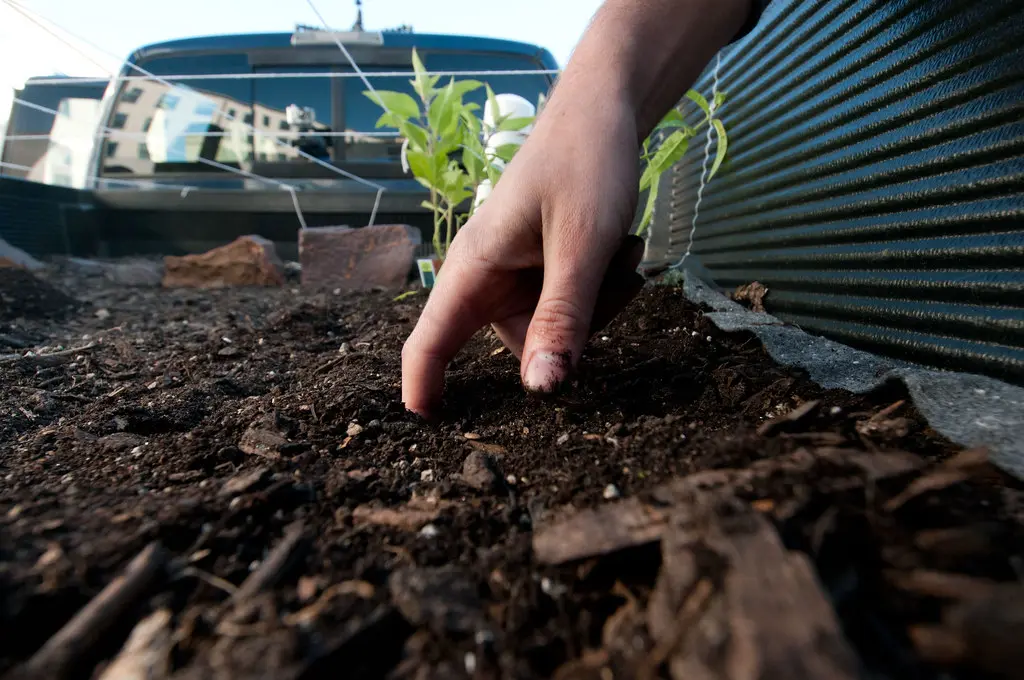
How Much Does a Cedar Raised Garden Bed Cost?
A DIY 4×8-foot cedar raised garden bed kit usually costs about $150 to $600, and total cost can be higher once soil and hardware are included. If you price only the boards, you can miss the soil bill and come up short by a few hundred dollars. This guide breaks down cedar frame cost, fasteners, soil volume, and labor by build scenario so you can price your bed accurately.
Cedar raised bed cost breakdown
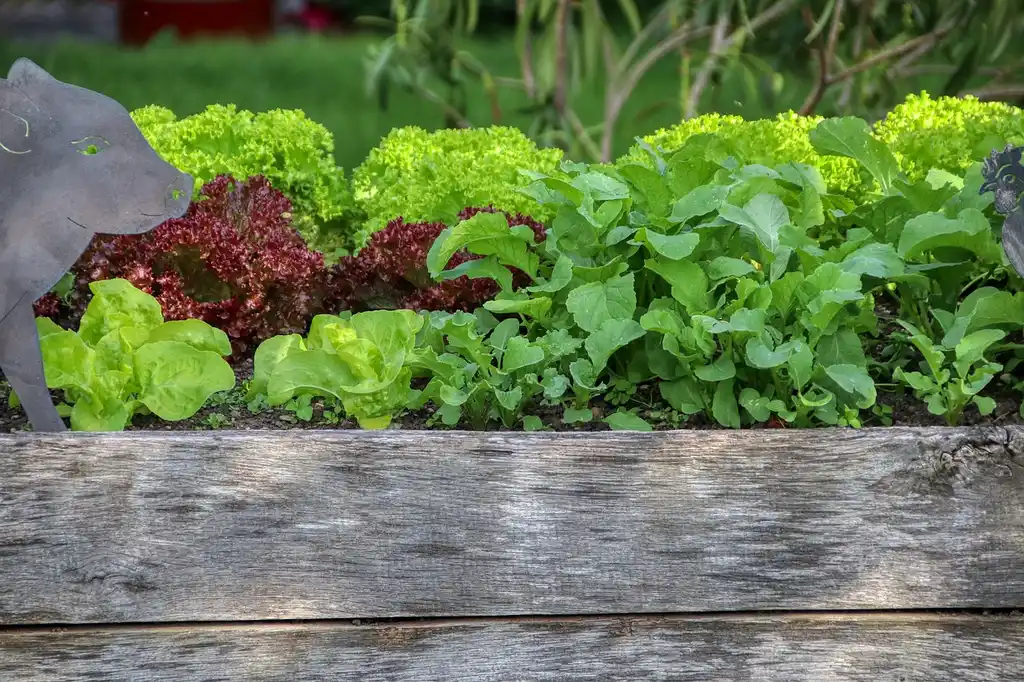


A standard cedar raised bed starts with a 4×8 footprint, and the total price changes fast as you move from frame-only pricing to a fully filled, delivered build. Cedar usually costs more than pine and less than many composite or metal builds. It costs more than pine, but many gardeners choose it for rot resistance where the wood touches soil.
Frame materials
The frame is only one part of the bill. A cedar 4×4-foot flat-board bed is priced at $400 to $650, while a cedar 4×8 standard bed is priced at $550 to $900 and a cedar 4×8 tall bed is priced at $750 to $1,200. Custom wood beds can cost $300 to $1,000 for cedar in a 4×8 format, depending on board grade, corner design, and whether the bed is simple or heavily reinforced.
Hardware and liner
Screws, brackets, and corner connectors can look minor on paper, but they matter on custom builds. A weed barrier liner may cost $10 to $60, which is a small share of the total but still useful if the soil mix is fine and you want to limit washout. More corners and heavier joinery usually mean more hardware and a higher parts bill.
Soil, delivery, and labor
Soil and amendments can add $40 to $250 per bed, and that line item often becomes the largest hidden cost. Labor to assemble a 4×8 raised bed is estimated at $75 to $300, and delivery can add a smaller but still noticeable charge that depends on distance, supplier, and region. The full project total for a standard 4×8 bed is commonly $450 to $1,400 once those buckets are included.
How much does a cedar raised garden bed cost?
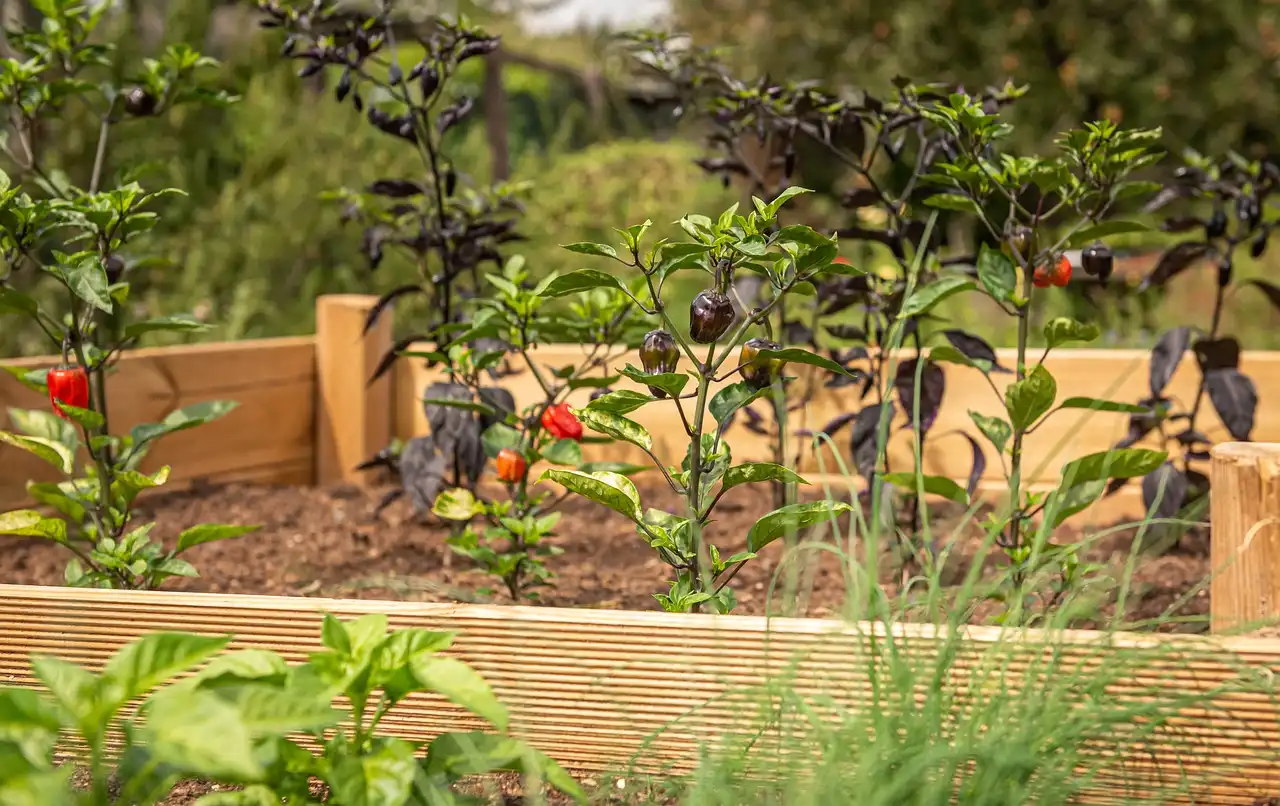
For a standard 4×8 cedar bed, a practical budget starts around $550 to $900 for the frame and can climb much higher once you add soil, delivery, and labor. The biggest swing comes from depth. An 11-inch bed uses far less fill than an 18-inch bed, so two beds with the same footprint can land in very different totals.
Standard 4x8x11 estimate
A 4x8x11 cedar bed is a common entry point for gardeners who want a manageable fill bill and a simpler frame. The soil volume is about 29 cubic feet, or roughly 1.1 cubic yards. That is enough to keep the total lower than a deeper bed, especially if you source soil in bulk instead of buying many small bags.
Deeper 4x8x18 estimate
A 4x8x18 cedar bed uses about 48 cubic feet of fill, or about 1.8 cubic yards. That is a large jump in soil volume from an 11-inch bed. The frame also uses more lumber, so deeper beds cost more twice: once in the structure and again in the material that fills it.
What changes the total fastest
The fastest cost changes come from bed depth, soil strategy, and whether the bed is built on site or delivered as a kit. A standard footprint helps, but depth drives cubic footage, and cubic footage drives soil cost. Hardware grade and corner style can also change the frame price more than many buyers expect.

Cedar bed budget worksheet
This worksheet separates the main cost buckets so you can budget from the actual drivers, not just the footprint. It uses three scenarios: a DIY 4x8x11 bed, a DIY 4x8x18 bed, and a hired build. The totals below are subtotal estimates for the frame, hardware, liner, delivery, and labor; soil cost is discussed separately above.
| Scenario | Cedar lumber | Screws/brackets | Liner | Soil volume | Delivery | Labor | Low total | Mid total | High total |
|---|---|---|---|---|---|---|---|---|---|
| DIY 4x8x11 | $180 to $300 | $25 to $60 | $10 to $60 | 29.3 cu ft | $25 to $75 | $0 | $240 | $435 | $795 |
| DIY 4x8x18 | $260 to $450 | $35 to $85 | $10 to $60 | 48 cu ft | $25 to $100 | $0 | $330 | $590 | $945 |
| Hired build | $180 to $450 | $25 to $85 | $10 to $60 | 29.3 to 48 cu ft | $25 to $100 | $75 to $300 | $315 | $595 | $995 |
Those totals are worksheet estimates, not fixed quotes. The point is to show where the money goes. If you only price cedar boards, you can miss the soil and labor lines that move the total the most.
Suppose you choose a 4x8x18 bed and buy everything in smaller bags because the local store is convenient. The frame may still fit your budget, but the soil total can climb quickly, and the final bill can land much closer to the upper end than expected.
What drives the price up on a cedar raised bed?
Depth, joinery, and fill strategy push the price up fastest. A deeper bed needs more cedar, more fasteners, and more soil. Heavy-duty corner blocks, thicker boards, or a cleaner finish also raise the parts bill, and labor rises if the frame takes longer to square and assemble.
Bed depth and cubic footage
Depth is the real budget lever. A 4x8x12 bed holds 32 cubic feet, while a 4x8x18 bed holds 48 cubic feet. That 50% increase in volume matters because it affects both lumber count and fill cost. If the bed is deeper than needed for the crops you plan to grow, you may pay for volume you do not use.
Joinery and hardware grade
Simple screw-fastened corners are cheaper than heavy brackets, hidden joinery, or reinforced corner systems. Better hardware can improve stiffness and lifespan, but it also adds cost. More corners mean more cuts, more fasteners, and more labor time. On custom beds, that can move the project out of the lower pricing tier fast.
Delivery distance and fill strategy
Delivery is usually a smaller add-on than soil, but it still varies by supplier and region. Fill strategy matters just as much. A common first-timer mistake is buying too many bagged cubes, then overfilling the bed because the soil settles. That pushes cost up and can waste material if the bed was already sized for a top layer of mulch or compost.
Is cedar more expensive than pine for raised beds?
Yes. Cedar is generally more expensive than pine for raised beds, but it is also a more durable choice where the wood touches damp soil. That makes cedar a middle-to-upper price option: more upfront cost than pine, usually less than many composite or metal builds over the full project life, depending on thickness and hardware.
Material tier comparison
Pine is the budget choice, especially for short-term beds or temporary layouts. Cedar usually costs more because the material itself is pricier and because many buyers choose it for better rot resistance. Composite and metal often sit above cedar in total project price, especially once shipping, panels, or specialty connectors are included.
Durability versus upfront price
Cedar can make sense when the bed will stay in place for years and the soil contact is constant. It is less attractive if the bed is temporary, if the garden layout may change soon, or if the budget is tight enough that a lower-cost wood will free up money for better soil. The better value depends on expected service life, not just board price.
When a cheaper wood makes sense
If the bed will be shallow, temporary, or tucked into a low-wear garden area, pine may be the better budget choice. It lowers the frame cost and leaves more room for quality soil. That can matter more to plant performance than upgrading the frame material alone.
Should I buy a kit or build from lumber?
A kit can cost less when you want a simple, standardized bed and you value speed over customization. A lumber build is better when the layout needs custom dimensions, stronger corners, or thicker stock. The cheapest option is not always the best if it forces a poor fit, weak frame, or awkward soil volume.
When a kit costs less
A raised bed kit with basic wood can cost $150 to $600, which puts it below many custom cedar builds. Kits usually include pre-cut boards and connectors, so they reduce labor and simplify assembly. For a single standard bed, that can be the easiest way to stay on budget.
When custom lumber is worth it
Custom lumber makes sense when you want a specific depth, a wider top rail, or stronger joinery. It also helps when the site is not perfectly square or when you need a size that a kit does not offer. For multi-bed garden layouts, custom lumber may fit better and waste less material.
Typical tradeoffs in fit and finish
Kits are faster and easier to compare on price. Lumber builds give more control over board grade, corner style, and overall stiffness. The tradeoff is simple: kits usually save labor, while custom builds usually give better fit and more design flexibility.
Ways to lower the total
The best savings usually come from standard sizing, careful fill planning, and avoiding unnecessary add-ons. You do not need to cut corners on structure to save money. You do need to avoid paying for depth, delivery, or soil volume that the bed does not actually need.
Standardize the footprint
Stick to a 4×8 footprint if you want easy pricing and easier sourcing. Standard sizes often reduce waste and simplify delivery. They also make it easier to compare kit pricing against custom lumber pricing without mixing in odd dimensions or specialty cuts.
Choose fill carefully
Soil and amendments can add $40 to $250 per bed, so fill strategy deserves as much attention as lumber choice. Use bulk soil when possible, and plan the depth around crop needs rather than around a guess. If the bed is deeper than the root zone requires, the extra cubic footage mostly inflates the bill.
Cut labor and delivery costs
DIY assembly avoids the labor line, which is often estimated at $75 to $300 for a 4×8 bed. Delivery can be reduced by buying locally, bundling multiple beds in one order, or choosing a supplier close to the install site. A two-person crew usually fits the standard build, but hourly rates and minimum charges still vary by region.
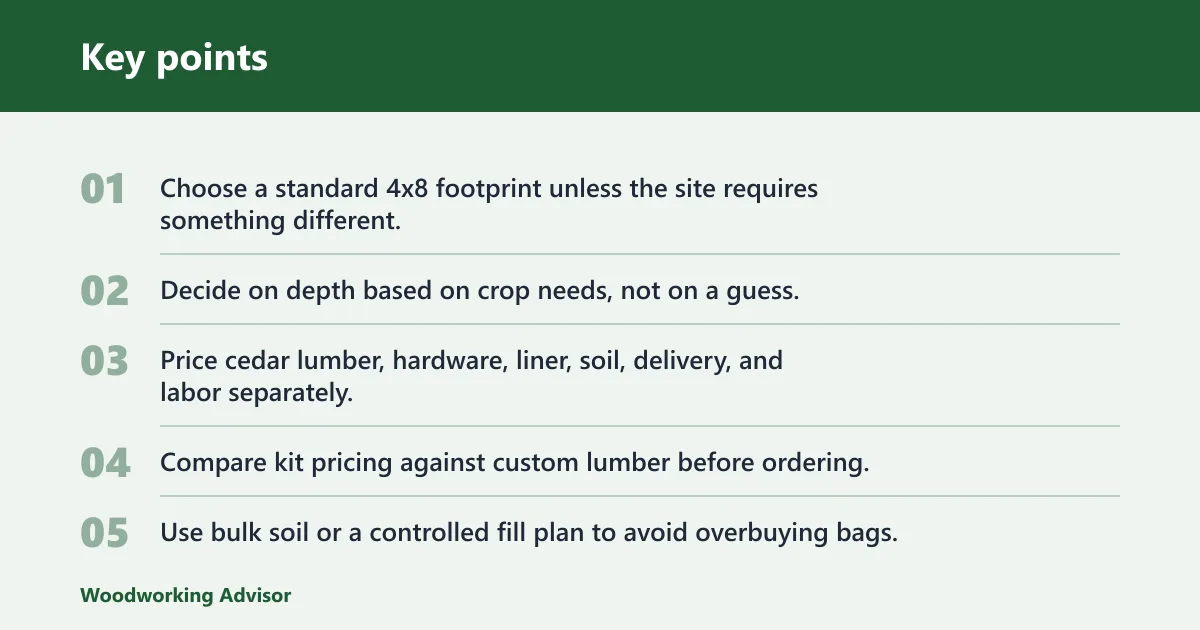
- Choose a standard 4×8 footprint unless the site requires something different.
- Decide on depth based on crop needs, not on a guess.
- Price cedar lumber, hardware, liner, soil, delivery, and labor separately.
- Compare kit pricing against custom lumber before ordering.
- Use bulk soil or a controlled fill plan to avoid overbuying bags.
Frequently asked questions
How much does it cost to build a cedar raised garden bed?
Once soil, delivery, and assembly are included, a standard project can move into the $450 to $1,400 total range depending on depth, materials, and how much work is hired out.
What is the average cost of a cedar 4×8 raised bed?
Those figures describe the bed itself, not the full garden install. Soil, delivery, and labor can still add a meaningful amount to the final bill.
How much should I budget for soil and amendments?
Soil and amendments can add $40 to $250 per bed, and the deeper the bed, the more likely that number moves toward the high end. The safest budget is based on cubic feet, not on a flat guess. A 4x8x18 bed needs far more fill than a 4x8x11 bed.
Do deeper raised beds cost a lot more?
Yes, because deeper beds need more lumber and more soil. A 4x8x11 bed holds about 29.3 cubic feet, while a 4x8x18 bed holds 48 cubic feet. That extra volume raises both the structural cost and the fill bill, so depth is one of the biggest budget drivers.
What is the cheapest way to build a cedar raised bed?
The cheapest cedar option is usually a standard-size DIY bed with simple corners, basic hardware, and careful soil planning. A kit can also be cheaper than custom lumber, since a raised bed kit with basic wood can cost $150 to $600. Avoid oversized depth unless your crops truly need it.
Sponsored / affiliate links. As an Amazon Associate I earn from qualifying purchases. I may earn additional commission from eligible campaigns.