How Much Does a Board Foot Cost? Sticker vs. Real Price (2026)
A board foot costs about $2 to $6 for pine, poplar, and red oak, $4 to $12 for cherry, maple, and ash, and $6 to $18 or more for walnut and white oak, but that sticker price covers boards you will never fully use. Planing and defects can push the real price per usable board foot 25 to 100 percent higher. This guide covers species prices, thickness, yield, and a worked bookcase budget.
What a Board Foot Price Actually Covers
Best Lumber-Yard Moisture Check
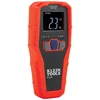 |
Klein Tools ET140 Pinless Moisture Meter, $49.14 Kiln-dried stock costs more per board foot, so this meter lets you confirm the premium is real before you pay it. Press it flat on a board and it reads moisture without leaving pin holes.
|
As an Amazon Associate we earn from qualifying purchases.
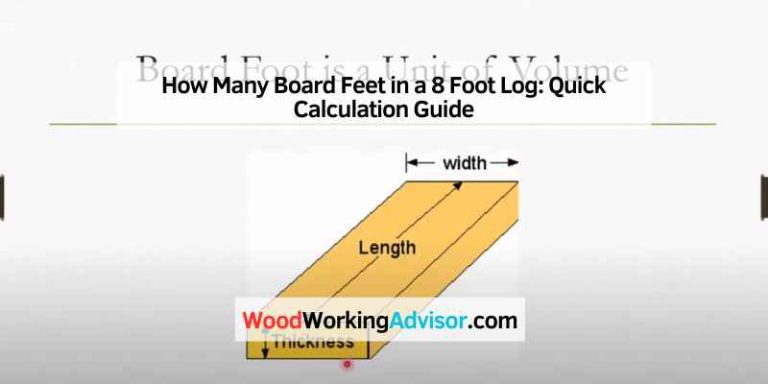
A board foot is a volume of lumber equal to 144 cubic inches, such as a board 12 inches wide, 12 inches long, and 1 inch thick. Yards use it because hardwood arrives in random widths and lengths, so a per-piece price would mean nothing. If you want the measuring side first, our board feet in an 8×8 guide and lumber size calculator do the arithmetic for you.
The quoted rate is almost always a base rate. It usually assumes 4/4 (one-inch) stock, a common species grade, and a small purchase. Ask four questions before you compare quotes from two yards:
- Is the price rough-sawn or surfaced (S2S, S4S)?
- Is it kiln-dried, air-dried, or green?
- What grade is it (FAS, Select, #1 Common, #2 Common)?
- Does the yard bill nominal thickness, and does it round each board up?
This page is about what the per-board-foot figure means once it becomes an invoice. For a broader price chart that includes dimensional lumber and a 2×4 comparison, see our wood cost per board foot guide.
Board Foot Price by Species (2026 Ranges)
These are base rates for 4/4 stock, compiled from published dealer and pricing-guide ranges (The Wood Yard, August 2026; CraftQuote, March 2026) and cross-checked against several 2026 price guides. Expect your local yard to land 20 to 30 percent above or below them.
| Species | Rough-sawn ($/bf) | Surfaced ($/bf) | Tier |
|---|---|---|---|
| Eastern white pine | $1 to $3 | $2 to $5 | Softwood |
| Poplar | $2 to $4 | $3 to $6 | Hardwood |
| Red oak | $2 to $5 | $4 to $7 | Hardwood |
| Ash | $3 to $6 | $5 to $9 | Hardwood |
| Hard maple | $3 to $6 | $5 to $9 | Hardwood |
| Cherry | $4 to $8 | $6 to $11 | Hardwood |
| White oak | $5 to $10 | $8 to $15 | Hardwood |
| Black walnut | $6 to $12 | $10 to $18 | Hardwood |
| Sapele | $6 to $9 | $9 to $14 | Exotic |
| Padauk | $14 to $17 | $20 to $24 | Exotic |
Pick species by job before you pick by price. Poplar costs about the same as pine but machines far more cleanly, which makes it a common choice for painted drawer boxes and shop furniture. Our types of wood guide compares hardness and grain if you are choosing between a few of these.
Why Thickness Changes What You Pay
Hardwood is sold in quarters of an inch. The number is the rough thickness the board started at, not the thickness you can build with. A board bought as 4/4 and surfaced on both faces ends up around 13/16 inch, and closer to 3/4 inch if you plane it to final size.
| Quarter size | Rough thickness | Typical S2S | Typical finished |
|---|---|---|---|
| 4/4 | 1 inch | about 13/16 inch | about 3/4 inch |
| 5/4 | 1.25 inches | about 1 1/16 inches | about 1 inch |
| 6/4 | 1.5 inches | about 1 5/16 inches | about 1 1/4 inches |
| 8/4 | 2 inches | about 1 13/16 inches | about 1 3/4 inches |
Two consequences follow. First, a 3/4-inch shelf or door panel can be milled from 4/4, so you rarely need to buy thicker stock for ordinary casework. Second, thicker stock is usually priced higher per board foot, since fewer logs yield wide thick boards and they dry more slowly. Ask for the 8/4 and 4/4 rates side by side if a project could be laminated from thinner boards instead, like a workbench top or table legs.
If you are matching these to dimensional softwood, our nominal vs actual lumber size chart shows the same nominal-versus-actual gap on 2x and 1x boards.
Sticker Price vs. Real Price: The Yield Factor
Here is the assumption most price lists leave out: the price per board foot is not the price per usable board foot. Between thickness lost to planing, ends trimmed for checks, knots, and sapwood you cut around, a project rarely uses every board foot you bought. Divide the quoted price by your yield to get the real number.
| Quoted rough price | At 50% yield | At 65% yield | At 80% yield |
|---|---|---|---|
| $3.50 (red oak midpoint) | $7.00 | $5.38 | $4.38 |
| $6.00 (cherry midpoint) | $12.00 | $9.23 | $7.50 |
| $9.00 (walnut midpoint) | $18.00 | $13.85 | $11.25 |
Yield depends on the board and the part. Long clear parts from wide, clean stock sit near the top of that range. Small parts cut from knotty boards, or a project that needs matched grain, sit near the bottom. A 65 percent figure is a reasonable planning number for a first estimate, but it is a rule of thumb, not a measurement.
Grade is really a yield promise. Under National Hardwood Lumber Association rules, FAS (Firsts and Seconds) boards must yield at least 83 1/3 percent clear cuttings, #1 Common at least 66 2/3 percent, and #2 Common at least 50 percent. So a cheaper common-grade board can match FAS on cost per usable foot when your parts are short, and it loses badly when you need long clear pieces.
Price tip: a #1 Common board at $4 per board foot and 66 2/3 percent clear yield costs $6.00 per clear board foot, while FAS at $6 and 83 1/3 percent costs $7.20. For short parts, the cheaper grade wins.
Worked Example: Budgeting a Six-Foot Bookcase
Take a bookcase with two 11-inch-wide sides, 72 inches tall, and five 10-inch-wide shelves, 30 inches long, all cut from 4/4 stock. The sides are 2 x (1 x 11 x 6) divided by 12, or 11 board feet. The shelves are 5 x (1 x 10 x 2.5) divided by 12, or about 10.4. That is 21.4 board feet of finished parts. At 65 percent yield you need about 32.9, which a yard rounds up to 33.
| Species (rough midpoint) | Naive cost (21.4 bf) | Realistic cost (33 bf) | Difference |
|---|---|---|---|
| Red oak at $3.50 | $74.90 | $115.50 | $40.60 |
| Cherry at $6.00 | $128.40 | $198.00 | $69.60 |
| Black walnut at $9.00 | $192.60 | $297.00 | $104.40 |
The difference is the price of milling loss and waste. Long parts like the sides come from wide, clean boards, so a careful buyer might land closer to the naive number, while knotty stock pushes toward the realistic one. The table uses the midpoint of the rough-sawn ranges above, so your invoice will move with your local price.
How to Calculate Board Feet and Total Cost
The formula works the same for every species. For beams and framing members, our wood beam cost calculator applies the same math to larger sections.
- Measure the rough board: Record thickness, width, and length in inches, using the nominal thickness (4/4 is 1 inch) if the dealer bills that way.
- Apply the formula: Board feet = thickness in inches x width in inches x length in feet, divided by 12.
- Round the way the yard rounds: Most dealers round each board up, so a 9.3 bf board is usually billed as 10.
- Multiply by the quoted rate: Total = billed board feet x price per board foot for that species, grade, and surfacing.
- Divide by your expected yield: Divide the total by 0.65 for a typical project, or 0.80 if the boards are clean, to get what you will really spend.
As a quick check, a 1 x 8 x 6 foot board is (1 x 8 x 6) divided by 12, or 4 board feet. At $6 per board foot that is $24 before any waste allowance, or about $37 at 65 percent yield.
What Moves the Price Up or Down
- Region: species that do not grow near you carry freight. Walnut is generally cheaper in the Midwest and Appalachia than on the coasts.
- Volume: many yards discount at larger quantities, so ask where the breaks are before you split a purchase across two visits.
- Width and length: wide or long boards in premium species often carry a surcharge or a higher tier.
- Drying: kiln-dried stock costs more than air-dried or green, but it is the stock that stays flat after you build with it.
- Extras: planing, ripping, and custom widths are often billed separately from the board foot rate.
If your project uses sheet goods for the carcass and solid wood only for faces and edges, price the sheets separately. Our plywood price per square foot calculator handles that half of the budget, and a 4×8 sheet of 3/4-inch plywood equals 24 board feet of volume if you want to compare it with solid lumber.
Ways to Pay Less Per Usable Board Foot
- Buy rough-sawn stock if you already own a jointer and planer. It is typically cheaper per board foot, but only worth it if your shop time is free.
- Buy common grade for short parts such as drawer sides, rails, and stretchers, and save FAS for long visible pieces.
- Check the yard’s shorts or odd-lot bin for small projects, since offcuts often cost less and fit small parts.
- Choose a similar species. Ash and hickory give strong grain at prices well under walnut or figured maple.
- Pick your own boards when the yard allows it. Choosing straighter, cleaner stock raises your yield, and yield is the biggest lever in the tables above.
Frequently Asked Questions
How much does a board foot of wood cost?
Most boards run $2 to $6 per board foot for pine, poplar, and red oak, $4 to $12 for cherry, maple, and ash, and $6 to $18 or more for walnut and white oak. Exotics such as padauk and cocobolo run higher still. Surfaced boards cost more than rough-sawn, and the figure you pay depends on your region and the yard.
How many board feet are in a 1x6x8 board?
A nominal 1x6x8 contains 4 board feet: 1 x 6 x 8 divided by 12. Dimensional pine at a big-box store is usually sold per piece, so the board foot figure matters mainly when you compare it with hardwood priced by the board foot.
What does 4/4 mean on lumber?
4/4 (said four-quarter) means the board started at 1 inch thick. It is the standard thickness for hardwood and mills down to roughly 3/4 inch after surfacing both faces. Thicker stock follows the same pattern: 5/4 is 1.25 inches, 6/4 is 1.5 inches, and 8/4 is 2 inches.
Is rough lumber cheaper than surfaced lumber?
Per board foot, yes. You trade that saving for a jointer and planer, plus the thickness you plane away. If you do not own those machines, or you value the shop time, surfaced stock can come out closer in real cost than the sticker price suggests.
Why is walnut so much more expensive than oak?
Walnut is a slower-growing species with strong demand for furniture and cabinets, and it is harvested from a more limited area than red oak. Both factors push the per-board-foot price up, and the gap grows once you account for the premium grades and wide boards buyers often want.
Conclusion
A board foot costs a few dollars for pine and poplar and well over ten for walnut and white oak, but the figure that matters is cost per usable board foot. Ask for the grade, thickness, and surfacing behind every quote, estimate a yield between 50 and 80 percent, and round purchases up. Do that and your budget will survive the lumber yard.
Sponsored / affiliate links. As an Amazon Associate I earn from qualifying purchases. I may earn additional commission from eligible campaigns.