How Much Does Genuine Teak Furniture Cost?
Genuine teak furniture usually costs about $300 to $1,200 for a chair, about $900 to $3,500 for a dining table, and about $2,000 to $8,000+ for a sofa set. The price is shaped by teak grade, whether the frame is solid wood or veneer, the piece size, and freight or parcel shipping. Buy poorly and you can pay teak money for teak-look veneer, mixed hardwoods, or weak joinery. This guide breaks down fair price ranges, what should raise or lower the cost, and how to spot overpriced pieces.
What genuine teak furniture actually

Genuine teak furniture is made from teak wood, not a laminate, stained acacia, or another wood sold with a teak color. The price rises when the piece uses more solid teak, tighter grain, stronger joinery, and thicker stock, especially on parts that carry weight or face weather.
Solid teak vs teak veneer
Solid teak usually costs more because the visible parts and structural parts are teak, not just the surface. Teak veneer can look convincing in photos, but the core may be a cheaper substrate, so the price should be lower than a true solid-teak piece of the same size.
Teak-look alternatives are often sold for outdoor use at lower prices. They may suit a short-term, low-budget purchase, but they are not the same product as genuine teak. A higher price only makes sense when the frame, panels, and joints match it.
Plantation teak, reclaimed teak, and heartwood content
Plantation teak is commonly priced below older, dense reclaimed stock when the construction is similar, though well-managed plantation wood can still sit at the premium end of the market. Reclaimed teak may command more when the wood is sound and the finish is clean, but damaged reclaimed pieces should not be priced like furniture-grade new stock.
Heartwood content matters because heartwood is the denser, oilier part of the board. Teak’s natural oil content helps it perform outdoors, and furniture with more heartwood usually costs more than pieces cut with more sapwood or mixed sections. That difference should show up in the asking price.
Teak price framework table
This framework helps you compare price against what you are actually buying. Size, construction, and logistics can move the number as much as the wood itself, especially for bulky outdoor pieces that ship by freight or arrive assembled.
| Furniture type | Size range | Construction cues | Expected retail price drivers | Shipping cost risk | Red-flag price anomalies |
|---|---|---|---|---|---|
| Chair | 18–24 in. wide, 18–20 in. seat height | Solid teak frame, mortise-and-tenon or reinforced joinery, no thin veneer on load-bearing parts | Armrests, contoured seat, hand finishing, outdoor-rated hardware | Low to moderate; boxed shipping is common | Very low price with “solid teak” claim; visible staples, hollow-feeling parts, or mixed woods |
| Dining table | 60–96 in. long, 36–42 in. wide, 28–30 in. high | Thicker tabletop, stable apron, solid stretchers, quality fasteners, even grain | Longer length, thicker top, extension leaves, and better finishing | Moderate to high; freight is common for long tops | Large table priced like a small side table; thin top sold as premium solid teak |
| Bench | 48–72 in. long, 14–18 in. deep, 17–18 in. high | Thick slats, rigid leg bracing, outdoor hardware, no soft-core substrate | Longer span, heavier stock, indoor/outdoor versatility | Moderate; bulky shape raises dimensional charges | Bench weight far below what solid teak should suggest; weak leg joints |
| Lounger | 74–82 in. long, adjustable back, wider frame for poolside use | Corrosion-resistant hardware, strong moving joints, drain-friendly slats | Adjustable mechanism, outdoor finish, larger frame | High; oversized packing is common | Low price plus “all-teak” claim on a piece with flimsy hardware |
| Sectional | Multiple modules, often 6–10 seats or more | Matching module fit, solid frame members, consistent finish across sections | Seat count, modular complexity, cushions, and assembly labor | Very high; freight and accessorial charges are common | Large seating set priced below smaller teak sofas; mismatched modules or thin rails |
How much does teak furniture cost by type?
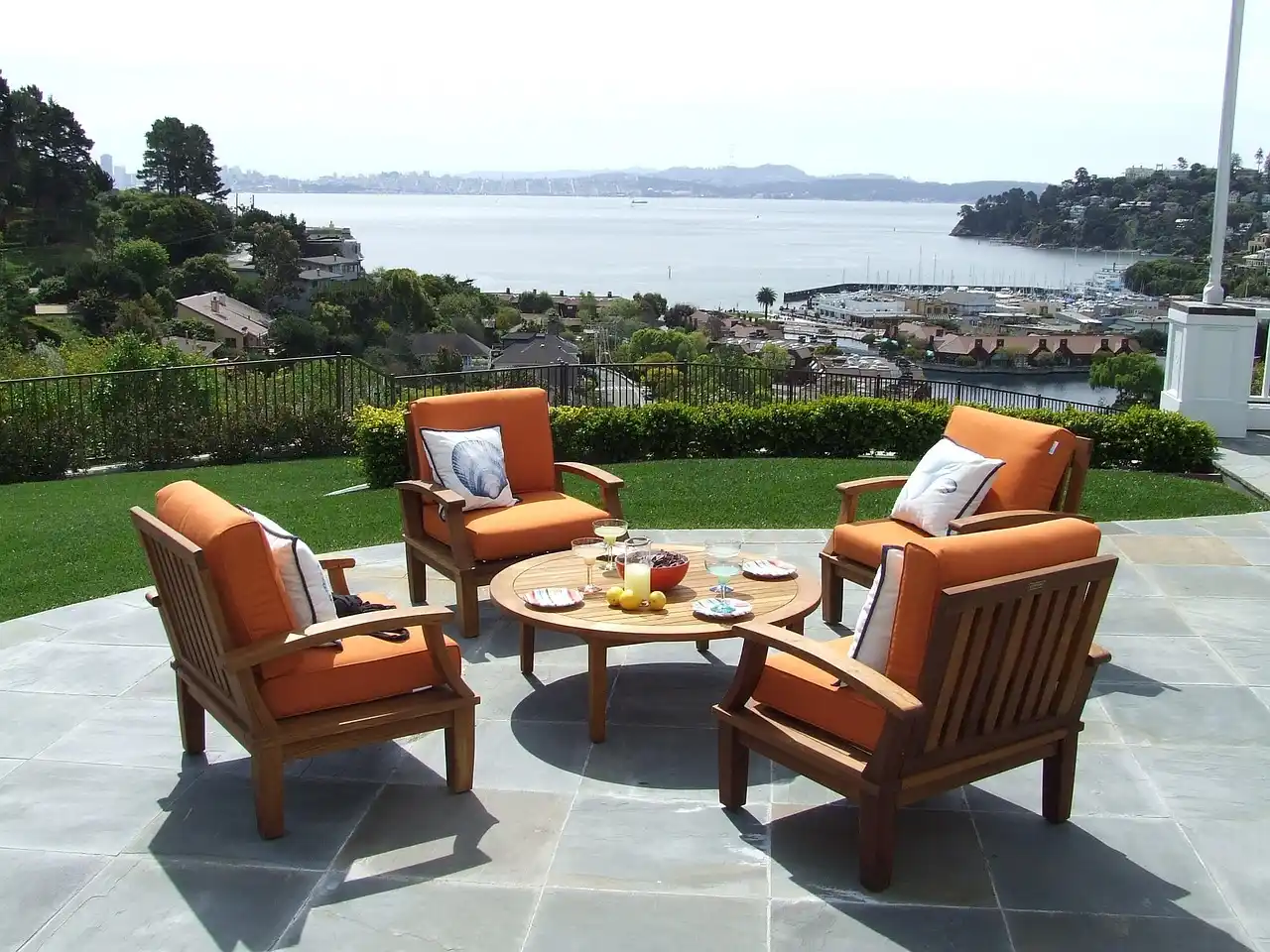
Pricing changes sharply by category. A simple chair can land in the low hundreds, while a large dining table, lounger, or sectional can rise into the thousands because of size, wood volume, hardware, and shipping. The same species can look “cheap” or “expensive” depending on those factors.
Chairs and dining tables
Chair prices are usually the easiest to compare because the footprint is small. For genuine teak, a fair chair price is often lower than a long dining table, but the chair can still cost a lot if it uses thick stock, curved arms, or careful joinery. Dining tables cost more because they use more lumber and usually need thicker tops to stay flat.
On a dining table, check the length, width, height, and tabletop thickness together. A 72-inch table with a thick solid top and sturdy base should not be priced like a compact patio table with a thin surface. That size jump should show in the ticket.
Benches and loungers
Benches often sit in the middle of the market. They use less material than a full dining table, but a long bench still needs solid rails and a rigid frame. Loungers cost more because they are long, wide, and often include moving parts that need stronger hardware.
If a 72-inch outdoor bench is listed at a bargain price but weighs much less than expected and arrives in a box with thin brackets, treat that price as a warning. It is not a bargain when the listing calls it solid teak but does not show how the frame is built.
Sectionals and other large outdoor pieces
Sectionals and larger outdoor sets often carry the highest total ticket because you are buying multiple frames, more finish work, more cushions, and more freight exposure. The number can look high even when the per-seat cost is reasonable. Compare cost against seat count, module size, and delivery method.
A six-seat teak sectional sold direct to consumer can look inexpensive at first, then freight, liftgate, and appointment delivery appear at checkout. The total may still be fair, but only if the frames are truly solid teak and the hardware is outdoor grade.
What drives the price up or down?
Construction details can change price almost as much as species. Solid teak with strong joinery, thicker stock, and better finish work costs more than thin, veneered, or fastened-together pieces. Indoor seating also tends to cost less than outdoor furniture built to handle rain, sun, and seasonal weather conditions.
Joinery, thickness, and hardware
Mortise-and-tenon joinery, dowels, and well-fitted joints generally support a higher price than simple screws alone. Thicker tabletops, wider rails, and heavier legs add material cost and usually improve stability. Hardware matters too, because outdoor furniture needs fasteners that tolerate moisture and regular use.
Teak furniture is built to handle rain, moisture, direct sun, changing temperatures, seasonal weather shifts, and everyday use. Those demands justify a higher price only when the piece is actually built for them.
Finish quality and assembly level
A clean factory finish, careful sanding, and even color matching cost money. Flat-pack furniture can price lower because the maker saves on freight volume and final assembly labor. Fully assembled furniture usually costs more, and that difference often shows up in shipping and handling, not just wood quality.
Some pieces are sold unfinished or lightly finished so the buyer can oil them later. That can lower the initial cost, but it shifts maintenance work to you. If the finish is thin and the joinery is weak, the lower price is not a real saving.
Indoor versus outdoor use
Outdoor teak furniture usually costs more than indoor pieces of similar size because the design has to manage water, sun, and movement in the wood. Indoor pieces may use lighter construction and simpler hardware. If an outdoor-style chair is priced like a basic indoor chair, check the frame and finish before assuming it is a deal.
Does source and certification change the price?
Yes, source and documentation can affect price, but they do not replace a close look at the furniture itself. A responsible supply chain can support a higher price, especially when the seller can show where the timber came from and how the wood was managed.
Indonesia source and responsible plantation management
Premium teak furniture made at source in Indonesia can cost more because the maker may be handling manufacturing, finishing, and export logistics close to the supply chain. Responsible plantation management also matters because it supports better traceability and reforestation efforts, which many buyers are willing to pay for.
FLEGT licensed timber and SVLK certification
FLEGT licensed timber and SVLK certification can support confidence that the supply meets a documented legal standard. That may raise price, but it should not be treated as a substitute for good construction. A certified source does not guarantee thick stock, careful joinery, or a finish that suits your use.
What certification can and cannot tell you
Certification can help you judge the source. It cannot tell you whether a tabletop is thick enough, whether a chair is veneer over substrate, or whether the piece is overpriced for its size. Use certification as one part of the buying decision, not the only one.
How shipping and delivery affect the total cost
Shipping can turn a fair price into a costly one fast. Teak is dense, and bulky pieces often move by freight rather than standard parcel service. Local pickup can save money, while remote delivery, assembly, and accessorial fees can push the total higher than the advertised price suggests.
Flat-pack versus assembled furniture
Flat-pack furniture usually ships cheaper because it takes less space. Assembled pieces cost more to move and more to protect in transit. If the item is oversized, fragile, or already finished, shipping protection and crating can add to the total.
Freight delivery, local pickup, and accessorial charges
Freight delivery often includes palletized shipment, curbside drop-off, or liftgate service. Accessorial charges can include liftgate fees, residential delivery, appointment windows, or inside delivery. Local pickup is often the cheapest option, but only if you can load a heavy piece safely and inspect it before payment.
Marketplace listings can hide the real total until checkout. A chair may look inexpensive online, but freight, service fees, and tax can erase the savings. For a bulky dining table, compare the delivered total, not the sticker price alone.
How to check if the price is fair
A fair price matches the size, seat count, construction, and delivery method. If the seller cannot explain the wood species, frame build, or logistics, the listing is incomplete. For used teak, condition matters just as much as species, because damage and repairs can erase the value of genuine wood.
Size and seating capacity
More seats mean more lumber, more hardware, and more freight risk. A table that seats six should not cost the same as a compact two-person set unless the smaller item has unusually strong construction or a designer finish. Compare dimensions first, then compare price.
Red flags for teak-look pieces priced as solid teak
Watch for vague wording such as “teak finish,” “teak style,” or “teak color” when the seller claims premium solid teak pricing. Other red flags include very low weight for the size, unfinished underside photos, no close-ups of joinery, and a price that is far below similar genuine teak pieces.
- Confirm whether the piece is solid teak, veneer, or a teak-look alternative.
- Check the dimensions and seating capacity against the asking price.
- Ask for close-up photos of joints, edges, underside panels, and hardware.
- Look for source details such as Indonesia origin, FLEGT licensed timber, or SVLK certification when relevant.
- Price out shipping, assembly, liftgate service, and local pickup before deciding.
Used teak condition checks before you buy
Used teak can be a good buy if the frame is sound. Check the original finish, repairs, water damage, warping, cracks, and loose joinery. A weathered silver-grey surface is not a defect by itself, but warped rails, split arms, or swollen joints can be costly to fix.
Frequently asked questions
How much does teak furniture cost?
For genuine teak, prices vary by furniture type, size, and construction. Chairs often sit around $300 to $1,200, dining tables around $900 to $3,500, and sofa sets around $2,000 to $8,000+. The final total changes with shipping, finish quality, and whether the piece is solid teak or veneer.
How expensive is teak?
Teak is expensive compared with short-term outdoor furniture, but the price is not fixed. Dense stock, better joinery, larger dimensions, and responsible sourcing all push the number up. Smaller or simpler pieces can be more moderate, especially if you buy direct or pick up locally.
How much does teak wood cost?
Teak wood price depends on grade, cut, and source. Heartwood-rich, well-dried material generally costs more than mixed stock or lower-grade pieces. For furniture buyers, the more useful number is the price of the finished item, because labor, hardware, finish, and logistics often add a large share of the total.
Is teak wood expensive?
Yes, genuine teak wood is usually expensive relative to many common furniture woods. The cost reflects material quality, outdoor performance, and sourcing controls. That said, a high price is only justified when the piece uses real teak, solid construction, and a size that matches the asking number.
Where to buy teak furniture?
Buy from direct-to-consumer sellers, local dealers, custom makers, and reputable marketplaces that show detailed photos and full dimensions. For U.S. shoppers, local pickup can reduce freight costs. Ask for species proof, construction details, and delivery terms before paying a premium.
What is the average cost of teak outdoor furniture?
Outdoor teak furniture usually lands above basic patio furniture because it is built to face moisture, sun, changing temperatures, and regular use. A dining chair may start in the hundreds, while a full outdoor dining set or sectional can run into the thousands once freight and assembly are included.
Sponsored / affiliate links. As an Amazon Associate I earn from qualifying purchases. I may earn additional commission from eligible campaigns.