How to Clean Deck Wood the Right Way (No Damage Done)
Cleaning your deck can seem tricky, especially if you’re new to it. Many people worry about damaging the wood or using the wrong cleaners. It’s a common concern, but it doesn’t have to be hard!
We’ll show you exactly How to Clean Deck Wood the Right Way (No Damage Done) with simple steps. Get ready to make your deck look amazing without any stress.
Preparing Your Deck for Cleaning
Before you start scrubbing, getting your deck ready is super important. This part might seem boring, but it makes all the difference for a great cleaning job. Think of it like getting your tools ready before a big project.
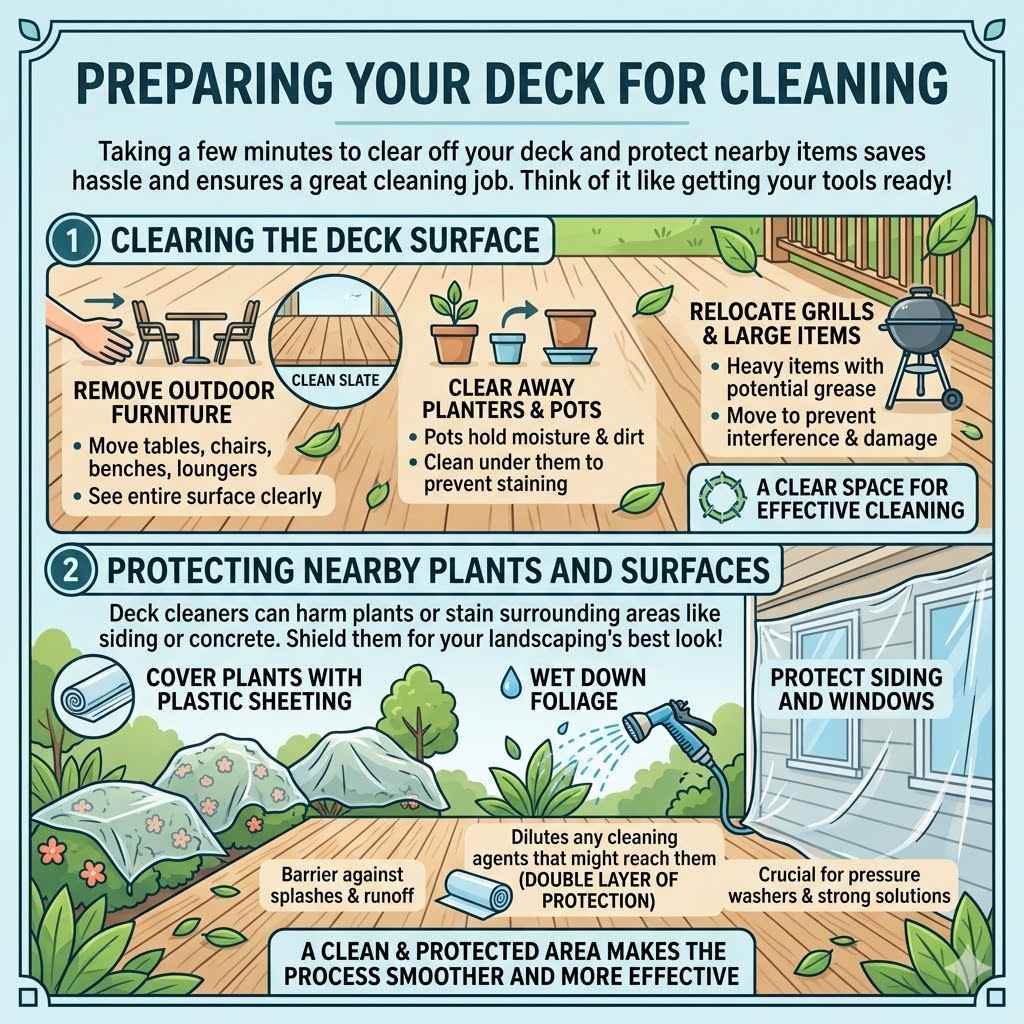
Taking a few minutes to clear off your deck and protect nearby plants will save you a lot of hassle later on. It ensures you can access every part of the wood and prevents accidental damage to things you care about.
Clearing the Deck Surface
The first step is to remove everything from your deck. This includes furniture, planters, grills, and any decorations. You need a clear space to work so you can clean thoroughly.
Move these items to a safe area, perhaps a lawn or a patio nearby. Make sure the area you move them to won’t be in the way of your cleaning process or get splashed with cleaner.
Remove all outdoor furniture. This means tables, chairs, benches, and loungers. You need to see the entire deck surface clearly.A clean slate makes the whole process much easier and more effective. If furniture is heavy, ask for help or use furniture sliders.
Clear away planters and pots. These can hold moisture and dirt, and their bases can leave marks. Moving them allows you to clean under them and prevent staining the wood.Some pots are quite heavy, so be careful when lifting.
Relocate grills and other large items. These can be very heavy and may have grease or residue that could drip onto the deck. Moving them ensures they don’t interfere with your cleaning or get damaged by cleaning solutions.
Protecting Nearby Plants and Surfaces
Deck cleaners can sometimes harm plants or stain surrounding areas like siding or concrete. It’s smart to shield them. This prevents unwanted damage and keeps your landscaping looking its best.
You want your deck to look good, not your flowers!
Cover plants with plastic sheeting. Use tarps or old sheets to cover any bushes, flowers, or trees close to the deck. This creates a barrier against cleaning solutions that might splash or run off.
Wet down foliage. For plants you can’t fully cover, thoroughly wetting their leaves and soil with plain water can help dilute any cleaning agents that might reach them. This provides a double layer of protection.
Protect siding and windows. If your deck is next to your house, cover the siding and windows with plastic sheeting. This is especially important if you are using a pressure washer or a strong cleaning solution.
Choosing the Right Cleaning Method
Deciding how to clean your deck is key to avoiding damage. Different types of wood and levels of dirt require different approaches. Using the wrong method can lead to splintering, discoloration, or even structural issues.
We’ll explore gentle yet effective ways to get your deck sparkling.
Understanding Different Decking Materials
The type of wood your deck is made from matters a lot. Softwoods like pine or cedar need a gentler touch than hardwoods like ipe or teak. Knowing your material helps you pick the best cleaner and technique.
This prevents you from making costly mistakes.
Softwoods (Pine, Cedar, Redwood). These woods are softer and more porous. They can be easily damaged by harsh chemicals or too much pressure.A mild cleaner and a soft brush are usually best. Avoid abrasive scrubbers.
Hardwoods (Ipe, Teak, Mahogany). These woods are denser and more durable. They can withstand slightly stronger cleaners and more vigorous scrubbing.However, it’s still wise to start with a less aggressive approach to see what works.
Composite Decking. If you have composite or PVC decking, cleaning is often simpler. These materials are resistant to stains and rot.Usually, mild soap and water or a specialized composite cleaner is enough. Avoid oil-based cleaners.
Gentle Cleaning Solutions
For most decks, a mild, eco-friendly cleaner is the way to go. You don’t need harsh chemicals to get good results. Often, simple household items work wonders and are much safer for your wood and the environment.
Always test any cleaner on an inconspicuous spot first.
Oxygen Bleach Cleaners. These are excellent for lifting dirt and mildew without damaging wood fibers. They are a safer alternative to chlorine bleach.Look for products specifically labeled for deck cleaning.
Mild Dish Soap and Water. For light dirt, a few drops of mild dish soap in a bucket of warm water can be very effective. This is the gentlest option and is safe for most deck types.
Solution. A mixture of one part white vinegar to two parts water can help kill mildew and algae. While effective, the acidity can sometimes lighten wood, so use with caution and rinse well.
The Case Against Harsh Chemicals
Many people reach for strong, bleach-based cleaners thinking they are more effective. However, these can strip the natural oils from your wood, leading to drying, cracking, and premature aging. They can also harm nearby plants and outdoor finishes.
It is best to avoid them whenever possible.
Harsh chemicals like chlorine bleach can be particularly problematic. While they kill mold and mildew, they also degrade wood fibers. This makes the wood weaker and more susceptible to rot.
The damage may not be obvious immediately, but it weakens the deck over time.
Furthermore, these aggressive cleaners can cause uneven lightening or staining of the wood. If you have stained or painted deck boards, strong chemicals can strip the finish. This leads to a patchy, unsightly appearance that requires more extensive repair work.
The Step-By-Step Cleaning Process
Now that you know what to use, let’s walk through the actual cleaning. Following these steps ensures you get a great clean without causing any harm. This method is designed to be easy for beginners and effective for all common deck types.
Think of it as a clear path to a beautiful deck.
Step 1 Wetting the Deck
Before applying any cleaner, always wet your deck thoroughly with plain water. This helps the cleaner spread evenly and prevents it from soaking too deeply into one spot, which could cause damage or uneven cleaning. It also helps rinse away loose debris.
Use a garden hose with a spray nozzle for this. Aim for a gentle spray, not a high-pressure blast. Ensure all surfaces of the deck are damp.
Pay attention to areas that might be especially dry or absorbent.
Saturate the wood. A good wetting helps open up the wood’s pores. This allows the cleaner to work more effectively on the surface dirt and grime.
Rinse away loose debris. The water spray will wash away leaves, dust, and small bits of dirt. This makes the cleaning solution’s job easier.
Ensure even dampness. Check for dry spots. Uneven dampness can lead to streaky results after cleaning.
Step 2 Applying the Cleaner
Once the deck is wet, apply your chosen cleaner. Work in small sections, especially if you are using a spray bottle or a mop. This ensures the cleaner stays wet and active on the wood.
Don’t let the cleaner dry on the surface.
If using a deck cleaning product, follow the instructions on the bottle for dilution. Some are concentrate and need to be mixed with water. Others are ready to use.
Pouring directly from a bucket or using a pump sprayer works well.
Mix solutions correctly. If you’re making your own cleaner, measure carefully. Too much of one ingredient can be too harsh or ineffective.
Apply to small areas. Work in manageable sections, perhaps 6 feet by 6 feet. This prevents the cleaner from drying out before you can scrub or rinse.
Use a pump sprayer or mop. A pump sprayer gives even coverage. A mop or brush can also be used to spread the cleaner.
Step 3 Gentle Scrubbing
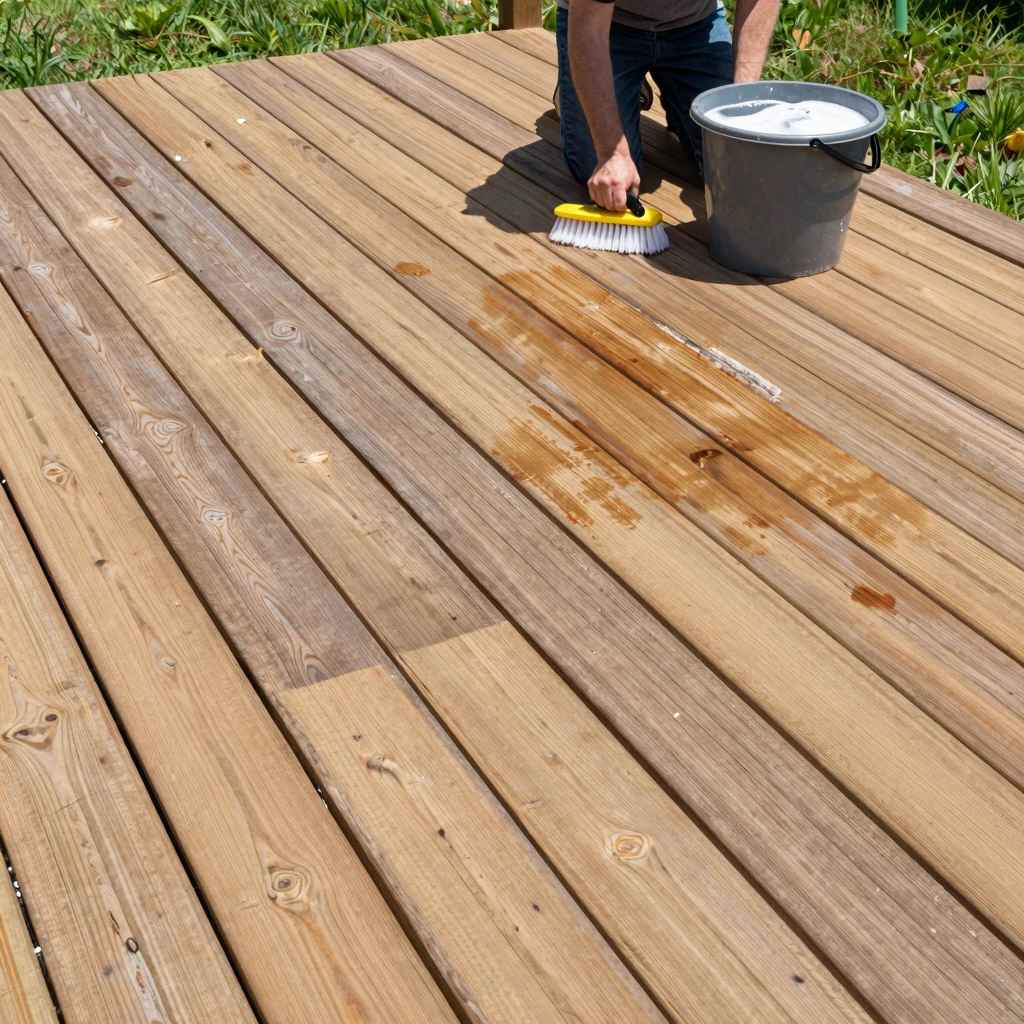
This is where the real cleaning happens. Use a stiff-bristled brush or a scrub brush. For most wood decks, a nylon or natural fiber brush is best.
Avoid metal brushes, which can damage the wood and leave rust marks.
Scrub in the direction of the wood grain. This is very important to avoid scratching the surface or lifting splinters. Apply moderate pressure.
You’re trying to lift dirt, not gouge the wood.
Scrub with the grain. Always move your brush along the length of the deck boards. This follows the wood’s natural pattern and prevents damage.
Use moderate pressure. You want to lift embedded dirt and grime. Too much force can scratch the wood or create fuzziness.
Address stubborn spots. For tough stains like mildew or algae, you might need to scrub a bit more firmly. A second application of cleaner might also help.
Step 4 Rinsing Thoroughly
Rinsing is just as crucial as cleaning. You need to remove all traces of the cleaner and the loosened dirt. Leftover cleaner can leave residue, attract dirt faster, and potentially damage the wood over time.
Use your garden hose again.
Rinse section by section, just as you applied the cleaner. Start from the highest point of the deck and work your way down. Make sure to rinse all cracks and crevices.
A good rinse leaves the wood looking clean and refreshed.
Rinse completely. Ensure no cleaner residue remains on the deck. This is vital for the wood’s health and appearance.
Work from top to bottom. Direct the water flow away from cleaned areas and towards the ground or an area where water can drain easily.
Check for foam. If you see suds, you need to rinse more. Foam means cleaner is still present.
Dealing with Stubborn Stains and Mold
Sometimes, your deck has tougher issues than just general grime. Mold, mildew, and deep stains need a bit more attention. Knowing how to tackle these specific problems will ensure your deck looks its best and stays protected.
We’ll cover safe ways to handle these challenges.
Identifying and Treating Mold and Mildew
Mold and mildew thrive in damp, shady conditions. They often appear as dark spots or a fuzzy green/black growth. If left untreated, they can damage the wood and cause it to rot.
For mild cases, a vinegar solution or a specialized oxygen bleach cleaner can work wonders. For more severe infestations, you might need a deck cleaner specifically designed to kill mold and mildew. Always test these products in a hidden area first.
Test cleaning solutions. Before applying to the whole affected area, test your chosen cleaner on a small, out-of-sight spot. This ensures it won’t discolor or damage the wood.
Apply and let sit. For mold and mildew, let the cleaner sit on the surface for the recommended time. This allows it to penetrate and kill the growth effectively.
Scrub and rinse. After the dwell time, scrub gently with your brush, following the wood grain. Rinse thoroughly to remove all traces of the mold, mildew, and cleaner.
Removing Oil and Grease Stains
Oil and grease stains, often from grills or furniture, can be tricky. They soak into the wood and darken it. The best approach is to tackle them as soon as possible.
For fresh stains, a liberal amount of absorbent material like sawdust, cornstarch, or baking soda can soak up much of the oil. Let it sit for several hours or overnight, then sweep it up. For set-in stains, a specialized deck degreaser or a strong dish soap paste might be needed.
Apply, let it work, scrub, and rinse.
Act quickly. The sooner you treat an oil stain, the easier it will be to remove. Fresh spills are much simpler to handle.
Use absorbents. Materials like cat litter, sawdust, or baking soda can draw oil out of the wood. Apply generously and let it absorb for a good amount of time.
Degreasers for tough stains. If absorbents don’t work, try a deck degreaser. Apply it to the stain, let it dwell, scrub, and rinse.You might need a couple of applications.
Dealing with Paint and Stain Issues
If your deck has old, peeling paint or stain, cleaning can be a precursor to refinishing. While deep cleaning might remove some loose bits, extensive peeling usually means more work is needed.
For general cleaning of a painted or stained deck, use mild cleaners and gentle scrubbing. Avoid anything that will further lift or peel the existing finish. If you plan to re-stain or repaint, the cleaning process prepares the surface for new coatings.
Use gentle cleaners. Avoid harsh chemicals that can strip existing paint or stain unless that is your goal. Mild soap and water are often best.
Avoid aggressive scrubbing. The goal is to clean, not to remove the existing finish. Be gentle to avoid creating more damage.
Prepare for refinishing. If the paint or stain is in bad shape, the cleaning process helps remove surface dirt, making it easier to sand and reapply a fresh coat later.
When to Consider Pressure Washing
Pressure washing can be a very effective way to clean decks, but it requires extreme caution. It’s a powerful tool that, if used incorrectly, can cause significant damage. Understanding its limitations is vital for a successful outcome.
The Risks of Pressure Washing
The main risk with pressure washing is the force of the water. Too much pressure can goude the wood, creating splinters and fuzziness. It can also strip away the wood’s natural surface, making it look older and more weathered than it is.
High pressure can also damage the wood fibers, weakening them over time.
Incorrect use can lead to permanent damage. You might end up with an uneven appearance, raised grain, or even cracks in the wood. For this reason, many professionals recommend a gentler cleaning approach, especially for beginners.
Wood damage. High water pressure can etch into softwoods, leaving permanent marks. It can lift the grain, creating a rough surface.
Discoloration. Uneven pressure can lead to patchy bleaching or darkening of the wood, creating an unattractive look.
Weakening the wood. Repeated or improper pressure washing can break down wood fibers, reducing the deck’s lifespan.
Using Pressure Washers Safely
If you choose to use a pressure washer, always start with the lowest pressure setting. Use a wide-angle nozzle (40 degrees or more) to spread the water force. Keep the wand moving constantly and maintain a consistent distance from the deck.
Test on an inconspicuous area first. Always work with the grain of the wood. If you hear the wood making a hissing or “fuzzy” sound, the pressure is too high.
It’s often better to use a good deck cleaner and a scrub brush than to risk damaging your deck with a pressure washer.
Use low pressure. Start with the lowest setting available on your machine. You can always increase it slightly if needed, but it’s hard to undo too much pressure.
Wide-angle nozzle. A 40-degree or wider nozzle distributes water over a larger area, reducing the intensity on any single spot.
Keep it moving. Never let the spray linger on one spot for too long. Constant motion prevents etching and uneven cleaning.
When to Hire a Professional
For very old decks, decks with significant damage, or if you are uncomfortable with the process, hiring a professional is a wise choice. They have the experience and equipment to clean your deck effectively and safely. They can assess the wood’s condition and choose the best cleaning method without risking damage.
Professionals can also advise on necessary repairs or refinishing. They understand the different types of wood and cleaners. Their expertise ensures your deck is cleaned thoroughly and its lifespan is extended.
It’s an investment in your home’s appearance and longevity.
Expert assessment. Professionals can accurately gauge the condition of your deck and the best approach for cleaning and care.
Proper equipment. They have access to high-quality tools and cleaning solutions that are both effective and safe for various wood types.
Risk avoidance. Hiring a pro eliminates the risk of causing accidental damage, which can be costly to repair.
Protecting Your Deck After Cleaning
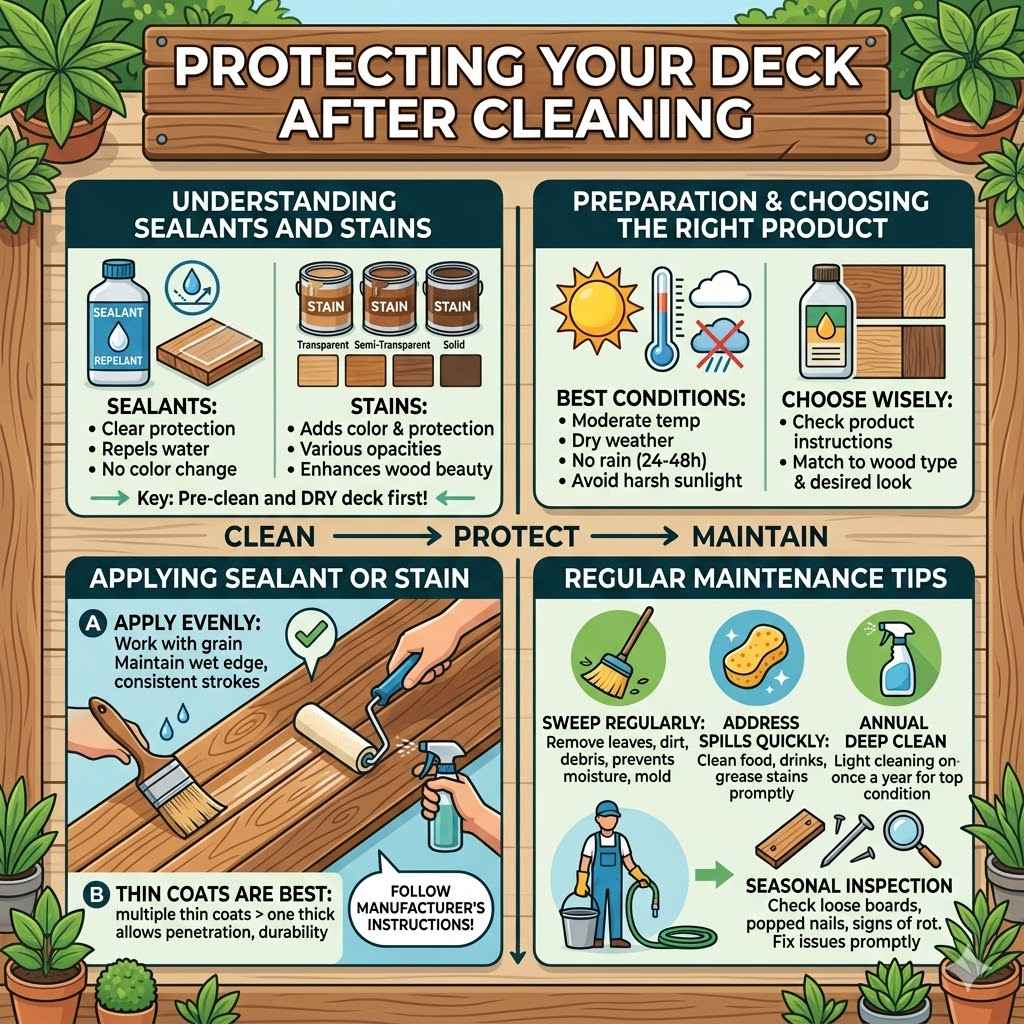
Cleaning is only half the battle. Protecting your deck afterward ensures it stays looking good and lasts longer. Sealing or staining your deck helps shield it from the elements and wear and tear.
This step is crucial for long-term beauty and durability.
Understanding Sealants and Stains
Deck sealants and stains are designed to protect the wood from moisture, UV rays, and foot traffic. Sealants offer a clear protective layer, while stains add color and protection. Both help prevent weathering and damage.
Sealants help repel water, reducing the risk of rot and warping. Stains not only offer water repellency but also add pigment to your deck. This can enhance its natural beauty or give it a fresh new look.
Choosing the right product depends on your desired appearance and the type of wood you have.
Sealants. These clear coatings help repel water and prevent UV damage. They offer protection without changing the wood’s color significantly.
Stains. Stains add color and protection. They come in various opacities, from transparent to solid, and can completely transform the look of your deck.
Preparation is key. For best results, ensure your deck is completely dry and clean before applying any sealant or stain.
Applying Sealant or Stain
Always follow the manufacturer’s instructions for the product you choose. Generally, apply in thin, even coats using a brush, roller, or sprayer. Avoid over-application, which can lead to peeling or an uneven finish.
Work in consistent strokes and avoid stopping mid-board.
Pay attention to the weather. You’ll want a few dry days in a row for application and drying. Avoid applying in direct, hot sunlight, which can cause the product to dry too quickly and streak.
Choose the right conditions. Apply when the temperature is moderate and there’s no rain expected for at least 24-48 hours. Avoid applying in direct, harsh sunlight.
Apply evenly. Use a brush, roller, or stain pad. Work in the direction of the wood grain, and maintain a wet edge to avoid lap marks.
Thin coats are best. Apply multiple thin coats rather than one thick coat. This allows for better penetration and a more durable finish.
Regular Maintenance Tips
Consistent, simple maintenance will keep your deck looking great year after year. Regular sweeping and prompt attention to spills can prevent many problems. A quick wash once or twice a year will also help.
Inspect your deck seasonally for any loose boards, popped nails, or signs of rot. Address these issues promptly to prevent them from worsening. Keeping your deck clean and well-maintained is the best way to ensure it lasts a long time and remains a beautiful part of your outdoor space.
Sweep regularly. Remove leaves, dirt, and debris frequently. This prevents moisture from being trapped against the wood and stops mold growth.
Address spills quickly. Clean up spills from food, drinks, or grease immediately to prevent stains from setting in.
Annual deep clean. A light cleaning once a year, in addition to regular sweeping, will keep your deck in top condition.
Frequently Asked Questions
Question: How often should I clean my deck
Answer: For most decks, a good cleaning once a year is sufficient. However, if your deck is in a very damp or shaded area, or if you notice significant mold or mildew growth, you might need to clean it more often. Regular sweeping is recommended weekly or bi-weekly.
Question: Can I use bleach to clean my deck
Answer: It is generally not recommended to use chlorine bleach on wood decks. While it can kill mold and mildew, it can also damage the wood fibers, strip natural oils, and cause discoloration. Oxygen bleach is a safer alternative.
Question: What is the best way to remove moss from my deck
Answer: For moss, you can use a stiff brush and a solution of equal parts water and white vinegar, or a specialized deck cleaner designed for moss removal. Scrub the moss away, let the solution sit for a bit, and then rinse thoroughly.
Question: Do I need to seal my deck after cleaning
Answer: Yes, sealing or staining your deck after cleaning is highly recommended. It protects the wood from moisture, UV rays, and general wear, helping to extend its lifespan and keep it looking its best.
Question: How long does it take for deck cleaner to work
Answer: The dwell time for deck cleaners varies by product. Most will require you to let the cleaner sit on the surface for 10-20 minutes to effectively break down dirt and grime before scrubbing and rinsing.
Wrap Up
Learning how to clean deck wood the right way involves simple steps and the right tools. You now know how to prepare your deck, choose gentle cleaners, scrub effectively, and protect your wood. Following this guide ensures a beautiful finish without any damage, giving you a refreshed outdoor space to enjoy.
Sponsored / affiliate links. As an Amazon Associate I earn from qualifying purchases. I may earn additional commission from eligible campaigns.