Plywood Thickness Chart: Nominal vs Actual Sizes
Plywood labels are nominal; actual thickness is usually thinner, so size joinery to the measured panel, not the printed number. Ignore that gap and dados, rabbets, and cabinet fits can end up loose or too tight. This guide shows a plywood thickness chart, common nominal-to-actual sizes, and a clear method for measuring before you cut.
| Decision factor | Nominal | Actual Sizes | Winner |
|---|---|---|---|
| Shop planning | Fast to buy and sort on the rack. | Matches the thickness that calipers read. | Actual Sizes |
| Joinery fit | Can miss the real panel thickness. | Lets you size dados, rabbets, and grooves to the sheet. | Actual Sizes |
| Order clarity | Matches store labels and supplier sheets. | Needs checking because brand and panel type vary. | Nominal |
| Cabinet and shelf accuracy | Good for rough material selection only. | Better for fit, edge banding, and hardware alignment. | Actual Sizes |
| Structural panel use | Useful as the listed product class. | Needed when the panel must meet a measured build plan. | Tie |
Why actual thickness matters for shop joinery
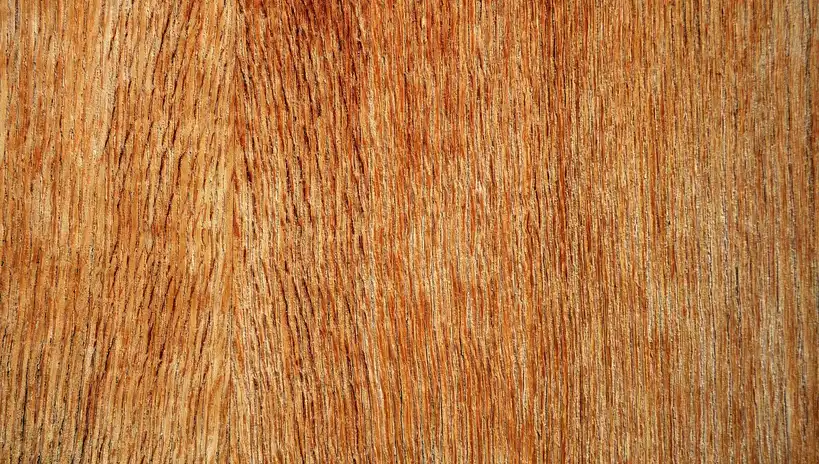
Nominal thickness is the store label, such as 1/2 or 3/4. Actual thickness is what calipers read, and it is usually thinner because plywood is sanded and finished after pressing. That difference matters most where one board must fit another board exactly.
What the label means
Think of the label as a category, not a promise. A sheet sold as 3/4 inch plywood is commonly 23/32 inch actual, and a sheet sold as 1/2 inch is commonly 15/32 inch actual. Those are shop dimensions, not marketing names.
Why actual size is smaller
Plywood leaves the mill after pressing, trimming, and sanding, so the final thickness is reduced from the nominal label. The result is normal, not defective. Variation also appears by brand, grade, and core type, which is why two sheets with the same label can measure differently.
When the number matters most
The label matters when you are buying stock or comparing panel categories. The measured thickness matters when you cut dados, rabbets, shelf grooves, or any joint that depends on a snug fit. A half-inch label that measures closer to 15/32 will not fit like solid 1/2 inch material.
Say your cabinet side calls for a 3/4-inch dado but the sheet measures 23/32. If you cut the groove to the label, the shelf can bind. If you size the cutter to the measured panel, the fit is predictable and the edge treatment lands where you expect.
This chart lists common nominal sizes and the actual thicknesses used in shop work. The numbers below matter for joinery, edge banding, and hardware layout. Metric panels belong in the same conversation, because 12 mm and 18 mm are common imported sizes.
Imperial sizes and common actual dimensions
| Nominal label | Common actual thickness | Shop note |
|---|---|---|
| 1/4 in | 7/32 in | Thin panel for backs, inserts, and light-duty skins. |
| 11/32 in | 11/32 in class panel, often sold near 3/8 in class | Common sheathing size; verify before use in joinery. |
| 1/2 in | 15/32 in | Good for lighter case parts when measured carefully. |
| 5/8 in | 19/32 in | Often treated as a structural panel size. |
| 3/4 in | 23/32 in | Common cabinet and furniture panel thickness. |
Metric sizes in mm
Metric plywood is not only a conversion chart. Imported and European panels are often sold as 18 mm, 12 mm, 9 mm, and 6 mm. A 3/4-inch class sheet is commonly listed as 18.3 mm in some charts, and 23/32 equals 0.71875 inches.
How to read the chart for shop work
Use the chart to choose the starting material, then measure the actual sheet before you cut. If your plan uses a router bit or saw setup that assumes a label, it can drift when the sheet is undersized. That is why the chart is a planning tool, not a substitute for measurement.
How do you measure plywood thickness?
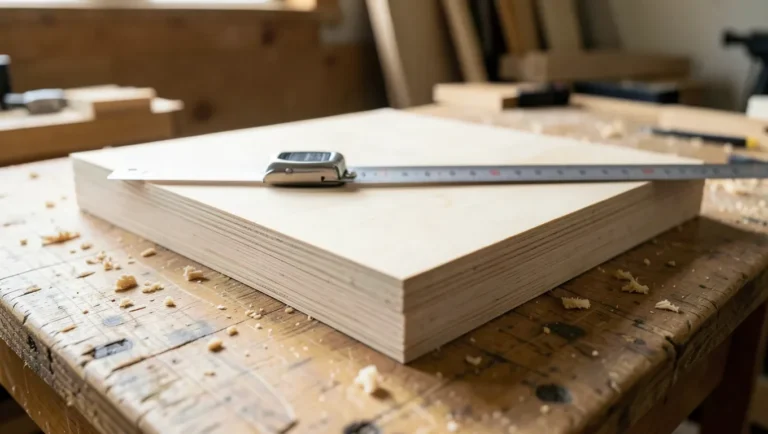
Use calipers and measure at multiple points before any joinery is cut. Plywood can vary from edge to edge and sheet to sheet, even when the label is the same. Recording the measurement first avoids a dado that is too tight or a shelf that rattles.
- Open the calipers and zero them before use.
- Measure near each corner and once near the center.
- Check both faces and the exposed edge if the sheet has been handled or trimmed.
- Write down the thinnest reading if the joint must slide in cleanly.
- Set your dado, rabbet, or groove to the measured thickness, not the label.
Check both faces and edges
One face can be slightly more compressed than the other, especially on lower-grade sheets or panels with a softer core. A quick multi-point check catches that before a shelf or divider is cut to the wrong size. This matters most for long parts where small errors add up.
Record the thickness before joinery
A simple note on the cut list is enough. Mark the actual thickness next to the sheet size so you can match router setups and saw stops later. That small step helps when several panels in the same stack do not read exactly the same.
Plywood fit decision table
This table turns nominal labels into measured-use decisions. It shows how to think about dados, shelf fit risk, edge banding, and whether one sheet is enough for setup or whether each sheet should be checked. Use it as a quick shop rule, not as a substitute for reading the actual panel.
| Use decision | 1/4 | 11/32 | 1/2 | 15/32 | 19/32 | 23/32 | 18 mm |
|---|---|---|---|---|---|---|---|
| Dado/rabbet width | Size to 7/32 and test-fit | Match the measured sheet, not the label | Set to 15/32 if that is the reading | Set to the measured 15/32 panel | Set to the measured 19/32 panel | Set to the measured 23/32 panel | Set to the measured metric sheet |
| Shelf fit risk | Moderate in narrow grooves | Moderate if mixed with imperial hardware | Moderate when mixed with full 1/2 assumptions | Low when the joint is cut from the reading | Higher if treated as cabinet-grade plywood | Low when all parts come from the same batch | Low if the project is laid out in metric |
| Edge-banding allowance | Keep allowance light and trim carefully | Allow for a thinner edge band stack | Plan for a little less than true 1/2 | Common choice for edge banding on case parts | Allow for structural faces and trimmed edges | Use standard cabinet edge banding practice | Match banding width to the metric panel |
| Measure every sheet? | Measure every sheet | Measure every sheet | Measure every sheet | Measure every sheet | Measure every sheet | Measure every sheet | Measure every sheet unless the batch is already verified |
| One-line recommendation | Cabinet backs, light panels, and inserts | Sheathing and light utility parts | Light case parts with checked joinery | Cabinet work that needs a measured half-inch class panel | Structural panels and subfloor use | Cabinets, shelves, and most casework | Imported or European panel projects |
A common first-timer mistake is to buy several sheets labeled 3/4, cut all the dados the same way, and then discover that one panel is tighter than the next. The fix is simple: measure the batch, sort the sheets by thickness if needed, and size the cutter to the actual reading that matters for the joint.
What thickness should you use?
Choose the thickness that fits the task, then check the sheet you bring home. For cabinets and shelves, the best choice is usually the thickness that gives the right stiffness and still matches your joinery plan. For sheathing and structural work, the listed panel class matters as much as the measured size.
Cabinets and casework
Most cabinet boxes are built from 3/4-class plywood, which commonly measures 23/32. That thickness gives enough edge for screws, shelf pins, and hardware while still working with standard cabinet construction. If the project calls for lighter parts, 15/32 can work, but only when the load and joinery are suited to it.
Shelves and long spans
Shelf thickness should match the span and load, not the label on the rack. A thicker measured panel resists sag better than a thinner one, but the joinery still has to fit the real thickness. If the shelf will be visible, edge treatment also needs to account for the actual panel size.
Structural panels and sheathing
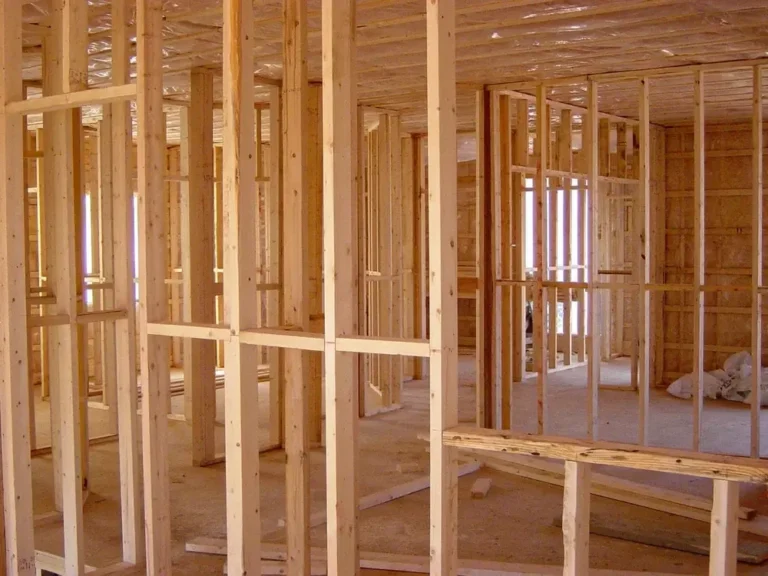
19/32 is often used as a structural panel size, not as a furniture default. It appears in rated sheathing and subfloor work, where the panel class and grading matter more than fine cabinet joinery. Treat it as construction stock unless the project specifically calls for a measured furniture panel.
Why do plywood sheets vary by brand?
Sheets vary because manufacturers use different core constructions, species, pressing methods, and sanding allowances. That is why one mill’s 3/4 panel may read slightly differently from another’s, even though both are sold under the same nominal label. Grade and panel type matter too.
Manufacturing tolerance
A sheet can leave the press one thickness and leave the sander a little thinner. That is normal. The practical result is that the same nominal label can land at different measured values across brands or batches, so one setup should not be trusted for every stack.
Species, grade, and core type
Cabinet-grade plywood, sheathing, and imported Baltic birch do not behave the same way at the cut line. Baltic birch is commonly sold in 5 x 5 foot sheets, and it is also commonly sold as 18 mm, 12 mm, 9 mm, and 6 mm stock. That changes how you plan cuts, not only how you order material.
Standard sheet sizes
The standard North American sheet is 4 x 8 feet. Baltic birch is commonly sold in 5 x 5 foot sheets, and 4 x 10 foot specialty sheets are also available. Sheet size does not tell you thickness, but it does tell you how much material you must allow for layout and waste.
What is the actual thickness of 3/4 plywood?
3/4 plywood is commonly 23/32 inch actual, which is 0.71875 inches, and some charts list that as 18.3 mm. That is the size many woodworkers should plan around for cabinet joinery. Still, the correct reading is the one on the sheet in front of you.
Why is 1/2 plywood thinner than 1/2 inch?
1/2 plywood is often 15/32 inch actual because the panel is pressed and sanded after it is built. The label is nominal, so it names the product class rather than the finished caliper reading. That is why a sheet can be sold as 1/2 and still measure thinner.
What does 23/32 plywood mean in inches and mm?
23/32 plywood means 23 divided by 32 inch, or 0.71875 inches. In the common chart used by many suppliers, it is the actual size associated with nominal 3/4 plywood, and some metric references list it as 18.3 mm. Use that reading when setting joinery.
What thickness plywood should you use for cabinets or shelves?
For cabinets, 3/4-class plywood is the default starting point because it gives reliable hardware support and stable joinery. For shelves, choose the thickness that meets the span and load, then cut the joint to the measured panel. If a lighter case is planned, 15/32 can be suitable with the right design.
Verdict: Nominal or Actual Sizes?
Choose Actual Sizes if you are cutting dados, rabbets, shelf grooves, or cabinet fits, because the article says to size joinery to the measured panel so the shelf does not bind or rattle.
Choose Actual Sizes if you are building cabinets, shelves, or most casework, because the article recommends using the thickness that matches the real reading for edge banding, hardware alignment, and a predictable fit.


Frequently asked questions
What are standard plywood sheet sizes?
The standard North American plywood sheet is 4 x 8 feet. Baltic birch is commonly sold in 5 x 5 foot sheets, and 4 x 10 foot specialty sheets are also available. Use sheet size for layout planning, then measure thickness separately before cutting joinery.
Is 19/32 plywood the same as 5/8 plywood?
They are very close in practice, but 19/32 is the common actual size used for 5/8-inch class plywood. It is often used in structural work such as sheathing or subfloor applications. For cabinet work, measure the sheet and plan from the reading, not the label.
How do I measure plywood thickness accurately?
Use calipers, zero them, and check several points across the sheet. Measure near the corners and the center, then use the reading that fits your joinery. If the panel will fit into a groove or dado, size the cutter to the actual number, not the nominal label.
Why do plywood sheets vary between brands and grades?
Different cores, sanding allowances, species, and grading standards create variation between sheets. Two panels with the same nominal size can read differently once you put calipers on them. That is why the safe workflow is to measure each batch before you cut dados, rabbets, or shelf openings.
Sponsored / affiliate links. As an Amazon Associate I earn from qualifying purchases. I may earn additional commission from eligible campaigns.
 Baltic Birch Plywood Sheets Box of 45 - Laser Engraving Cutting, Scroll Saw Nature Veneer Color, Stronger Than Basswood, A/A Grade,12 x 12 x 1/8”, 3mm Thickness Perfect for Wood Burning
 Baltic Birch Plywood 1/8'' x 12'' x 18'', 6 Pack, B/BB Grade, Void-Free Core, Laser Cutting Ready, Flat Sheets for CNC, Engraving, DIY Crafts, Art Painting, Wood Burning, Staining