How to Make a Wooden Urn for Ashes: Free Plans + Size Math
A wooden urn for an adult needs at least 1 cubic inch of inside volume per pound of body weight before cremation, and the 10 x 7 x 6-3/4 inch box plan below holds 257 cubic inches, enough for up to 250 pounds. But wall thickness eats space: 3/4 inch boards turn a 385 cubic inch outside footprint into 257 inside. This guide covers the capacity math, a checked cut list, bag fit, finishing, and TSA travel rules.
What You Need to Build a Wooden Urn
Best Walnut Urn Wall Stock Pick
 |
Barrington Hardwoods Walnut Lumber, 3/4 x 6 x 36 in., 2 Pcs ($57.25) One 36 in. board covers the 31-3/8 in. of wall pieces in the cut list below, and the second board is spare stock for test cuts or a second urn.
|
As an Amazon Associate we earn from qualifying purchases.
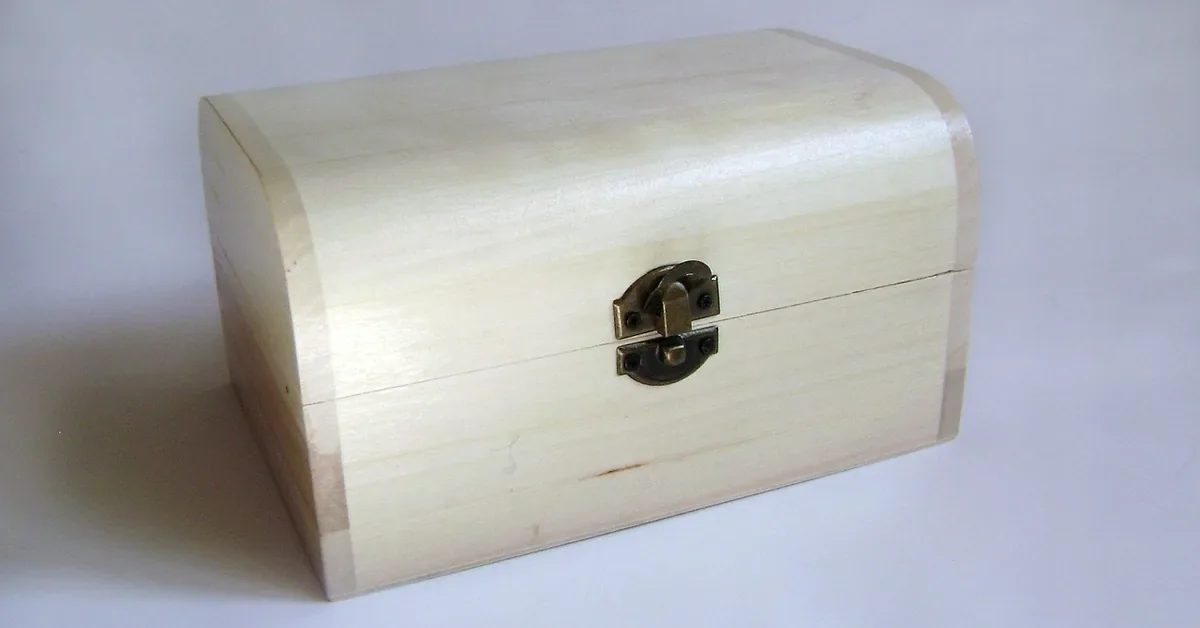
The plan is a plain rectangular box with butt-jointed walls, a fixed lid and a removable bottom, so it needs only straight cuts, clamps and a drill. If you have never built a box before, our guide to small wooden box cut lists explains the side-length rule in detail.
| Part | Spec used in this plan | Why |
|---|---|---|
| Walls | One 3/4 x 5-1/2 x 36 in. hardwood board (walnut, cherry or maple) | Board width sets the wall height, so no ripping is needed |
| Lid | 3/4 in. hardwood plywood, 8 x 11 in. | Plywood does not swell and shrink across its width like a solid board |
| Bottom | 1/2 in. plywood, 7 x 10 in. | Screws on, so the bag can be placed inside last |
| Glue and fasteners | PVA wood glue, 1-1/4 in. brads, six #6 x 1 in. screws | Glue and brads hold the corners; screws hold the bottom |
| Abrasives and finish | 120 and 220 grit paper, wipe-on clear finish | Thin coats are forgiving on a small box |
You also need a saw with a miter box or a miter saw, a tape measure, a combination square, clamps or painter’s tape, a drill with a pilot bit, and iron-on edge banding for the plywood edges. Our guide to gluing wood without clamps covers the tape method.
How Many Cubic Inches Does a Wooden Urn Need?
The funeral-industry rule of thumb is one cubic inch of urn capacity for each pound of body weight prior to death, so a 175 lb person needs an urn of 175 cubic inches or more, according to Funeralwise. It is a planning rule based on the person’s weight before cremation, not on the weight of the remains.
The average weight of adult cremated remains is between four and six pounds. Source: Cremation Association of North America. Those few pounds are why a 250 lb rule-of-thumb volume is a generous allowance, not a tight fit.
Where most plans go wrong is measuring the outside of the box. A butt-jointed box with 3/4 inch walls loses 1-1/2 inches from each inside dimension, so the usable capacity is much smaller than the box looks:
| Measure | Calculation | Result |
|---|---|---|
| Outside footprint x wall height | 10 x 7 x 5.5 | 385 cubic inches |
| Inside length | 10 minus (2 x 3/4) | 8.5 in. |
| Inside depth (front to back) | 7 minus (2 x 3/4) | 5.5 in. |
| Inside volume | 8.5 x 5.5 x 5.5 | 257.1 cubic inches |
| Share of the outside footprint that is usable | 257.1 / 385 | about 67% |
The inside height is the full 5-1/2 inch wall, because the bottom panel sits under the walls and the lid sits on top. Size a box from the outside and you can come out a third short. To size one for a different person, keep the 5-1/2 inch depth and height and change only the length:
| Body weight up to | Volume needed | Inside length | Inside volume (L x 5.5 x 5.5) | Front and back length (outside) |
|---|---|---|---|---|
| 120 lb | 120 cu in | 4 in. | 121.0 cu in | 5-1/2 in. |
| 150 lb | 150 cu in | 5 in. | 151.3 cu in | 6-1/2 in. |
| 180 lb | 180 cu in | 6 in. | 181.5 cu in | 7-1/2 in. |
| 200 lb | 200 cu in | 6-3/4 in. | 204.2 cu in | 8-1/4 in. |
| 250 lb | 250 cu in | 8-1/2 in. | 257.1 cu in | 10 in. |
| 300 lb | 300 cu in | 10 in. | 302.5 cu in | 11-1/2 in. |
For one urn that holds two people, apply the same rule to their combined body weights. Cemeteries, columbaria and scattering gardens can have their own size or material limits, so ask before you build if the urn will be placed anywhere other than your home.
Wooden Urn Box Plans: Dimensions and Cut List
These are the cut pieces for the 10 x 7 inch box, with 3/4 inch walls, a 5-1/2 inch wall height and the 257 cubic inch interior worked out above:
| Piece | Qty | Size (thickness x width x length) | Notes |
|---|---|---|---|
| Front and back | 2 | 3/4 x 5-1/2 x 10 in. | Grain runs along the length |
| Sides | 2 | 3/4 x 5-1/2 x 5-1/2 in. | Fit between front and back: 7 minus (2 x 3/4) = 5-1/2 |
| Lid | 1 | 3/4 x 8 x 11 in. (plywood) | Overhangs 1/2 in. on every side: 10 + 1 = 11, 7 + 1 = 8 |
| Bottom | 1 | 1/2 x 7 x 10 in. (plywood) | Full outside size, screwed to the front and back |
The wall pieces add up to 10 + 10 + 5.5 + 5.5 = 31 inches. Three saw cuts at about 1/8 inch each add 3/8 inch, so you need 31-3/8 inches of board, and a 36 inch board leaves 4-5/8 inches spare (see our kerf calculator). Dimensional 1×6 lumber is 3/4 x 5-1/2 inches (see the nominal versus actual lumber size chart), but a hardwood board sold as 6 inches wide may be a full 6 inches. Measure yours: the wall height is the board width, and the volume becomes 8.5 x 5.5 x 6 = 280.5 cubic inches for a full 6 inch board.
How to Build the Urn, Step by Step
- Measure the real board: Check the thickness and width with a ruler, then recompute the side length as outside depth minus twice the thickness.
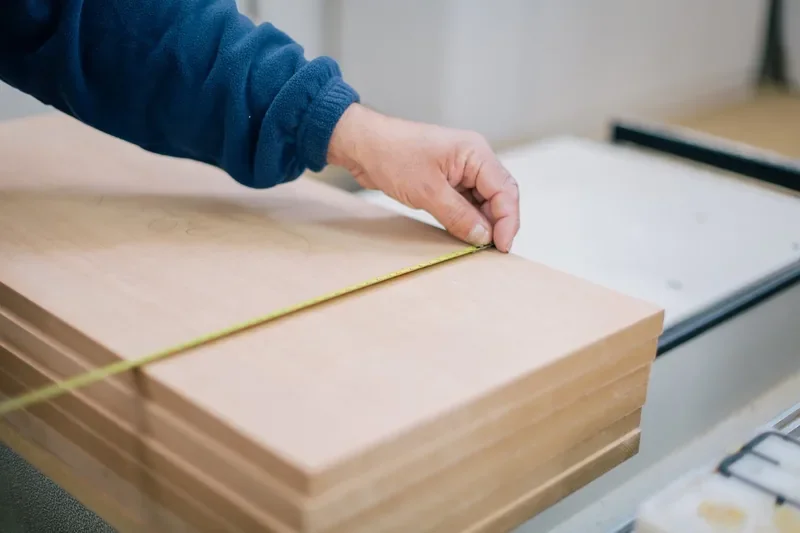
- Cut the walls: Cut the front and back to 10 inches and the two sides to 5-1/2 inches, using a stop block so matching pieces come out identical.
- Dry-fit with tape: Lay the four walls outside face down in the order front, side, back, side, tape the joints, and fold the strip into a box to check the fit.
- Glue the walls: Spread glue on the side end grain, clamp or tape the box, and add three 1-1/4 inch brads through each front and back corner.
- Check for square: Measure both diagonals and adjust the clamps until the two measurements match before the glue sets.
- Cut the lid and bottom: Cut the 11 x 8 inch lid and the 10 x 7 inch bottom from plywood and apply edge banding to the visible plywood edges.
- Glue on the lid: Center the lid so it overhangs 1/2 inch on every side and glue it to the top edges of the walls.
- Sand and finish: Sand to 120 grit and then 220 grit, then apply thin coats of clear finish to the box and bottom panel, allowing the recoat time on the can.
- Drill and screw the bottom: Drill pilot holes 3/8 inch from the edge at 2, 5 and 8 inches along the front and back, then fasten the bottom with six #6 x 1 inch screws.
The bottom screws go only into the front and back because those edges are long grain, which holds a screw far better than the end grain on the side walls. Do a test run with the screws and bottom panel before finishing, then remove them.
Fitting the Bag, the Bottom and the Lid
Cremated remains are returned in a strong plastic bag, placed inside either an urn or a temporary container, according to the Cremation Association of North America. The simplest and cleanest approach is to keep the remains in that sealed bag and set the whole bag inside the finished box. Lay the bag in the box before you close it to confirm it sits flat, and check that you can lift the bag back out through the bottom opening.
Plywood is used for the lid and bottom on purpose. A solid wood panel 8 inches wide will change width with humidity, and a lid glued across both walls can crack a joint over a few seasons. Our wood movement calculator shows how much a board of a given width can move. If you prefer a solid lid, glue it to one wall only and attach the other side with slotted screw holes, or see our guide to making wooden lids.
Finishing a Wooden Urn
Sand all the way to 220 grit, wipe the dust off with a dry cloth, and apply a thin coat of a wipe-on clear finish. Thin coats are easier to keep even on a small box, and you can add coats for a deeper look. Finish the underside of the bottom panel and the lid too, so both faces of each panel take up moisture at the same rate.
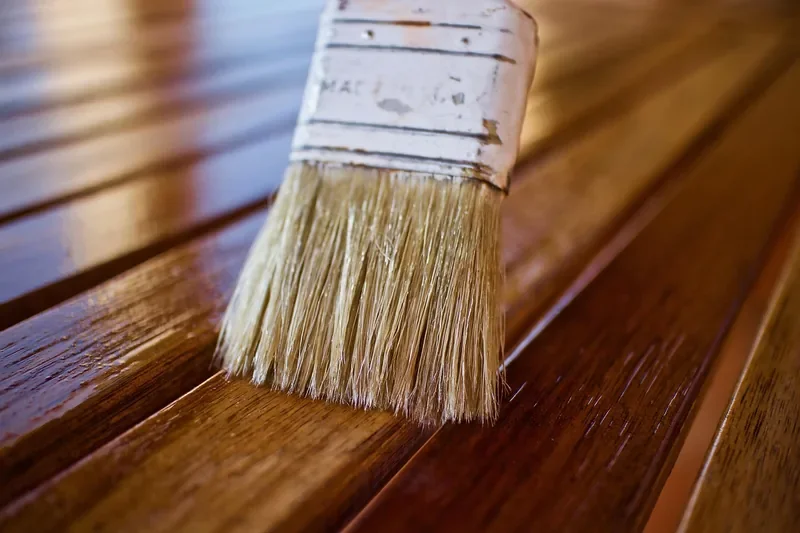
Let the finish cure completely, according to the label, before the bag goes in, so the closed box does not hold a solvent smell. If you want to add a name plate, an engraved plaque or woodburned lettering, do it on the lid before the final coat. A small recessed plaque is a gentler way to personalize the urn than carving into a thin wall. Wipe the finished urn with a dry soft cloth and keep it out of direct sun and damp rooms.
Taking a Wooden Urn on a Plane
The TSA guidance on cremated remains allows them in carry-on bags with special instructions and in checked bags. The container has to pass X-ray screening: if its material produces an opaque image, officers cannot see what is inside and the container is not allowed. TSA suggests a temporary or permanent container made of a lighter material, such as wood or plastic. Some airlines do not allow cremated remains in checked bags, so check with your airline first.
Out of respect for the deceased, TSA officers will not open a container, even if requested by the passenger.
TSA, cremated remains guidance
We have not run this design through an X-ray, so we cannot promise that it screens clearly. Thick dense hardwood and screws can change the image. If you are unsure, a practical option is to travel with the remains in the plastic bag and temporary container they came in, then move them into the urn at your destination. The final decision belongs to the screening officer, so allow extra time at the checkpoint.
Frequently Asked Questions
What Size Should a Wooden Urn Be for Human Ashes?
Use at least 1 cubic inch of inside volume per pound of the person’s body weight before cremation. Measure the inside of the box, not the outside: the 10 x 7 inch plan in this guide has 257.1 cubic inches inside, enough for up to 250 pounds.
Can a Beginner Build a Wooden Urn at Home?
Yes. The box plan uses only straight cuts, glue, brads and six screws, with no lathe, router or dovetail jig. Allow two working sessions: one for cutting and gluing, and one for sanding and finishing, with the finish curing before the bag goes in.
Do Ashes Go Directly Into a Wooden Urn?
Usually not. Cremated remains are returned in a strong plastic bag, and the simplest approach is to keep them in that sealed bag and place the bag inside the box. The wood then never touches the remains, and the bag can be lifted back out.
Can You Take a Homemade Wooden Urn on a Plane?
TSA allows cremated remains in carry-on bags with special instructions, but the container must produce a clear X-ray image, and officers will not open it. TSA suggests lighter materials such as wood or plastic. Check your airline’s rules, especially for checked bags.
What Wood Is Best for a Cremation Urn?
Any stable, kiln-dried hardwood works. Walnut, cherry and maple are common choices because they sand and finish cleanly, while poplar is a lower-cost option that takes a finish well. Avoid boards with cracks or loose knots in the walls, and use plywood for the lid and bottom to avoid movement.
Before You Close the Urn
Check three numbers before the last screw: the inside volume against the body weight, the bag lying flat inside, and the bottom panel coming off and going on without a fight. If you are also preparing a flag display for a service member, our guide to folding a flag for a shadow box may help. Take your time with each step, since a careful build is part of the tribute.
Sponsored / affiliate links. As an Amazon Associate I earn from qualifying purchases. I may earn additional commission from eligible campaigns.