How to Make a Wood Bead Garland
Make a wood bead garland by stringing wooden beads on jute or cord. Choose bead size and spacing based on the look you want: tighter spacing gives a fuller strand, while looser spacing gives a lighter one. Bad sizing leaves gaps, awkward drape, or a garland that is too short for the tree or mantel. This guide covers bead-size choices, length math, spacing, and display-specific planning for trees and mantels.
How to plan your garland
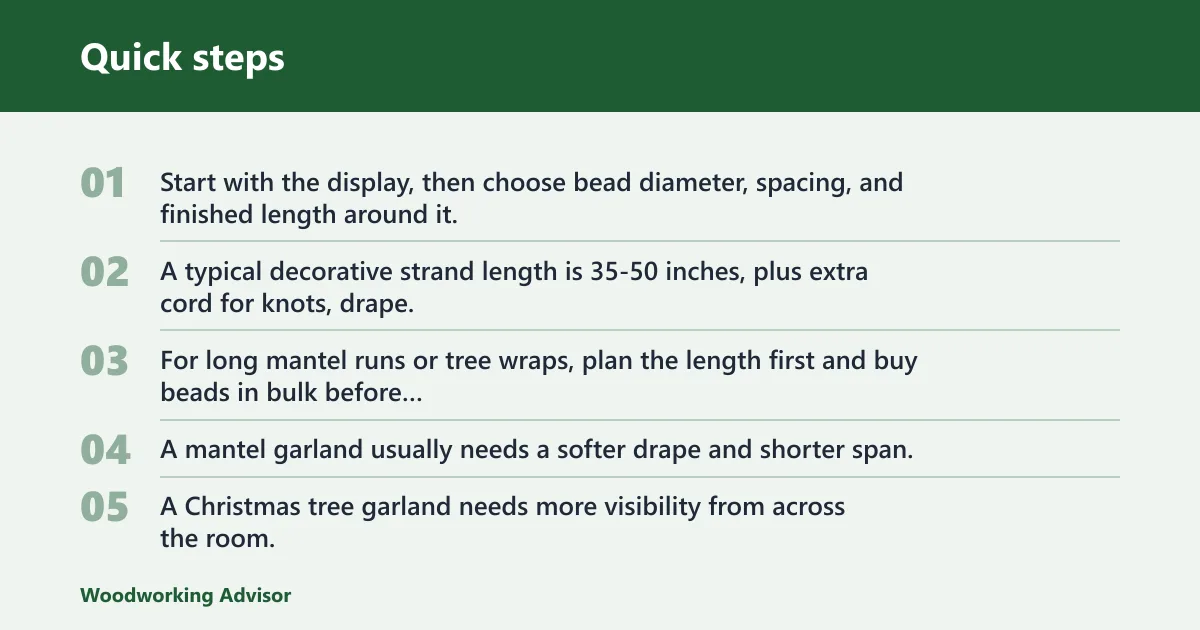


Start with the display, then choose bead diameter, spacing, and finished length around it. A typical decorative strand length is 35-50 inches, plus extra cord for knots, drape, and any tassels. For long mantel runs or tree wraps, plan the length first and buy beads in bulk before threading.
Choose the display first
A mantel garland usually needs a softer drape and shorter span. A Christmas tree garland needs more visibility from across the room, so bead diameter matters more and you may need multiple joined strands rather than one long run.
Set length, spacing, and bead size
Larger beads read better from farther away. 8mm beads look delicate and busy; 14mm and 16mm are a common middle ground; 19mm and 20mm beads create a bolder line that is easier to see on a tree. Tight spacing gives fuller coverage. Loose spacing uses fewer beads and feels lighter.
What you’ll need
- Wood beads in the diameter you want, such as 8mm, 14mm, 16mm, 19mm, or 20mm
- Twine, cord, or string with a diameter small enough to pass through the bead holes
- Scissors
- Measuring tape or ruler
- Optional tassels or small decorative accents
- Optional glue for locking knots if the cord frays easily
Wood beads are sold in natural wood, painted, or stained finishes. Natural beads pair well with neutral decor. Painted and stained beads add contrast, and the finish can raise cost, especially in bulk orders for longer strands or multiple garlands.
Pick cord size to match bead holes
Use twine or string as the default choice because both give a flexible drape and are easy to knot. Pick a cord thin enough to pass through the bead holes with room to move, but not so thin that the knot pulls through. Wire can help if the hole is large and the strand needs to hold a fixed shape, but it is not the first choice for a soft mantel drape.
Bead garland sizing worksheet
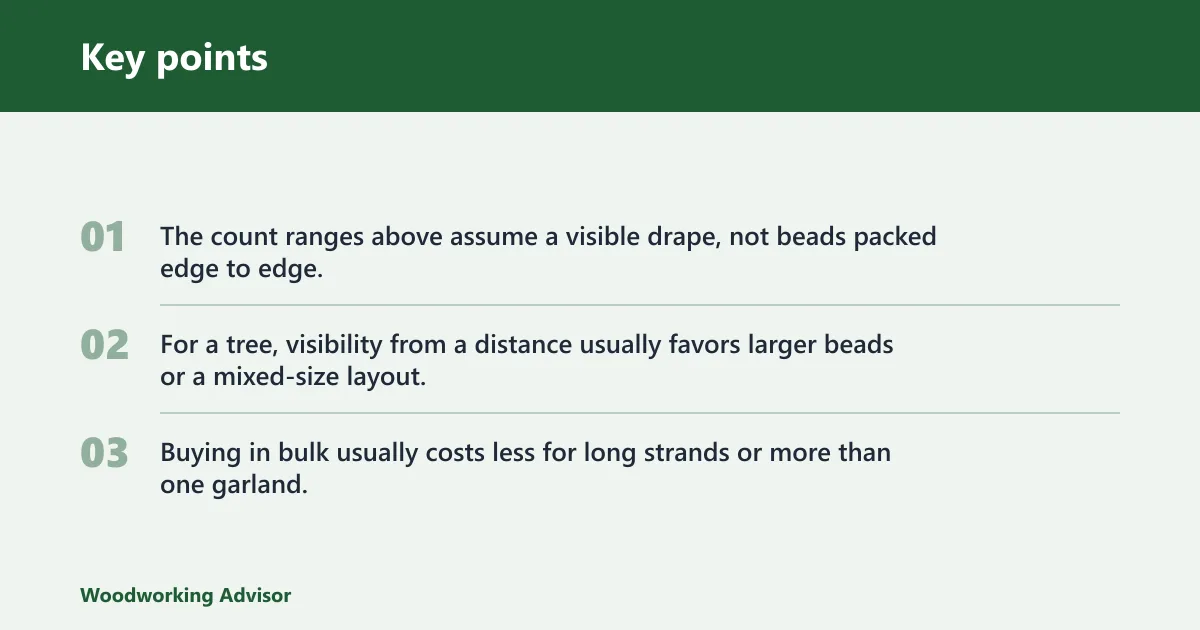
Use this worksheet before you buy supplies. It shows the finished strand length, bead size range, approximate count, and a rough material-cost line so you can price the project before you start threading.
| Project scenario | Recommended strand length | Suggested bead diameter range | Approximate bead count | Simple material-cost estimate line |
|---|---|---|---|---|
| Mantel | 35-50 inches, plus 6 inches extra | 16mm to 20mm | 60 to 110 beads | One strand: budget for one bag of beads plus cord; finish and size change the price |
| 4-6 foot tree | 70-100 inches total, often in 2 sections | 14mm to 19mm | 140 to 220 beads | Two sections: buy beads in bulk for a lower per-bead cost |
| Large tree | 120-180 inches total, often in 3 or more sections | 8mm to 16mm mixed with 19mm or 20mm accents | 250 to 450 beads | Multiple strands: mixed sizes usually cost more than one-size natural beads |
The count ranges above assume a visible drape, not beads packed edge to edge. If you tighten spacing, the count rises. If you leave wider gaps, the count falls. For a tree, visibility from a distance usually favors larger beads or a mixed-size layout.
Use the table to buy bulk beads
Buying in bulk usually costs less for long strands or more than one garland.
How to finish the ends
Secure the ends with a knot that fits the cord and bead holes; on smoother cords or larger bead holes, you may also need a stopper knot or a tiny dab of glue to keep the strand from slipping. If the cord frays, trim the end cleanly before you knot it and add a tiny dab of glue only if needed.
- Hold the last bead in position and tie a tight knot beside it.
- Repeat the knot two more times to make a triple knot.
- Pull the knot snug, but do not crush the cord fibers.
- Trim the tail, leaving enough length for a tassel or accent if you want one.
How do I keep wood beads from slipping on garland?
Use a cord that fits the bead holes closely enough to hold position, then finish with a knot that will not pull through. If beads still drift, add a second knot near the first bead on both ends, and use a stopper knot or a small dab of glue if the cord is especially smooth or the bead holes are large. On a loose strand, spacing changes can also make the whole run slide, so check tension before hanging.
How do you add tassels or decorative accents?
Tassels add length and weight at the ends, and they are easiest to attach to leftover twine ends after the garland is threaded. Tie them on after you finish the bead run, then check that both ends hang evenly. Uneven tassels can pull one side of the strand lower than the other.
How to make a wood bead garland with tassels
Leave extra cord at both ends, wrap each tassel around the tail, and knot it tightly before trimming. If you want the tassel to sit centered, use the same tail length on both sides. Keep the tassels light enough that they do not distort the drape.
Suppose a garland looks balanced until tassels are added. If the left end drops lower, shorten that tassel tail by about 1/2 inch and recheck the hang. Small adjustments are easier than rebuilding the strand.
How do you hang it?
Hang the garland after you check the final shape on a flat surface. Mantel styling usually benefits from visible slack and layered decor. Tree wraps need longer sections, stronger visual contrast, and careful spacing so the beads still read clearly from across the room.
Mantel styling
A mantel works well with a strand that dips slightly in the middle and ends near a bowl, vase, or greenery. Keep the drape soft. If the garland looks stiff, the strand is probably too short or the cord is too tight between support points.
Tree wrap planning
A Christmas tree garland often needs multiple sections, especially on a 4-6 foot tree or a large tree. Use 14mm to 20mm beads when you want the strand to stand out at viewing distance. Smaller 8mm beads can work, but they disappear faster on a busy tree.
A common first-timer mistake is choosing 8mm beads for a large tree and then expecting a heavy visual line. The strand can look fine on the table, then read thin once it is wrapped around branches. Larger beads or mixed sizes solve that problem better than tighter spacing alone.
Common mistakes
Most problems come from sizing, not from the threading itself. Too little slack, poor knotting, and the wrong bead diameter can make the garland look unfinished even if the beads are evenly spaced.
- Too-tight slack: Leave extra cord so the strand can drape.
- Sparse spacing: Use tighter spacing if the garland looks thin once hung.
- Slipping knots: Use a secure knot and recheck the end beads.
- Frayed cord: Trim the end before threading and before tying off.
- Wrong bead size: Use larger beads for trees viewed from farther away.
If the strand still looks too bare, add 2 to 4 beads per section and rehang it. If that does not help, shorten the visible span slightly or switch to a larger bead diameter. That is often easier than rebuilding the whole garland.
Frequently asked questions
How long should a wood bead garland be for a mantel?
A mantel garland usually works best in the 35-50 inch range, plus 6 inches extra for knots and drape. If the mantel is wide, use two shorter strands rather than forcing one strand to span too far, because the middle will look flat and the ends may pull down unevenly.
What size wood beads are best for garland?
Use 16mm to 20mm beads for a fuller look on most displays. Choose 8mm beads for a delicate strand, 14mm for a balanced middle ground, and larger 19mm or 20mm beads when you need stronger visibility on a Christmas tree or a long mantel run.
How many wood beads do I need for a Christmas tree garland?
For a 4-6 foot tree, plan roughly 140 to 220 beads for a two-section garland, depending on size and spacing. For a large tree, total demand often moves into the 250 to 450 bead range, especially if you want a fuller wrap or multiple strands.
Should I use twine or wire for a wood bead garland?
Use twine or string for most garlands because they drape naturally and are easy to knot. Use wire only when you need a fixed shape or the bead holes and display style suit it. Check hole size first; a cord that is too thick will stop the beads from threading cleanly.
Can I make a wood bead garland cheaper than buying one?
Often, yes, but the price depends on bead size, finish, and quantity. Natural beads are usually the least costly, while painted or stained beads increase the total. Buying in bulk lowers the cost per bead.
How do I add tassels or decorative accents to a wood bead garland?
Leave extra twine at the ends, tie the tassels on after the beads are in place, and trim both sides to the same length if you want a balanced finish. Keep the accents light enough that they do not pull the strand out of line or make one end hang lower.
Sponsored / affiliate links. As an Amazon Associate I earn from qualifying purchases. I may earn additional commission from eligible campaigns.