Mineral Spirits vs Paint Thinner vs Lacquer Thinner: When to Use Each
Mineral spirits, paint thinner, and lacquer thinner sit on the same shelf and get swapped in a lot of shop advice, but the name on the can is a poor guide to what is inside. The published safety data sheets (SDS) show a flash point of 105°F or higher for mineral spirits, close to 0°F for lacquer thinner, and at least one current "paint thinner" that is mostly acetone. This guide compares real SDS figures from Klean-Strip and Sunnyside, then tells you which solvent fits oil-based finishes, lacquer, shellac, and brush cleanup.
Which Solvent Should You Use? The Short Answer
Best Odorless Mineral Spirits Pick
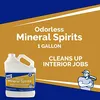 |
Klean-Strip Odorless Mineral Spirits, 1-Gallon – $21.98 The one solvent on this page that covers brush cleanup, thinning oil-based finishes, and wiping bare wood. Its published safety data sheet lists a single ingredient and a flash point above 105°F.
|
Match the solvent to the finish, not to the word on the label:
- Oil-based stain, varnish, polyurethane, or alkyd paint: mineral spirits, or a petroleum paint thinner whose SDS confirms a flash point above 100°F.
- Nitrocellulose lacquer and lacquer spray-gun cleanup: lacquer thinner.
- Shellac: denatured alcohol. Neither mineral spirits nor lacquer thinner is the right tool.
- Water-based finishes: water and soap, none of these solvents.
If you only buy one, buy odorless mineral spirits. It handles the most common woodworking tasks and carries the lowest fire risk of the three.
What the Safety Data Sheets Actually Say
Most comparison articles repeat generic ranges. The table below uses numbers printed on actual manufacturer SDS documents, so you can see how different two cans with similar names can be.
| Product (SDS date) | Main ingredient | Flash point | Other SDS details |
|---|---|---|---|
| Klean-Strip Odorless Mineral Spirits (SDS dated 2015) | 100% hydrotreated light distillate (petroleum) | Above 105°F | Boiling range 318-354°F; vapor about 5 times heavier than air; aspiration hazard |
| Sunnyside Paint Thinner, product 701 (SDS revised 2015) | Medium aliphatic solvent naphtha, 60-100% | 108°F (42°C) | Boiling point 315°F; label warns it may be fatal if swallowed and enters airways |
| Klean-Strip Paint Thinner (SDS dated 2021) | Acetone 80-100%, plus 3-7% 4-chlorobenzotrifluoride and 1-5% mineral spirits | 0°F (Setaflash) | Classified Flammable Liquid Category 2; label says not for small enclosed spaces such as basements and bathrooms |
| Klean-Strip Lacquer Thinner, California formulation (SDS dated 2015) | Acetone 90-100%, plus 1-5% dipropylene glycol n-butyl ether | 0°F (Setaflash) | Vapor pressure 211 mmHg at 68°F; vapor heavier than air |
Three things stand out. First, the name does not guarantee the chemistry. The 2021 Klean-Strip Paint Thinner SDS lists 80-100% acetone with a 0°F flash point, the same flash point reported on the lacquer thinner SDS. Sunnyside Paint Thinner, by contrast, is a petroleum naphtha that flashes at 108°F. Formulations also change by state and by year, so the can in your hand may not match a sheet from a few years ago.
Second, "lacquer thinner" is not one recipe. The California-compliant Klean-Strip version is almost pure acetone. Traditional blends sold elsewhere commonly add toluene, ketones such as MEK, acetates, and alcohols, so their flash points and fumes differ from brand to brand. The old rule of thumb that lacquer thinner is always acetone plus MEK is only sometimes true.
Third, "odorless" does not mean harmless. The odorless mineral spirits SDS lists a vapor density of about 5 (air is 1), so the vapor sinks and collects low in a shop. It also carries an aspiration hazard: if swallowed, the liquid can enter the lungs, and the sheet says not to induce vomiting and to call a poison center or doctor right away.
Mineral Spirits vs Paint Thinner
For brush cleaning and thinning oil-based finishes, a petroleum paint thinner and mineral spirits do the same job. Sunnyside Paint Thinner lists medium aliphatic solvent naphtha with a boiling point of 315°F, while Klean-Strip Odorless Mineral Spirits lists a 318-354°F boiling range. Those are close enough that they evaporate at similar speeds and dissolve the same oil-based resins.
The practical differences are smaller than the marketing suggests. Odorless grades have the aromatic hydrocarbons removed, which cuts the smell, and that is why they are the usual choice for a garage or basement shop. Standard grades smell stronger and cost less. The real trap is the acetone-based product sold under the "paint thinner" name: it flashes at 0°F, and our article on thinning polyurethane with paint thinner explains why the thinner type matters when you are mixing it into a finish.
When Lacquer Thinner Is the Right Call
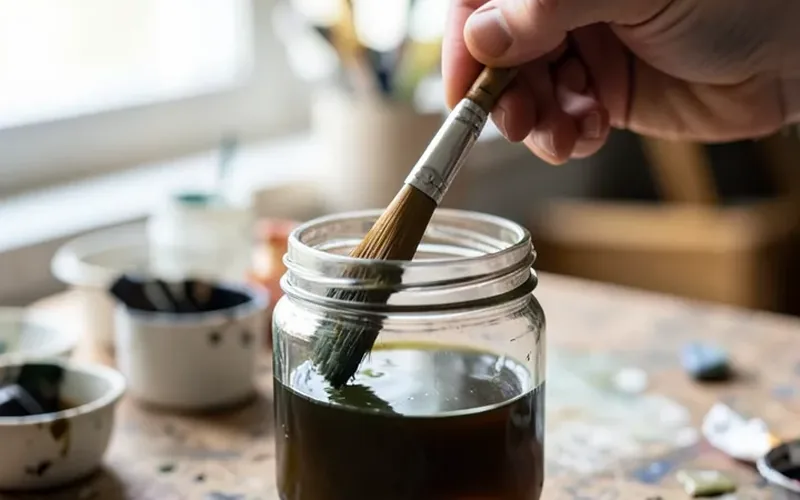
Lacquer thinner exists to dissolve and thin lacquer. Use it to thin nitrocellulose lacquer for spraying and to flush a spray gun after a lacquer session, because dried lacquer in the needle and cap passages will not dissolve in mineral spirits. Our guide to applying lacquer to wood covers the finishing side.
It is the wrong tool in three situations. It is not the way to thin or clean up shellac, which wants denatured alcohol (see the shellac cut ratio calculator). It is not a general-purpose cleaner for oil-based work, because it is a much bigger fire and fume hazard than mineral spirits for no benefit. And it should not be wiped across a cured finish you want to keep, since strong solvents like acetone can soften or dull many finishes. Test a hidden spot first if you must.
Task-by-Task Guide
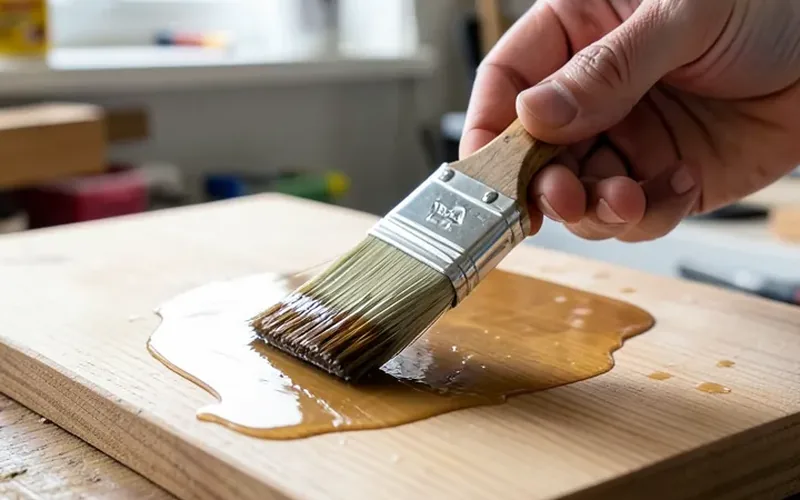
- Cleaning brushes after oil-based paint or varnish: mineral spirits or a petroleum paint thinner. Work the brush in a jar, squeeze it out, and repeat in fresh solvent until it runs clear.
- Thinning oil-based polyurethane or varnish: mineral spirits, but only as far as the can label allows. Some labels permit a small percentage of thinning, and some say not to thin at all. See how to thin varnish by maker for the published ratios.
- Wiping bare wood before an oil-based finish: a rag dampened with mineral spirits removes surface grease and shows roughly how the wood will look under a clear oil finish. Let it flash off fully before you apply stain or oil.
- Cleaning a spray gun after lacquer: lacquer thinner only, followed by disassembly of the needle and cap.
- Cleaning shellac brushes and thinning shellac: denatured alcohol.
- Water-based polyurethane or latex cleanup: water and soap.
For a longer walkthrough of thinning ratios and brushing technique, see our guide to thinning oil-based paint.
Safety Rules Taken From the Labels
These come from the SDS and label language on the products above, not from guesswork:
- Ventilate and keep ignition sources away. Pilot lights, space heaters, static, and non-sparking tools all matter. The Klean-Strip Paint Thinner label specifically says not to use it in small enclosed spaces such as basements and bathrooms, because vapors can accumulate and explode if ignited.
- Use the right respirator. The Klean-Strip SDS documents call for a properly fitted NIOSH-approved respirator for organic solvent vapors where ventilation is inadequate, and state that a dust mask does not protect against vapors.
- Wear solvent-resistant gloves and eye protection. Prolonged skin contact dries and irritates skin.
- Never siphon or taste-test. If someone swallows any of these, do not induce vomiting. Call poison control (1-800-222-1222 in the US) or a doctor.
- Treat the Klean-Strip lacquer thinner and acetone-based thinners as the highest fire risk, with a 0°F flash point, meaning they give off ignitable vapor at freezing temperatures.
Storage and Disposal
Keep solvents in their original labeled containers, tightly closed, in a cool place away from heat. Never pour them down a drain or into the trash. Drop used solvent at a household hazardous waste collection site; our guide on disposing of paint thinner after cleaning brushes covers the details.
Rags need separate attention. Solvent-soaked rags are flammable on their own, and rags that also carry oil finishes such as linseed oil, tung oil, or oil-based stain can heat up and ignite as the oil cures. Lay them flat outdoors to dry, or store them in a sealed metal can with water, and follow the steps in how to dispose of stain rags safely.
Frequently Asked Questions
Are mineral spirits the same as lacquer thinner?
No. Mineral spirits is a petroleum distillate with a flash point above 105°F on the Klean-Strip SDS, while the Klean-Strip lacquer thinner SDS lists a flash point of 0°F and a mostly acetone formula. Mineral spirits cannot dissolve dried lacquer, and lacquer thinner evaporates far too fast and too aggressively for everyday oil-finish work.
Is paint thinner the same as mineral spirits?
Often, but not always. Sunnyside Paint Thinner is a petroleum naphtha with a 108°F flash point, so it behaves like mineral spirits. But the Klean-Strip Paint Thinner SDS dated 2021 lists 80-100% acetone and a 0°F flash point, which is a different product entirely. Check the SDS flash point before treating a can as a mineral spirits substitute.
Can I use lacquer thinner instead of mineral spirits?
Not for oil-based paint, stain, or varnish. It evaporates too quickly to brush or wipe oil finishes properly, and its much lower flash point makes it a bigger fire risk. Use it only for the lacquer jobs it was made for, such as thinning lacquer and flushing a spray gun.
Which is safest to use indoors?
None of them is safe to use without ventilation. Odorless mineral spirits has the highest flash point of the group, so it is the lowest fire risk, but its SDS still calls for adequate ventilation, keeping ignition sources away, and a NIOSH-approved organic-vapor respirator for occasional use where engineered ventilation is not available. A dust mask does not protect against solvent vapors.
What should I use to thin or clean up shellac?
Denatured alcohol, not mineral spirits and not lacquer thinner. Shellac dissolves in alcohol, and mineral spirits will not dissolve it. Our shellac cut ratio calculator shows how to mix a batch.
Conclusion
Read the finish label first, then pick the solvent: mineral spirits for oil-based finishes and general cleanup, lacquer thinner only for lacquer work, denatured alcohol for shellac. Before you trust any can called "paint thinner," check the flash point and ingredients on its SDS, because one popular brand now sells an acetone-based product under that name. Ventilate, keep ignition sources away, and dispose of rags and spent solvent properly.
Sponsored / affiliate links. As an Amazon Associate I earn from qualifying purchases. I may earn additional commission from eligible campaigns.
![12.25 Oz Clear Brushing Lacquer Spray Gloss [Set of 6]](https://m.media-amazon.com/images/I/41y-ntITa2L._SL500_.jpg)