Best Paints for High Humidity (2026): Based on Specs and Reviews
For many bathrooms, laundry rooms, and mudrooms, a washable acrylic latex in satin is commonly recommended; move to semi-gloss for frequent splashes, and use a specialty moisture-resistant system for shower surrounds or chronically damp walls. Choose the wrong sheen, and moisture can leave marks on the film, speed peeling, and make mildew cleanup harder. This guide explains which finish fits each room, where satin is enough, and when semi-gloss or a specialty coating is the smarter choice.
Quick comparison
| Product | Badge | Best for | Price | ||
|---|---|---|---|---|---|
 |
Zinsser Perma-White Mold & Mildew-Proof Paint, Semi-Gloss,Zinsser | Our pick | 1 gallon · semi-gloss · mold & mildew-proof | $87.50
Price as of 28 Oct 2026
|
View |
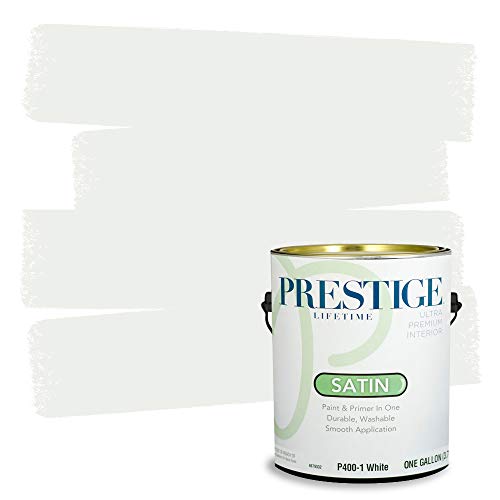 |
PRESTIGE Paints Interior Paint and Primer in One, 1 Gallon,PRESTIGE | Also great | 1 gallon · satin · paint and primer | $64.62
Price as of 28 Oct 2026
|
View |
 |
Valspar Signature Semi-gloss Swiss Coffee 7002-16 LatexGeneric | Upgrade pick | 1 gallon · semi-gloss · Swiss Coffee | $95.95
Price as of 28 Oct 2026
|
View |
Compare sheen, primer need, and the kind of moisture exposure each product can handle. None of these is a waterproof substitute for a shower surround coating.
How we chose
The picks below are compared on four points: explicit mold and mildew claims, sheen and cleanability, primer behavior on prepared surfaces, and fit for humid interior spaces. The goal is to match paint to exposure level, not to treat every damp room the same.
The selection process also favored products whose published details make the limits easier to see. A label that says mildew resistant, self-priming, or paint and primer in one tells you more than a vague “bathroom paint” claim.
For high-moisture rooms, the difference between a ceiling, a wall, and a splash-prone trim area matters. A wall paint that works in a powder room can fail fast beside a shower or behind a toilet if condensation stays on the surface.
Quick picks
| Best for | Pick | Why it fits | Drawback |
|---|---|---|---|
| Full bathroom walls | Zinsser Perma-White Semi-Gloss | Mold and mildew-proof claim, moisture-resistant finish, self-priming on many surfaces | Semi-gloss can show wall flaws more than satin |
| Ceilings and patchy repairs | PRESTIGE Interior Paint and Primer in One, Satin | Satin middle ground, washable acrylic latex, paint and primer in one | Less water-shedding than semi-gloss |
| Trim and cabinets | Valspar Signature Semi-gloss | Higher scrubability, stain resistance, paint and primer in one | Needs careful prep on glossy or damaged surfaces |
| Light-traffic humid rooms | PRESTIGE Interior Paint and Primer in One, Satin | Works well where steam is limited and splashes are rare | Not the best choice for frequent wipe-downs |
Humidity paint decision matrix
| Scenario | Recommended sheen | Primer required? | Main failure risk |
|---|---|---|---|
| Powder room wall | Satin | Usually no on sound, clean paint; yes over stains or glossy old paint | Surface scuffing and occasional moisture marking |
| Full bathroom wall | Satin or semi-gloss | Yes over patches, repairs, or stained areas | Condensation streaks and peeling near humid corners |
| Bathroom ceiling | Satin with moisture resistance | Often yes if patched or stained | Drips, spotting, and stain telegraphing |
| Trim or cabinet | Semi-gloss | Usually yes over glossy or slick finishes | Adhesion loss and worn edges from wiping |
| Shower-adjacent splash zone | Specialty moisture-resistant system | Yes, and surface prep matters | Direct splash breakdown and coating failure |
| Stained repair area | Any finish chosen for the room | Yes, use a stain-blocking primer first | Water stain bleed-through and uneven sheen |
Zinsser Perma-White semi-gloss: best for full bathroom walls
- Moisture-resistant finish for baths and kitchens
- Washable semi-gloss finish
- Self-priming on many surfaces
Zinsser Perma-White is the strongest all-around choice here for bathrooms that see daily steam, regular cleaning, and repeated condensation. Its published details include a mold and mildew-proof claim, a semi-gloss finish marketed as moisture-resistant, and self-priming on many surfaces, which makes it a solid fit for wall surfaces that need frequent wipe-downs.
This is the pick for readers who want the most direct answer for a humid bathroom wall. The semi-gloss sheen is easier to clean than satin and gives better water-shedding than flatter finishes. Research and manufacturer guidance both point to higher-sheen coatings as better at resisting moisture penetration than flat paint.
The drawback is visual. Semi-gloss shows patching, wall texture, and drywall repair more readily than satin, so surface prep has to be cleaner. It is also more paint than a powder room wall usually needs.
PRESTIGE Interior Paint and Primer in One, satin: best for ceilings and light-traffic humid rooms
- Paint and primer in one
- Smooth application
- Washable acrylic latex finish
PRESTIGE’s satin finish is the middle-ground pick for rooms that get humidity but not constant direct splash. It works well for powder rooms, laundry rooms, mudrooms, and bathroom ceilings where you want easier cleaning than flat paint without the glare of semi-gloss.
This option makes sense when the surface is sound and the room is ventilated. Satin is a practical compromise, and sourced guidance puts it between flat and semi-gloss on moisture resistance and cleanability. It is also a safer fit than eggshell for a room that sees real steam.
The drawback is simple: satin is not the best water-shedding choice for high-wear trim or splash-prone zones. If the ceiling is stained, patched, or previously nicotine- or water-marked, you still need a stain-blocking primer before topcoating.
Valspar Signature semi-gloss: best for trim and cabinets
- Paint and primer in one
- Durability and stain resistance
- Low-odor formula
Valspar Signature semi-gloss is the strongest choice for trim, cabinets, and other wipeable surfaces in humid rooms. Semi-gloss offers the best water-shedding ability and scrubbability among the three products here, which matters when you are painting baseboards, door casing, and vanity faces.
Its paint-and-primer-in-one setup helps on properly prepared surfaces. That makes it a practical option for bathrooms, laundry areas, and coastal interiors where salt air or repeated washing can wear down softer finishes faster.
The drawback is prep sensitivity. Glossy old paint, dents, and water-damaged wood still need proper sanding, cleaning, and often a separate primer. Built-in primer is not a substitute for a stain-blocking primer over severe water damage.
Which one should you buy?
If you are painting a full bathroom wall, start with Zinsser Perma-White. It gives the strongest match to steam, condensation, and repeated cleaning. For a ceiling, a laundry room, or a powder room wall, PRESTIGE satin is usually enough if the surface is sound and the room is not facing constant splash.
Choose Valspar Signature semi-gloss when the surface gets handled often. Trim, cabinets, and vanity fronts get more wiping and more edge wear than walls, so the harder finish earns its keep there.
Say your guest bath is 6 by 8 feet, has a fan, and only sees short showers. Satin is a sensible call for the walls. Suppose the same room has yellowing around the ceiling vent and a patched water stain above the toilet. That ceiling and repair area need primer first, then a moisture-resistant topcoat.
For anything inside a shower or tub enclosure, stop here and use a specialty system made for that direct-water exposure. Standard bathroom paint is for humid interior surfaces, not routine water contact inside the enclosure.
What is the best paint for a humid bathroom?
The best paint for a humid bathroom is usually a washable acrylic latex in satin, with semi-gloss reserved for higher-wear areas. Look for explicit mold and mildew resistant claims, or better yet a mold and mildew proof label. That matters most in rooms with steam, condensation, and frequent cleaning.
Satin is the practical middle ground for most walls and ceilings. Semi-gloss becomes the better choice when water is splashing more often or the surface needs repeated scrubbing. Eggshell is only a compromise for well-ventilated powder rooms, and it gives up some moisture resistance compared with satin and semi-gloss.
When satin is enough
Satin is enough for a powder room wall, a bathroom ceiling with decent ventilation, and laundry-room walls that see humidity but not direct splash. It gives you better washability than flat paint and less reflection than semi-gloss, which helps hide surface irregularities while still handling routine cleaning.
When semi-gloss is the smarter call
Semi-gloss is the smarter call for trim, cabinets, and full bathroom walls that get wiped down often. It resists moisture penetration better than flat paint, and its harder surface sheds water better. Use it when the room sees more condensation, more hand contact, or more cleaning.
When a specialty moisture-resistant system is justified
Use a specialty moisture-resistant system when the surface sits next to a shower, tub lip, or other zone that gets frequent splash. Standard bathroom paint is not a waterproof coating. If the surface gets routine direct water exposure, you need a product designed for that abuse, not just a mildew-resistant wall finish.
Which finish should you choose?
See the room-by-room guidance above for the finish that fits each surface and exposure level.
Satin for walls and ceilings
Satin sits between flat and semi-gloss, which is why it works so well in humid rooms. It is easier to clean than flatter finishes and less reflective than semi-gloss, so it can handle walls and ceilings without turning every surface flaw into a bright glare.
Semi-gloss for high-wear trim and wipeable surfaces
Semi-gloss gives you a harder, less porous surface, which helps water bead and makes grime easier to remove. That is why it makes sense on trim, cabinets, and frequently touched bathroom surfaces. It also gives the best scrubbability of the common interior sheens discussed here.
Why eggshell is usually the weaker compromise
Eggshell can work in a well-ventilated powder room, but it is the weaker compromise for a bathroom that gets real steam. It offers less moisture resistance than satin and less cleanability than semi-gloss, so it is easy to outgrow once a room starts seeing daily showers.
Do you need primer in high humidity?
Yes, when the surface has stains, patches, damage, or old glossy paint. A stain-blocking primer is safer than relying on built-in primer for water-damaged areas. On clean, sound paint, self-priming formulas can save a step.
Self-priming paint on sound, clean surfaces
Self-priming paint can work on properly prepared surfaces and may eliminate a separate bonding primer layer. That is helpful for fresh drywall, clean repaints, and walls that have no stain bleed-through. It is not enough when the substrate is compromised.
Separate primer for stains, patches, and glossy old paint
Use a separate primer when you see water marks, repaired joint compound, patched drywall, or old glossy enamel. Primer is safer for severe water damage than paint with built-in primer. It helps seal the problem instead of asking the finish coat to do all the work.
Bathroom and stain-blocking primers for ceilings and repairs
Ceilings and repair spots need special attention because moisture and stains often show there first. A bathroom primer or stain-blocking primer helps prevent bleed-through and gives the finish coat a better base. That matters most above showers, near exhaust fans, and around toilet tanks where condensation collects.
How should you paint in humid rooms?
Clean the surface thoroughly, remove soap residue or dust, and degloss glossy paint before coating. Apply thin coats and allow proper dry time between coats. Ventilation during drying and curing matters just as much as the paint itself, because trapped humidity slows curing and raises the risk of peeling.
Prep, degloss, and clean before coating
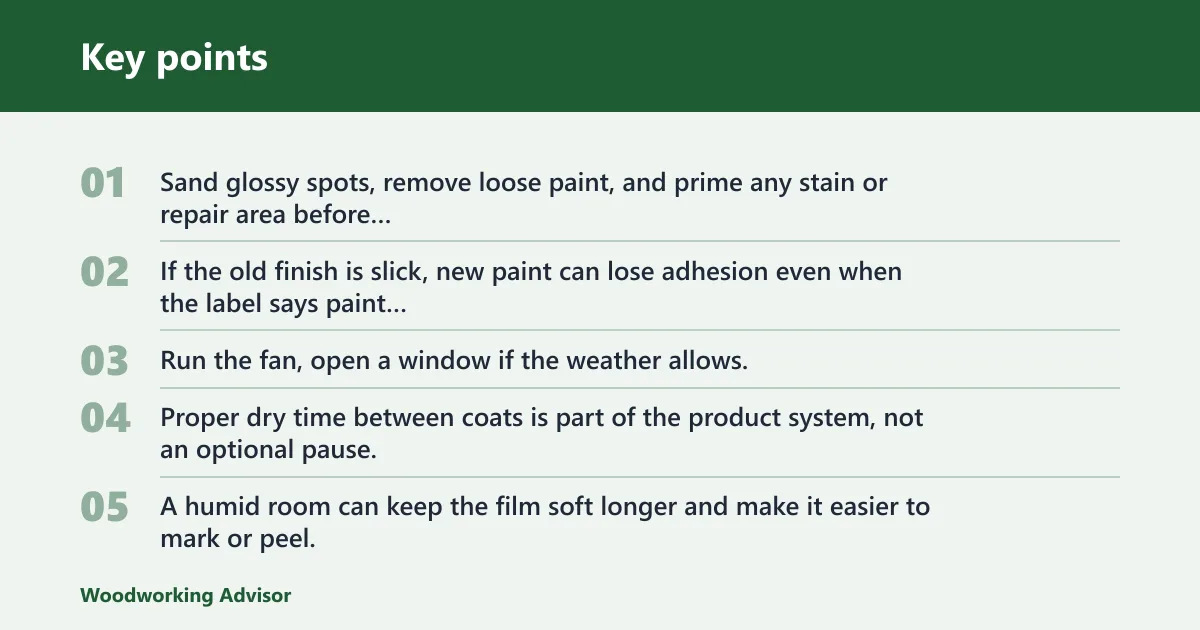
Start with a sound surface. Sand glossy spots, remove loose paint, and prime any stain or repair area before topcoating. If the old finish is slick, new paint can lose adhesion even when the label says paint and primer in one.
Ventilation during dry and cure time
Run the fan, open a window if the weather allows, and keep humidity down while the coating dries. Proper dry time between coats is part of the product system, not an optional pause. A humid room can keep the film soft longer and make it easier to mark or peel.
Why direct-splash areas need a different system
Direct-splash areas are different because moisture sits on the surface, not just in the air. A shower-adjacent wall or tub surround can outstrip ordinary bathroom paint quickly. That is where a specialty moisture-resistant system belongs, not a standard washable wall paint.
A common first-timer mistake is using satin on a bathroom wall and then carrying the same paint onto the shower side wall. That can work on a wall behind a vanity, but it is the wrong system for an area that gets repeated water contact. The finish choice has to match the exposure.
Frequently asked questions
What is the best paint for high humidity bathroom?
For most high-humidity bathrooms, the best paint is a washable acrylic latex in satin, with semi-gloss for more exposed areas. Look for explicit mildew-resistant or mold and mildew proof claims, and use a primer when the surface is stained, patched, or glossy. Direct splash zones need a specialty system.
What paint is good for high humidity?
Good choices for high humidity are satin and semi-gloss interior paints with mildew-resistant labeling. Satin is the better all-purpose wall choice, while semi-gloss handles trim and frequent wipe-downs better. Eggshell is only a mild step up from flat and works best in lighter-duty spaces.
Can you paint in high humidity?
Yes, but the room needs enough ventilation for the coating to dry and cure properly. High humidity slows that process and can raise the risk of peeling or a soft film. If possible, wait for a drier window, especially for ceilings, repairs, and rooms that already have moisture stains.
Do I need primer for high-humidity paint?
Not always, but primer is smart over stains, patches, damaged drywall, or glossy old paint. A stain-blocking primer helps prevent bleed-through on ceilings and repairs. Self-priming paint works better on sound, clean surfaces.
How do I stop bathroom paint from peeling?
Stop peeling by matching the finish to the exposure, cleaning and deglossing before painting, and using primer where the surface needs it. Ventilation matters too. If steam stays in the room or moisture comes from a leak, no paint can compensate for that problem for long.
Sponsored / affiliate links. As an Amazon Associate I earn from qualifying purchases. I may earn additional commission from eligible campaigns.