Kerfing Saw Blade: Full vs. Thin Kerf (+ Bending Spacing)
A kerfing saw blade removes either 1/8 inch (full kerf) or 3/32 inch (thin kerf) of wood with every pass, and that width also determines how far apart to space kerf-bending cuts when bending wood for guitar sides. Using the wrong blade wastes expensive stock or leaves a joint unstable. This guide covers full vs. thin kerf blade specs, the separate kerfing-saw bending technique, and the real formula for calculating cut spacing.
What Is a Kerfing Saw Blade? Full Kerf vs. Thin Kerf
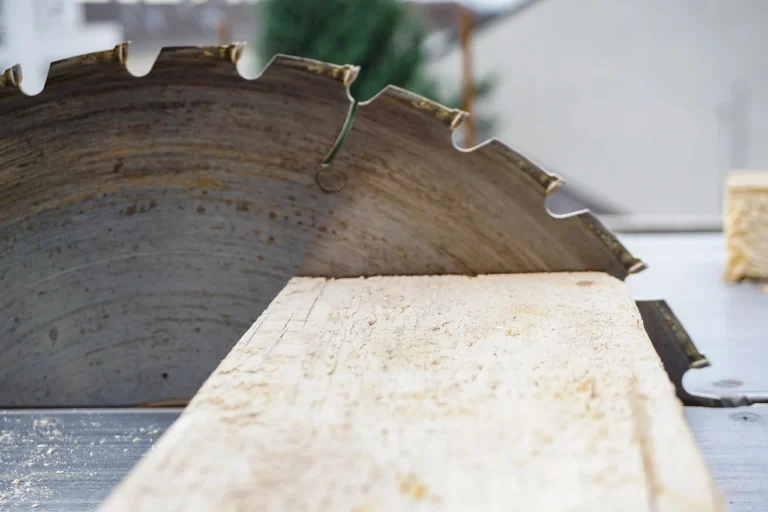
Kerf is the width of material a saw blade turns into sawdust as it cuts – not the cut’s length or depth, just its width, and it applies across every saw type in our full woodworking saws guide. A full-kerf blade is a blade with thicker carbide teeth, typically around 1/8″ (0.125″) wide, brazed onto the plate at a wider angle for extra rigidity. A thin-kerf blade uses narrower teeth, usually 3/32″ (0.09″–0.094″) wide, with little to no set, so the blade removes less wood and needs less power to spin through it.
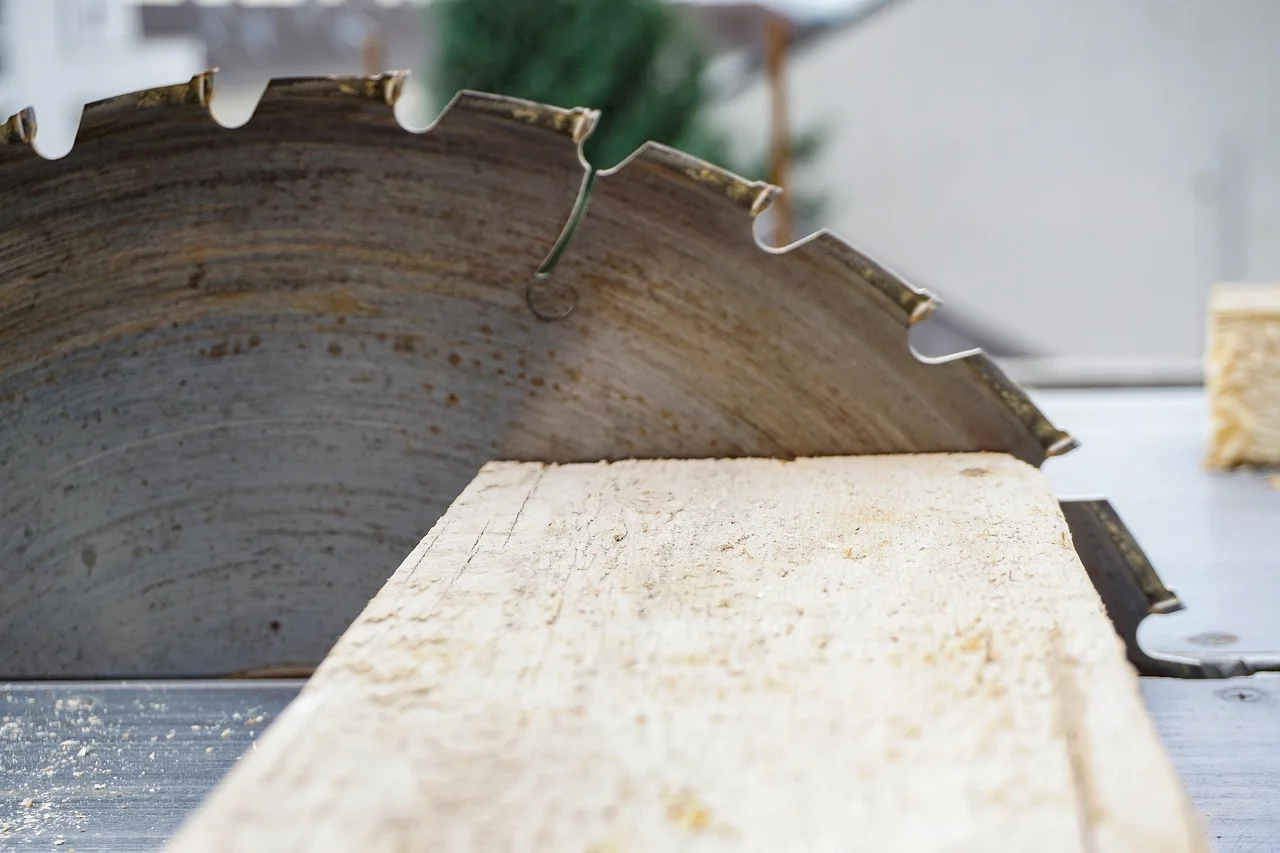
The two widths trade off the same way every time: a thicker (full) kerf removes more wood per pass, which means more sawdust, more resistance, and more power draw from the saw – but the wider plate also deflects less, so cuts stay straighter in thick or dense hardwood. A thinner kerf leaves more usable stock behind, which matters most on figured hardwood, veneer-grade lumber, or any board you paid a premium for.
| Blade Type | Kerf Width | Plate Thickness | Best For |
|---|---|---|---|
| Full kerf | ~1/8″ (3.2mm) | ~0.100″–0.126″ | Hardwood, thick stock, ripping where deflection matters |
| Thin kerf | ~3/32″ (2.2–2.4mm) | ~0.063″–0.094″ | Veneer, expensive lumber, lower-powered saws (under 2HP) |
| Kerfing/dozuki hand saw | ~0.02″ (0.5mm) | ~0.012″ (0.3mm) | Dovetails, fine joinery, controlled kerf-bending cuts by hand |
📊 A full-kerf blade at 1/8″ removes about 0.03125″ more wood per cut than a 3/32″ thin-kerf blade – over 100 rip cuts in 3/4″ plywood, that difference adds up to roughly 3 inches of extra stock lost to sawdust with the full-kerf blade. Source: Olson Saw Co., 2024
“Kerfing Saw” vs. Kerf: The Second Meaning Most Guides Skip
“Kerfing saw blade” gets searched two different ways, and most articles on this topic only answer one of them. The first meaning is the blade-width question above. The second is kerfing as a bending technique: cutting a series of closely spaced, shallow parallel slots into one face of a board so it flexes like cardboard along that line. Luthiers use this to bend guitar sides and linings around tight curves, and it’s also a direct alternative to bandsaw-resawn strips laminated in a bending form for the same shape.
Kerf-bending and bent lamination solve the same problem – getting a straight board to hold a curve – from opposite directions. Lamination glues several thin strips into a curved form; kerfing saws slots into one solid piece so it folds. Kerfing is faster for a one-off curve and needs no form, but the slots must stay hidden on the concave (inside) face, and the technique tops out around a 120° bend before the wood tears. For anything tighter, or for a structural piece, lamination or steam bending holds up better.
How to Calculate Kerf-Bending Cut Spacing
Kerf-bending spacing isn’t a guess – it comes from a fixed ratio between the bend radius, the blade’s kerf width, and how deep each cut goes. Guessing the spacing either leaves the board too stiff to bend or cuts it so aggressively that it snaps.
- Measure your target bend radius (R): the inside radius of the curve you need, in inches – for a typical guitar waist, this runs roughly 3″–4″.
- Note your blade’s kerf width (w): use the actual measured width, not the nominal spec – a table saw blade averages 0.09″–0.125″.
- Set cut depth (d) to about 80–90% of board thickness: leave a thin uncut web on the concave face so the board bends instead of breaking into strips.
- Calculate spacing: s = (R × w) ÷ d. Each kerf closes fully when the board reaches its bend, so this spacing distributes the bend evenly across every cut.
- Find total kerfs needed: N = ceil((R × π × bend angle ÷ 180) ÷ s) – round up to the nearest whole cut.
- Test on scrap first: wood species, grain direction, and moisture content all shift how cleanly a kerf closes, so confirm spacing on an offcut before cutting your actual side.
Worked example: bending a 0.09″-thick guitar side to a 3.5″ radius with a 0.02″-kerf dozuki hand saw at 0.075″ cut depth gives s = (3.5 × 0.02) ÷ 0.075 ≈ 0.093″ between cuts – call it a kerf roughly every 3/32″. For a 90° bend, that works out to around 66 individual kerfs. A full-kerf table saw blade (0.125″) on the same radius and depth would need cuts spaced nearly twice as far apart, which produces a rougher, more faceted curve.
📊 The spacing formula s = (R × w) ÷ d comes from treating each closed kerf as a hinge that rotates the board by w ÷ d radians – halving the bend radius halves the required spacing. Source: Fine Woodworking, “Calculated Kerfs,” 2021
Best Kerfing Saw Pick
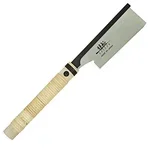 |
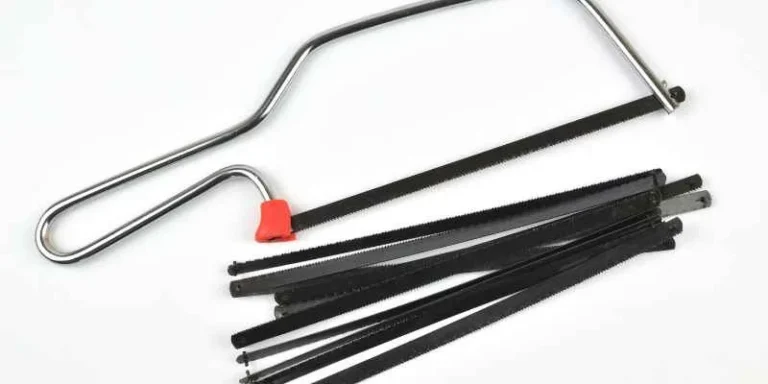
SUIZAN Dozuki Dovetail Saw 6″ Cross Cut – $38.80 A 0.02″ (0.5mm) kerf pull saw – the same fine-kerf class this guide uses in the worked kerf-bending spacing example above, and precise enough for dovetails and other fine joinery.
|
Choosing the Right Full or Thin Kerf Blade
Match the blade to the wood and the saw, not just the price tag. Hardwoods like maple, oak, and hard walnut push back harder against a thin plate, so a full-kerf blade with more carbide mass resists deflection and heat better on long rips. Softwoods and sheet goods like plywood or MDF cut cleanly with a thin-kerf blade, and the lower resistance is easier on saws under 2 horsepower – most benchtop and jobsite saws included.
| Material | Recommended Kerf | Typical Tooth Count |
|---|---|---|
| Hardwood (maple, oak, walnut) | Full kerf | 24–40T |
| Softwood (pine, fir) | Thin kerf | 24–32T |
| Plywood / veneer / MDF | Thin kerf | 60–80T |
| Benchtop saw, under 2HP | Thin kerf | N/A – prioritize kerf over count |
Blade steel and carbide grade matter as much as kerf width. A blade with high-quality C4 carbide teeth holds an edge through more board feet than budget carbide, and it’s worth the extra cost on a blade you’ll resharpen rather than replace.
Thin Kerf vs. Full Kerf: What You Actually Gain or Lose
A thin-kerf blade’s main advantage is yield: less wood turned to sawdust means more usable stock from every board, which shows up fastest on veneer, figured hardwood, or any cutlist where every board foot is expensive. It also draws less power, so it’s the safer default on a contractor or benchtop saw that bogs down under a full-kerf load.
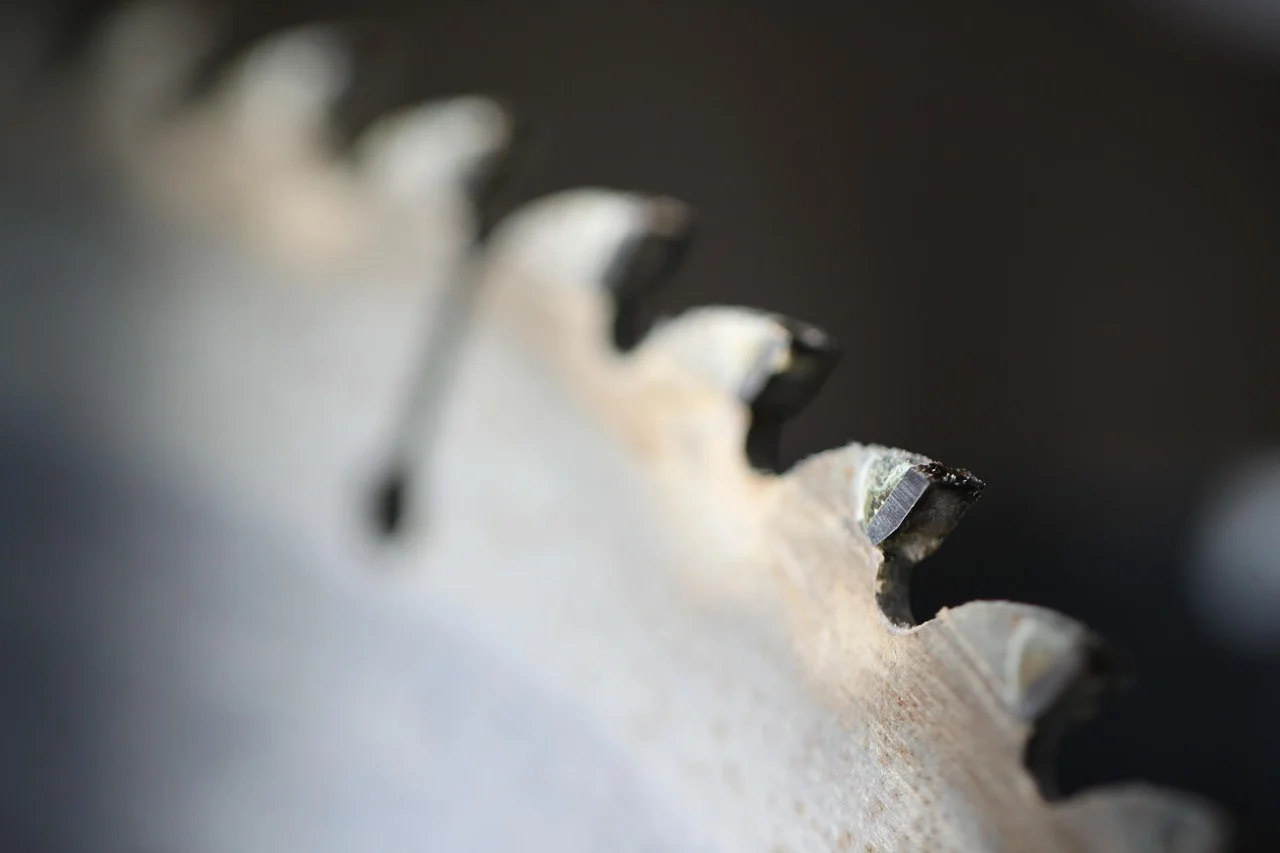
A full-kerf blade’s advantage is stability: the thicker plate resists heat warping and side-to-side deflection on long or deep rips through dense hardwood, which keeps the cut straighter and reduces binding. It’s also the better choice any time you’re cutting tight curves by hand or by kerf in thicker stock, where a flimsier thin-kerf plate can wander mid-cut.
Maintaining a Kerfing Saw Blade
Clean pitch and resin buildup off the blade with a soft brush and a dedicated blade cleaner or a mild degreaser, then rinse and dry it completely – leftover moisture is what starts rust on carbon steel plates between uses. Sharpen carbide teeth with a diamond hone or send the blade out for professional sharpening once cutting quality drops noticeably; carbide holds an edge far longer than the steel in a kerfing hand saw’s replaceable blade, which is designed to be swapped rather than resharpened.
Frequently Asked Questions
What is kerf in a saw blade?
Kerf is the width of material a saw blade removes as it cuts, not the length or depth of the cut. A thicker kerf removes more material and turns more of the board into sawdust, while a thinner kerf conserves more wood. Kerf width is set by the blade’s tooth thickness and set, not by the saw’s motor.
What is the difference between thin and full kerf saw blades?
Thin kerf blades cut a narrower slot, typically around 3/32″, minimizing material waste and requiring less power to spin. Full kerf blades cut around 1/8″ wide, with a thicker plate that resists deflection and heat, making them sturdier for heavy or deep cuts in hardwood. Choose thin kerf for efficiency and expensive stock, full kerf for stability in tough materials.
What size is the kerf on a circular saw?
Most circular saw blades cut a kerf between 1/16″ (thin kerf) and 1/8″ (full kerf), depending on the blade. Thin kerf blades remove less material and need less power, which suits smaller circular saws. Full kerf blades offer more stability and a smoother cut on thicker material. Check the blade’s packaging for its exact kerf spec before buying.
How thick is a full kerf blade?
A full kerf blade is typically about 1/8″ (0.125″) thick at the tooth, compared to roughly 3/32″ (0.09″) for a thin kerf blade. That extra thickness removes more material per pass but resists deflection better, which is why full kerf blades are the standard choice for ripping thick or dense hardwood.
What is a kerfing saw used for in guitar building?
In guitar building, a kerfing saw cuts closely spaced, shallow parallel slots into one face of a guitar side so the solid wood flexes like cardboard around the bending form. It’s an alternative to bent lamination for the same curve, works well up to about a 120° bend, and the cut slots must stay hidden on the concave, unseen face of the finished side.
How far apart should kerf-bending cuts be spaced?
Spacing follows the formula s = (bend radius × blade kerf width) ÷ cut depth. A tighter bend radius or a thinner blade both call for closer spacing, while a deeper cut lets you space kerfs farther apart. Always test the spacing on scrap wood first, since species and grain direction change how cleanly each kerf closes.
Conclusion
Full kerf (1/8″) blades trade extra wood loss for a straighter, more stable cut in dense hardwood; thin kerf (3/32″) blades save stock and power on softwood, plywood, and lower-horsepower saws. For hand-cutting kerf-bending slots in guitar sides or fine joinery, a narrow-kerf pull saw like a dozuki gets you closer to the spacing the math actually calls for. Measure your bend radius, pick the right blade for the wood in front of you, and test any new kerf spacing on scrap before committing a good board to it.
Sponsored / affiliate links. As an Amazon Associate I earn from qualifying purchases. I may earn additional commission from eligible campaigns.