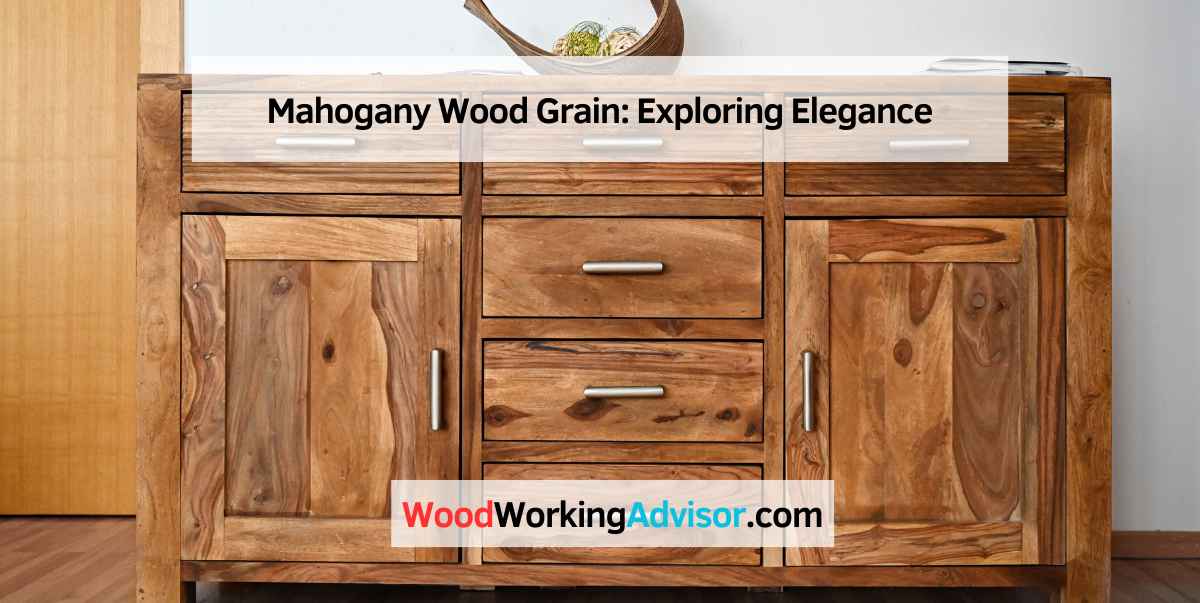
Mahogany Wood Grain Explained: Ribbon Figure & Chatoyancy
Mahogany grain runs straight to interlocked, and on quartersawn boards the interlocked layers create a “ribbon figure” — alternating light and dark stripes, not a stain effect. Cut the wrong way and that figure barely shows, wasting the wood’s best feature. This guide covers what causes the ribbon pattern, how genuine mahogany compares to African mahogany and Sapele, and whether your piece needs grain filler before finishing.
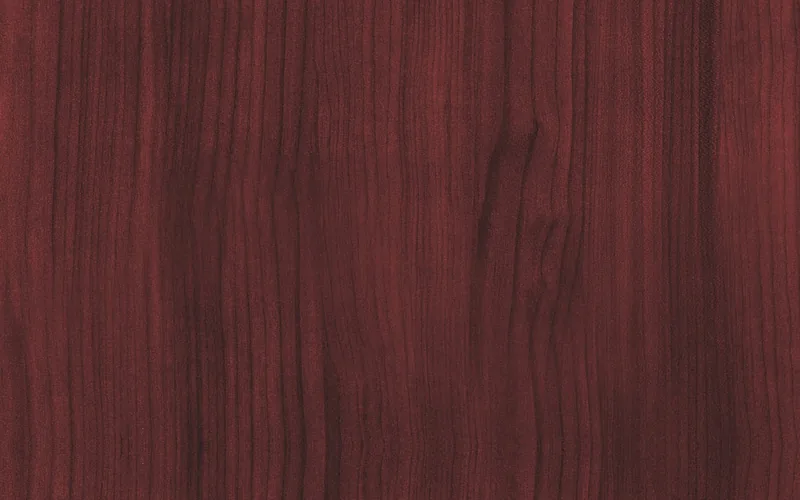
Where Mahogany’s Distinctive Grain Comes From
Best Grain Filler Pick
Aqua Coat Clear Wood Grain Filler Gel – $23.33
A clear, stainable gel built for exactly the open-pore problem covered above — fills genuine mahogany’s pores without hiding the reddish-brown color the ribbon figure depends on.
- Best for: Genuine or African mahogany headed for a stained, glass-like finish
- Why we picked it: Clear and stainable, so it won’t mute the ribbon figure this guide explains
- Main drawback: Needs two coats and full cure time for a truly flat surface on open-pored wood
Compare more grain filler options
 Option 1 Goodfilla Neutral Base Grain Filler – $11.69
|
 Option 2 Gorilla All Purpose Wood Filler – $9.39
|
 Option 3 Aqua Coat High-Performance Filler – $29.43
|
As an Amazon Associate we earn from qualifying purchases.
Genuine mahogany (Swietenia macrophylla) grows in the tropical forests of Central and South America, and its reddish-brown color deepens with age and light exposure. Mahogany wood was imported to Europe by the 17th century, where its density and tight, even grain made it the standard for fine furniture and shipbuilding — a reputation that still drives demand today. Browse our full mahogany wood guide hub for species, finishing, and care articles beyond grain alone.
The grain itself varies by species and by tree: some boards show a straight, uniform pattern, while others grow with an interlocked structure that produces the ribbon effect covered below. For the full identification picture — color, weight, and pore structure together — see our mahogany wood characteristics guide.
What Causes Mahogany’s Ribbon Figure? (Interlocked Grain Explained)
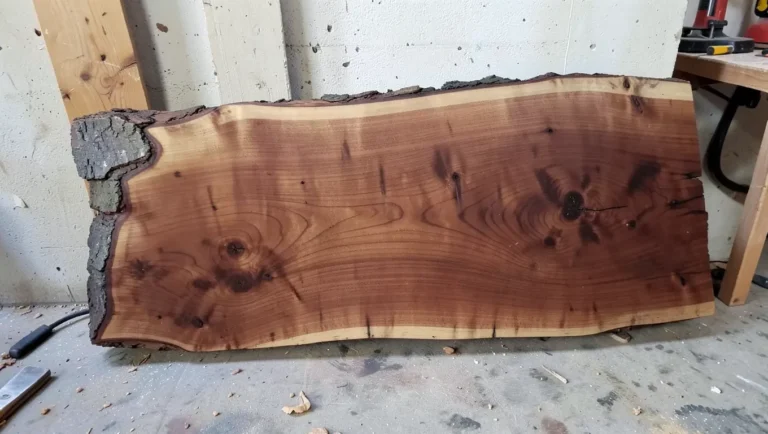
Straight-grained mahogany simply has fibers running in one consistent direction, giving a smooth, uniform surface. Interlocked grain is different: each growth layer spirals in the opposite direction from the one before it, so light reflects off adjacent layers at different angles. On a quartersawn face, that alternation reads as parallel light-and-dark stripes — the ribbon figure prized in fine furniture. On flatsawn boards, the same interlocking shows up as a gentler wave rather than a hard stripe.
Definition
Chatoyancy is an optical effect where a wood’s figure appears to shift between light and dark bands as the viewing angle changes, caused by parallel fiber structures reflecting light like tiny mirrors. Genuine mahogany shows it only where the grain interlocks — boards with very uniform straight grain often lack enough directional contrast to shimmer.
“The ribbon figure is most dramatic on quartersawn” boards, according to The Wood Database — genuine Swietenia can also be identified by marginal parenchyma (light cell rows at growth-ring borders) and ripple marks on flatsawn faces, features African mahogany (Khaya) lacks.
Genuine Mahogany vs. African Mahogany vs. Sapele: Grain, Hardness & Finishing Compared
These three woods get sold under the “mahogany” name and share a reddish-brown color, but their grain behavior and hardness differ enough to change how you cut, finish, and budget for a project.
| Wood | Grain Pattern | Janka Hardness | Needs Grain Filler? |
|---|---|---|---|
| Genuine (Honduran) Mahogany | Straight to interlocked; moderate ribbon on quartersawn cuts | 800–900 lbf | Yes, for a glass-like gloss |
| African Mahogany (Khaya) | More consistently interlocked; pronounced ribbon stripe | ~1,410 lbf | Yes |
| Sapele | Strongly interlocked; banded parenchyma, cedar-like scent | ~1,410 lbf | Yes |
📊 Genuine Honduran mahogany rates 800–900 lbf on the Janka hardness scale — African mahogany (Khaya) runs harder at roughly 1,410 lbf, nearly matching red oak. — Source: The Wood Database, African Mahogany
All three woods share one practical consequence of their open, interlocked grain: visible pores that need to be filled before a high-gloss finish will look glass-smooth. Skip this step on unfinished mahogany and any sprayed lacquer or polyurethane will telegraph every pore as a tiny dimple once it cures — see our mahogany grain filler application guide for the full step-by-step process.
Quartersawn or Flatsawn: Which Cut Shows Mahogany’s Grain Best?
Quartersawn boards — cut so the growth rings run roughly perpendicular to the face — expose the interlocked layers edge-on, which is exactly what produces the parallel ribbon stripe. Flatsawn boards, cut roughly parallel to the rings, show the same interlocking as a softer, wavier figure instead of a hard stripe. Neither cut is “wrong,” but if a project’s whole purpose is showing off mahogany’s ribbon figure, specify quartersawn stock or ask your supplier for quarter-sliced veneer rather than assuming a flatsawn board will show the same effect.
Applications In Furniture Making
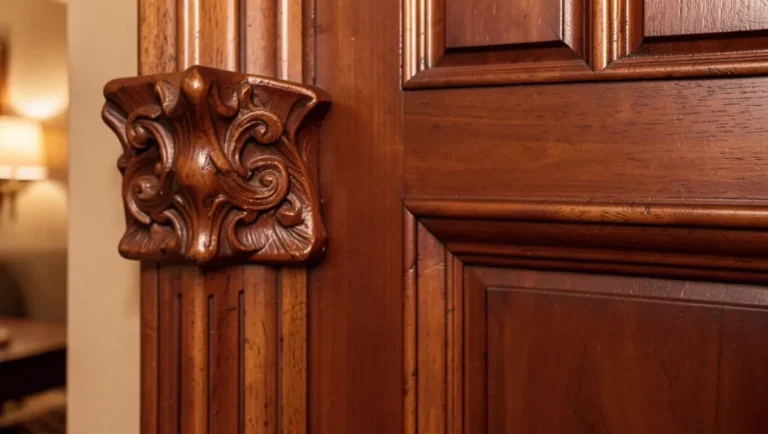
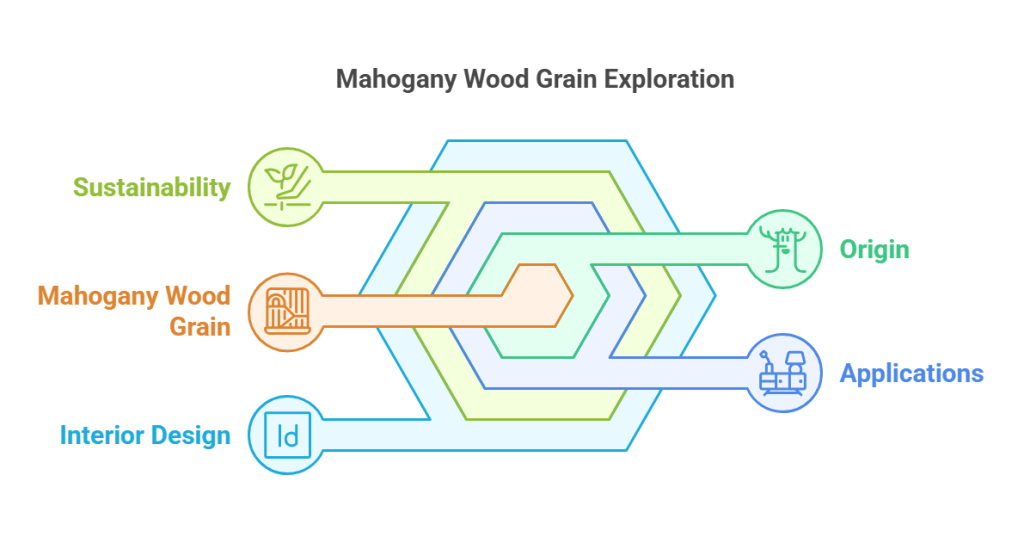
Mahogany’s density, stability, and resistance to warping have made it a standard for dining tables, cabinets, and fine chairs since the 18th century, and that same stability has carried it into contemporary furniture, where designers pair its warm grain with glass and metal for a less formal look. Mahogany craftsmanship spans both eras because the wood’s core properties — not the style trends around it — are what make it durable furniture material.
Sustainability And Conservation
Mahogany demand has driven illegal logging and habitat loss across its native range, which is why genuine Swietenia macrophylla is now regulated under CITES Appendix II. Buying from certified sustainable sources, or choosing reclaimed mahogany, lets you get the same grain and color without contributing to further deforestation.
Maintaining Mahogany Furniture
Maintaining mahogany furniture preserves both its color and the grain figure that makes it valuable in the first place.
Cleaning And Polishing
- Dust with a soft cloth regularly to prevent grit from scratching the finish and dulling the ribbon figure.
- Wipe with a mild wood cleaner, always working with the grain direction, never across it.
- Apply a quality furniture polish periodically to keep the surface’s shimmer visible.
Preventing Damage
- Keep mahogany furniture out of direct sunlight — UV exposure fades the reddish-brown color unevenly.
- Use coasters and placemats; heat and moisture rings are far harder to sand out of interlocked grain than straight grain.
- Rotate decorative items periodically so the whole surface ages and darkens evenly.
Frequently Asked Questions On Mahogany Wood Grain
What Is The Grain Pattern Of Mahogany?
Most mahogany has a straight, even grain, but some boards grow with an interlocked pattern that produces a ribbon figure — alternating light and dark stripes — on quartersawn faces. Either pattern shows the wood’s deep reddish-brown color, which is why both are prized for furniture and decorative woodworking.
How Can You Tell Mahogany Wood?
Look for a reddish-brown color that deepens with age, a straight-to-interlocked grain, medium-to-high density, and visible but smooth open pores. Genuine mahogany also shows marginal parenchyma — light cell rows at growth-ring borders — on close inspection of the end grain.
What Is The Difference Between Oak Grain And Mahogany Grain?
Oak grain is lighter in color with large, open, prominent pores and pronounced ray fleck. Mahogany grain runs darker reddish-brown, with finer, tighter pores and a more uniform, subtle appearance unless it’s interlocked, in which case it shows a ribbon figure oak doesn’t produce.
What Wood Grain Is Similar To Mahogany?
Sapele is the closest match — a similar reddish-brown color with an even more pronounced interlocked ribbon stripe, sold as an affordable mahogany alternative. African mahogany (Khaya) is the next closest, sharing color and interlocked grain at a lower price than genuine Honduran mahogany.
What Causes Mahogany’s Shimmering “Chatoyance” Effect?
Chatoyance happens where mahogany’s grain interlocks: light reflects differently off each alternating growth layer, so the figure appears to shift between light and dark as you change your viewing angle. Very straight-grained boards usually lack enough directional contrast to shimmer at all.
Does Mahogany Need Grain Filler Before Finishing?
Yes, if you want a glass-smooth, high-gloss result. Mahogany is an open-pored wood, and without a stainable grain filler, sprayed lacquer or polyurethane will cure with tiny visible dimples over every pore instead of a flat surface.
Quartersawn or Flatsawn: Which Cut Shows Mahogany’s Grain Best?
Quartersawn cuts show mahogany’s ribbon figure most clearly, since the interlocked layers are exposed edge-on. Flatsawn cuts show the same interlocking as a softer wave rather than a hard stripe — specify quartersawn stock if the ribbon figure is the point of the project.
Conclusion
Mahogany’s grain earns its reputation honestly: interlocked growth layers create a genuine ribbon figure and chatoyance that straight-grained boards can’t match, genuine Honduran mahogany and its African and Sapele cousins each behave differently under a saw and a finish coat, and a stainable grain filler is what turns those open pores into the glass-like surface the wood is known for. Choose your cut and your finishing process with the grain science above in mind, and mahogany’s reputation for elegance holds up under a closer look, not just a glance.
Sponsored / affiliate links. As an Amazon Associate I earn from qualifying purchases. I may earn additional commission from eligible campaigns.