Outdoor Cushion Storage for Winter
For outdoor cushion storage in winter, match the container to the cushion material and your climate: dry foam and polyester can go in breathable bins indoors or a dry shed, while sealed plastic is safest only for fully dry, mildew-resistant cushions. Store them wrong, and you can trap moisture, invite mold, and ruin the fill or fabric by spring. Keep cushions off damp floors or concrete. This guide shows how to pick the right storage method, container, and location for your cushions.
What to know before storing cushions
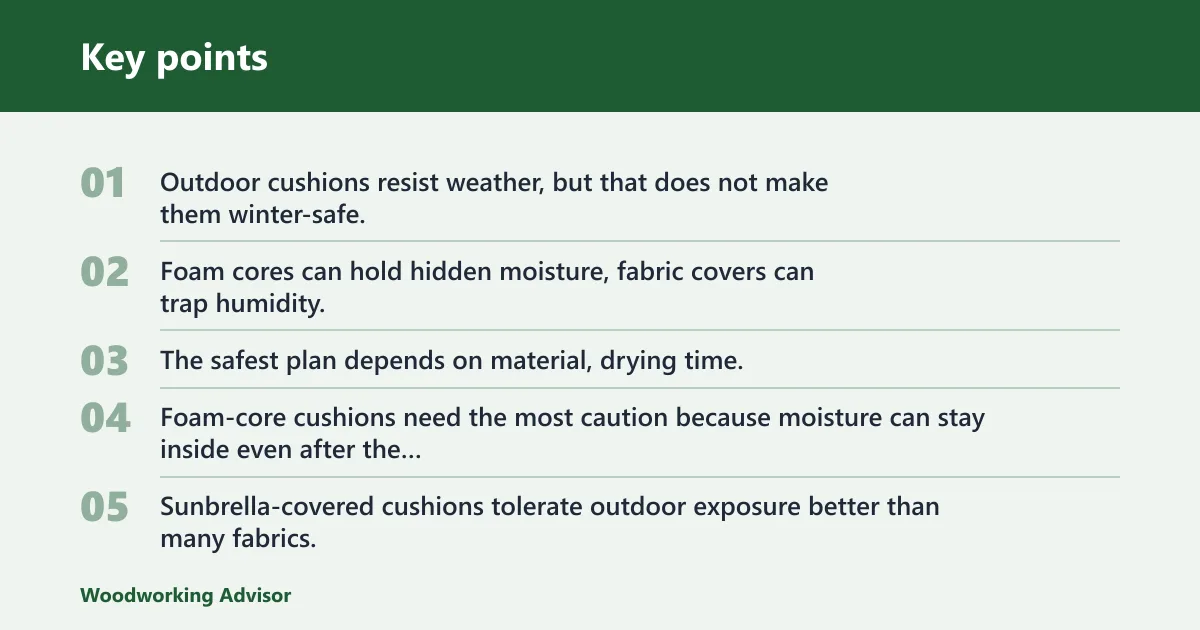


Outdoor cushions resist weather, but that does not make them winter-safe. Foam cores can hold hidden moisture, fabric covers can trap humidity, and repeated freeze-thaw can stiffen fill and damage piping. The safest plan depends on material, drying time, and whether your storage space stays dry and cool.
Why cushion material changes the plan
Foam-core cushions need the most caution because moisture can stay inside even after the outer fabric feels dry. Sunbrella-covered cushions tolerate outdoor exposure better than many fabrics, but they still should be fully dry before storage. Mixed-fiber cushions can dry unevenly, so seams and corners need extra attention.
Why climate and storage space matter
A finished basement with steady humidity is different from an unheated garage, and both are different from a deck box sitting over damp ground. F&J Outdoors recommends dry, cool, well-ventilated spaces such as garages, basements, or sheds, but condensation risk rises when air is humid or temperatures swing hard overnight. Sealed storage and weather-resistant storage are not the same thing.
What can go wrong if you store them too soon?
Moisture left in fabric, foam, or seams can lead to odors, mildew, mold, and pest activity. Homeowners often miss the problem because the surface feels dry while the inner fill is still damp. Foam cushions also suffer more in unheated spaces where repeated freezing and thawing can make the fill feel stiff and uneven.
What you’ll need
- Mild soap or vinegar for cleaning
- Soft brush or cloth for debris and surface dirt
- Clean towels for blotting after washing
- A drying area with airflow
- Plastic bins for sealed storage
- Breathable fabric bags for vented storage
- A raised deck box if outdoor storage is the only option
- Silica gel packs or DampRid-style moisture absorbers
- Labels for cushion sets and covers
- Inspection checklist for midwinter checks
How to clean and dry cushions
Start by removing dirt, pollen, and spills, then dry every cushion completely before storage. Omni Home Ideas recommends mild soap and water before storage, and wikiHow advises brushing debris off first. Foam-core cushions can need at least 48 hours of open-air drying after cleaning, especially in humid conditions.
- Brush off loose debris and dust from seams, piping, and zippers.
- Wash removable covers on a gentle cycle if the care tag allows it.
- Clean fixed covers with mild soap or a vinegar solution, then rinse well.
- Blot surface moisture with towels instead of sealing cushions while damp.
- Stand cushions on edge so air can move around all sides.
- Check foam cores, corners, and stitched seams for hidden damp spots.
- Wait until the inside feels dry, not only the outer fabric.
- Let them dry longer in humid weather; a common rule is 48 hours or more for dense foam.
Say your 24-inch seat cushion feels dry on top after a sunny afternoon, but the zipper side still feels cool and heavy. That usually means moisture remains inside the fill or along the seam tape. Leave it open on its edge and check again later rather than packing it early.
Choose a storage method
Choose the container after you match the cushion type to the storage space. Airtight bins can block moisture and pests, which F&J Outdoors recommends, but they also trap humidity if the cushions are not fully dry. Breathable bags reduce trapped condensation, while deck boxes are only acceptable when they stay elevated, dry, and well drained.
| Cushion type | Heated garage | Unheated garage | Basement | Outdoor deck box |
|---|---|---|---|---|
| Foam-core | Yes | No | Yes, if dry | No |
| Sunbrella-covered | Yes | Yes, only if fully dry | Yes, if humidity is controlled | Yes, if raised and ventilated |
| Mixed-fiber | Yes | No | Yes, if dry and off the floor | No |
When a sealed bin makes sense
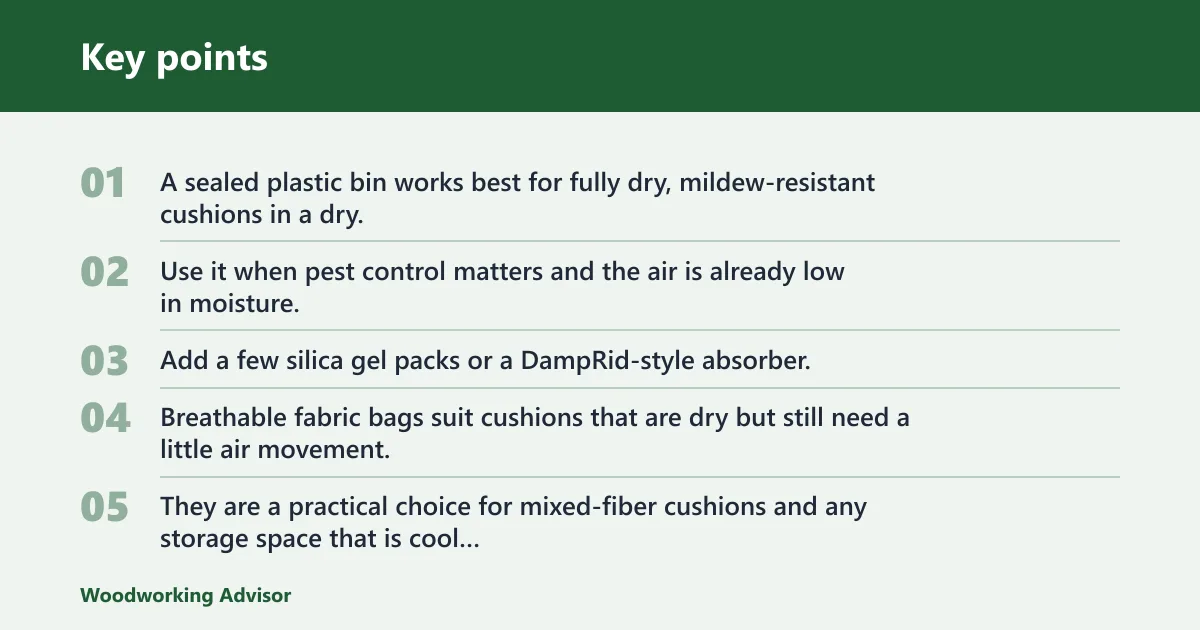
A sealed plastic bin works best for fully dry, mildew-resistant cushions in a dry, cool room. Use it when pest control matters and the air is already low in moisture. Add a few silica gel packs or a DampRid-style absorber, but do not use them as a substitute for drying.
When a breathable bag is the better choice
Breathable fabric bags suit cushions that are dry but still need a little air movement. They are a practical choice for mixed-fiber cushions and any storage space that is cool but not perfectly sealed. Homes and Gardens notes that vacuum bags can shrink bulky cushions to roughly half their original size, but compression can stress foam and crease fill, so use that option sparingly.
When a deck box is acceptable
A deck box is generally acceptable only when it is raised off wet ground, latches tightly, and does not collect water. It is a poor choice for foam-core cushions, and it is risky in damp climates because condensation can still form inside. If the box sits on a wet deck or concrete pad, it is not a safe default.
Can you leave cushions outside in the winter?
Yes, but only in a limited set of conditions, and only for some cushion types. A raised, weather-resistant deck box is the least-bad outdoor option for fully dry, tough fabric-covered cushions. Direct exposure, ground contact, and repeated wetting raise the risk of mildew, odors, and frozen moisture inside the fill.
If you can move cushions indoors, do that first. F&J Outdoors advises dry, cool, well-ventilated storage, and Omni Home Ideas notes that most outdoor cushions are weather-resistant but not built for freezing temperatures. Outdoor storage is a fallback, not the best choice.
- Set the deck box on blocks or pavers so the bottom stays out of standing water.
- Line the box with a dry barrier, not plastic that can trap condensation against the cushion.
- Leave small air gaps between cushions instead of compressing them tightly.
- Use silica gel packs or a moisture absorber, then check them midwinter.
Suppose you have two Sunbrella-covered seat cushions and a raised box on a covered patio. That setup is acceptable if both cushions are bone dry and the box stays off the ground. If the same box sits on a flat, wet deck with no airflow underneath, the risk changes fast.
Where should you store them indoors?
Heated garages and dry basements are the best indoor choices, with basements only when humidity stays controlled. Finished basements are especially stable; The Lasting Home calls that setup the gold standard for storage stability. Unheated garages and sheds can work for some cushions, but they are far less forgiving in freeze-thaw weather.
Heated garage versus unheated garage
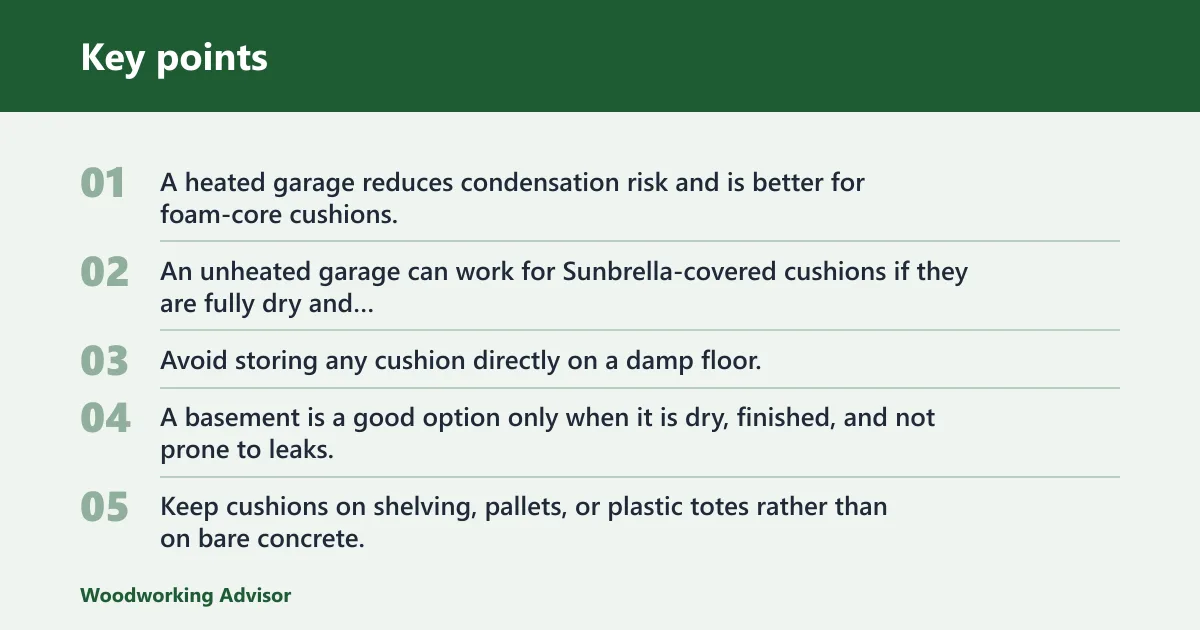
A heated garage reduces condensation risk and is better for foam-core cushions. An unheated garage can work for Sunbrella-covered cushions if they are fully dry and raised off concrete. Avoid storing any cushion directly on a damp floor, because concrete can wick moisture back into the fabric.
Basement storage when humidity is controlled
A basement is a good option only when it is dry, finished, and not prone to leaks. Keep cushions on shelving, pallets, or plastic totes rather than on bare concrete. If the air feels damp enough for a musty odor, that is a warning sign, not a normal storage condition.
Why sheds and damp concrete floors cause problems
Sheds often swing between cold, damp, and warm, which creates condensation on bags and bins. Damp concrete floors do the same from below. That is why weather-resistant storage is not the same as truly sealed, dry storage. A cushion can look protected and still pull moisture from the air around it.
How do you keep cushions from getting moldy in storage?
Keep cushions mold-free by removing moisture completely, choosing the right container, and checking for condensation during winter. Air trapped inside a sealed bin can turn into dampness later, especially in unheated spaces. Use absorbers, leave airflow where the storage space is humid, and inspect for odor before mold starts.
- Store only cushions that feel dry at the seams and inside the fill.
- Choose airtight storage for dry, pest-prone spaces and breathable storage for damp-prone spaces.
- Add silica gel packs or a DampRid-style absorber if the room tends to hold humidity.
- Leave 2 to 3 inches of air gap around stacked cushions so air can move.
- Check for a musty smell, damp corners, or condensation once during midwinter.
Moisture absorbers reduce condensation, but they do not rescue a wet cushion. If the fill is damp, the absorber will only slow the problem. That is why drying comes first and storage comes second.
Common mistakes
Most winter storage problems start with rushed packing or the wrong container for the room. The fix is to slow down at the drying stage, keep cushions off the floor, and check the space again halfway through winter. A few minutes now can prevent a springtime smell you cannot ignore.
- Storing foam-core cushions before the inside is fully dry.
- Sealing humid air inside a plastic bin or wrapped stack.
- Leaving cushions on bare concrete or against a damp wall.
- Using a deck box that sits low and collects runoff.
- Skipping midwinter checks for odors, damp spots, or pest droppings.
- Assuming a weather-resistant fabric is also freeze-safe.
Outdoor cushion storage checklist
- Damp homes: Use a finished, conditioned room before any outdoor box or unheated shed.
- Mildew-prone homes: Choose breathable storage, dry longer, and add absorbers only after full drying.
- Space-limited homes: Store cushions vertically with 2 to 3 inches of air gap or compress only the least fragile covers.
Frequently asked questions
How do you store outdoor cushions for the winter?
Clean them, dry them completely, then match the cushion type to a dry storage space. Foam-core cushions do best indoors in a heated or finished area. Sunbrella-covered cushions can tolerate more storage options, but they still need airflow, pest protection, and a dry floor.
Can you leave outdoor cushions outside in the winter?
Only if they are fully dry and stored in a raised, well-sealed deck box. Even then, outdoor storage is the backup plan. Direct exposure, snow melt, and ground contact create more risk than indoor storage, especially for foam-filled cushions.
Should cushions be stored in plastic bins or fabric bags?
Use plastic bins for very dry cushions in rooms that already stay cool and low in humidity. Use fabric bags when the space may be dry but you still want some airflow. Do not choose plastic bins for cushions that were not fully dried first.
What if my garage or basement is damp in winter?
Move the cushions to a drier room if you can. If you must use that space, keep them off concrete, add a moisture absorber, and inspect them before the deepest cold sets in. Damp air and concrete together are a bad mix for long storage.
Is a deck box okay for winter cushion storage?
Yes, but only as a raised, dry, ventilated option for cushions that are already fully dry. It is not the right choice for foam-core cushions in freeze-thaw weather. If condensation has shown up inside before, treat the box as unsafe for winter storage.
What should you do before putting outdoor cushions away?
Brush off debris, wash with mild soap or vinegar, rinse fully, and dry them in open air until seams and foam cores are dry too. For removable covers, a gentle machine cycle is fine when the care tag allows it. Then label the set before packing.
Sponsored / affiliate links. As an Amazon Associate I earn from qualifying purchases. I may earn additional commission from eligible campaigns.