Pilot Hole for a #9 Wood Screw (9/64″ or 11/64″?)
A #9 wood screw needs a 9/64-inch pilot hole in softwood and an 11/64-inch pilot hole in hardwood — sized to the screw’s root diameter, not its full 0.177-inch shank. Get this wrong and the wood splits along the grain, or the screw spins without ever gripping. This guide covers the exact chart for #9 and nearby gauges, why so many online charts disagree on this specific size, and how deep to drill for the length you’re using.
Pilot Hole Size Chart for a #9 Wood Screw and Nearby Gauges
Best Pilot Hole Drill Bit Pick
EZARC 12-Piece Countersink Drill Bit Set
Five tapered bits spanning #4 to #12 (with replacements), so the #9 gauge falls neatly between the #8 and #10 tapered bits included.
- Best for: covering the full range around a #9 screw without buying a single-size bit
- Why we picked it: titanium-coated HSS holds up in hardwood, and the 82-degree countersink seats flat-head screws flush in one pass
- Main drawback: the case is plastic and the replacement bits are a step down in steel quality from the originals
Compare more pilot hole drill bit options
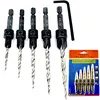 Option 1 FTG USA 5pc Countersink Drill Bit Set
|
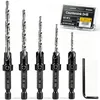 Option 2 Aertyzeen 5pc Adjustable Depth Stop Set
|
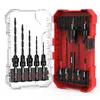 Option 3 EZARC 15pc Set with Plug Cutters
|
As an Amazon Associate we earn from qualifying purchases.
A #9 screw sits between the much more common #8 and #10 sizes, which is exactly why most hardware store charts skip it. Use the softwood column for pine, cedar, fir, and most construction lumber; use the hardwood column for oak, maple, walnut, and ash.
| Screw Size | Softwood Pilot Hole | Hardwood Pilot Hole | Shank Diameter |
|---|---|---|---|
| #6 | 7/64″ | 9/64″ | 0.138″ |
| #8 | 1/8″ | 11/64″ | 0.164″ |
| #9 | 9/64″ | 11/64″ | 0.177″ |
| #10 | 9/64″ | 13/64″ | 0.190″ |
| #12 | 5/32″ | 7/32″ | 0.216″ |
Working with a screw size outside this range, or need the matching clearance and countersink holes too? See the full wood screw drill size chart for every common gauge from #4 to #14.
What Size Is a #9 Wood Screw?
A #9 wood screw is a fastener with a major (shank) diameter of about 0.177 inches and a root diameter of roughly 0.140 inches — the number refers to a gauge, not a fraction of an inch. It falls between a #8 (0.164″) and a #10 (0.190″), which is why it’s uncommon: most manufacturers only stock #8 and #10 for general woodworking, so #9 mostly shows up on specialty hardware, some hinge screws, and imported fastener sets.
Length for a #9 screw typically runs from 5/8 inch up to 2-1/2 inches. Heads are usually flat (countersunk) or pan-head, in zinc-plated steel, brass, or stainless. The thread grips through the wood fibers around the pilot hole, so oversizing the hole even slightly reduces holding strength — that’s the actual tradeoff a pilot hole chart is managing.
How to Drill a Pilot Hole for a #9 Screw
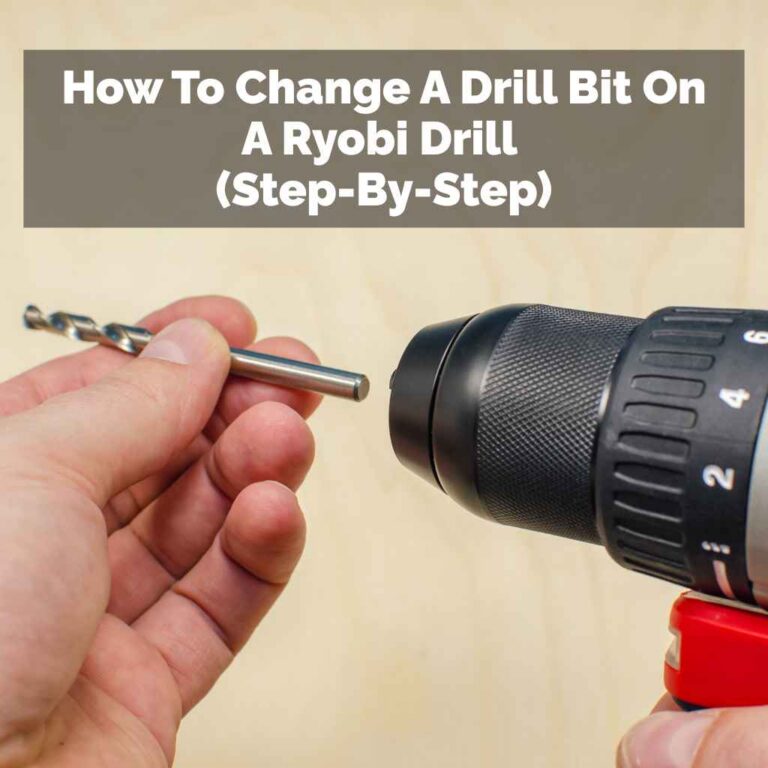
- Pick the right bit: load a 9/64-inch bit for softwood or an 11/64-inch bit for hardwood, checked against the chart above.
- Mark the spot: mark the screw location with a pencil and, on hardwood or near an edge, a light center-punch mark so the bit doesn’t wander.
- Clamp the workpiece: secure the board so it can’t shift once the bit contacts the surface.
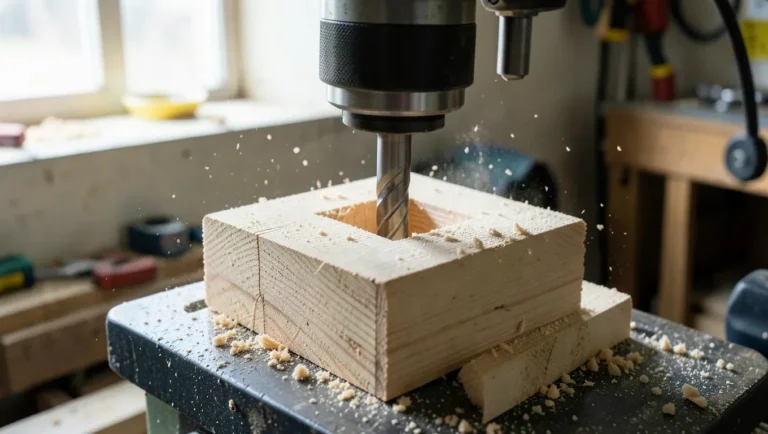
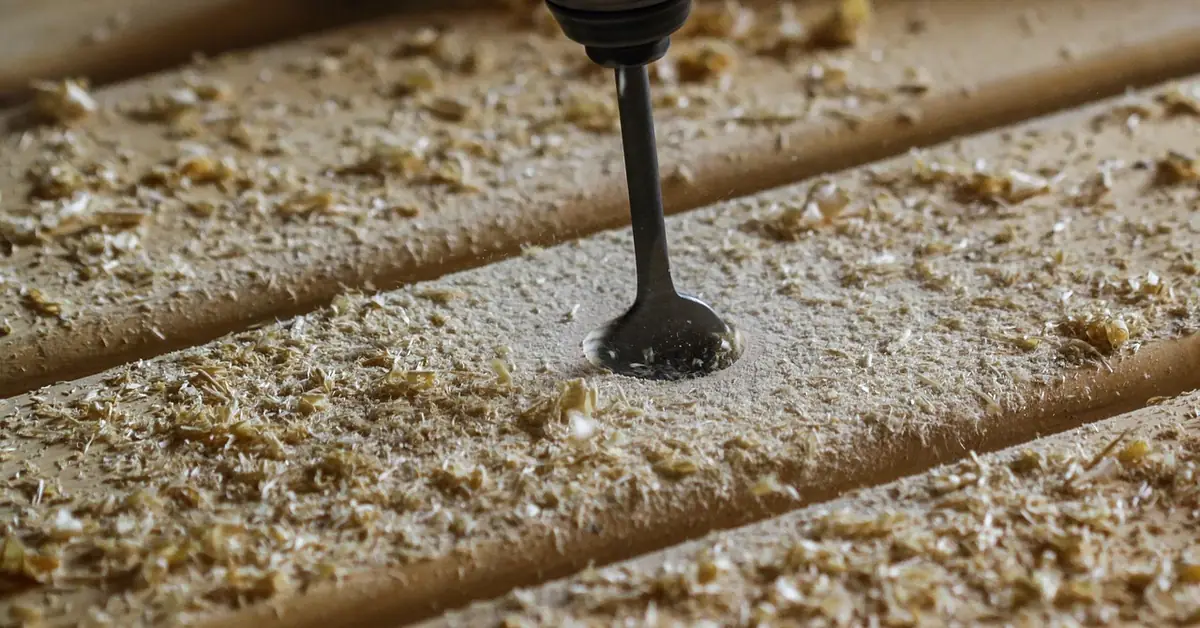
- Drill straight and steady: keep the drill perpendicular to the surface and ease off pressure as you approach full depth — forcing it can blow out the far side of thin stock.
- Drill to 60–75% of the screw’s length: stop the hole short of full screw length so the threads still have solid wood to bite into past the pilot hole.
- Clear the dust and drive the screw: blow or vacuum out the debris, then drive the screw with a bit driving on speed control to avoid stripping the head.
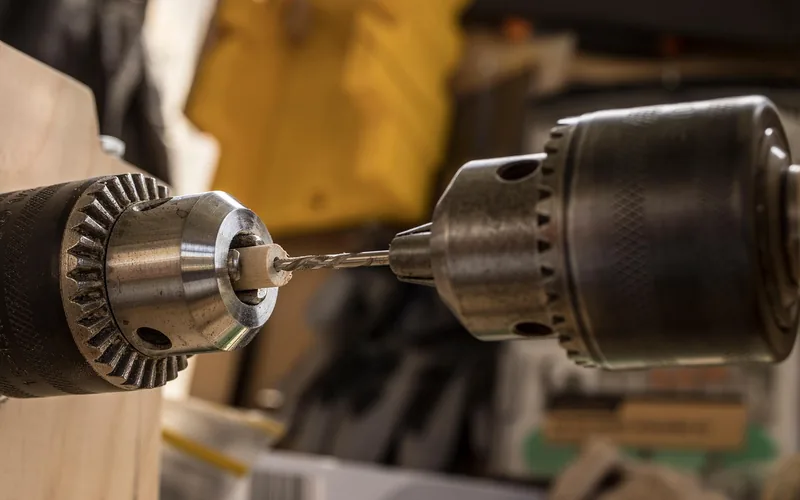
Prefer to see it in motion first? This short video walks through matching a bit to a screw before you ever touch a board.
Why Online Pilot Hole Charts Disagree About #9 Screws
Search for a #9 pilot hole size and you’ll find several different answers — some list 1/8″ for softwood, others 9/64″, and a few list numbers that actually belong to a #8 or #10 screw. There are two real reasons for this, not just sloppy publishing.
First, because #9 isn’t a size most hardware stores stock, many published charts simply skip it and interpolate, rounding to whichever neighboring size the writer had data for. Second, pilot hole size can be calculated from either the screw’s root (minor) diameter — the thinner core under the threads, used for the softwood figure — or a value closer to the major diameter for denser hardwood that’s more prone to splitting. Mixing up which diameter a chart is using is where most of the online disagreement comes from.
“When a screw size isn’t a common stock item, I always drill a test hole in an offcut of the same wood first — a chart gets you close, but the actual screw and the actual board settle it. Two minutes with a scrap piece beats redoing a split board.”
— Md Meraj, Woodworking Advisor
How Deep Should the Pilot Hole Be?
📊 Drill the pilot hole to 60–75% of the screw’s total length. Too shallow and the screw fights solid wood the whole way in; too deep and the threads run out of material to grip, so the screw spins instead of tightening. — Source: Bolt Depot and UF Tools pilot-hole reference guides.
For a 1-1/4 inch #9 screw, that means drilling roughly 3/4 to 1 inch deep. If you’re joining two boards, only the top (clearance) hole needs to be full screw diameter with no threads gripping — the pilot hole depth applies to the bottom board the threads are actually anchoring into.
Common Mistakes When Pre-Drilling for #9 Screws
- Using a bit sized for #8 or #10: the closest stocked bit isn’t always close enough — a 1/64-inch difference matters more on dense hardwood than on softwood.
- Skipping the pilot hole near an edge: within 1–2 inches of a board edge or end grain, the wood has nowhere for the stress to go and will split even with a light-duty screw.
- Drilling too deep: a hole that runs the full screw length leaves nothing for the threads to bite, and the screw spins instead of tightening.
- Not clamping the workpiece: movement while drilling walks the bit off-center and leaves an oversized, oval pilot hole that won’t hold the screw straight.
- Ignoring a stripped hole: if a hole already spins out, redrilling the same size won’t fix it — see how to repair a stripped screw hole in wood before driving the screw again.
When Should You Skip the Pilot Hole Entirely?
Not every #9 screw needs one. See the full breakdown of when to pre-drill screws and when to skip it for the wood types, edge distances, and screw sizes where a pilot hole is optional rather than required. For larger structural fasteners in the same gauge range, the tradeoffs shift again — see whether large structural wood screws need pre-drilling before assuming the same rule applies.
Frequently Asked Questions
What size drill bit do I need for a #9 wood screw?
Use a 9/64-inch drill bit in softwood and an 11/64-inch drill bit in hardwood. These sizes match the screw’s root diameter closely enough to guide the threads without loosening their grip in the wood.
Why is it hard to find a #9 screw pilot hole chart?
Because #9 falls between the far more common #8 and #10 gauges, most hardware manufacturers don’t stock #9 screws for general use, so fewer official charts include the size. It mostly appears on specialty hinges and imported hardware sets.
Can I skip drilling a pilot hole for a #9 screw?
You can skip it in soft, wide softwood boards when driving well away from any edge. In hardwood, near an edge, or into end grain, skip the pilot hole and the wood is likely to split as the screw drives in.
What is the shank diameter of a #9 wood screw?
A #9 wood screw has a major (shank) diameter of about 0.177 inches, placing it between a #8 screw (0.164 inches) and a #10 screw (0.190 inches).
Conclusion
For a #9 wood screw, drill a 9/64-inch pilot hole in softwood or an 11/64-inch pilot hole in hardwood, and stop at 60–75% of the screw’s length. Because #9 sits between the more common #8 and #10 sizes, test-fit on scrap first if your only bit set skips this gauge — it’s the fastest way to confirm the fit before committing to the actual board.
Sponsored / affiliate links. As an Amazon Associate I earn from qualifying purchases. I may earn additional commission from eligible campaigns.