Ready Seal Stain Temperature Range
Apply Ready Seal only when air and wood temperatures stay above 50°F, the wood is dry, and rain is not in the forecast. If overnight lows are expected to drop below 50°F soon after application, wait. Cool, damp conditions slow penetration and drying, which can leave lap marks, uneven sheen, and a finish that fails sooner. This guide explains the temperature check, surface-dryness test, wood-moisture limits, and how to use the forecast to decide when to start or stop.
This guide is part of our Cold Weather Wood Finishing: What Works Below 50°F series.
What temperature matters for Ready Seal?

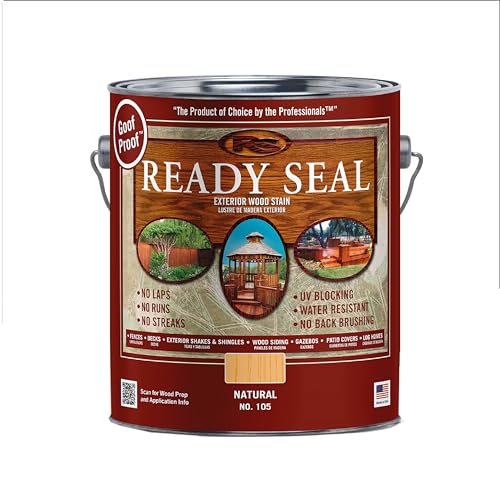
Use more than one temperature reading. Daytime air temperature matters, but so do surface temperature, overnight low, humidity, and whether the wood is already dry enough to accept an oil-based stain-and-sealer-in-one. Ready Seal does not appear to publish a fixed minimum or maximum application temperature, so the safer choice is based on the weather window, not one number.
Ready Seal is an oil-based, exterior wood stain-and-sealer-in-one. Ready Seal also says it will not crack, chip, flake, or peel. That explains why the product is often chosen for exterior wood, but it does not replace the need to check site conditions before you coat.
Ready Seal temperature checklist
| Daytime air temperature | Overnight low | Wood readiness |
|---|---|---|
| Above 50°F and holding | Stays above 50°F for the first night | Dry, clean, and measured at 12% moisture content or less |
| Above 50°F, but cool front moving in | Expected to dip below 50°F soon after application | Wait until the forecast gives a warmer drying window |
| Near the low 50s with morning shade | Warm enough overnight, but dew is likely | Only proceed if the wood surface is fully dry before start time |
| Below 50°F for much of the day | Near freezing or falling overnight | Do not apply |
Use that table as a field check, not as a promise that every site behaves the same. Humidity, location, and surface porosity can all change how fast the coating penetrates and dries. A shaded deck on a damp coast is not the same as a sunlit fence in a dry inland area.
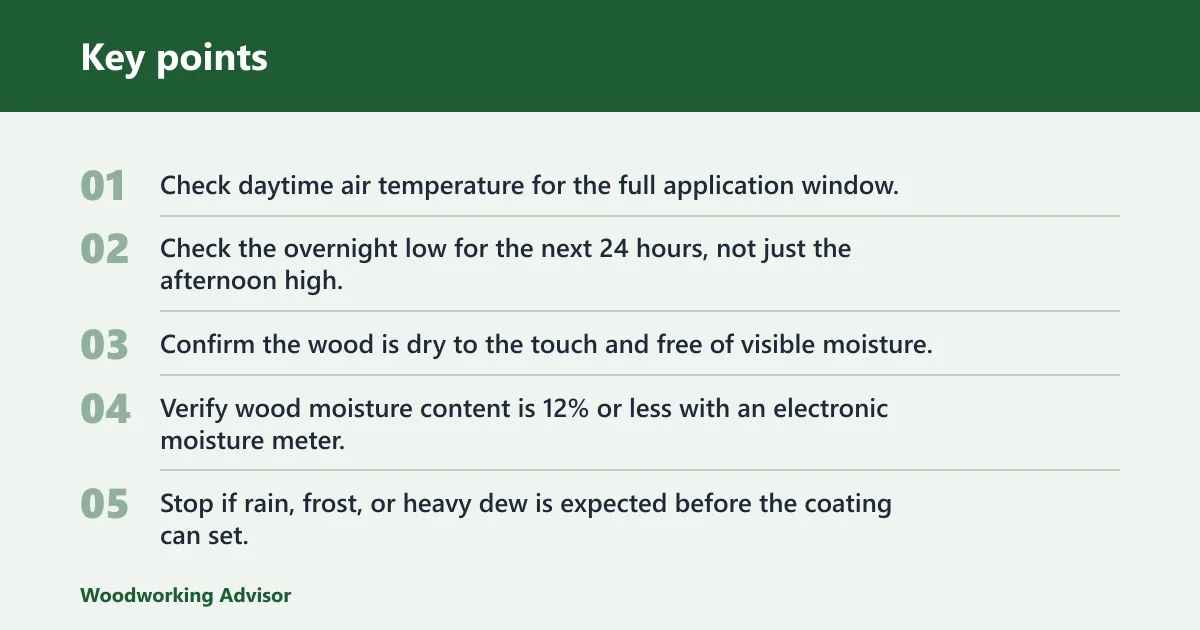
- Check daytime air temperature for the full application window.
- Check the overnight low for the next 24 hours, not just the afternoon high.
- Confirm the wood is dry to the touch and free of visible moisture.
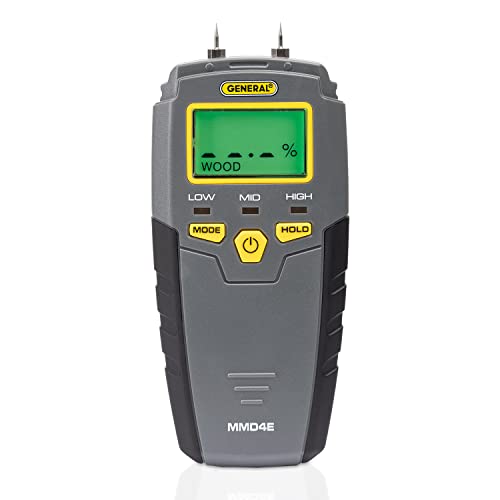
- Verify wood moisture content is 12% or less with an electronic moisture meter.
- Stop if rain, frost, or heavy dew is expected before the coating can set.
Say a deck is about 14 feet by 20 feet and the afternoon reaches about 58°F, but the forecast low drops to about 46°F before sunrise. That is a poor start. The daytime reading looks fine, yet the overnight drop creates a cold, damp cure window that can interfere with penetration and drying.
Can you apply Ready Seal below 50°F?
Below 50°F is not a good application window for this product, especially if the temperature will keep falling or the surface may get wet again before it sets. Even if the afternoon air feels workable, cool nights and morning dew can interrupt drying and leave an uneven finish.
The key issue is not only the thermometer reading at the moment you start. It is whether the wood and the air will stay warm enough for long enough. If the forecast low goes below 50°F soon after application, the safer choice is to wait for a warmer stretch.
When cool daytime temperatures are still workable
A cool day can still be acceptable if the wood is dry, the surface is warm enough to the touch, and the overnight low stays above 50°F. A sheltered wall or rail can hold heat better than a shaded deck board, so the surface reading matters as much as the air reading.
Picture a fence in open shade with an afternoon air temperature of 53°F and a forecast low of 54°F. That is much better than the same temperature with a low in the 40s, because the coating gets a longer warm window to penetrate before night moisture settles.
When to stop because the low will drop too far
Stop if the forecast shows a sharp drop after sunset, even when the daytime high looks acceptable. Wetting from fog, dew, frost, or a light shower can interrupt cure and leave the finish blotchy. Near-freezing conditions are especially risky because moisture on the surface can form just when the coating needs time to settle.
Do not apply if any of these are present: frost, dew, wet wood, or a forecast that puts the overnight low below 50°F soon after coating. Those are failure conditions, not minor delays.
How dry should the wood be?
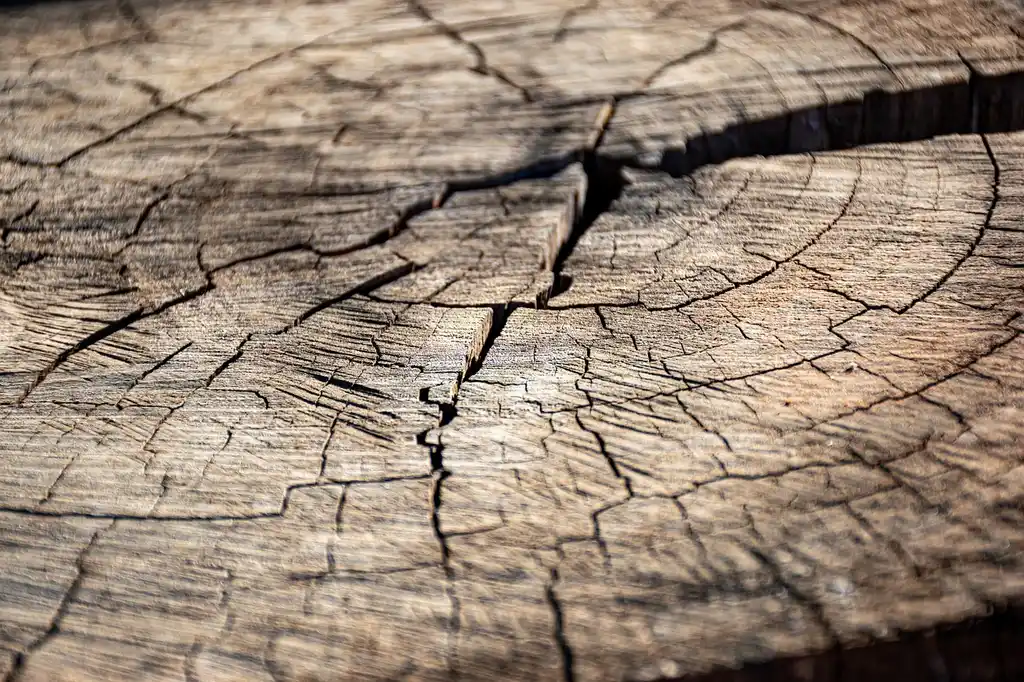
Wood should be dry enough for penetration, not just dry on the surface. Ready Seal recommends wood moisture content of 12% or less, measured with an electronic moisture meter. That figure is a field check, not a universal promise for every species, climate, and site condition.
Dry time also depends on what kind of wood you are staining. Existing wood needs at least 48 hours of dry time before application. New cedar may need 2-4 weeks, new pine, spruce, or fir may need 1-3 weeks, and new pressure-treated lumber needs a minimum of 1 month.
Wood moisture and dry-time checks
- Measure moisture with an electronic moisture meter before you stain.
- Target 12% moisture content or less.
- Confirm the surface is dry after rain, washing, or dew.
- Give existing wood 48 hours or more after it has been wet.
- Give new cedar 2-4 weeks of dry time.
- Give new pine, spruce, or fir 1-3 weeks of dry time.
- Give new pressure-treated lumber at least 1 month of dry time.
Moisture control matters because the coating has to move into the wood, not sit on a damp film. If the board still feels cool and damp in the morning, it may not be ready even if the weather clears by lunch. That is why a meter reading is more useful than a guess.
Surface prep before staining
Cleanliness affects both appearance and bond. The wood must be free of mildew, dust, dirt, oil, and grease before staining. Previous stains and sealers should be removed when present, and caustic strippers need to be neutralized before application. A clean surface gives the coating a better chance to penetrate evenly.
Ready Seal is designed as a penetrating exterior stain, so surface residue matters. A dirty board can block penetration and leave a patchy look, especially on porous wood. If the surface was washed with a stripper or cleaner, let it dry fully and neutralize it as required before you coat.
Prep steps that matter most
- Remove loose dirt, dust, and mildew.
- Wash off oil, grease, and other residue.
- Strip old stain or sealer when a previous coating is present.
- Neutralize caustic strippers before proceeding.
- Let the wood dry again to the moisture target.
- Check for dew or condensation before starting.
A common first-timer mistake is cleaning a deck in the morning and staining it the same afternoon after the boards still hold moisture in shaded seams. The surface can look dry from a few feet away while the meter still reads too high for coating.
How Ready Seal goes
Ready Seal can be sprayed, rolled, or brushed onto wood. It does not require a primer, and spray applications do not call for thinning. That makes the application process straightforward, but it also means you need to control overspray and keep the work area protected.
Because the coating can penetrate porous material, it can stain porous stone and concrete as well as wood. Protect adjacent masonry, walkways, and landscaping before you start. If the deck has open-grain boards or nearby pavers, overspray control should be part of the setup.
Application notes for cool weather
- Use spray, roller, or brush as the project calls for.
- Skip primer.
- Do not thin the product for spray use.
- Keep adjacent porous stone and concrete covered.
- Watch for slower dry-down when humidity is high.
Humidity matters because it can slow drying even when the thermometer looks acceptable. Location matters too. A coastal job with fog risk is not the same as a dry inland fence, even at the same air temperature.
How long does Ready Seal last?
Maintenance timing depends on surface orientation and wood type. Ready Seal recommends recoating every 2 years on horizontal surfaces and every 3 to 4 years on vertical surfaces. Hardwoods may need yearly reapplication because dense wood can wear differently and may not hold protection as long.
The recoat schedule is about maintenance, not a strict failure date. Sun, foot traffic, rain exposure, and surface porosity all affect how long the coating holds up. On a horizontal deck, water exposure is harsher than on a vertical fence board, so the schedule is shorter.
Recoat timing by surface
| Surface type | Recoat timing | Why it changes |
|---|---|---|
| Horizontal surfaces | Every 2 years | More sun, water, and foot traffic |
| Vertical surfaces | Every 3 to 4 years | Less standing water and wear |
| Hardwoods | May need yearly reapplication | Denser wood and site exposure can shorten service life |
Frequently asked questions
What temperature can you apply Ready Seal?
Use Ready Seal when the wood and air stay warm enough for drying, with daytime temperatures above 50°F and an overnight low that does not drop below 50°F soon after application. Because the brand does not appear to publish a fixed range, wood moisture, dew risk, and forecast lows matter just as much as the afternoon reading.
What is the minimum temperature for Ready Seal application?
There is no clearly published fixed minimum from the brand in the material referenced here. In practice, many installers treat 50°F as the lower working threshold and avoid any window that will fall below that soon after coating. If the forecast turns colder, wait for a better drying window.
How long should wood dry before applying Ready Seal?
Existing wood should dry for 48 hours or more before application. New cedar may need 2-4 weeks, new pine, spruce, or fir may need 1-3 weeks, and new pressure-treated lumber needs a minimum of 1 month. Humidity, weather, and porosity can stretch those timeframes.
What moisture content is acceptable before staining with Ready Seal?
Ready Seal recommends wood moisture content of 12% or less, checked with an electronic moisture meter. That reading is a useful field target, not a guarantee that every board will behave the same. A dry surface with a high meter reading should still be left alone until it drops.
How often should Ready Seal be reapplied?
Recoat every 2 years on horizontal surfaces and every 3 to 4 years on vertical surfaces. Hardwoods may need yearly reapplication. Exposure level, surface porosity, and local weather can shorten the interval, so inspect the wood rather than waiting only for the calendar.
Sponsored / affiliate links. As an Amazon Associate I earn from qualifying purchases. I may earn additional commission from eligible campaigns.