Ready Seal Exterior Wood Stain Review: 8 Colors, 125-170 Sq Ft/Gal
Ready Seal is a semi-transparent, oil-based stain and sealer that soaks into bare wood instead of forming a film, and it comes in 8 colors. Many reviews repeat a coverage figure of about 80 sq ft per gallon. Ready Seal’s own coverage chart says 125 to 170 sq ft per gallon, depending on the wood. This review works from the manufacturer’s 2023 Info and Protocol sheet and its FAQ, and it adds what those documents imply but never put in one place: the real cost per square foot, and the two-coat test that decides whether your wood can take a second coat at all.
Is Ready Seal Worth Buying? The Short Verdict
Best Ready Seal Starter Can | |
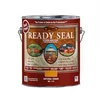 |
Ready Seal 112 Exterior Wood Stain & Sealer, Natural Cedar, 1 Gallon
|
As an Amazon Associate we earn from qualifying purchases. | |
Ready Seal is worth buying if your wood is bare, clean and dry, and you like a flat, natural look that fades instead of peeling. It is a poor match for wood that already carries paint, solid stain or a film finish, because the maker states that Ready Seal will not penetrate through any other product. That wood has to be stripped back to bare first.
Two things set the stain apart. It uses no linseed oil, which Ready Seal says is known to promote algae and mildew growth, and its trans-oxide pigments double as the UV protection. Both points come from the manufacturer, not from our own testing, and we have not applied this stain to a test deck ourselves.
Ready Seal Specs From the Manufacturer
These numbers come from the Ready Seal Info and Protocol sheet (2023) and the FAQ on readyseal.com. Where the two sources differ, both figures are shown.
| Spec | What Ready Seal states |
|---|---|
| Type | Semi-transparent, oil-based penetrating stain and sealer in one |
| Colors | 8: Burnt Hickory, Mahogany, Dark Walnut, Redwood, Mission Brown, Pecan, Natural Cedar, Natural (formerly Light Oak) |
| Coverage | 125 to 170 sq ft per gallon, depending on wood type and texture |
| Wood moisture limit | 12% or less, for the first coat and every recoat |
| Expected life, horizontal | 1 to 3 years (decks, docks) |
| Expected life, vertical | 2 to 5 years in the protocol sheet, 3 to 5 years on the FAQ page |
| Rain after application | Can rain within hours if the prep, dryness and light application rules were followed |
| Full cure | Up to 14 days to reach final tone |
| Application tools | Brush, roller (1/4 to 3/8 inch nap), pump-up sprayer, or airless sprayer |
| Clean-up | Mineral spirits or paint thinner |
| Temperature limits | None stated; can be applied in direct sunlight if well stirred |
| Unopened shelf life | 1.5 to 2 years |
Coverage: Why 80 Sq Ft Per Gallon Is the Wrong Number
Ready Seal’s chart lists 150 sq ft per gallon for a spruce fence and for a smooth cedar deck, and 125 sq ft per gallon for rough cedar fencing and rough cedar siding. The highest figure on the chart is 170. That is roughly double the 80 sq ft that circulates in many reviews, including an earlier version of this one. Rough-sawn wood drinks more, which is why it sits at the low end.
Here is what that means for your budget. The cost table uses the 1 gallon price of $44.98 and the 5 gallon pail at $199.99 (about $40 per gallon), as listed on Amazon when this page was updated. Prices move, so check the current listing.
| Project area | Gallons at 125 | Gallons at 150 | Gallons at 170 |
|---|---|---|---|
| 200 sq ft (small deck or short fence) | 1.6 | 1.3 | 1.2 |
| 400 sq ft (mid deck or fence run) | 3.2 | 2.7 | 2.4 |
| 800 sq ft (large deck plus fence) | 6.4 | 5.3 | 4.7 |
| Coverage rate | Cost per sq ft, 1 gal can | Cost per sq ft, 5 gal pail |
|---|---|---|
| 125 sq ft per gallon | $0.36 | $0.32 |
| 150 sq ft per gallon | $0.30 | $0.27 |
| 170 sq ft per gallon | $0.26 | $0.24 |
These figures are for the wood coverage as the chart presents it. Calculate stain only for the surface you are actually covering, and remember that a second coat on dense wood may not go in at all, as explained below.
The 12% Moisture Rule That Decides Everything
Ready Seal is oil-based, and oil and water do not mix. The manufacturer calls dry wood the most important requirement for success. You cannot judge it by touch or by counting hours, because humidity, temperature and wood density all change drying time. Ready Seal recommends a moisture meter, says entry-level models are fine, and quotes $20 to $200 for the range. Spot check corners, knot holes, tops and bottoms.
- Target: 12% or less on the meter, on the first application and on every future recoat.
- Humid regions: the sheet allows that very humid areas may only dry down to 14 to 15%. In that case the wood may take only one light coat.
- New cedar: the FAQ says 2 to 4 weeks of drying. New pine, spruce or fir: 1 to 3 weeks.
- After cleaning: 48 hours or more, depending on weather.
- If you skip it: the stain can stay on the surface like paint, wash away in rain, or flake later.
For pressure treated lumber the FAQ states a minimum of 1 month of aging, with 2 to 3 months recommended. Our guide to sealing a pressure treated deck covers how to read a deck’s condition before you choose any product.

The Two-Coat Test Most Reviews Skip
Ready Seal is meant to go on in two coats, and its color samples show two-coat results. But the sheet admits that some wood simply will not take a second coat: brand new smooth-milled lumber such as deck boards, and some dense exotic hardwoods. It can take several years for that wood to open up enough. Over-applying to force it is the usual cause of a sticky, glossy surface.
The maker’s test works like this:
- Apply the first coat and wait 1 hour.
- Put a few drops of Ready Seal in a few test spots.
- Leave the drops alone for 30 to 45 minutes.
- Wipe the spots with a finger or paper towel. If you see only clear oil or nothing, the pigment has soaked in and a light second coat will go in.
- If you see color on your finger, stop. Wait a year or more before the next coat.
If a deck still looks wet and oily more than 24 hours after staining, the sheet blames too much product or a barrier such as moisture, mill glaze or another finish. The fix is an old rag with mineral spirits, wiped over the surface to lift excess oil and pigment. It does not disturb stain that has already soaked in.
Prep by Wood Condition
The protocol sheet gives a different prep path for each starting condition. Pick yours, because the wrong one is a common reason for patchy results.
| Starting condition | Ready Seal prep |
|---|---|
| New rough-cut lumber | No special prep, just confirm 12% moisture or less |
| New smooth-milled lumber (deck boards, furniture) | Remove mill glaze: spray 25% bleach and 75% water, wait 10 to 15 minutes, rinse with a pressure washer at 800 to 1000 PSI or less (or a hose jet), then dry to 12% |
| Gray, unfinished wood over a year old | Spray 50% bleach and 50% water, wait 15 to 20 minutes, rinse well with a hose, then dry to 12% |
| Wood with another finish | Strip, neutralize and brighten to bare wood; Ready Seal will not penetrate through other products |
| Wood already coated with Ready Seal | Light clean only: 25% bleach and 75% water, 10 to 20 minutes, hose rinse |
The sheet advises against sanding. Sanding closes the wood pores, so you will likely only get one light coat in. If sanding is unavoidable, it recommends 60 to 80 grit. For stripped wood it lays out a longer sequence: stripper, a pressure wash at 1200 PSI or less, oxalic acid to neutralize (left on, not rinsed), a bleach brightening step, then drying back to 12%.
Applying Ready Seal: Tools and Precautions
- Brush or roller: any standard brush, or a 1/4 to 3/8 inch nap roller.
- Pump-up sprayer: a mid-range or better garden sprayer works.
- Airless sprayer: 0.18 to 0.23 GPM range with a 211 or 213 tip.
- Stirring: remove the lid and stir, dragging the stick along the bottom so settled pigment is fully mixed. Blend multiple cans together for color consistency.
- Walking on it: you can walk on the deck while staining; it self-levels and does not leave footprints, but watch for stain on your shoes.
- Wind: do not spray on a breezy day; overspray travels and is hard to remove.
One protective trick from the sheet is worth copying. Generously wet nearby concrete or stone before you stain. Because oil floats on water, spills and drips stay on top for a short window, and a second rinse afterward washes the floating oil away. Do not let that water evaporate first, and never wet the wood itself, since Ready Seal will not penetrate wet wood.
Rags soaked with any oil-based finish can heat up and ignite on their own. Lay them flat outdoors to dry, or soak them in water in a sealed metal container, before disposal.
The 8 Ready Seal Colors
The full range is Burnt Hickory, Mahogany, Dark Walnut, Redwood, Mission Brown, Pecan, Natural Cedar and Natural, which replaced the older name Light Oak. Older guides that mention 10 colors are out of date.
- Darker tones last longer. The sheet explains that the pigment provides the UV protection, so a darker color gives more life than a lighter one.
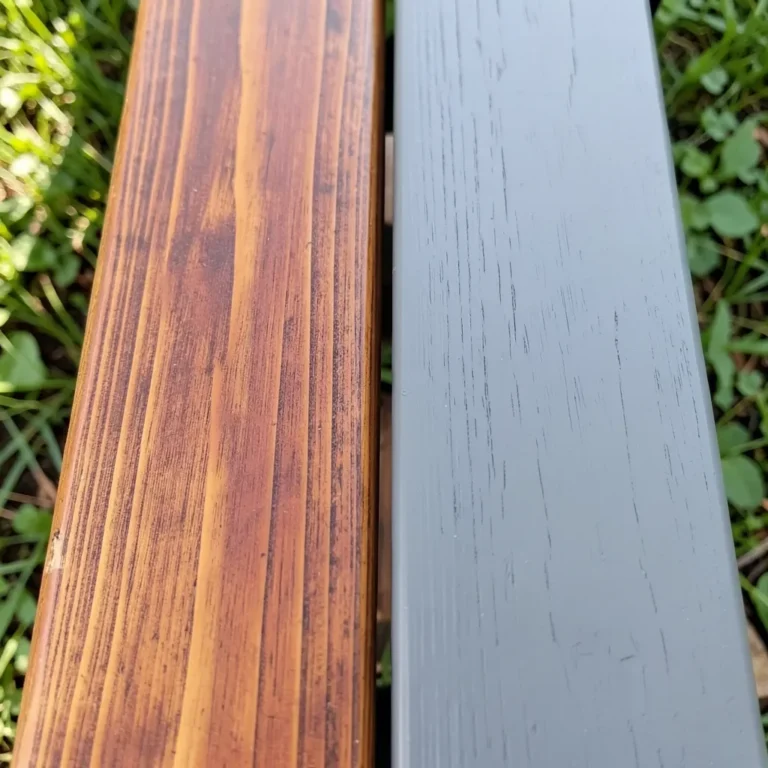
- Test first. Final tone depends on the age, species and texture of the wood. Dark Walnut on rough cedar will not look like Dark Walnut on treated pine.
- Samples exist. Ready Seal offers liquid sample cans so you can test on a spare board.
- Be patient on tone. It takes up to 14 days to cure and reach its final color.
To compare tones across brands before committing, see our wood stain color chart.
How Long Ready Seal Lasts and How to Recoat
Ready Seal does not guarantee a lifespan. Its estimate is 1 to 3 years on horizontal surfaces like decks and docks, and 2 to 5 years on vertical surfaces like fences and pergolas. The FAQ page narrows the vertical figure to 3 to 5 years and suggests recoating horizontal surfaces about every 2 years and vertical surfaces every 3 to 4. Some dense hardwoods need yearly reapplication.
The recoat is the strongest practical advantage: a light clean, a dry-down to 12%, and a new coat, with no stripping or sanding. Because it is a penetrating finish, it fades rather than peels. Full details on a refresh are in our guide on how to restain a deck.
Pros and Cons
| Pros | Cons |
|---|---|
| Penetrates, so no peeling, flaking or chipping when applied as directed | Will not go over paint, solid stain or any film finish |
| Recoat needs only a light cleaning, not sanding or stripping | 12% moisture rule applies to every coat, so you need a meter |
| No temperature limit stated; can go on in direct sun | Smooth-milled new wood may take only one coat |
| Walk on the deck while applying | Mineral spirits clean-up and oily rags to handle |
| Pigment doubles as UV protection | Flat, semi-transparent look; it tints rather than hides the grain |
Who Should Choose Something Else
- Painted or solid-stained wood: a film finish is already there. Either strip to bare wood or pick a product made to go over it.
- Anyone who cannot wait for wood to dry: if the lumber is wet pressure treated stock, aging it for weeks to months is part of the price.
- Trailer decks: Ready Seal is one of several penetrating options, but cargo, steel corrosion and oily-rag hazards change the choice. See our guide to treating a wood trailer deck.
- Comparing brands: if you prefer a film-forming deck stain, read our Sherwin-Williams SuperDeck guide.
Frequently Asked Questions About Ready Seal
Is Ready Seal a stain and sealer in one?
Yes. Ready Seal is a semi-transparent, oil-based penetrating stain and sealer in one product. You do not need a separate primer, but the wood must be bare, clean and dry (12% moisture or less).
How much does a gallon of Ready Seal cover?
Ready Seal’s chart lists 125 to 170 sq ft per gallon, depending on the wood. Spruce fence and smooth cedar deck are listed at 150, and rough cedar fence and siding at 125. The 80 sq ft figure often repeated online is far lower than the manufacturer’s numbers.
Do I need to sand before applying Ready Seal?
No. The manufacturer advises against sanding because it closes the wood pores. If you must sand, use 60 to 80 grit and expect that only one light coat will soak in.
Can I use Ready Seal over old stain or paint?
No. Ready Seal will not penetrate through other products, so previous finishes must be fully removed by stripping or power washing before you apply it. Wood previously coated with Ready Seal only needs a light cleaning.
How long does Ready Seal take to dry?
If the wood was prepped and dry, it dries within hours and rain soon after will not wash it away. It can take up to 14 days to fully cure and reach its final tone, and you should wait a couple of days before putting textiles like rugs on it.
How often do I need to reapply Ready Seal?
The manufacturer estimates 1 to 3 years on horizontal surfaces like decks and 2 to 5 years on vertical surfaces like fences, with darker colors lasting longer. Some dense hardwoods may need yearly reapplication.
Is Ready Seal safe after it dries?
Ready Seal states that once cured, a project such as a picnic table or play set is safe for people and animals. Keep pets and children off until the surface is dry.
How do I clean up after using Ready Seal?
Clean brushes, rollers and sprayers with mineral spirits or paint thinner. Keep mineral spirits nearby for spills, and handle oily rags safely.
Sponsored / affiliate links. As an Amazon Associate I earn from qualifying purchases. I may earn additional commission from eligible campaigns.