Sherwin-Williams Deck Stain Temperature to Apply
Deck stain is generally applied when air and deck-surface temperatures stay at or above about 50°F for the full drying period, with no rain or freezing overnight; around 60°F and rising is often the safer target. Start too cold, and the stain can dry slowly, stay sticky, or cure unevenly. This guide turns label guidance into a practical weather window for deciding when to start staining a deck in cool weather.
What you’ll need

Tools and materials
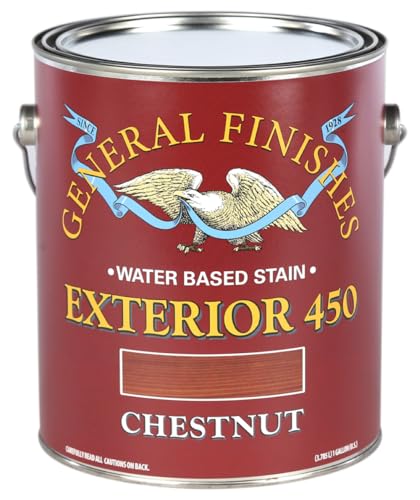
- Sherwin-Williams deck stain in the finish you need, including SuperDeck Exterior Waterborne Semi-Transparent Color Deck Stain, SuperDeck Exterior Waterborne Solid Color Deck Stain, or SuperDeck Exterior Waterborne Semi-Solid Color Stain
- Cleaner for removing dirt, mildew, and old residue before staining
- Water for the readiness test
- 4-inch brush
- Roller
- Staining pad
- Extension pole
- ¼-inch nap roller
- Drop cloths, tape, and stir sticks
Surface prep basics
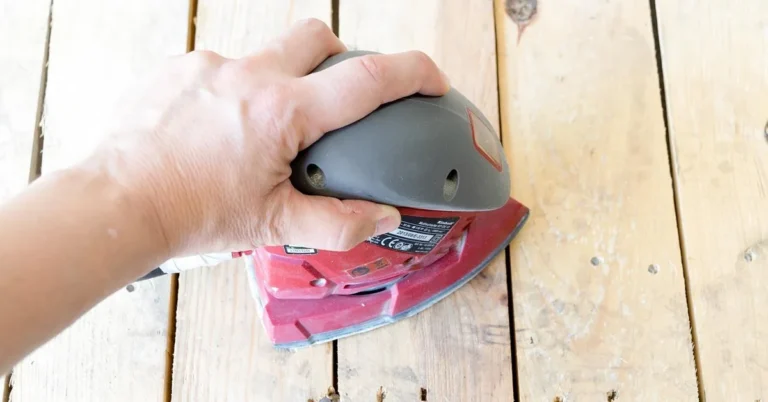
Clean the deck first, then let it dry until the wood absorbs water instead of beading it. That tells you the surface can take stain.
Weather check items
Check the forecast for daytime temperature, overnight low, humidity, and sun exposure. You need a dry window long enough for the stain to set before dew, rain, or a cold night.
Deck stain temperature decision table
Forecast to action
| Forecast conditions | Daytime temp | Overnight low | Humidity | Sun exposure | Expected dry window | Recommended action |
|---|---|---|---|---|---|---|
| Cold scenario | High 40s to low 50s | Near 40°F or below, or frost risk | High | Mixed shade with some sun | Short and uncertain | Postpone |
| Moderate scenario | 60s | Mid-50s or warmer | Moderate | Morning sun, afternoon shade | Long enough for drying and overnight cure | Go |
| Humid scenario | Upper 50s to 70s | Above 50°F | High | Bright but not direct midday sun | Drying slows; surface may stay tacky longer | Proceed with caution |
Use the table as a yes-or-no filter, not a guess. If the deck is not likely to stay above freezing overnight, postpone even if daytime temperatures look acceptable.
What temperature should you apply deck stain?
Apply deck stain when the deck and air stay warm enough through the full drying period, not just for an hour at midday. A practical target is 60°F and rising, with at least 50°F held overnight and no frost risk. Cooler weather pushes dry time out and can leave the finish sticky.
Daytime temperature range
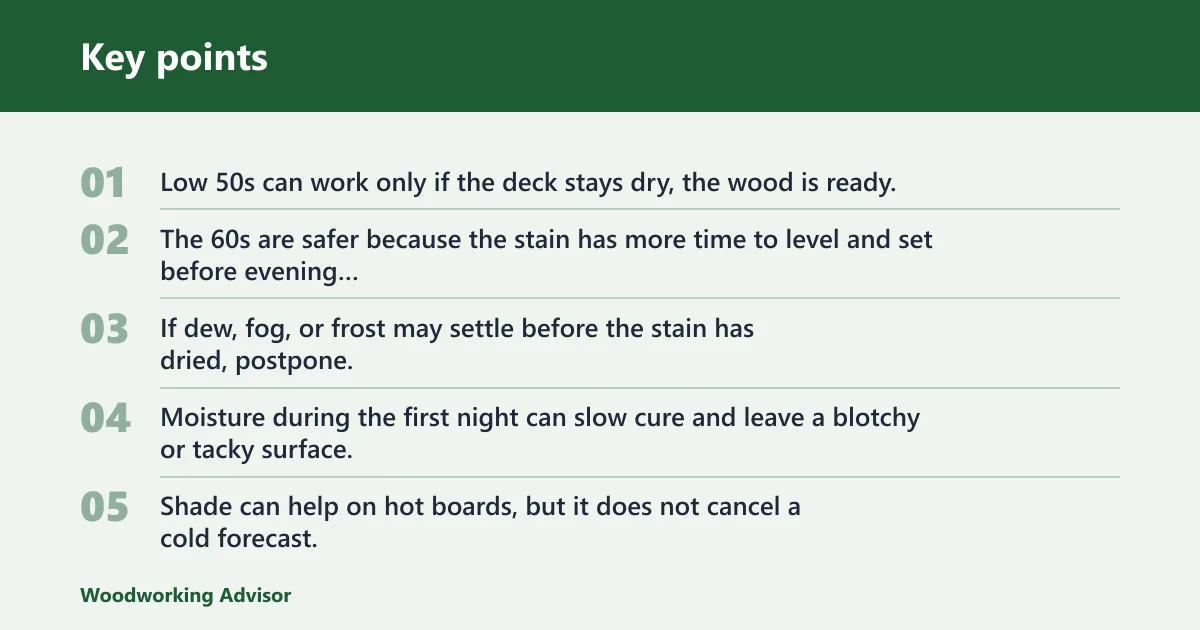
Low 50s can work only if the deck stays dry, the wood is ready, and the forecast stays warm after application. The 60s are safer because the stain has more time to level and set before evening moisture arrives.
Overnight low and dew risk
A warm afternoon does not fix a cold night. If dew, fog, or frost may settle before the stain has dried, postpone. Moisture during the first night can slow cure and leave a blotchy or tacky surface.
Shade versus direct sun
Shade can help on hot boards, but it does not cancel a cold forecast. Direct sun on a warm, dry board can make the surface skin too fast, so Sherwin-Williams advises avoiding midday and direct sunlight while staining.
Can you stain a deck in cold weather?
Yes, but only in a narrow weather window. Cold weather increases the risk of slow drying, poor leveling, tackiness, and a finish that does not cure evenly. If the forecast includes frost, a damp night, or temperatures that dip near freezing, postpone the project.
When to postpone
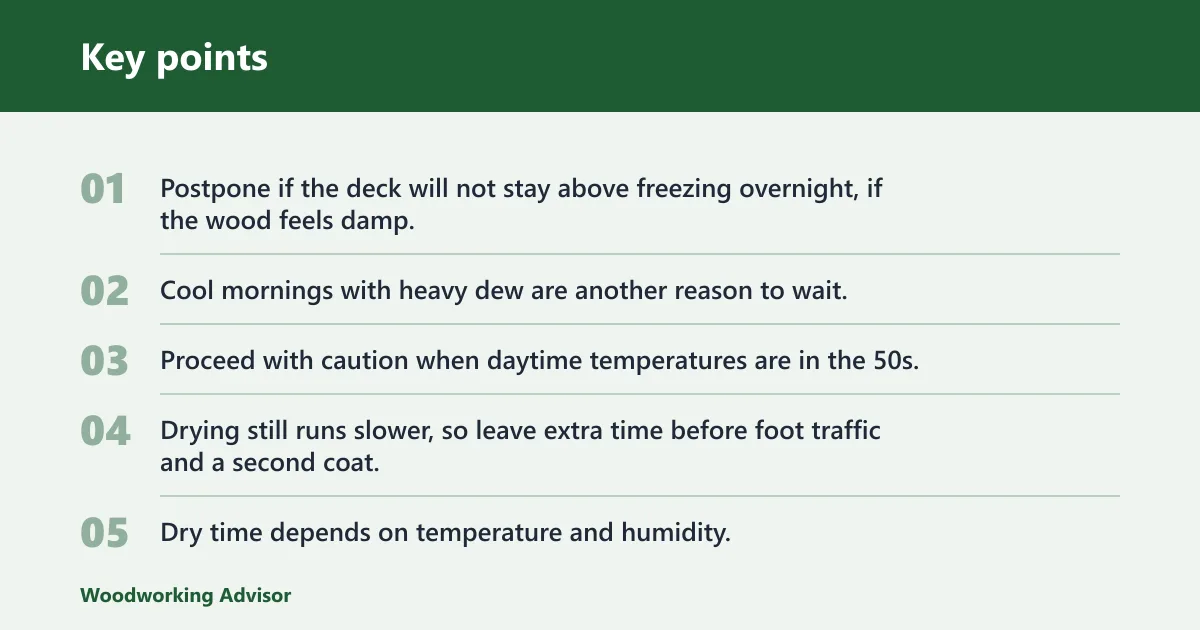
Postpone if the deck will not stay above freezing overnight, if the wood feels damp, or if the forecast offers only a short warm spell. Cool mornings with heavy dew are another reason to wait.
When to proceed with caution
Proceed with caution when daytime temperatures are in the 50s, the overnight low stays safely above freezing, and the deck is in moving shade or early sun. Drying still runs slower, so leave extra time before foot traffic and a second coat.
What cool weather changes
Dry time depends on temperature and humidity. In cool, damp conditions, most stains need at least 24 hours to cure fully, and oil-based stains can take up to 72 hours. High humidity slows curing and can negatively affect adhesion.
Say your deck is on the north side of a house and the forecast shows 54°F by afternoon, 41°F overnight, and light fog at dawn. That is a postpone day, even though the afternoon looks mild. The overnight low is the problem.
How long before you can use the deck?
Light use usually waits 24 to 48 hours, but the exact window depends on temperature, humidity, and stain type. If a second coat is needed, wait 4 hours between applications. Oil-based stains may need up to 72 hours to cure fully before normal use.
Dry time before light use
Plan for 24 to 48 hours before using the deck. Cool air and high humidity push that toward the longer end. If the surface still feels tacky, wait longer rather than testing it with furniture or shoes.
Second-coat timing
If the product calls for a second coat, wait 4 hours between applications. Do not treat that as automatic permission in cool weather. When the deck is cold or damp, the first coat may need more time before the next pass.
Cure time by stain type
Oil-based stains can take up to 72 hours. That difference matters when you are planning weekend work around a cold front or an overnight temperature drop.
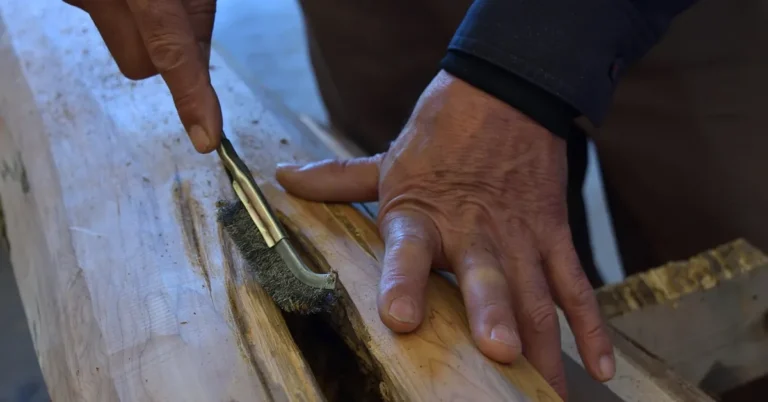
Step 1: Clean the deck
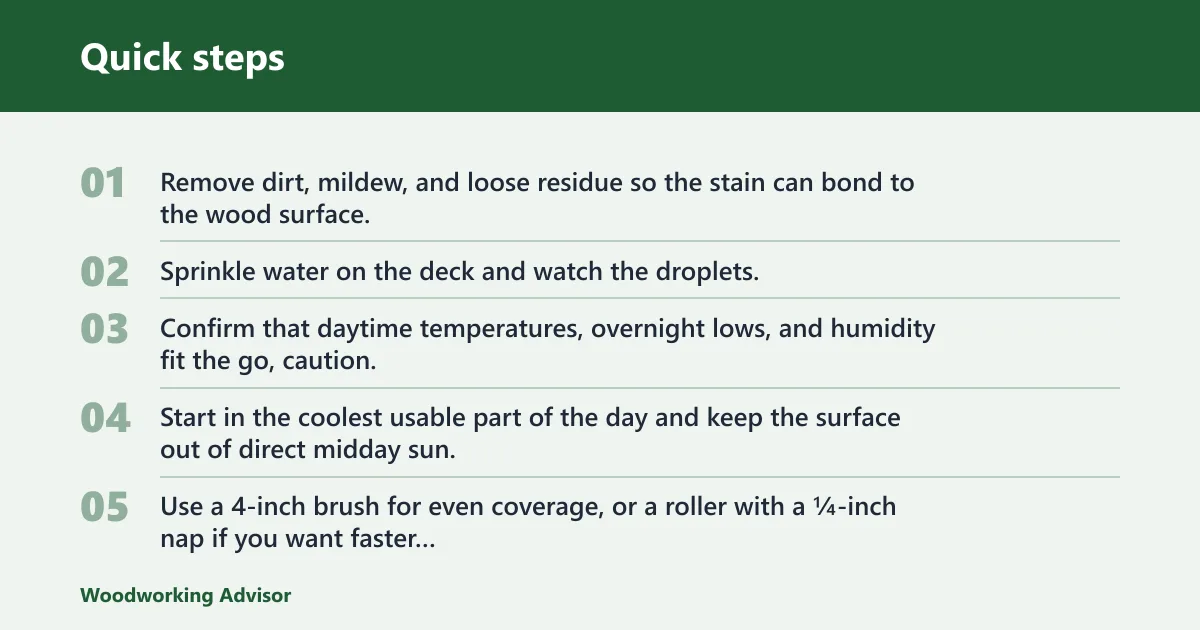
- Remove dirt, mildew, and loose residue so the stain can bond to the wood surface.
Step 2: Test wood readiness
- Sprinkle water on the deck and watch the droplets. If they sink in, the wood is ready; if they bead up, wait longer or clean again.
Step 3: Check the forecast window
- Confirm that daytime temperatures, overnight lows, and humidity fit the go, caution, or postpone table before you open the stain.
Step 4: Apply in the right conditions
- Start in the coolest usable part of the day and keep the surface out of direct midday sun.
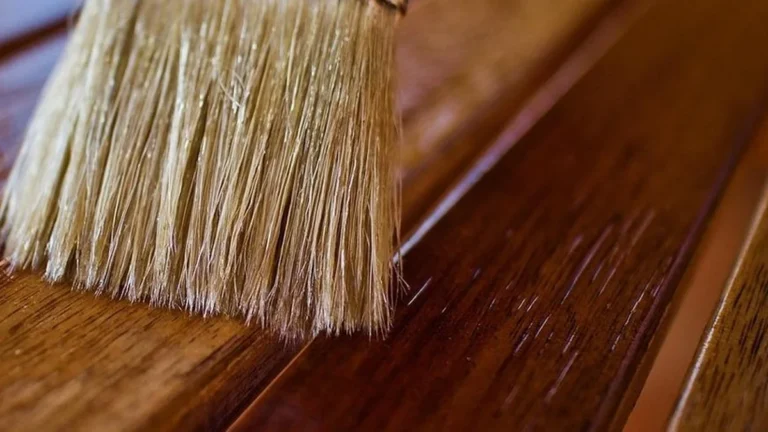
- Use a 4-inch brush for even coverage, or a roller with a ¼-inch nap if you want faster initial application.
- Work the stain with a staining pad or extension pole where boards are open and easy to reach.
Step 5: Watch the first coat
- Check for lap marks, shiny wet patches, or slow-drying areas after the first pass.
A common first-timer mistake is starting at 11 a.m. on a bright day because the board feels warm to the touch. By midafternoon, the surface skins over fast and leaves overlap marks where the stain could not flow out evenly.
Common mistakes
Applying in direct sunlight
Sherwin-Williams says to avoid direct sunlight and to avoid staining at midday. Sun can flash-cure the surface before the stain levels, which raises the chance of lap marks and patchy color. If one side of the deck is shaded, start there.
Ignoring humidity
Humidity slows curing and can negatively affect adhesion. That means a deck may look dry on top while still holding moisture in the finish. In humid weather, leave more time before a second coat and before light use.
Skipping the water test
If the deck still beads water, it is not ready. The readiness test helps prevent poor penetration and uneven color. Skip it, and you may end up applying stain to wood that rejects the finish.
Product lineup and application notes
Sherwin-Williams deck stain options
Sherwin-Williams deck stain covers multiple opacity options, so you can choose the look that fits the wood and the amount of grain you want to keep visible. The SuperDeck Exterior Waterborne Semi-Transparent Color Deck Stain keeps more grain visible. The solid color and semi-solid options cover more of the wood pattern.
Waterborne and oil-based behavior
Waterborne and oil-based stains do not cure at the same pace. Waterborne products usually feel ready sooner, while oil-based stains can take up to 72 hours to cure fully. That is why a forecast with cool nights matters more than a quick warm spell.
Tool choice and spread
A 4-inch brush gives control on edges and rail joints. A roller speeds coverage on flats, and a ¼-inch nap roller gives better results on smoother boards. A 3/8- to ½-inch nap may work for rougher decks, but it can leave more product on the surface.
Frequently asked questions
How long for Sherwin-Williams deck stain to dry?
Dry time before using the deck is 24 to 48 hours, but cooler temperatures and high humidity push it longer. If you need a second coat, wait 4 hours between applications. Full cure takes at least 24 hours for most stains and up to 72 hours for oil-based formulas.
What temperature should deck stain be applied?
A practical target is 60°F and rising, with no overnight freeze risk. If the deck and air stay at or above 50°F through the drying period, that is the lower end of a workable window. Below that, drying slows enough to create tackiness and uneven cure.
What temperature should Sherwin-Williams deck stain be applied?
Use the same weather rule: warm enough to stay dry and cure through the night, not just during the afternoon. A mild day in the 50s can work if the overnight low stays safely above freezing. A steady 60s forecast gives a better margin.
Can I stain my deck in cold weather?
You can, but only when the deck stays dry, the overnight low stays above freezing, and humidity is not high. If frost, dew, or a damp night is part of the forecast, postpone. Cold weather increases the risk of slow cure, lap marks, and sticky spots.
How long before I can use my deck after staining?
Plan on 24 to 48 hours before light use. If humidity is high or temperatures are low, wait longer. Oil-based stains can take up to 72 hours to cure fully, so furniture, grills, and heavy traffic should stay off the surface until the finish hardens.
Should I stain a deck in direct sunlight?
No. Sherwin-Williams advises avoiding direct sunlight and midday application. Sun can dry the surface too fast, especially on warm boards, which raises the chance of lap marks and uneven color. Shade or early morning is a better window when the forecast is otherwise acceptable.
Sponsored / affiliate links. As an Amazon Associate I earn from qualifying purchases. I may earn additional commission from eligible campaigns.