Gel Stain in Cold Weather: Dry Time and Application Tips
Gel stain can go on in cool weather, but only if the wood, stain, and surrounding area stay above the product label’s minimum, often around 50°F. Below 65°F, open time often gets longer and overnight dry time can stretch. Bad timing leaves blotchy color, sticky wipe-off, and a soft film that picks up dust. This guide covers temperature limits, dry-time changes, and when to apply now, wait, or warm the workspace.
Can you apply gel stain in cold weather?
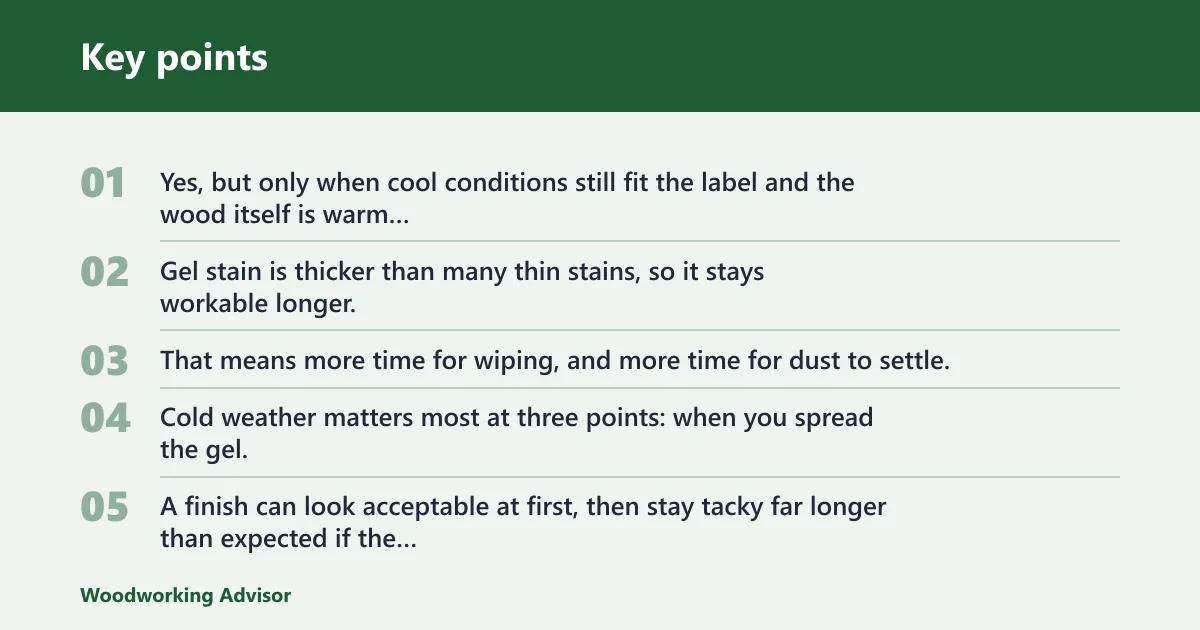


Yes, but only when cool conditions still fit the label and the wood itself is warm enough to take the stain evenly. Gel stain is thicker than many thin stains, so it stays workable longer, but it also holds onto its solvent or carrier longer when temperatures fall. That means more time for wiping, and more time for dust to settle.
Cold weather matters most at three points: when you spread the gel, when you wipe it back, and during the first night after application. A finish can look acceptable at first, then stay tacky far longer than expected if the air drops near freezing or if the board starts cold. The label still sets the final limit.
What makes gel stain different in cool conditions
Gel stain forms a thicker film than a wipe-on stain. That thicker film can help with even color on uneven-grain or blotchy wood, and it usually reduces run-off on vertical faces. In cool weather, that same film also holds moisture and solvent longer, so wipe-off timing matters more than it does with a thin penetrating stain.
Because the film is slower to lose solvent, you may see two separate slowdowns: a longer open time during application and a longer tack period afterward. That is why gel stain can feel forgiving when you spread it, then stay soft overnight.
When cold is workable and when it is not
Cool weather is workable when the wood surface is dry, the wood temperature is above the label minimum, the air is above freezing, and the overnight forecast stays safely above freezing or otherwise inside the product’s written limits. It becomes risky when the board is colder than the room, humidity is high, or dew point sits close to the expected overnight low.
For exterior or garage-adjacent work, do not treat daytime air temperature as the only number that matters. A board can be colder than the air, especially early in the day or after a cold night. That cold surface slows spread, penetration, and wipe-off behavior.
Why the label still sets the final limit
Most manufacturers publish temperature and recoat limits that control the final call. General guidance can help you judge risk, but the label overrides a generic rule. If the can says the surface, air, or product must stay above a certain temperature, follow that instruction even if the day feels mild.
| Daytime air temp | Wood surface temp | Overnight low | Recommended action | Dry-time expectation |
|---|---|---|---|---|
| 60–70°F | 55–70°F | Above 40°F | Apply if the label allows; work in shade and keep the surface dry. | Normal to slightly longer open time; expect a longer recoat wait than in warm weather. |
| 50–59°F | 50–58°F | Above freezing | Apply only if the label minimum is met and you can keep the area warm overnight. | Open time stretches; tack time can run well past the same-day window. |
| 45–49°F | Below 50°F | Near freezing | Wait or warm the workspace and the boards before opening the can. | Dry time may double, and wipe-off can turn gummy or uneven. |
| 40–44°F | 40–45°F | At or below 32°F | Do not apply unless the label specifically allows it and the area can stay warm overnight. | Very slow drying; high risk of sticky residue and poor cure. |
What temperature is too cold for gel stain?
Risk often rises fast below 50°F, and it rises again as temperatures approach 32°F. If the wood surface is below the product’s minimum or the overnight low is expected to hit freezing, the safer move is to wait or warm the space. Air temperature alone is not enough to judge the job.
Air temperature versus board temperature
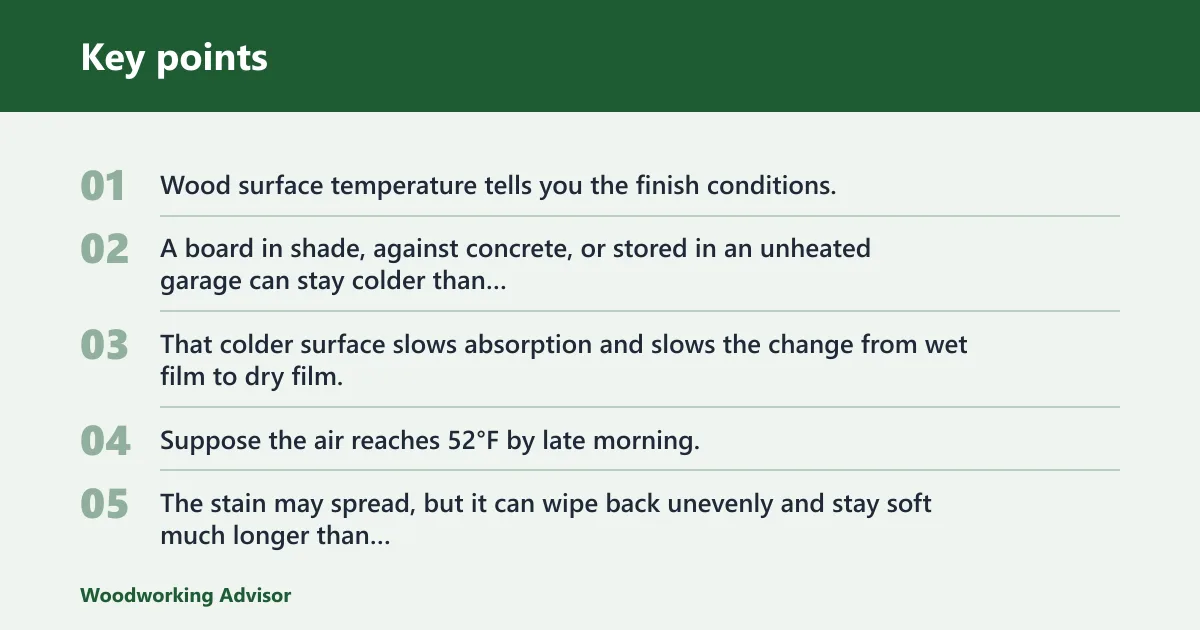
Air temperature tells you the weather. Wood surface temperature tells you the finish conditions. A board in shade, against concrete, or stored in an unheated garage can stay colder than the air for hours. That colder surface slows absorption and slows the change from wet film to dry film.
Suppose the air reaches 52°F by late morning, but a panel still reads 44°F from an overnight chill. The stain may spread, but it can wipe back unevenly and stay soft much longer than expected. In that case, the board temperature, not the weather app, should drive the decision.
Why freezing overnight changes the risk
Freezing after application can interrupt drying before the film has enough strength to stay uniform. Cold weather can double stain drying time, and if temperatures drop after staining, curing can be improper. That does not mean every low temperature ruins the coat, but it does mean the margin for error gets small.
If the forecast low is at or below 32°F within the first 8 hours, that is a strong warning sign. If the finish is still tacky at dusk, the next night’s freeze can leave it soft, uneven, or susceptible to dust and print marks.
Dew point and condensation checks
Dew point helps you judge whether moisture may form on the wood after application. If the wood surface cools to the dew point overnight, condensation can land on the fresh film even when rain is not expected. That is a separate risk from temperature alone.
Before you stain, check the gap between the forecast low and the dew point. A small gap means condensation is more likely, especially on cool boards in still air. If the wood is expected to cool to that point, warm the area or wait.
How long does gel stain take to dry in cold weather?
Cold weather can double stain drying time, and gel stain already dries more slowly than some thin stains because it leaves a heavier film behind. In cool conditions, open time gets longer, wipe-off timing becomes less forgiving, and the stain may stay tacky far beyond the usual same-day window. Humidity slows it further.
Open time, wipe-off time, and tack time
Open time is the window when the stain can still be spread and leveled. Wipe-off time is when excess can still be removed cleanly. Tack time is the point when the surface should no longer feel sticky under light contact. Cold weather stretches all three, but not by the same amount.
Oil-based products can still cure slowly, up to 48 hours, in cold weather. Water-based stains dry poorly below 50°F, and water-based finishes may become cloudy or dimple in cold weather. Gel stain can sit between those behavior patterns depending on its formula, so the label matters.
Why humidity stretches dry time
Humidity slows evaporation, which leaves the finish wet for longer. Still air compounds that effect because moving air helps carry away solvents or water vapor. If the room or garage feels damp, tack time can extend even when the thermometer looks acceptable.
That is why a 55°F day with high humidity can perform worse than a drier 50°F day. The finish does not care only about temperature. It also needs a path for moisture or solvent to leave the film.
When to expect a longer recoat wait
When temperatures stay below 65°F, plan on a longer wait before recoating. If the first coat still feels cool, soft, or slightly grabby under a light test, stop and give it more time. Recoating too soon can trap residue and leave the second coat uneven.
A common first-timer mistake is treating a surface that feels dry on top as fully ready underneath. With gel stain, the top can lose sheen while the film below remains soft. Give the surface more time than a warm-day schedule would allow.
How do you apply gel stain in winter?
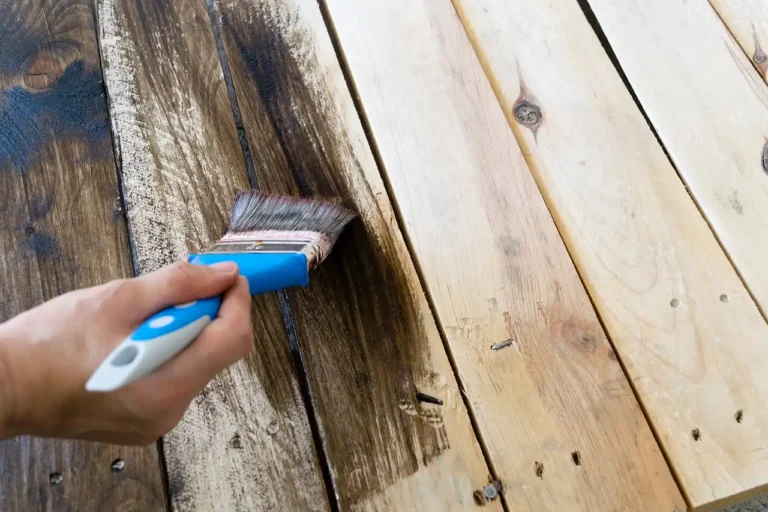
Winter application works best when the wood starts dry, the surface temperature is inside the label range, and the workspace stays out of direct cold drafts. The goal is even color with controlled wipe-off, not speed. Shade or cooler parts of the day usually help because they reduce flash drying and make the spread more uniform.
Surface prep before you open the can
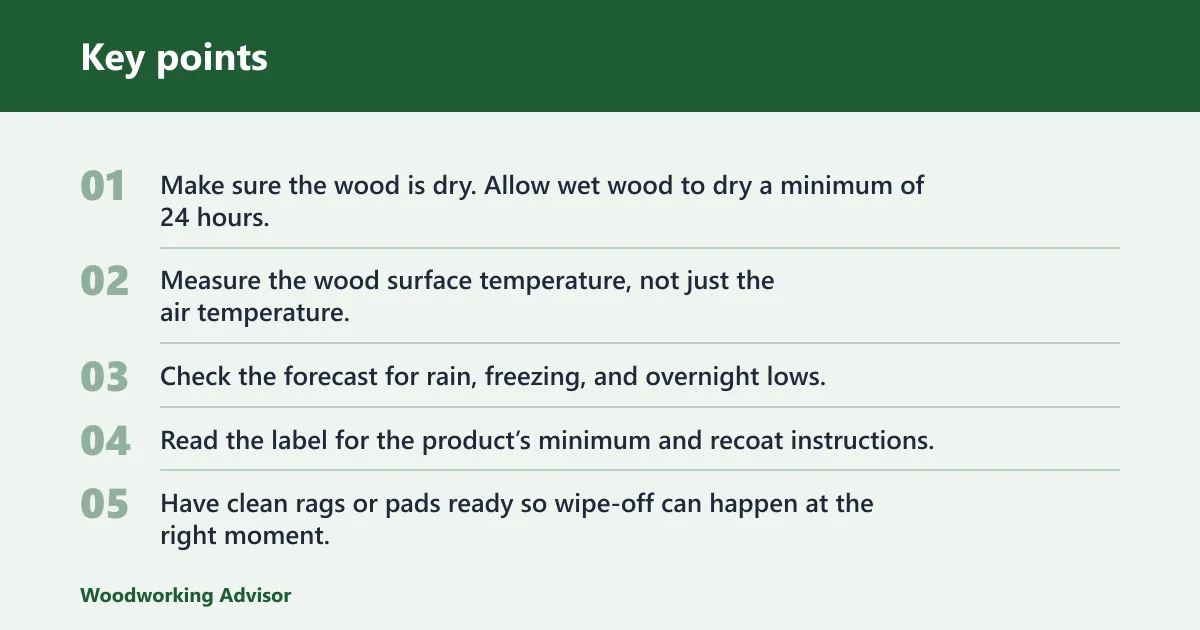
- Make sure the wood is dry. Allow wet wood to dry a minimum of 24 hours.
- Measure the wood surface temperature, not just the air temperature.
- Check the forecast for rain, freezing, and overnight lows.
- Read the label for the product’s minimum and recoat instructions.
- Have clean rags or pads ready so wipe-off can happen at the right moment.
Wet wood is not a safe starting point. Moisture in the fibers slows stain uptake and extends drying even further. If the board is cold from storage, bring the workspace and materials to temperature before you begin.
Shade, still air, and even wipe-off
Shade is usually the better choice when conditions are borderline. Direct sun can warm one section of the board faster than another, which creates patchy open time and uneven wipe-off. A cooler, shaded surface gives you more control across the whole panel.
Keep the area out of moving hot or cold air blasts. Strong airflow can produce uneven flashing, especially on edges and corners. Apply the gel in a consistent pass, then wipe it off at the same pace across the piece.
How to avoid sticky residue and blotchiness
Spread only what you can wipe back while the surface stays workable. If the stain starts dragging, stop and work a smaller area. Leaving excess gel in corners or pores is one of the fastest ways to create sticky residue in cold weather.
Say your 3-foot cabinet door looks even right after application, but one side sits next to an unheated wall and the other side faces the room. The colder side can stay tackier longer and accept less uniform wipe-off. Rotating the door or warming the area gives the two sides a better chance to dry at the same pace.
Can gel stain cure if it freezes overnight?
Sometimes it can, but the result is risky. A near-freezing night can leave the film soft, delay full cure, or cause uneven drying across the surface. If temperatures are expected to drop below freezing within about 8 hours after application, the chance of poor cure rises sharply. Warmth after the fact may help the film finish drying.
What a near-freezing night can do to the film
The finish may stop building strength at the very stage when it needs steady drying. That can leave the surface soft to the touch, dusty-looking in patches, or slightly uneven in sheen. If the wood itself gets colder than the air, the problem can linger into the next day.
Freezing is especially concerning when the stain was applied late in the day. The film has less time to start setting before the low arrives, so the overnight drop becomes the main event rather than a mild slowdown.
Signs the stain needs more time or removal
- Surface remains tacky well into the next day.
- Dust sticks to the finish with light contact.
- Color looks uneven after the first night.
- Wipe marks or lap marks stay visible instead of blending.
- The film feels soft rather than dry at the surface.
If these signs appear, do not rush a second coat. Warm the area if possible and give the film more time. If the product was applied over a cold or damp board, the safest fix may be to strip the problem coat and start again under better conditions.
When warming the area is the better move
Warming the workspace is the better move when the daytime temperature is borderline but the label range can be met indoors or in a protected area. A small temperature lift can shorten tack time, cut moisture risk, and make wipe-off more predictable. It is often easier than trying to rescue a nearly finished coat after a cold night.
Water-based vs oil-based stain in the cold
Water-based stains are generally more sensitive below 50°F, and they can cloud or dimple in cold weather. Oil-based products are more tolerant of cooler conditions, but they still cure slowly in cold weather. Gel stain usually behaves like a thicker film category, so its slow drying in the cold deserves the same caution either way.
Why water-based products need more caution
Water-based formulas depend heavily on evaporation. When the air is cold, evaporation slows; when humidity is high, it slows more. That is why water-based stains dry poorly below 50°F and can develop a cloudy or dimpled appearance in cold conditions.
Why oil-based products still need time
Oil-based stain can handle cooler weather better than many water-based formulas, but it still cures slowly. Up to 48 hours is a realistic caution point in cold conditions. The film may look acceptable before it is actually ready for handling, recoating, or topcoating.
For gel stain, the practical takeaway is simple: cool weather extends both wipe-off and cure time, no matter which carrier is inside the can. The product label tells you where that extension stays acceptable and where it becomes a problem.
Frequently asked questions
Will gel stain cure if it drops below freezing overnight?
Sometimes it may still dry, but freezing within 8 hours after application can leave the film soft, uneven, or improperly cured. If the stain is tacky at dusk and the forecast low is below 32°F, warming the space is the better choice. Watch for dust pickup and sticky residue the next day.
Should you stain wood in the shade when it’s cold?
Usually yes. Shade helps reduce uneven flash drying, which gives you more control over spread and wipe-off. Direct sun can warm one area faster than another, especially on a cold board, and that can create patchy color or lap marks.
How long before rain is safe after staining in cool weather?
Rain should be kept off the fresh film until the surface has had enough time to set and the product label says exposure is safe. In cool weather, that window needs to be longer than it would be on a warm day. If rain is possible within the same day, wait.
Sponsored / affiliate links. As an Amazon Associate I earn from qualifying purchases. I may earn additional commission from eligible campaigns.