What Type of Lacquer to Use on Wood (5 Types Compared)
For most home projects the practical answer is a nitrocellulose brushing lacquer or aerosol from Minwax or Deft, but it ambers with age, so maple, birch and ash point toward CAB-acrylic or waterborne lacquer. This guide compares seven manufacturer data sheets on solvent, recoat time, yellowing and flash point, then covers brushing versus spraying, sanding between coats, retarder, guitars and fire safety.
What Type of Lacquer Should You Use? The Short Answer
Best Starter Lacquer Spray Pick
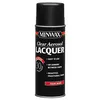 |
Minwax Gloss Clear Brushing Lacquer Spray, 12.25 oz: $10.97 A nitrocellulose aerosol, the first lacquer type in the data sheet table below: dry to the touch in 30 minutes, recoat in 2 hours, 3 to 4 thin coats.
|
As an Amazon Associate we earn from qualifying purchases.
Lacquer is a family, not one product. The right pick depends on wood color, wear, and whether you brush or spray:
- Dark or stained wood, first project, brush or can: nitrocellulose. It is the type in Deft and Minwax products.
- Maple, birch, ash or a white or pickled stain: CAB-acrylic or waterborne lacquer, which the sheets describe as water-white.
- Kitchen cabinets, chairs, anything wiped with household cleaners: pre-catalyzed or post-catalyzed lacquer for the better water, chemical and abrasion resistance.
- Low odor and a high flash point: waterborne lacquer, with a listed flash point of 200 F against 53 F for Deft nitrocellulose.
If you only want to know what lacquer is, start with what lacquer means as a wood finish and why lacquer is solvent-based, not oil-based.
Lacquer Types Compared on Real Data Sheets
Seven manufacturer data sheets, side by side. These compare specific products, not whole categories: each sheet used its own conditions (72 to 77 F, 35 to 50 percent humidity) and reports VOC differently.
| Type and product | Recoat per sheet | Flash point | VOC as listed | Color note on the sheet |
|---|---|---|---|---|
| Nitrocellulose brushing lacquer (Deft Clear Wood Finish) | 2 hours | 53 F | Under 680 g/L | Deft says it resists yellowing over time |
| Nitrocellulose aerosol (Minwax Clear Brushing Lacquer) | 2 hours | Under 100 F | Not listed | Slight ambering over light stains or woods |
| Nitrocellulose spray lacquer (Mohawk Finisher’s Choice) | 45 minutes, scuff-sand with 320 grit | -4 F | 273 g/L (coating) | Clear; no yellowing statement |
| Pre-catalyzed (Mohawk DuraCoat) | 30 to 45 minutes | Not listed (flammability rated 3) | 701 to 710 g/L | No yellowing statement |
| Post-catalyzed (Sherwin-Williams Sher-Wood CC-F21) | 30 to 60 minutes | 37 F | 654 g/L maximum | No yellowing statement; 3% catalyst, 30-day pot life |
| CAB-acrylic (Sherwin-Williams Sher-Wood CC-F23) | 30 to 60 minutes | 37 F | 672 g/L maximum | Water-white, excellent resistance to yellowing |
| Waterborne pre-catalyzed (Mohawk) | At least 1 hour, then scuff-sand | 200 F | 170 g/L (coating) | Water-white; milky in the can, dries clear |
Flash points on these sheets run from -4 F to 200 F. Source: Mohawk Finisher’s Choice Clear Lacquer data sheet (-4 F) and the Mohawk waterborne data sheet (200 F).
Two things general guides skip. First, no sheet publishes a heat-resistance number, so a claim that one lacquer survives a hot mug better than another is not in the manufacturers’ writing. The sheets are qualitative: Mohawk calls Finisher’s Choice alcohol resistant, Sherwin-Williams lists excellent resistance to household chemicals and solvents for its catalyzed lacquer, and Deft lists resistance to alcohol, water and common household spills. Second, the nitrocellulose sheets disagree about color, which matters on pale wood.
Nitrocellulose Lacquer: The Default for Dark and Stained Wood
Nitrocellulose is the lacquer most people mean. Deft lists its Clear Wood Finish as nitrocellulose lacquer with 18 percent solids by volume, dry to the touch in 30 minutes, and recoatable in 2 hours at 77 F and 50 percent humidity. Minwax lists the same resin type for its aerosol, with 0.75 to 1.0 mil of dry film per coat and a recommended 3 to 4 coats. Mohawk’s Finisher’s Choice is a professional spray version.
Does it yellow? The manufacturers do not agree. Deft’s sheet says the clear finish resists yellowing over time. Minwax warns of slight ambering when its lacquer goes over light-colored stains or wood. Fine Woodworking says nitrocellulose film yellows as it ages and can eventually shrink and craze. None gives a number, so the safe reading is relative: nitrocellulose warms pale wood more than CAB-acrylic does, which rarely shows on walnut or a dark stain. For the full picture see does lacquer yellow.
Limits to know before you open the can. Deft says its product is for interior use only, not for floors, and should not be applied below 50 F. Both Deft and Minwax say not to put lacquer over polyurethane, varnish, enamel or other finishes that dry by oxidation; Deft warns it may lift or wrinkle, and Minwax says polyurethane must be removed first. If you are working over oil, read can you lacquer over oiled wood first, and for the poly question see nitrocellulose vs polyurethane and Deft Clear Wood Finish vs polyurethane.
Pre-Catalyzed and Post-Catalyzed Lacquer: A Chemical Cure for Tougher Finishes
Fine Woodworking describes catalyzed lacquers, both pre- and post-catalyzed, as having much better water, chemical and abrasion resistance than nitrocellulose while applying with similar ease. Both have a limited pot life because of the catalyst. In pre-catalyzed lacquer the maker adds the catalyst; in post-catalyzed you mix it in yourself.
The data sheets add concrete details. Mohawk DuraCoat is pre-catalyzed, recoats in 30 to 45 minutes, and has a package life of 6 months. Its sheet says the finish reaches maximum characteristics after 30 days, a useful reminder that handling-dry is not fully cured. Sherwin-Williams CC-F21 is post-catalyzed: 3 percent catalyst, 30-day pot life. The DuraCoat sheet also lists formaldehyde among its hazards.
The trade-off is that these are professional spray products sold by the gallon. For how waterproof any lacquer actually is, see is lacquer waterproof.
CAB-Acrylic Lacquer: Pick This When Yellowing Matters
CAB stands for cellulose acetate butyrate. Sherwin-Williams describes its Sher-Wood CAB-Acrylic Lacquer as formulated for the water-white, non-yellowing demands of furniture and kitchen cabinets, intended as a clear topcoat over white, pickled or light pastel stains. Its flash point is 37 F and recoat is 30 to 60 minutes. Fine Woodworking adds that CAB-acrylic dries to a less brittle, more flexible film than nitrocellulose, resists scratches better, costs more, and is best sprayed.
Sherwin-Williams calls its CAB-acrylic “superior to all nitrocellulose compositions” for yellowing resistance.
The sheet lists interior use only. It is an industrial coating; the aerosols and brushing lacquers read for this guide are nitrocellulose, so on pale wood the realistic options are a waterborne lacquer or a spray-grade CAB-acrylic from a finishing supplier.
Water-Based Lacquer: Lower VOC, Different Rules
Mohawk’s waterborne pre-catalyzed lacquer is a waterborne acrylic that is milky in the can and dries clear. Its sheet lists a 200 F flash point, 170 g/L coating VOC, handling-dry in 20 minutes, and water cleanup, and says it contains no formaldehyde or isocyanate and passes all KCMA performance standards. Compare 170 g/L with Deft’s under 680 g/L and the nitrocellulose gap is large.
The rules change, though. The waterborne sheet says to dry at least 1 hour and scuff-sand before recoating with 320 grit and to keep total film under 4 dry mils. It also says to protect the product from freezing and never to use a tack cloth, and to put a waterborne sealer under lower sheens (40 or below) because excess build can cloud the film. If you are weighing water-based against oil-based in a different resin, see water-based vs oil-based spar urethane.
Brushing Lacquer vs Spray Lacquer vs Aerosol
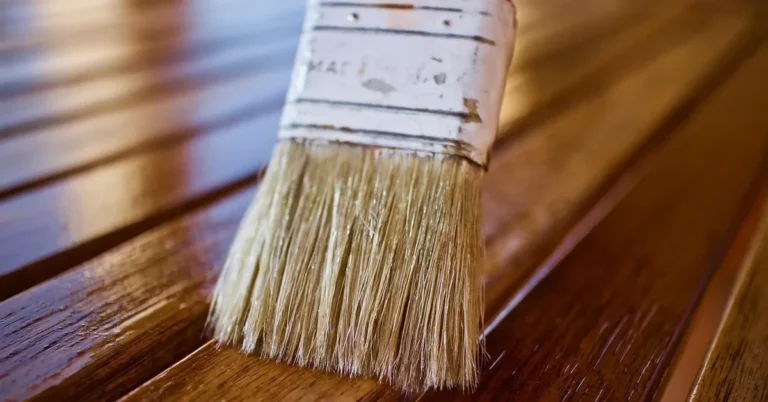
Brushing lacquer. Deft’s liquid is made to brush, pad or roller on, and its sheet says it must not be thinned or sprayed. It advises thin coats, three or more, with the grain, and no over-brushing because lacquers set up fast. Stir; do not shake.
Spray lacquer. Mohawk Finisher’s Choice is ready to spray, with acetone for further reduction, in light coats of 3 to 4 wet mils.
Aerosol. The Minwax aerosol data sheet says to shake the can vigorously for two minutes, hold it 12 inches from the surface, apply thin coats to avoid runs, let each dry at least two hours, and allow 24 hours after the last coat before normal use. For a step-by-step method see how to apply lacquer to wood.
Sanding, Recoating and Retarder: What the Sheets Actually Say
Instructions differ enough that mixing advice between brands causes trouble:
- Minwax aerosol: no sanding between coats, recoat after at least 2 hours, and another coat can be applied at any time without removing the old finish.
- Deft: the sheet says no sanding between coats is required, yet its recoat paragraph also says to sand with 180 to 220 grit and remove dust. The two statements do not fully agree, so scuff lightly if the surface feels rough.
- Mohawk Finisher’s Choice: scuff-sand aggressively with 320 grit between coats and remove dust before topcoating.
- Mohawk DuraCoat: sand and recoat in 30 to 45 minutes; if sanding between coats, use 240 grit or finer.
- Mohawk waterborne: always scuff with 320 grit, dust off with a dry cloth, never a tack cloth.
Fine Woodworking says each new nitrocellulose coat blends into the previous ones, which is why it repairs easily. Mohawk sets a ceiling, though: the Finisher’s Choice, DuraCoat and waterborne sheets all say the total dry film of the whole system should not exceed 4 mils, and the Finisher’s Choice sheet warns that excess build can cause poor adhesion, cracking or cold check problems. Minwax asks for 3 to 4 coats at 0.75 to 1.0 mil each, which works out by simple arithmetic to roughly 2.25 to 4.0 mils, right up against that figure. More coats is not automatically better. Grit choices are covered in best grit sandpaper for lacquer finishes, and coat counts in how many coats of lacquer you need.
Retarder and blushing. Fine Woodworking says high humidity can trap moisture in the film and cause a milky cloudiness called blushing; the remedy is a slower-drying thinner called a retarder. Mohawk lists a retarder at up to 20 percent by volume for Finisher’s Choice and propylene glycol at 2 to 4 ounces per gallon for the waterborne; each system names its own, so check the sheet. For drying times by condition, see how long lacquer takes to dry on wood.
Fire and Vapor Safety: Read This Before Spraying Lacquer
Safety wording below is restated from the manufacturer sheets and labels, not independent advice. Read the current label and safety data sheet for your exact product.
- Flammable liquid and vapor. Deft’s sheet carries a DANGER warning for flammable liquid and vapor, and Minwax says vapors may cause flash fires. With flash points as low as -4 F on these sheets, vapors can ignite below freezing.
- Remove ignition sources. Mohawk says to extinguish flames and pilot lights and turn off stoves, heaters, electric motors and other ignition sources until all vapors are gone.
- Ventilate and use a respirator when needed. The sheets call for cross-ventilation, and Mohawk says to wear a properly fitted NIOSH-approved respirator if you experience eye watering, headache or dizziness.
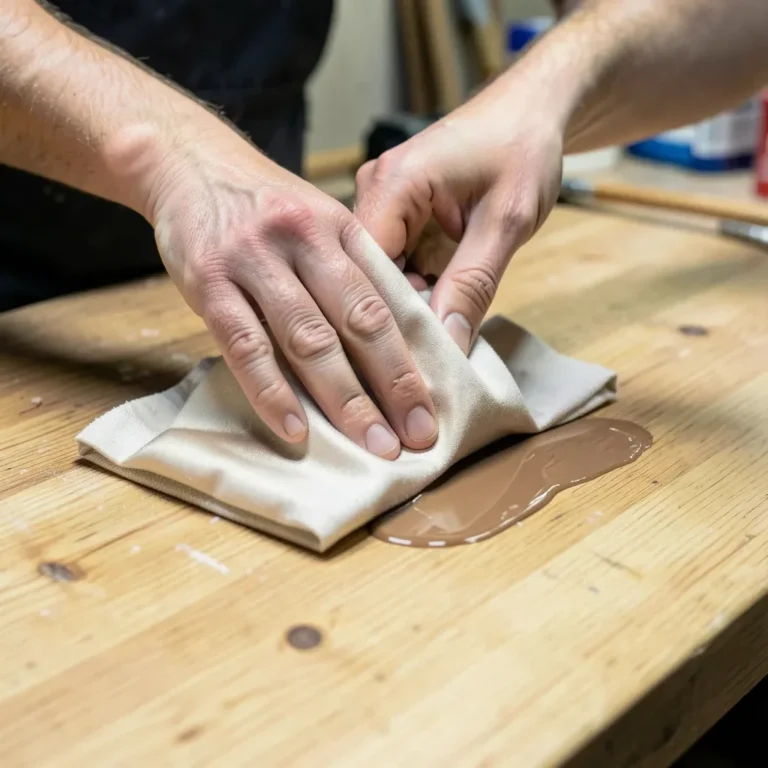
- Rags can ignite on their own. Deft states that rags, steel wool or waste soaked with the product may spontaneously catch fire if improperly discarded, and says to place them in a sealed, water-filled metal container immediately after each use.
- Do not store near heat or sparks. Minwax says not to store the product near heat, sparks or open flames.
The waterborne sheet lists a flammability rating of 1 against 3 for the solvent products, an advantage in a small shop, though ventilation still matters. For solvents see mineral spirits vs paint thinner vs lacquer thinner and whether lacquer is toxic after it dries.
Choosing Lacquer for Guitars and Special Cases
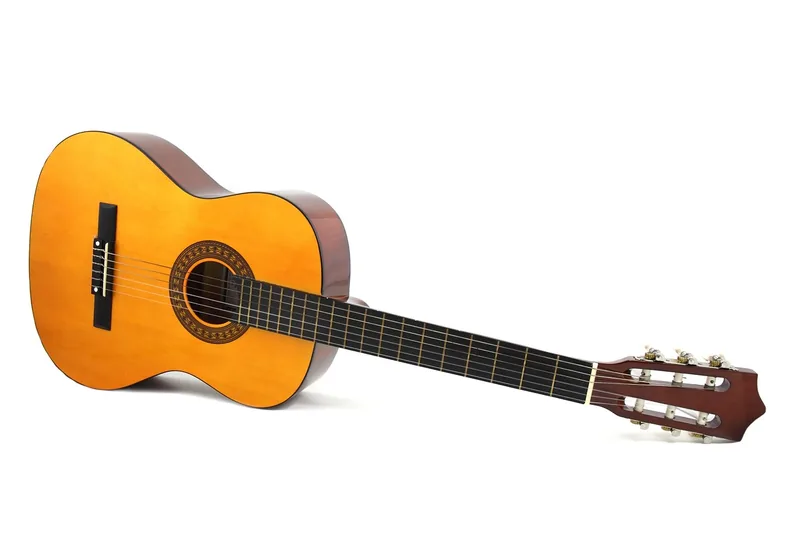
For a guitar body the criteria are the table’s: color stability on your wood, repairability, and fire-risk control while spraying. Because each coat of nitrocellulose blends into the last, per Fine Woodworking, spot repair is simpler than with finishes that cure by a chemical reaction. For a project walkthrough see how to finish a bass guitar body.
Where lacquer is the wrong pick: floors (both Deft and Minwax say no; floor lacquer vs varnish covers the alternatives), exterior wood (the Deft and Mohawk sheets say interior only), and any surface with an oil-cured topcoat already on it. If you want a different traditional film, how to use shellac on wood covers the alcohol-based option, and painting over lacquer and removing lacquer help when a finish must change. See also the wood finishing guide.
Frequently Asked Questions
What is the best type of lacquer for wood furniture?
It depends on wood color and wear. Nitrocellulose brushing or aerosol lacquer suits dark or stained furniture and is the easiest to repair, CAB-acrylic stays water-white for maple, birch and ash, and catalyzed lacquers have much better water, chemical and abrasion resistance according to Fine Woodworking.
Is nitrocellulose or CAB-acrylic lacquer better for light wood?
CAB-acrylic. Sherwin-Williams calls its CAB-acrylic water-white with excellent resistance to yellowing and intends it over white, pickled or light pastel stains, while Fine Woodworking says nitrocellulose yellows as it ages and Minwax warns of slight ambering over light wood.
Can you brush lacquer or does it have to be sprayed?
You can brush products made for it. Deft sells a nitrocellulose lacquer applied by brush, pad or roller that must not be thinned or sprayed, while spray-grade lacquers such as Mohawk Finisher’s Choice are supplied ready to spray.
Can you put lacquer over polyurethane?
No. Minwax says not to apply its lacquer over polyurethane and to remove the polyurethane first, and Deft warns that lacquer over varnishes, enamels or other finishes that dry by oxidation may lift or wrinkle.
The Bottom Line
Pick nitrocellulose for dark or stained wood and simple home projects, CAB-acrylic or waterborne when pale wood must stay pale, and a catalyzed lacquer when a surface will be wiped and used hard. Test on scrap and respect the fire warnings. Sources read: Deft’s Interior Clear Wood Finish sheet (2014), Mohawk’s DuraCoat, Finisher’s Choice and Waterborne data sheets, Minwax’s aerosol sheet (05/07), Sherwin-Williams CC-F21 and CC-F23 (9/24), and Fine Woodworking’s All About Lacquers (2005). Formulations change, so check the current sheet.
Sponsored / affiliate links. As an Amazon Associate I earn from qualifying purchases. I may earn additional commission from eligible campaigns.
![12.25 Oz Clear Brushing Lacquer Spray Gloss [Set of 6]](https://m.media-amazon.com/images/I/41y-ntITa2L._SL500_.jpg)