What Wood Species Works Best for Dovetail Joints?
For most dovetail work, cherry, walnut, and soft maple are commonly considered among the easier reliable choices. Pine cuts fast, but it bruises and crushes. Oak and hard maple need sharper tools and tighter control. Poor species choice leads to split pins, crushed fibers, loose tails, and joints that fit badly even with a good layout. This guide ranks common woods by dovetail difficulty, explains their failure modes, and matches each species to hand tools, jig cutting, project type, and desired contrast.
What is a dovetail joint?
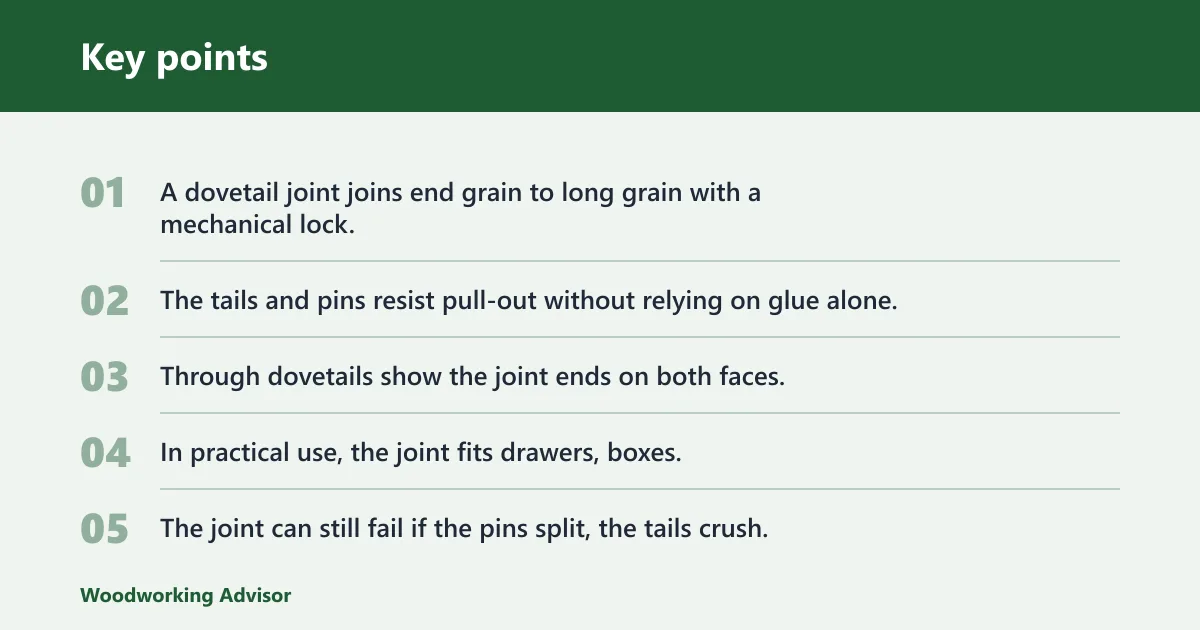


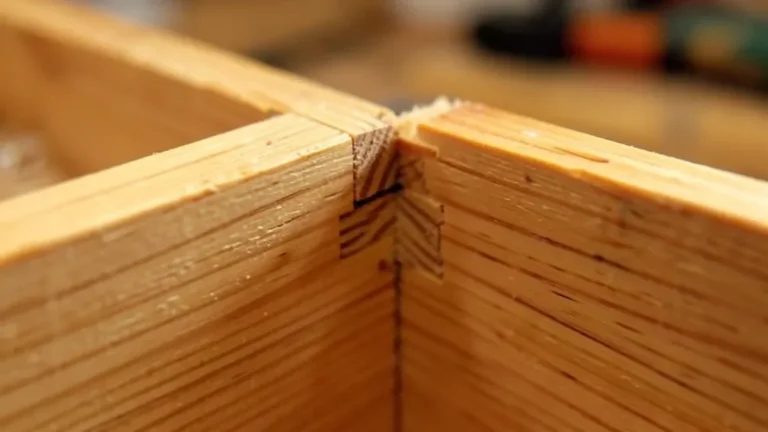
A dovetail joint joins end grain to long grain with a mechanical lock. The tails and pins resist pull-out without relying on glue alone. Through dovetails show the joint ends on both faces, while half-blind dovetails hide the end grain on the front of a drawer and are common on fine drawer fronts.
In practical use, the joint fits drawers, boxes, and cabinets where the parts need racking resistance and a clean edge. The joint can still fail if the pins split, the tails crush, or the stock moves after you cut it.
How the lock works
The angled tails trap the pins, so withdrawal force has to pull across the flared shape rather than straight along the grain. That makes dovetails a strong choice for corner joints that open and close often. The lock works best when the shoulder lines are square and the fit is even.
Through versus half-blind
Through dovetails are easier to inspect and fit because both faces are visible. Half-blind dovetails demand more accurate chopping at the front corner, because the socket depth controls the look and the fit. Wood choice matters more on half-blind work because tearout at the front is harder to hide.
Which woods are easiest for dovetails?
Cherry, walnut, and soft maple are the best all-around beginner choices because they cut cleanly enough to read your saw line without being so hard that every pare fights back. Basswood is the easiest cutting option, and butternut is also dovetail-friendly. Pine can work too, but it bruises, chips, and compresses more readily.
For first practice, look for straight grain, even color, and stock that does not have knots near the pins or tails. A board with calm grain gives you clearer reference lines and less breakout at the socket edges.
Best beginner species
- Walnut – forgiving enough for first cuts, with good visual contrast.
- Cherry – cuts cleanly and shows layout lines well.
- Soft maple – a practical step up from the softest woods, without jumping to the hardest group.
- Butternut – useful when you want an easy-cut wood for a larger case or chest.
- Basswood – easiest cutting option, best for dry practice and layout training.
What grain should you look for?
Choose straight, compact grain with no wild reversal through the pin board. Grain that runs out quickly toward the edge raises breakout risk at the half pins and at the socket shoulders. Straight grain also makes it easier to read the knife lines during paring.
The figure may look great, but short grain near the edge can break when the last bit of waste comes out.
How do harder woods change the cut?
White oak, hard maple, ash, and red oak generally are commonly reported to require precise cutting. Their density raises sawing effort, and their harder fibers leave less room for sloppy layout. With these woods, small errors at the baseline or shoulder line show up as gaps, crushed corners, or split pins during fitting.
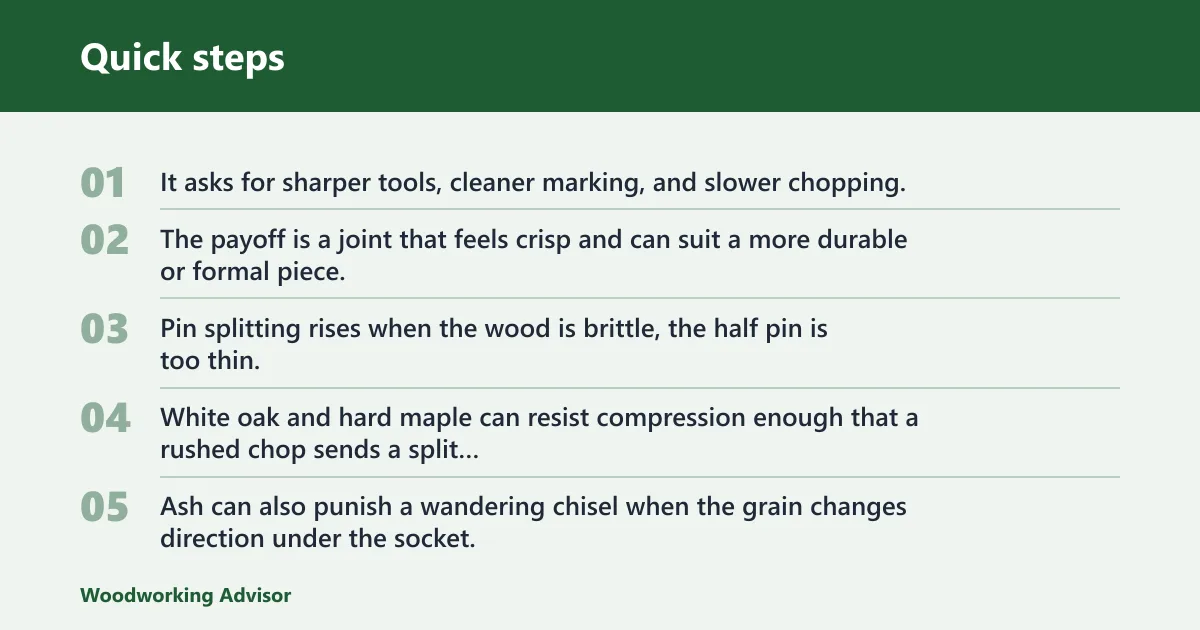
Harder stock is not off-limits. It asks for sharper tools, cleaner marking, and slower chopping. The payoff is a joint that feels crisp and can suit a more durable or formal piece.
Where harder woods cause trouble
Pin splitting rises when the wood is brittle, the half pin is too thin, or the grain runs the wrong way. White oak and hard maple can resist compression enough that a rushed chop sends a split along the pin. Ash can also punish a wandering chisel when the grain changes direction under the socket.
Red oak is durable enough for many furniture parts, but its open grain can make tiny gaps more visible. That matters when the joint sits on a bright front edge rather than a hidden case corner.
When a harder wood is still the right choice
Use a harder species when the part needs wear resistance, better dent resistance, or a stronger visual statement. Red oak was chosen for breadboard ends in one common application because it is more durable than butternut. That same logic can apply to drawer sides, cabinet parts, or exposed casework.
Dovetail wood selector table
| Species | Hardness feel | Tearout risk | Pin-splitting risk | Best tool method | Recommended dovetail angle tendency | Best project fit | Avoid this species when… |
|---|---|---|---|---|---|---|---|
| Basswood | Very soft; cuts with little resistance | Low to moderate, but edges bruise easily | Low if layout is accurate | Hand-cut practice, simple jig setup | 1:8 or slightly steeper for visual clarity | Practice boards, light boxes, layout drills | you need a durable, dent-resistant finished piece |
| Butternut | Soft hardwood; easy to saw and chisel | Low to moderate | Low to moderate | Hand-cut, also friendly to router jigs | 1:8 for a balanced look | Blanket chests, light casework, decorative boxes | the part needs high wear resistance or a very tight pin field |
| Pine | Softwood; compressible and fast cutting | Moderate to high; chips and tears out more easily | Moderate if half pins are thin | Router jig or very sharp hand tools | 1:8, with careful fit control | Practice drawers, utility boxes, shop fixtures | you want crisp front edges without denting or crush marks |
| Walnut | Soft hardwood; very workable | Low to moderate | Low to moderate | Hand-cut or jig-cut | 1:8 for most furniture; 1:6 for a bolder look | Fine drawers, boxes, visible furniture corners | you need the lightest possible cutting stock for absolute beginner drills |
| Cherry | Soft hardwood; predictable cutting feel | Low | Low to moderate | Hand-cut first, jig-cut also works well | 1:8 on most drawers and boxes | Drawer sides, small cabinets, furniture fronts | you are leaving the surface exposed and want to avoid visible chip-out from a dull edge |
| Soft maple | Medium-hard; still manageable with sharp tools | Low to moderate | Moderate | Hand-cut with sharp saw and chisels; jig-cut works well | 1:8 or a touch steeper if you want more visual bite | General furniture, drawers, training for harder stock | your tools are dull or the layout is loose |
| Red oak | Medium-hard to hard; open grain | Moderate | Moderate to high on thin pins | Router jig or very careful hand-cutting | 1:6 to 1:8 depending on visible face and use | Durable furniture parts, visible cabinet work | you are practicing your first dovetails or need a clean half-blind front |
| Ash | Hard; springy, with strong grain | Moderate | Moderate to high | Sharp hand tools or a jig with clean cleanup | 1:6 for a stronger visual lock | Stressed parts, strong casework, utility furniture | you cannot keep the chisel edge sharp or control the grain change |
| White oak | Hard; demanding but stable-looking | Moderate | High if layout is sloppy | Best with very sharp hand tools or a refined jig setup | 1:6 to 1:8 | Durable drawers, cabinets, exposed joinery | you are chasing speed over cleanliness |
| Hard maple | Very hard; precise feel needed | Low to moderate, but chips can be sharp and visible | High if you force the fit | Sharp hand tools or a dialed-in jig | 1:8, sometimes 1:6 for a more assertive look | Fine furniture, drawers, parts that need wear resistance | your layout and paring are still inconsistent |
Should you change the angle for softwood or hardwood?
Yes, the angle should follow the wood, the part, and the cutting method. A dovetail angle around 1:6 to 1:8 is generally regarded as correct. About 9.46 degrees corresponds to 1:6, and about 7.13 degrees corresponds to 1:8. Less than about 1:10 may be too shallow to matter mechanically, while more than about 1:4 is considered excessive.
For softwoods, a slightly steeper layout often helps because the wood compresses more and can look looser after assembly. For hardwoods, a more moderate 1:8 layout often gives enough lock without making the tails overly narrow or the pins too fragile. The best choice depends on the species, not on a fixed rule.
How to choose the angle
- Use 1:8 for many drawers and boxes in cherry, walnut, soft maple, and pine.
- Use 1:6 when you want a stronger visual shape or when the stock is hard and stable enough to accept tighter geometry.
- Do not force a shallow angle just because the wood is soft; too shallow can weaken the mechanical lock.
- Keep the same angle on a pair of mating parts so the fit stays consistent.
Suppose you are cutting pine drawer sides at 1:10 because it looks easy to lay out. The joint may fit, but the flares are so slight that the lock is weak. A 1:8 layout gives the joint more useful shape without making the cut extreme.
Why do dovetail pins split?
Pins split when the remaining wood is too thin, the grain runs toward the end, or the tool forces the fibers apart instead of severing them. A fragile half pin is the most common trouble spot. Brittle woods and hard, dry stock make this worse because they give less warning before the crack runs.
Sharp tools matter because dull edges push the fibers, leaving breakout behind the cut. Clean sawing and careful chopping reduce the wedge effect that starts a split. Grain direction matters just as much: if the grain leans out toward the edge, the pin has little support.
How grain direction affects strength
Long grain that runs parallel to the pin helps the joint hold together. Short grain or steep runout weakens the pin and the corners of a half-blind socket. In visible furniture, that weak grain also shows up as fuzzy edges or chipped shoulders after cleanup.
A common first-timer mistake is centering the tails nicely but leaving a paper-thin half pin at the edge. The joint may assemble, then crack as the last bit of pressure closes it up.
How much does moisture matter?
Moisture content matters because wood movement changes how tight the joint feels after assembly and through the seasons. Let stock acclimate to the shop and, more importantly, to the room where the piece will live. A joint that feels perfect in a dry shop can bind later, or loosen if the wood shrinks after assembly.
Glue helps, but it does not fix movement or poor fit. PVA yellow glue and aliphatic resin are common choices for dovetails. For moisture resistance, resorcinol and urea formaldehyde are options, but none of these are gap-filling solutions. The joint still needs clean mating surfaces.
Fit strategy by wood type
Softwoods often accept a slightly easier fit because they compress more during assembly. Hardwoods usually need a crisper, more exact fit because there is less compression to hide a loose shoulder. That does not mean you should leave hardwood joints gappy; it means you should pare them carefully and stop short of forcing the joint apart.
Picture a cherry drawer side cut in a dry shop in winter. If the board later picks up moisture in the home, the fit can tighten enough to make assembly harder than it was on the bench. Stable acclimation reduces that surprise.
Frequently asked questions
What wood is easiest for dovetail joints?
For an easy first cut, basswood is the easiest cutting option, followed by butternut and then cherry, walnut, or soft maple. These woods are forgiving enough to saw and pare cleanly without the severe resistance of hard maple or white oak. Straight grain still matters more than the species label alone.
Is pine good for dovetail joints?
Pine can be used for dovetails, and it is a common practice wood, but it may chip and tear out more easily. It also compresses more during assembly, which can hide small fit issues while making the joint feel less crisp. Use sharp tools and avoid bruising the edges.
Is maple too hard for dovetail joints?
Hard maple is not too hard, but it is less forgiving than cherry, walnut, or soft maple. It asks for sharp saws, clean layout, and careful chopping because the pins can split if forced. It is a fine choice once your cutting is accurate and controlled.
What dovetail angle should I use for softwood?
A 1:8 angle is a practical starting point for most softwoods. It gives enough mechanical lock without making the tails overly shallow. If the species is very compressible, such as pine, the angle can still work well as long as the fit is controlled and the layout is accurate.
What dovetail angle should I use for hardwood?
For hardwoods, 1:8 is a safe general choice, and 1:6 is useful when you want a more pronounced tail shape or a stronger visual presence. The harder the wood, the more important clean sawing and precise paring become. The angle should match the part, not a fixed rule.
What wood species are best for first dovetail practice?
Cherry, walnut, and soft maple are the best first practice species when you want a realistic but manageable cut. Basswood is the easiest cutting option if the goal is pure technique practice. Pine is useful too, but it introduces more crush and tearout than many beginners expect.
Sponsored / affiliate links. As an Amazon Associate I earn from qualifying purchases. I may earn additional commission from eligible campaigns.