Can MDF Be Repaired? Swelling, Chips and Stripped Screw Holes
MDF can be repaired when the damage is a chip, dent, crack or stripped screw hole, but swelling from water is only partly fixable. The Composite Panel Association states that swollen MDF does not fully recover when it dries. This guide gives a damage-by-damage decision table, the fixes that work, and the point where replacing the panel is the better call.
Can MDF Be Repaired? It Depends on the Damage
Best Epoxy Putty Pick | |
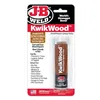 |
J-B Weld KwikWood Wood Repair Epoxy Putty, 1 oz Stick – $6.19 A two-part epoxy putty you knead by hand, for the chipped corners, blown-out screw holes and edge gouges this guide covers. J-B Weld lists it as drillable, tappable and sandable after an hour.
|
As an Amazon Associate we earn from qualifying purchases. | |
Most MDF repair advice treats every kind of damage the same. They are not the same. Dents and chips are a missing-material problem, which filler solves. Swelling is a fiber-structure problem, which filler hides but does not solve. Use this table to decide before you buy anything.
| Damage | Repairable? | Best fix | Replace when |
|---|---|---|---|
| Chip, dent or gouge | Yes, fully | Wood filler or epoxy putty, sand flush, prime, paint | Almost never |
| Crack on a face | Yes | Fill, sand, prime; add a backer if the panel flexes | The panel has snapped through |
| Stripped screw hole | Yes | Putty or glue-in dowel, cure, re-drill a pilot hole | Several holes in one area have merged |
| Crumbled corner or edge | Partly | Cut back to solid material, fill, seal the edge | The soft area is wider than the repair can span |
| Minor edge swelling, surface intact | Partly | Dry fully, sand flat, seal with primer | The edge stays raised after sanding |
| Soft, spongy or layered from water | No | None that restores strength | Always |
| Warped panel | Sometimes | Remove the moisture source, add a balanced backer | The warp stays after the panel dries |
The warped-panel row comes from the same CPA bulletin. It explains that moisture often enters MDF from the unfinished back, so the back swells more than a sealed top and the panel bows. If a stiff overlay holds one side, the CPA notes the warp can become permanent. That is why sealing the back and edges matters as much as fixing the damage on the front.
How to Repair Chips, Dents and Cracks in MDF
These are the repairs that work well, because nothing is wrong with the surrounding board. Vacuum the dust out of the damage first, then choose a filler by how much strength the spot needs.
- Wood filler for cosmetic spots: Minwax High Performance Wood Filler is sold for gouges and holes, hardens in 30 minutes and can be sanded, planed or drilled afterward. The maker’s mix is about 16 parts filler to 1 part hardener, and only enough to use in roughly 15 minutes should be mixed.
- Epoxy putty for corners and edges: J-B Weld KwikWood is kneaded by hand until uniform in color, then pressed in. The maker lists a 15-25 minute set time and a 1 hour cure, and says it can be sanded, filed, painted, drilled and tapped.
- Fast-curing filler for tight schedules: the Bondo wood filler directions call for rough shaping with 80 grit and finishing with 180 grit or finer, with only a few minutes of working time once mixed.
- Remove loose fibers and dust with a vacuum and a stiff brush so the filler grips solid material.
- Press the filler in firmly and overfill slightly, since it is easier to sand a high spot down than to fill a low one.
- Let it cure fully for the time on the label before sanding. Sanding early tears the filler out.
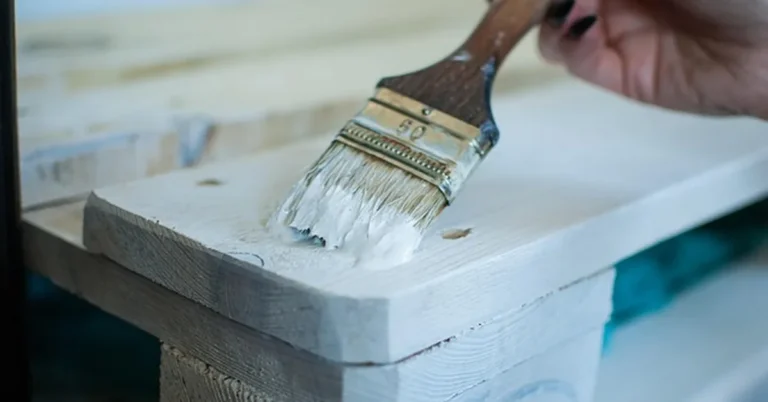
- Sand flush, wipe off the dust, then prime the patch before painting. Bare filler and bare MDF soak up paint differently, so a skipped primer shows through as a dull spot.
For surface scratches and finish work on a whole panel, our guide to fixing MDF wood covers the sanding and refinishing steps in more detail. This page stays focused on the repair-or-replace decision. A good wood primer matters here because it seals the patch and the fibers around it.
Can Swollen or Water-Damaged MDF Be Repaired?
Sometimes, but set realistic expectations. The CPA bulletin says MDF that swells beyond its original dimensions from humidity or water does not fully recover when it returns to its starting moisture level. Drying stops the damage from getting worse. It does not shrink the fibers back.
Use three checks after the board is completely dry:
- Surface test: if the face skin is unbroken and the raised area is small, sanding it flat is reasonable.
- Press test: press a thumbnail into the swollen edge. If it dents, flakes or crumbles, the fibers have lost their bond and the section will not hold fasteners.
- Layer test: if the board has split into visible layers, or a screw pulls out with a crumbly plug of fibers, the core is gone.
A board that passes all three can be sanded, filled where needed and sealed. Our walkthrough of the shellac primer method for water-damaged MDF covers that sealing step. A board that fails the press or layer test is a replacement job, because filler over crumbled fibers only hides the weak spot until the next screw or the next spill.
If you are weighing whether MDF suited the job in the first place, see our breakdown of MDF advantages and disadvantages and the properties of MDF.
How to Fix a Stripped Screw Hole in MDF
Stripped holes are the most common reason people ask whether MDF can be repaired, and they are one of the most fixable problems. The core of MDF has no grain to grab the thread, so the screw tends to wedge and split the fibers instead.
| Fix | How it works | Wait before re-drilling | Best for |
|---|---|---|---|
| Epoxy putty | Pack the hole, let it cure, drill a fresh pilot | About 1 hour for KwikWood per J-B Weld | Holes in visible parts |
| Wood filler | Fill, let it harden, drill a fresh pilot | 30 minutes for Minwax High Performance | Light-duty holes |
| Glue and wooden dowel or toothpicks | Glue snug wooden pieces in, trim flush, drill a fresh pilot | Follow your glue’s label | Hinges and hardware that carry load |
| Move the fastener | Relocate the screw to solid material | None | Holes too close to an edge or corner |
For new screws, Woodworkers Journal recommends Hi-Lo screws made for MDF and particleboard, because their double-pitch thread creates less outward pressure than a conventional screw. It also advises keeping screws a couple of inches from corners and using a bigger pilot hole if the screw swells the board as it goes in. Where a hinge keeps pulling loose, glue a solid-wood block behind the MDF and screw into that instead.

If the joint itself is the weak point, a stronger bond often beats more screws. See how to glue MDF to wood for the adhesives that hold. Squeaks from loose stair parts are a different problem, covered in how to stop MDF stairs creaking.
Repairing Edge Damage and Crumbling Corners
Edges fail first because they are the most porous part of an MDF panel and the first place moisture and knocks land. A small chip is a normal filler job. A corner that has crumbled needs one extra step: cut or scrape back to firm material so the filler has something solid to bond to, then build the corner back up in thin layers.
Finish by sealing the repaired edge with primer on every exposed surface, including the back if you can reach it. This applies the CPA’s balanced-moisture point in practice, since an unsealed back or edge is where the next round of swelling begins.
Safety: Dust and Formaldehyde When Repairing MDF
Repair work means sanding, and sanding MDF makes fine dust. Occupational health guidance from Mount Sinai, published on eLCOSH, says MDF may release formaldehyde gas for months or years after manufacture and recommends a respirator with cartridges approved for dust and formaldehyde. It also notes that respirators call for a proper respirator program with training and fit-testing, that local exhaust ventilation works best, that filters built for wood dust do not necessarily capture gas, and that compressed air should never be used for cleanup.
- Sand outdoors or in a space with strong cross ventilation.
- Clean up with a vacuum, not a broom or compressed air.
- Wash your hands and change clothes after a long sanding session.
For a closer look at the risks, read our guide on why MDF dust is dangerous.
When to Replace MDF Instead of Repairing It
Repair when the damage is local, the surrounding board is firm, and the part carries little load. Replace when any of these apply:
- The board is soft, spongy or splitting into layers after water exposure.
- The swollen area keeps getting bigger after the board has dried out.
- A structural part such as a shelf, a stair tread or a hinge mount has lost its screw-holding core.
- The panel stays warped after it has fully dried.
- The repair would cost more in filler, primer and time than a new cut panel.
When you rebuild with a new panel, seal every cut edge and the back before installing it. That one step addresses the cause of most MDF failures.
Frequently Asked Questions
Can swollen MDF be repaired?
Only partly. The Composite Panel Association states that MDF swelling from moisture is not fully reversible when the board dries. A slightly puffed edge with an intact surface can be dried, sanded flat and sealed, but a soft, crumbly or layered area should be cut out or replaced.
Can you use wood filler on MDF?
Yes. Wood filler and epoxy putty both work on MDF chips, dents and screw holes. Overfill slightly, let it cure fully, then sand flush. Check the label for cure time, since Minwax High Performance Wood Filler hardens in 30 minutes while J-B Weld KwikWood cures in 1 hour.
Can you repair an MDF edge that has crumbled?
A small crumbled chip can be filled with wood filler or epoxy putty, sanded and primed. If the damage runs deeper than a thumbnail or the surrounding edge feels soft, cut the panel back to solid material or replace it, because filler cannot restore the lost fiber structure.
Is it safe to sand MDF when repairing it?
Sanding MDF makes fine dust, and MDF can release formaldehyde gas. Mount Sinai occupational health guidance advises a respirator with cartridges approved for dust and formaldehyde, local exhaust ventilation, and never using compressed air to clean up. Work outdoors or with the shop door open for small repairs.
MDF is forgiving of chips and bad screw holes and unforgiving of water. Match the fix to the damage using the table above, wear proper dust protection while you sand, and replace the board once the fibers have gone soft.
Sponsored / affiliate links. As an Amazon Associate I earn from qualifying purchases. I may earn additional commission from eligible campaigns.