Why Is My Polyurethane Drying Cloudy?
Polyurethane turns cloudy most often from moisture blush, cold-cure haze, coats that go on too heavy, or contamination. If the cloudiness shows up in cool or humid conditions and fades as the finish warms, start with moisture or temperature. Leave it alone, and you can trap haze under later coats or sand through a soft film while fixing the wrong defect. This guide shows how to identify each failure mode and choose the safest correction.
What you’ll need
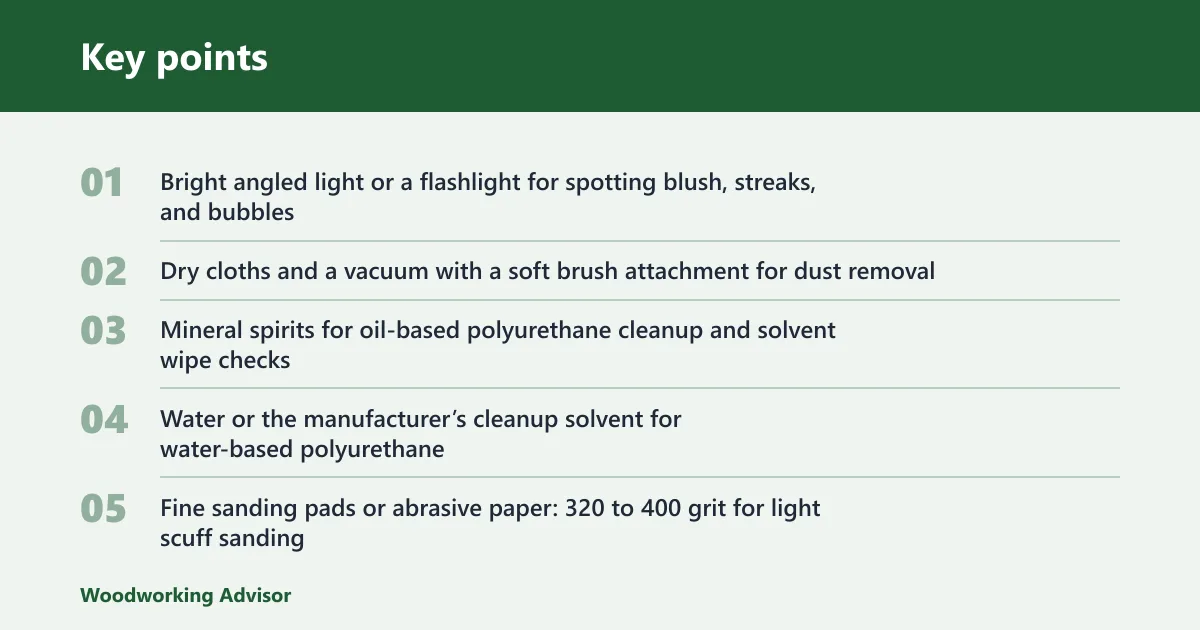


- Bright angled light or a flashlight for spotting blush, streaks, and bubbles
- Dry cloths and a vacuum with a soft brush attachment for dust removal
- Mineral spirits for oil-based polyurethane cleanup and solvent wipe checks
- Water or the manufacturer’s cleanup solvent for water-based polyurethane
- Fine sanding pads or abrasive paper: 320 to 400 grit for light scuff sanding
- Wet-film thickness gauge for checking coat thickness before it dries
- Clean foam applicator, quality brush, or spray gun matched to the product
- Degreaser or compatible surface cleaner for wax, oil, and silicone residue
- The product label or technical sheet for dry-to-touch time, recoat window, and full cure time
Is it still wet or already cured?
If the film is still tacky, soft, or changes appearance as it warms, wait before sanding or recoating. If the cloudiness remains after the finish has passed the manufacturer’s dry-to-touch time and full cure window, you are dealing with a cured defect, not temporary milkiness. That difference controls the repair.
Wet or tacky cloudiness
Wet cloudiness usually points to trapped solvent, a coat that is too heavy, or cool conditions that slowed flash-off. Sanding at this stage can smear the surface and lock in marks. Let the coat level and dry longer, with airflow and temperature inside the label range.
Partially cured milky film
A milky film that appears during cure often comes from moisture blush or condensation. This is common with high humidity, a cold substrate, or an overnight temperature drop that moves the surface below the dew point. The film may clear as it warms, but do not assume it will.
Fully cured haze
Fully cured haze is usually permanent contamination, trapped solvent, or a heavy coat that never cured cleanly. If the surface is hard and cloudy after the full cure time, light sanding and recoating may work. If the haze sits under multiple coats, stripping may be faster.
Can cold weather make polyurethane cloudy?
Yes. Cold air slows solvent evaporation, but the bigger risk is a cold surface. If the wood or previous coat falls below the product’s minimum temperature, the film can stay cloudy, blush, or cure unevenly even when the room air feels acceptable. Overnight swings make this worse.
Surface temperature vs air temperature
Check the substrate, not just the room. A wall, slab floor, or cold board can stay below the minimum even when the air is warmer. Most manufacturers list a minimum application temperature near 50°F to 55°F. Keep the wood, finish, and room above that range.
Safe temperature and humidity targets
A practical target is about 65°F to 75°F with relative humidity below 60%. Once humidity climbs much above that, evaporation slows and blush risk rises, especially if the dew point is close to the surface temperature. Measure both before you open the can.
Find the cause before you fix it
Cloudy polyurethane is often moisture, temperature, over-application, or contamination, but the failure pattern tells you which one. Oil-based and water-based products do not fail the same way. Look at when the cloudiness appeared, whether it sits in the film or under it, and whether the surface is soft, hard, or streaked.
Moisture blush and condensation
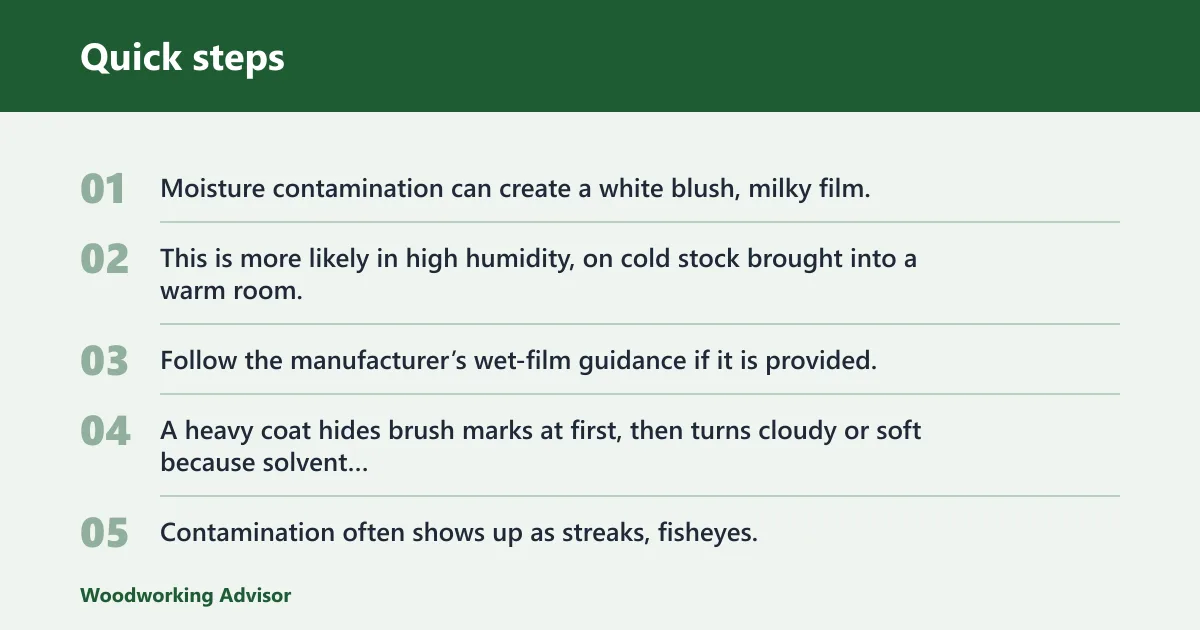
Moisture contamination can create a white blush, milky film, or soft cloudiness from condensation on the surface, wet wood underneath, or water trapped in the film. This is more likely in high humidity, on cold stock brought into a warm room, or when the dew point is close to the substrate temperature.
Over-application and trapped solvents
Thick coats can trap solvents and dry hazy. Follow the manufacturer’s wet-film guidance if it is provided, or apply thinner coats and allow full flash-off between passes. A heavy coat hides brush marks at first, then turns cloudy or soft because solvent leaves too slowly.
Dust, grease, wax, or silicone contamination
Contamination often shows up as streaks, fisheyes, or cloudy islands rather than even milkiness. Dust, grease, wax, and silicone from previous polish or furniture spray can block clear film formation. If the finish went over an unknown stain or old coating, compatibility deserves suspicion.
Water-based versus oil-based failure patterns
Water-based polyurethane turns cloudy faster when humidity is high, the substrate is cold, or the finish is overworked. Oil-based polyurethane usually clouds from trapped solvent, contamination, or cold cure. Water-based products also show microbubbles and whitening sooner if brushed too aggressively.
How do you fix cloudy polyurethane?
Start with the least invasive correction that matches the stage of cure. If the film is soft, wait. If it is hard but lightly cloudy, scuff sand and recoat. If contamination or deep haze remains after a test panel, strip and restart instead of burying the defect.
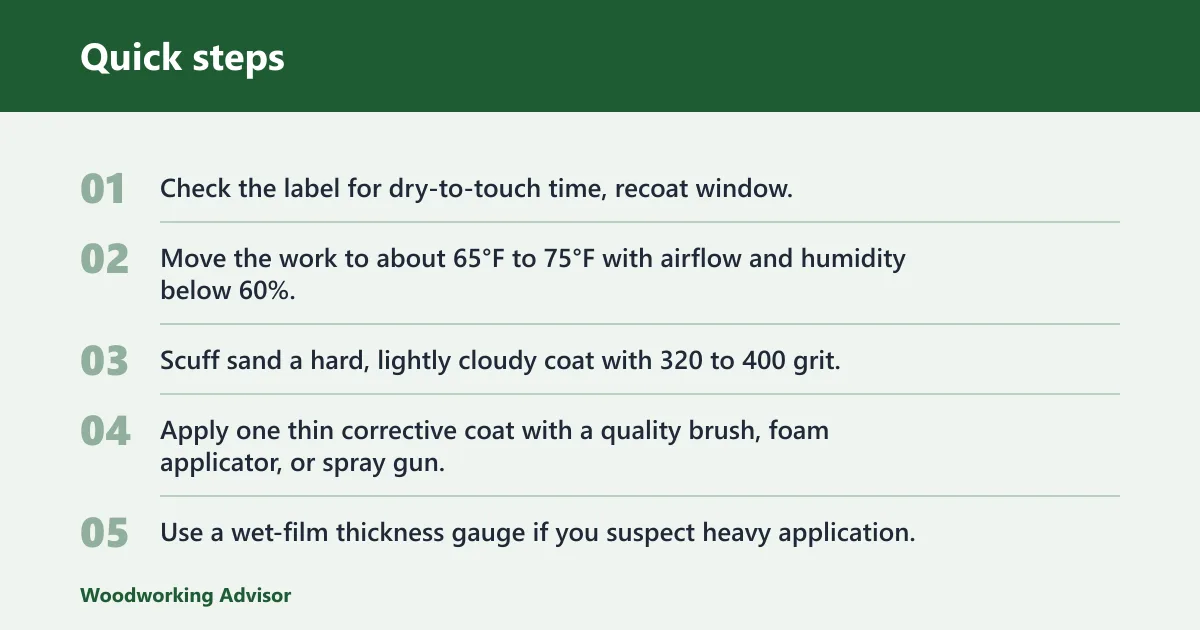
- Check the label for dry-to-touch time, recoat window, and full cure time before touching the surface.
- Move the work to about 65°F to 75°F with airflow and humidity below 60%, then wait 12 to 24 hours if the film is still soft.
- Scuff sand a hard, lightly cloudy coat with 320 to 400 grit, then vacuum and wipe with a compatible cleaner.
- Apply one thin corrective coat with a quality brush, foam applicator, or spray gun, and keep the wet film even.
- Use a wet-film thickness gauge if you suspect heavy application, then reduce the next coat thickness.
- If cloudiness returns after the next coat, stop and strip instead of stacking more finish on top.
Say your 2-foot-by-3-foot tabletop turns milky after a humid evening and is still slightly soft the next morning. Wait another day, keep air moving across the surface, and hold the room in range before you sand. Suppose the same top is hard, but a cloudy band remains after full cure; then scuff sanding and a thin recoat is the better next step.
Polyurethane troubleshooting matrix
| Symptom | Likely cause | Test to confirm | Safe fix | When to strip |
|---|---|---|---|---|
| Wet, tacky cloudiness | Heavy coat or trapped solvent | Press a hidden edge lightly; if it dents or strings, it is not ready | Wait, warm the room, increase airflow | If it stays soft after full cure time |
| Partially cured milky film in cool, damp weather | Moisture blush or condensation | Cloudiness fades as the surface warms and dries | Hold temperature steady, then scuff and recoat only after hardening | If blush returns after a test coat |
| Fully cured haze | Cold-cure haze or trapped solvent | Hard surface with no change after warming | About 320-400 grit scuff sanding, then cleaning and recoating, is a common rule of thumb for a fully cured haze. | If haze sits under multiple coats |
| Cloudy streaks or fisheyes | Wax, silicone, grease, or incompatible stain | Water beads, craters, or visible streaking in angled light | Clean, test compatibility, then spot repair | If contamination is widespread |
| White blush after overnight cooling | Surface temperature fell below dew point | Surface is colder than the room by touch or thermometer | Warm the substrate, then re-evaluate before recoating | If the film is locked under later coats |
Common mistakes
Judging the finish too early is the biggest mistake. A surface that looks cloudy while cold or humid may clear as it dries, but a soft film needs time, not sanding. Recoating over contamination is another common error; it hides the symptom and preserves the cause.
Applying heavy coats in cold or damp conditions is the fastest route to haze. Keep coats thin, respect the recoat window, and follow the cleanup solvent on the label. If the product calls for a specific minimum temperature, treat that as a floor, not a suggestion.
Frequently asked questions
Why is my polyurethane drying cloudy?
Cloudiness usually comes from moisture blush, cold-cure haze, over-application, or contamination. The fastest check is stage-based: soft film means wait, hard film means scuff and recoat, and widespread haze after full cure often points to stripping. Temperature and humidity matter more than air movement alone.
Why did my polyurethane dry cloudy?
It may have dried under one or more unfavorable conditions: a cold surface, humidity above about 60%, a coat that was too thick, or residue on the wood. Check the surface temperature, not just the room, and compare the result with the label’s dry-to-touch and full cure times.
Why does my polyurethane look cloudy?
Cloudiness can be temporary milkiness during cure or a permanent haze. If the film clears with warmth, moisture is a strong suspect. If it stays hard and cloudy after the full cure window, contamination or trapped solvent is more likely, and a scuff-and-recoat test is the next step.
Why is my clear coat drying cloudy?
A clear coat turns cloudy for the same reasons as polyurethane: moisture, temperature mismatch, heavy application, or dirty substrate. Match the fix to the product type. Water-based coats need humidity control; oil-based coats need more attention to flash-off and coat thickness.
Can cold weather make polyurethane turn cloudy?
Yes, especially when the substrate is colder than the air. Most products want roughly 50°F to 55°F or warmer, and a cold overnight swing can push the surface below dew point. Warm the wood and keep the room steady before recoating.
How do I fix polyurethane that dried cloudy?
First, confirm it is fully cured. Then scuff sand with 320 to 400 grit, remove dust, and apply one thin coat within the recoat window if the label allows it. If the haze is widespread, contaminated, or under several layers, strip and refinish.
Sponsored / affiliate links. As an Amazon Associate I earn from qualifying purchases. I may earn additional commission from eligible campaigns.