Best Wood Species for a Herringbone Floor (2026): we compared
For many herringbone floors, oak is a strong all-around choice, with white oak often preferred and hard maple or walnut sometimes used for specific looks, because the pattern can make movement, waste, and finish wear more noticeable. Pick the wrong species and you get warped boards, more offcuts, and a floor that reads busy or dated. This guide ranks the best wood species by appearance, hardness, stability, installation waste, and room fit.
This guide is part of our Wood Tone Pairing Chart: Matching Floors, Trim And Furniture series.
Quick comparison
| Product | Badge | Best for | Price | ||
|---|---|---|---|---|---|
 |
Bona Mega Wood Floor Finish Satin 1 GallonBona | Also great | Satin 1 Gallon oxygen-crosslinking polyurethane | $98.99
Price as of 11 Oct 2026
|
View |
 |
DEWALT 20V MAX* Narrow Crown Stapler, 18GA, Tool OnlyDEWALT | Upgrade pick | 18GA Narrow Crown Stapler, Tool Only | $299.00
Price as of 11 Oct 2026
|
View |
 |
Flooret Luxury Vinyl Plank Flooring Herringbone BestsellersFlooret | Our pick | Herringbone Bestsellers Sample Kit 6 Pieces | $14.89
Price as of 11 Oct 2026
|
View |
 |
KEILEOHO 2 PCS Flooring Jacks for Hardwood Floors, HardwoodKEILEOHO | Pair with it | 2 PCS Flooring Jacks for Hardwood | $48.49
Price as of 11 Oct 2026
|
View |
 |
Festool Plunge-Cut Circular Track Saw TS 55 FEQ-F-PlusFestool | Upgrade pick | Plunge-Cut Circular Track Saw TS 55 | $669.00
Price as of 11 Oct 2026
|
View |
This is the fastest way to compare species for a herringbone layout. The matrix below weighs the practical issues that matter most when boards are cut into short pieces and turned at repeated angles.
If you are torn between looks and upkeep, start with the room. Hallways with heavy foot traffic need harder, lower-key species, while small or north-facing rooms often do better with lighter wood and calmer grain.
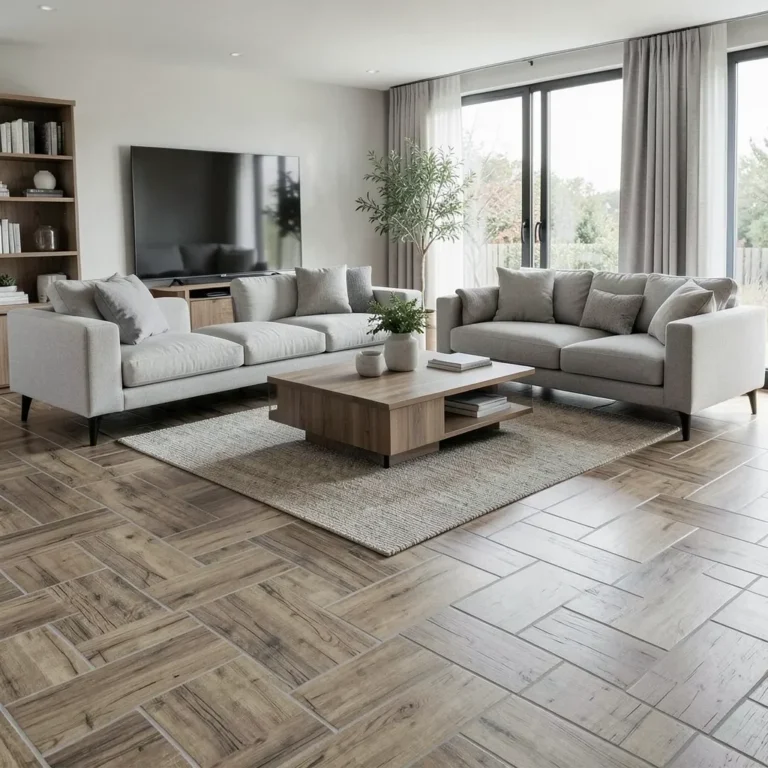
📊 The LaSamba page shows herringbone products in SPC vinyl at 5 mm thickness. Source: Vinyl s dekorem rybí kost.
How we chose
The ranking below uses a handful of factors that tend to matter more in herringbone than in straight runs: hardness and dent resistance, grain busyness, movement risk, stain visibility, and installation waste. Moisture resistance and maintenance needs also matter, especially in kitchens and entryways.
Solid wood and engineered wood are treated separately because patterned floors magnify subfloor and seasonal movement. Species with a busy grain can look louder once the pattern repeats across the room.
Room fit matters too. A pale species can open a small room, while a darker one can make the same room feel denser. That is a design choice, but it also changes how much dust, scratches, and patchy stain will show.

Oak: best for most herringbone floors
Oak is often a safe all-around pick for many herringbone floors. It is durable under wear, and its prominent grain gives the pattern definition without making every joint look noisy.
Choose oak in halls and family rooms, or in any space that needs a floor to sit comfortably with both traditional and modern interiors. In herringbone, oak also handles the repeated geometry better than highly figured woods.
The drawback is that oak is common for a reason, so it can read predictable. Its grain is visible enough that a dark stain or a strongly patterned finish can make the floor feel busier than expected.
Walnut: best for a darker, more formal look
Walnut suits herringbone when you want deep brown tones and a more luxurious look. Its warm color and distinctive grain can look especially refined in larger rooms with controlled light.
This species works best where appearance matters more than maximum dent resistance. Walnut is less hard than oak in practice, so it marks more easily in active households or in rooms where chairs, shoes, and pet claws all meet the floor.
Its biggest tradeoff is maintenance visibility. Scratches, pale dust, and some finish wear can show sooner on dark floors, and a busy herringbone layout can make those marks stand out even more.
Maple: best for bright, subtle interiors
Maple is the best choice when you want a light-toned floor with a smooth grain and a uniform appearance. It gives herringbone a brighter, airier feel, especially in smaller rooms or spaces that do not get much direct sun.
This species helps the pattern stay calm. Because the grain is smoother and less active than oak or ash, the repeated angles do not fight with the wood figure as much, so the room can feel cleaner and more ordered.
The drawback is that maple can be unforgiving with finishing. Stain can look blotchy if the prep is poor, and its pale surface can show scuffs and dirt sooner than a darker wood.
Ash: best for pale floors with visible grain
Ash is a strong pick if you want pale tones with a prominent grain. It is pale and hard, and it resists wear well, so it can suit active rooms where a lighter color is still the goal.
In herringbone, ash gives more movement than maple without going as dark as walnut. That makes it useful for rooms that need brightness but still want visible wood character under the pattern.
The drawback is grain busyness. In a small room, ash can read lively fast, especially if the boards are short and the finish leaves the grain highly visible.
Mahogany suits herringbone when the goal is a deep reddish-brown floor with a luxurious finish and an exotic look. It is a dense wood, and that density gives the floor a substantial feel under a refined, formal design.
This species works well in rooms where the pattern should feel deliberate and architectural. The color can look elegant against neutral walls, and it often gives herringbone a more tailored appearance than lighter species.
The drawback is cost and visual weight. In a tight or dim room, mahogany can make the pattern feel heavier, and its premium look is easy to overwhelm with crowded furniture or too much contrast.
What is herringbone flooring?
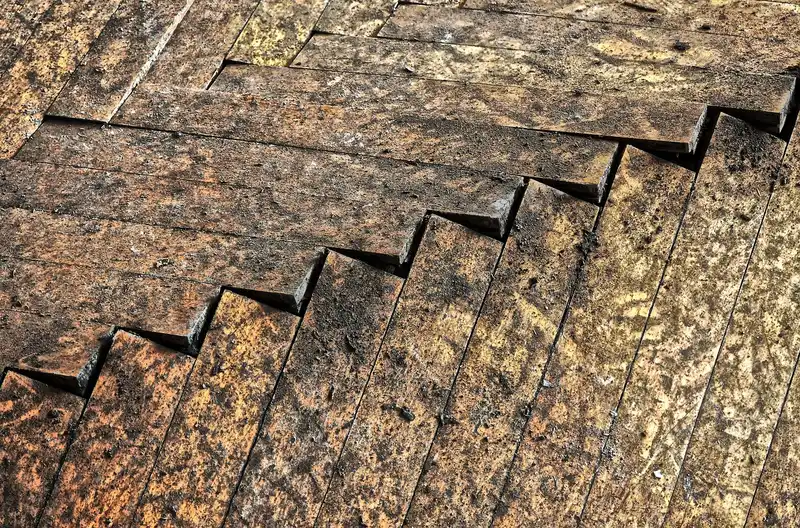
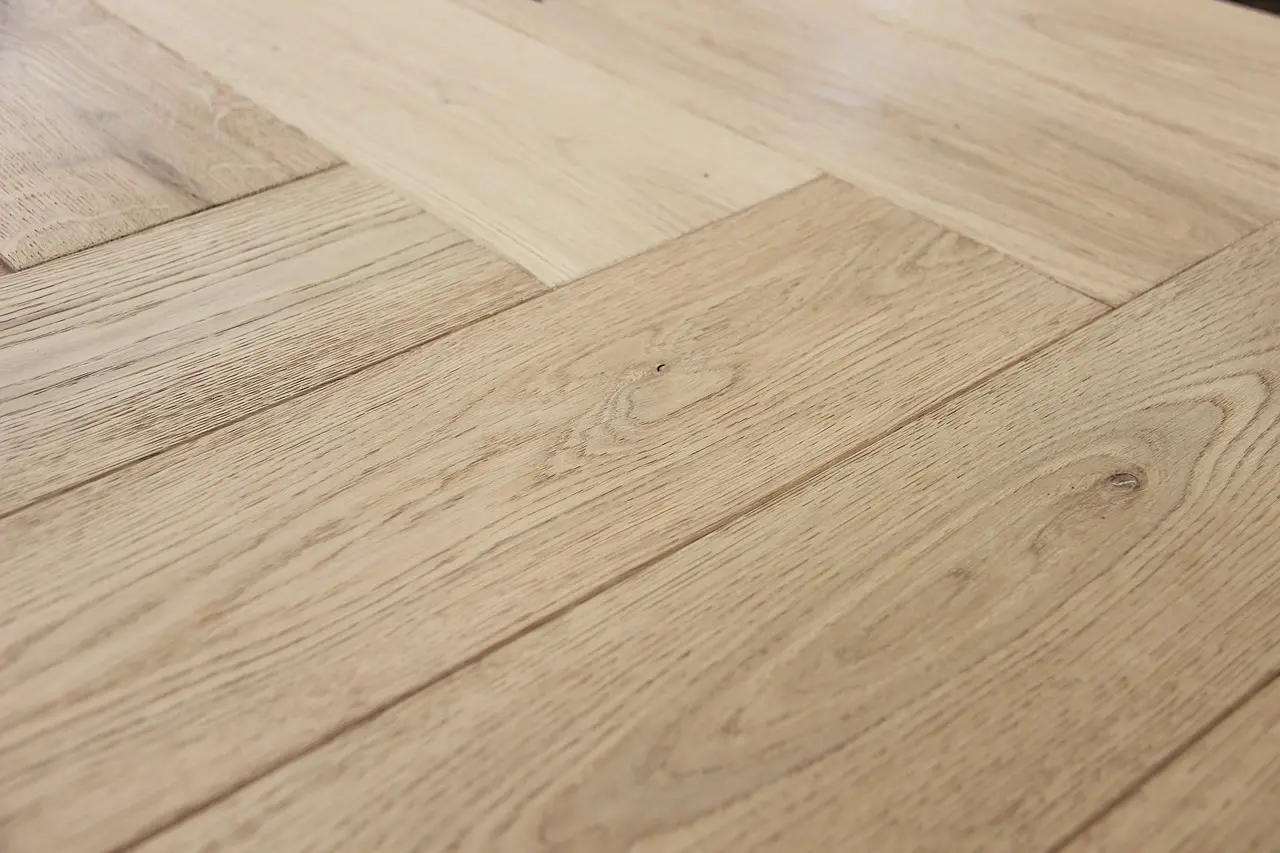
Herringbone flooring is a pattern made by laying rectangular boards in a staggered zigzag so each piece meets the next at an angle. Species choice matters because the pattern repeats the same board shape many times, which can magnify grain, color shifts, movement, and cut waste.
That repeated geometry also means board width and grain affect the result more than they do in straight flooring. A calm species can read elegant; a busy one can feel crowded fast.
Say your room is roughly 12 by 14 feet and you use a species with strong grain and a dark stain. The floor may look more active than the same species in a straight run because every turn catches the eye again.
How the pattern changes material demands
Herringbone needs more cuts, more planning, and more offcuts than straight flooring. Each board must be oriented precisely, so the species has to handle both repeated trimming and the final visual rhythm of the layout.
That makes waste and movement more important. A species that is easy to stain in a simple plank layout can become harder to live with once the pattern repeats across the whole floor.
Why board width and grain matter
Narrow boards make herringbone feel finer and more traditional. Wider boards make the pattern bolder, but they also increase the visual load, especially with species like ash or oak that already show prominent grain.
Grain direction matters too. Busy grain can make angled seams stand out, while smoother grain helps the pattern read as one surface instead of many separate pieces.
How do the species compare?
Oak is the best balance of durability, visual flexibility, and broad room fit. Walnut is the choice for a darker, more formal result. Maple is best when you want light, calm boards. Ash gives pale color with stronger grain. Mahogany is the premium, deep-toned option.
Use the table below to compare the species on the issues that matter most in herringbone: hardness, grain busyness, movement risk, stain visibility, installation waste, and room fit.
| Species | Hardness / dent resistance | Grain busyness | Movement risk | Stain visibility | Installation waste | Best room use case |
|---|---|---|---|---|---|---|
| Oak | High | Moderate to prominent | Moderate | Moderate | Moderate | Family rooms, halls, mixed-use spaces |
| Walnut | Moderate | Distinctive | Moderate | High | Moderate to high | Formal rooms, low-traffic living spaces |
| Maple | High | Low | Moderate | High | Moderate | Small rooms, bright interiors, clean modern looks |
| Ash | High | Prominent | Moderate | Moderate | Moderate | Pale rooms, open-plan spaces, light-filtered rooms |
| Mahogany | High | Moderate | Moderate | Moderate to high | Higher | Premium rooms, quiet formal settings |
Can an engineered wood be herringbone?
Yes, engineered wood can be herringbone, and in some installations it makes more sense than solid wood. It is often more stable than solid in patterned layouts, and it is especially useful over concrete or radiant heat when the product is specified for that use.
That stability matters because herringbone adds many end joints and turns, which can expose movement more than a straight floor would. Engineered construction can reduce seasonal stress when the subfloor and climate call for it.
The key is to check the manufacturer’s installation limits before ordering. If the product is not approved for the subfloor, adhesive, or heat conditions, the pattern is not the problem, the spec is.
What to confirm before ordering
- Approved subfloor type, including concrete if that is your base.
- Radiant heat compatibility, if the system runs under the room.
- Board format for herringbone, including left- and right-hand pieces if required.
- Wear layer and finish type, since those affect sanding and maintenance.
- Moisture limits for the room, especially for kitchens and entries.
How should you choose between solid and engineered?
Choose engineered wood when stability matters more than tradition, especially in herringbone. Choose solid wood when you have a well-prepared wood subfloor, good humidity control, and enough time for careful acclimation before installation.
Solid wood moves more with humidity changes, and that movement matters more in patterned installs. Herringbone gives the boards many more edges to telegraph stress, so moisture checks and subfloor checks matter more than they do in simple plank runs.
Engineered boards can also make waste easier to manage, because some products are milled for directional herringbone installation. Solid species still makes sense in rooms where the subfloor is stable and the long-term plan includes careful maintenance.
Acclimation, moisture, and subfloor checks
Before installation, the subfloor needs to be flat, dry, and within the manufacturer’s limits. That matters in any floor, but herringbone leaves less room for correction once the pattern starts.
Moisture resistance is especially important in kitchens and entryways. It does not make wood waterproof, but it does help you narrow the field when spills, wet shoes, or outside air are part of the room’s daily load.
Which one should you buy?
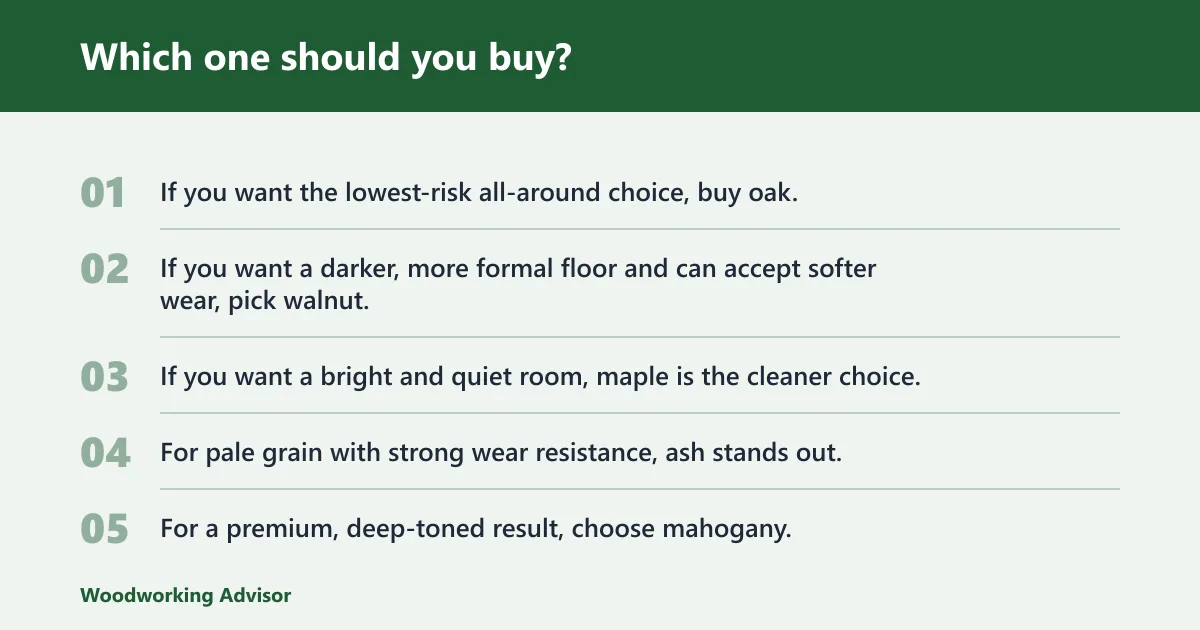
If you want the lowest-risk all-around choice, buy oak. If you want a darker, more formal floor and can accept softer wear, pick walnut. If you want a bright and quiet room, maple is the cleaner choice. For pale grain with strong wear resistance, ash stands out. For a premium, deep-toned result, choose mahogany.
For high-traffic family areas, oak is the safest default. For small or north-facing rooms, maple or ash can lift the room without making the pattern feel heavy. For kitchens and entryways, favor a species and finish that can handle moisture resistance and easier cleaning.
Best for high-traffic family areas
Oak comes first here because it balances durability, visible grain, and broad interior compatibility. Ash is the runner-up if you want a paler look and can manage more visible grain.
Best for small or north-facing rooms
Maple is usually the cleanest choice because its light tone and smooth grain help the room feel less crowded. Ash also works if you want more character and can accept a livelier look.
Best for kitchens and entryways
Choose engineered wood if the subfloor or moisture conditions point that way, and favor oak or another species with good wear resistance. The finish matters here too, because maintenance and moisture resistance matter as much as color.
Best for lower-maintenance ownership
Oak is the easiest general recommendation because it hides wear better than walnut and is less visually demanding than ash or mahogany. A matte or satin finish usually helps keep the grain from reading too loud.
Best for tighter budgets
Look for oak first, then maple, because both are common enough to keep material choices broader. Higher waste in herringbone can push a midrange species out of budget faster than many buyers expect.
How do you install herringbone wood flooring?
Herringbone installation starts with a true reference line and a dry layout. Because the pattern depends on repeated angles, a small error at the start can drift across the room and waste boards fast.
Cut planning matters as much as fastening. Herringbone creates more offcuts than straight flooring, so species choice and board length affect both cost and how clean the pattern reads once installed.
A common first-timer mistake is starting from one wall without checking the room’s centerline. In a 10-by-12-foot room, that can leave the last rows visibly out of square and force awkward filler cuts near the edge.
How to start a herringbone hardwood floor
- Mark a reference line based on the room geometry, not just the nearest wall.
- Dry-lay several rows to confirm the angle and the border fit.
- Check left- and right-hand pieces if the product requires both.
- Set the first units carefully, since every later row follows that line.
- Verify spacing at the perimeter before fastening large areas.
How to fit herringbone flooring
Fitting herringbone means checking end cuts, wall irregularities, and border widths before you commit. The outer rows often need trimming, so the installer should plan for extra waste, especially with species that have strong grain or color variation.
Species choice changes the difficulty because a busy grain makes errors more visible. Oak and ash are forgiving in pattern-heavy rooms; walnut and mahogany can make tiny layout issues stand out more clearly.
Bona Mega Wood Floor Finish Satin 1 Gallon: best for finish and maintenance
This finish suits buyers who want a satin topcoat with a waterborne, one-component format. Based on the spec sheet and reviews, the appeal is practical: oxygen-crosslinking polyurethane, no limited pot life, and good flow and leveling for a cleaner final look.
It is most useful when you want maintenance support without a complicated mixing schedule. That makes it relevant for herringbone floors, where finish quality affects grain visibility and how much daily wear shows on the repeating pattern.
The drawback is simple: it is a finish, not a floor. It also does not solve moisture issues on its own, so the subfloor and species still need to be chosen correctly.
DEWALT 20V MAX Narrow Crown Stapler: best for fastening herringbone
This stapler fits installers who want a battery-powered fastening tool with tool-free depth adjustment. Research and owner feedback point to its usefulness when you need consistent countersinking without dragging hoses or gas equipment around the room.
It is a practical choice for wood flooring work where clean fastening matters. Herringbone gives you many repeated boards, so depth control and runtime matter more than they do on a smaller repair job.
The drawback is cost. At $299.00, it is not a casual purchase, and as a tool-only model it assumes you already have battery support in place.
Flooret herringbone sample kit: best for color selection
This sample kit is useful when you want to compare herringbone colors before ordering a full floor. The kit includes six pieces of 12" cut samples from real planks, which helps you judge tone, grain texture, and how the color behaves in your light.
It is especially helpful if you are considering a wood-look alternative over concrete or in a moisture-prone room. The product data also shows a 5 mm thickness and a 0,55 mm wear layer on some herringbone products in the line, which helps frame what that category offers.
The drawback is that it is a sample, not a finished floor. It can guide color choice, but it does not answer species, subfloor, or installation questions for real hardwood.
KEILEOHO flooring jacks: best for fitting and closing gaps
These flooring jacks are for installers who need help straightening boards or closing gaps during hardwood and laminate work. Based on the specs, the cast steel body and hardened gears suit corrective work where pressure control matters.
They can be useful in herringbone because small alignment problems can spread quickly across the field. A good positioning tool helps keep rows tight while you work through angles and perimeter adjustments.
The drawback is that they are support tools, not core installation gear. They help with fit, but they do not replace good layout, correct fastening, or a stable subfloor.
Festool TS 55 FEQ-F-Plus: best for precise herringbone cuts
This track saw is the strongest fit for clean, controlled cuts on herringbone flooring. The published features point to concentrated torque, splinter-free cutting on both sides, and a cut edge that stays unchanged when the saw bevels.
That matters because herringbone creates a lot of angled trimming and end cuts. Cleaner cuts mean tighter joints, less visible breakout, and less waste from boards that chip at the edge.
The drawback is price. At $669.00, it is a premium tool, and that cost only makes sense if you expect to do enough precision cutting to justify it.
Frequently asked questions
herringbone vs straight flooring
Straight flooring is simpler to install and wastes less material. Herringbone is more demanding because every board angle affects the next one, so the species choice has a bigger impact on waste, grain visibility, and how much movement the floor will telegraph over time.
parquet vs herringbone flooring
Parquet is the broader category for decorative wood flooring patterns. Herringbone is one parquet pattern, defined by the repeating zigzag. If you compare them, herringbone usually feels more directional and less geometric than many other parquet layouts, which makes species grain and color even more noticeable.
what wood species is best for a herringbone floor
Oak is the best all-around choice for most herringbone floors because it balances durability, grain, and room fit. Maple is better for bright, calm spaces, walnut for darker luxury, ash for pale grain with strength, and mahogany for a premium, deep-toned result.
Sponsored / affiliate links. As an Amazon Associate I earn from qualifying purchases. I may earn additional commission from eligible campaigns.