Wood Glue Types Comparison Chart: Strength & Dry Time
For most furniture joints, PVA yellow glue is often the default choice. It holds strongly, clamps in about 30–60 minutes, and fits tight indoor joinery. Use polyurethane or epoxy only when gaps or water exposure justify the tradeoff. Pick wrong and you can get weak joints, creep, stained surfaces, or a repair that fails the first time humidity changes. This guide compares common wood glue types by strength, open time, clamp time, full cure, water resistance, and the joints they fit best.
This guide is part of our Wood glue essentials: types, uses, and cure times series.
What are you comparing when choosing wood glue?


Bond strength is only one part of the decision
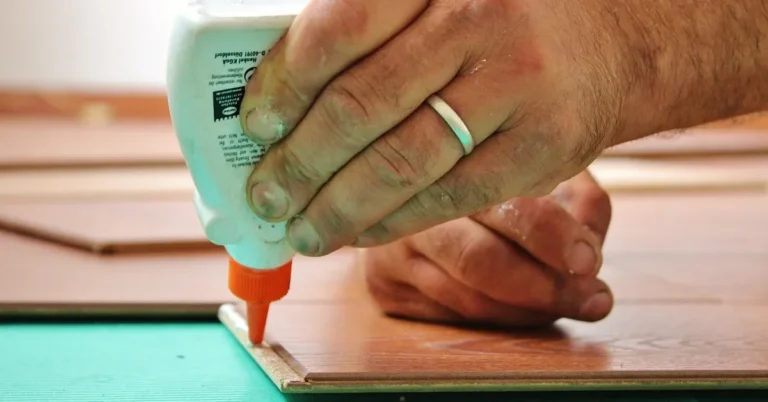
Strength matters, but it is not the whole story. I have seen a glue bond wood well and still fail in real use because the joint had gaps, saw moisture, or needed more working time than the assembly allowed. Long-grain joints, end grain, repaired edges, and mixed materials each ask for different behavior from the adhesive.
Open time, clamp time, and full cure are different
Open time is the window before the glue starts to grab. Clamp time is how long the parts need to stay under pressure. Full cure is when the adhesive reaches its final performance. Those numbers are not interchangeable, and cold or dry air slows every adhesive.
Joint fit and exposure decide whether a glue works
Close-fitting interior joints reward ordinary PVA. Wide gaps, oily woods, outdoor service, heat, or dissimilar materials push the choice toward polyurethane or epoxy. Hide glue and CA glue have narrow roles. They are useful, but they are not universal answers.
Wood glue comparison chart: strength, dry time, and water resistance
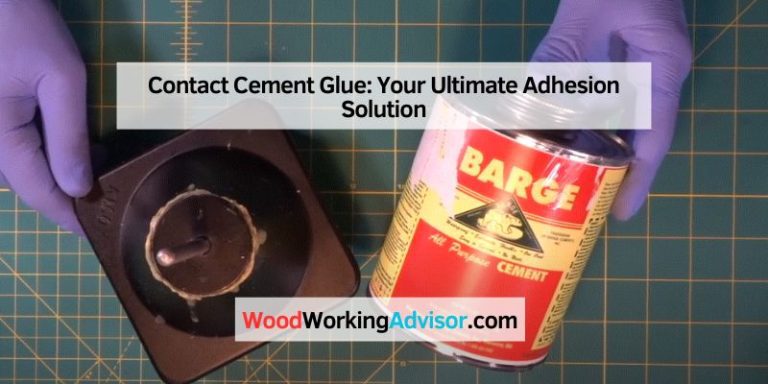
This chart is built for shop decisions, not brand loyalty. Read the fails when column first if your joint is marginal, exposed, or hard to clamp. PVA is the workhorse for woodworking, polyurethane reacts with moisture to form a solid, expanding bond, epoxy is a two-part adhesive consisting of resin and hardener, hide glue is made from animal collagen, and CA glue creates an instant bond for quick fixes.
| Glue type | Relative bond strength | Open time | Minimum clamp time | Water-resistance rating | Fails when |
|---|---|---|---|---|---|
| PVA glue / yellow-white woodworking glue | High on long grain; moderate on poor fit | About 4–10 minutes, depending on variant | About 30 minutes to 1 hour | Not waterproof unless Type II or III | Wide gaps, wet service, hot environments, or stressed outdoor joints |
| Titebond Original | High for interior long-grain joints | About 4–6 minutes | 30 minutes to 1 hour | Interior use | Outdoor exposure, standing moisture, or large gaps |
| Titebond II Premium | High for general woodworking | About 3–5 minutes | 30 minutes to 1 hour | ANSI Type II, water-resistant | Full soak, long-term outdoor stress, or badly fitting joints |
| Titebond III Ultimate | High, with better moisture durability | About 8–10 minutes | 30 minutes to 1 hour | ANSI Type I, waterproof | Loose joinery, heat stress, or when extra open time is not needed |
| Titebond Extend | High for long assembly work | About 15 minutes | 30 minutes to 1 hour | Interior woodworking | Water exposure, because it is chosen for working time, not outdoor durability |
| Polyurethane glue | High, especially on mixed materials | Moderate; working time is shorter than epoxy | About 1 to 2 hours | High water resistance | Sloppy fit, excessive squeeze-out, or parts that cannot be clamped well |
| Epoxy | Highest or near-highest, especially in repairs | Longer than PVA and PU; varies by formula | About 4 to 8 hours or longer in slow-set versions | Good water resistance | Incorrect mix, time pressure, or a joint that depends on speed rather than fill |
| Hide glue | Good for traditional work; lower moisture durability | Short | Short | Not waterproof | Wet service, long clamp delays, or modern joints that need high moisture resistance |
| CA glue | High for tiny parts; brittle under load | Seconds | Very short | Limited | Structural joints, flexing parts, or anything that needs toughness |
How to read the fails when column
That column tells you where a glue stops being a good idea, even if the bond sounds strong on paper. A glue can fail from moisture, heat, creep, poor fit, brittle behavior, or the wrong working time. That is why a chart like this is more useful than a single strength ranking.
Which wood glue is strongest for furniture joints?
For tight, long-grain furniture joints, PVA is usually strong enough and often the best practical choice. Epoxy wins when the joint has gaps, damaged edges, or dissimilar materials. CA glue is too brittle for stressed furniture, and hide glue is better for traditional work than for hard-use modern joints.
Long-grain glue lines usually favor PVA
On clean, close-fitting long-grain surfaces, PVA develops excellent bond strength. That is why ordinary yellow glue remains the default for tables, chairs, casework, and frames. It is dependable, easy to clean, and far less fussy than epoxy for normal joinery.
Epoxy wins when the joint is imperfect
When the parts do not meet well, epoxy is the safer answer because it fills gaps and keeps strength where PVA would starve. It is a better fit for cracked edges, old repairs, rotten spots that were stabilized, and odd material combinations.
Why CA glue and hide glue are poor picks for stressed modern furniture
CA glue bonds fast, but that speed comes with brittleness. It is best for tiny parts and quick fixes, not load-bearing joinery. Hide glue is valuable in repair work, yet its moisture limits and short working window make it a poor choice for demanding modern furniture assemblies.
How long do you clamp wood glue before removing clamps?
Clamp time is not full strength. Many PVA joints can come out of clamps after about 30 minutes to 1 hour, but the glue line is still gaining strength after that. Polyurethane usually needs around an hour or two in clamps, and epoxy often needs several hours or longer.
PVA, polyurethane, and epoxy need different schedules
Titebond Original is listed at about 4–6 minutes of open time and 30 minutes to 1 hour of clamp time. Titebond II and III use similar clamp windows, though Titebond III gives more working time. Polyurethane needs more patience. Epoxy needs the most.
Temperature and dry air change the schedule
Cold or dry air slows every adhesive. Low shop temperature stretches clamp time and full cure, especially on PVA and epoxy. Hot, dry air can shorten open time and make assembly more stressful, because the glue skins over before the parts are seated.
Full cure is the number that matters for stress
PVA often reaches practical full strength after about 24 hours, even if clamps came off earlier. That is the point to avoid heavy loading, racking, or moving a joint into service. Full cure matters more than the first unclampable moment.
Which wood glue is waterproof for outdoor projects?
For outdoor or damp use, the ANSI type can be a useful starting point. ANSI Type I is waterproof, while ANSI Type II is water-resistant. Titebond III is labeled ANSI Type I, so it fits wetter service better than Titebond II. Polyurethane and epoxy also suit outdoor work better than standard PVA.
ANSI Type I versus ANSI Type II for PVA formulas
Type I is the higher water-resistance category and is the safer choice when the joint may see repeated moisture. Type II is still useful, but it is better described as water-resistant rather than waterproof. Standard interior PVA is not the answer for exposed outdoor joinery.
Why Titebond III fits wetter use better than Titebond II
Titebond II is water-resistant and useful for many shop projects that may see the occasional splash. Titebond III offers a longer open time and a waterproof rating, and it is commonly chosen for wetter service and cutting boards. It is also listed as FDA-approved for indirect food contact.
Where polyurethane and epoxy fit better than standard PVA
Polyurethane is a good choice where moisture and mixed materials meet, because it reacts with moisture to form a solid, expanding bond. Epoxy is the stronger repair option when outdoor exposure, damaged edges, or fillable gaps are part of the job. Standard PVA is usually an interior choice.
Is PVA glue stronger than polyurethane glue?
For tight wood-to-wood joints, PVA is often just as useful as polyurethane and usually easier to live with. Polyurethane is better when moisture resistance or mixed materials matter. The deciding factor is not a raw strength contest. It is whether the joint needs waterproofing, gap fill, or easier cleanup.
PVA is the everyday interior woodworking choice
PVA is the workhorse for woodworking. It cleans up with water, sets predictably, and performs well on long-grain joints. Standard PVA is limited on water resistance, so it is best kept for indoor work unless the formula is a Type II or Type III variant.
Polyurethane is better for water resistance and mixed materials
Polyurethane is valuable on wood to metal and wood to plastic assemblies, and it is useful where moisture is part of the job. It does expand and foam, which can help fill minor voids but can also create messy squeeze-out. That tradeoff matters in fine furniture work.
When should I use epoxy instead of wood glue?
Use epoxy when the joint has gaps, damaged fibers, odd material combinations, or structural repair needs that ordinary PVA cannot handle well. Epoxy is the best fit for repairs where fill ability and durability matter more than quick assembly. It is slower, but it is far more forgiving of imperfect parts.
Best uses for epoxy in the shop
Epoxy is strong for cracked components, broken corners, stabilized repairs, and wood-to-metal or wood-to-plastic jobs. It is also useful for consolidating damaged areas before mechanical fastening. Slow cure is the tradeoff, but the material earns that time when the fit is poor.
When epoxy is the wrong answer
If the parts fit tightly and the joint is a standard furniture glue-up, epoxy is often overkill. It takes longer to cure, adds cost, and can be less convenient than PVA. In simple joinery, its gap-filling ability is unnecessary and can tempt sloppy fit.
Which glue is best for wood-to-metal repairs?
Polyurethane and epoxy are the practical choices for wood-to-metal repairs. Polyurethane works well when the fit is fair and moisture resistance matters. Epoxy is the better pick when the joint needs structural repair, gap filling, or long-term stability around dissimilar materials.
Why standard PVA is usually the wrong choice
PVA is made for wood-based surfaces and tight joinery. Metal does not give it the same mechanical advantage, and poor fit shows up quickly. For wood-to-metal work, choose an adhesive that tolerates dissimilar materials rather than relying on a standard woodworking glue.
What is the difference between Titebond II and Titebond III?
Titebond II is often described as an ANSI Type II, water-resistant glue. Titebond III is ANSI Type I and waterproof, with longer open time. Both are PVA formulas, but Titebond III is the better option for wetter service, while Titebond II fits many general-purpose shop jobs that need more moisture resistance than interior glue.
Working time and use case
Titebond II is often said to have just a few minutes of open time. Titebond III has about 8–10 minutes. That extra working time helps on larger assemblies, and it can reduce panic during complex glue-ups. For wet use, the Type I rating is the bigger difference.
Can I use hide glue for antique furniture repair?
Yes. Hide glue is often the right choice for antique furniture repair because it is reversible with heat and moisture and matches traditional construction methods. It is made from animal collagen and comes in hot and liquid versions. Its moisture limits make it better for restoration than for wet service.
Where hide glue belongs
Hide glue is favored for antiques and instruments because future repairs can be undone without brutal force. That reversibility matters when old work has to be preserved. It is less suitable for outdoor use, damp locations, or assemblies that need long open time.
What glue should I use for small cracks or quick fixes?
Use CA glue for tiny parts, hairline cracks, and quick fixes where speed matters more than long-term toughness. CA creates an instant bond and comes in thin, medium, and thick viscosities. It is not structural under load, so it should be used for small repairs, not major joints.
When CA glue works well
CA is useful for chip repairs, small turnings, loose veneer edges, and holding a tiny part in place while another fastener or adhesive does the real work. It sets very quickly, which is why it is handy for shop fixes. Brittleness is the tradeoff.
Choose PVA glue if… / choose polyurethane glue if… / choose epoxy if… / choose hide glue if… / choose CA glue if…
Choose by joint, not by label. PVA is the default for tight indoor woodworking. Polyurethane suits moisture and mixed materials. Epoxy is the repair adhesive when fit is imperfect. Hide glue belongs in antique and instrument work. CA glue is for tiny parts and quick fixes.
Choose PVA glue if…
- The joint is tight and mostly long grain.
- The project is indoor furniture, cabinets, or casework.
- Easy water cleanup matters.
- You want predictable clamp timing with ordinary shop workflow.
Choose polyurethane glue if…
- The joint may see moisture.
- You are bonding wood to metal or wood to plastic.
- Minor expansion helps fill small irregularities.
- You can manage foaming squeeze-out.
Choose epoxy if…
- The joint has gaps, missing fibers, or damaged edges.
- You need a repair on dissimilar materials.
- Structural strength matters more than speed.
- You can wait for a longer cure cycle.
Choose hide glue if…
- You are repairing antique furniture.
- The project is an instrument or traditional build.
- Reversibility is important.
- The joint will not live in wet service.
Choose CA glue if…
- The part is small.
- You need an instant bond for a quick fix.
- The joint will not carry serious load.
- You need to tack a piece before another method takes over.
When does each glue fail?
Every adhesive has a failure mode, and good shop planning depends on knowing it. PVA can fail in water, heat, or poor fit. Polyurethane can create ugly foaming and weak results if the assembly is sloppy. Epoxy can be ruined by poor mix or long cure time. Hide glue and CA fail when moisture, heat, or load exceed their comfort zone.
PVA failure cases
Standard PVA is a poor choice for wet service, hot environments, and stressed outdoor joints unless the formula is Type II or Type III. It also struggles when the fit is bad, because it is not a real gap-filling answer. Tight joinery is what makes it shine.
Polyurethane failure cases
Polyurethane can be messy because it expands and foams. That can push parts out of alignment or leave ugly residue if the fit is loose. It also does not rescue a badly prepared assembly. Good clamping and decent fit still matter.
Epoxy, hide glue, and CA failure cases
Epoxy fails when the mix is wrong, the cure is rushed, or the design depends on a faster adhesive. Hide glue fails in moisture and heat-heavy service. CA glue fails under stress because brittle joints do not tolerate flexing or impact well.
Frequently asked questions
Which wood glue dries the fastest?
CA glue dries the fastest. It creates an instant bond and is used for quick fixes, small parts, and temporary tacking. That speed is why it is so handy, but it is also why it is a poor choice for stressed structural joints that need toughness.
Sponsored / affiliate links. As an Amazon Associate I earn from qualifying purchases. I may earn additional commission from eligible campaigns.