Wood Stove with No Damper: How to Control the Burn
Without a flue damper, control a wood stove by using smaller, drier splits, a compact load, and staged air reduction: start with the startup air setting fully open, then close the relevant air control in steps after the fire is established. If you get it wrong, smoke can spill, creosote can build up, or the fire can run away hot. This guide covers startup, air-control sequencing, and what to do if the stove burns too fast or smolders.
No-damper basics
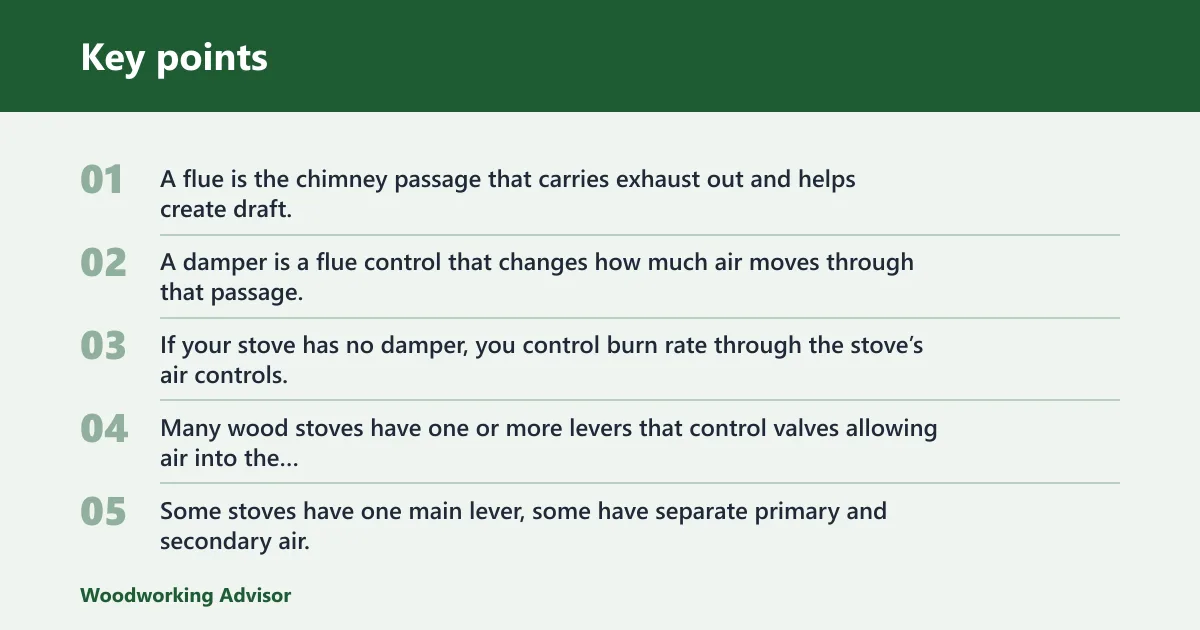


A flue is the chimney passage that carries exhaust out and helps create draft. A damper is a flue control that changes how much air moves through that passage. If your stove has no damper, you control burn rate through the stove’s air controls, fuel size, and how you place the load.
Many wood stoves have one or more levers that control valves allowing air into the firebox. The exact layout varies by model. Some stoves have one main lever, some have separate primary and secondary air, and some add tertiary air or fixed combustion-air inlets. Check the stove manual before you guess which lever does what.
What matters most is this: draft control and combustion control are not the same job. A flue damper changes the passage to the chimney. Stove air controls change how much oxygen reaches the fire. If your stove has no damper, you work with the air controls you actually have.
What you’ll need
- Dry kindling
- Small dry starter splits
- Seasoned firewood
- A fire poker or stove tool
- The stove manual
How do you control a wood stove with no damper?
Control it by opening the startup air setting or the control the manual identifies for ignition, then reducing the control that actually feeds combustion on your model in small stages after the fire is stable. Use smaller, drier wood for faster ignition and larger, denser splits for a slower burn. If the stove still runs hot, stop adding wood before you touch the next setting.
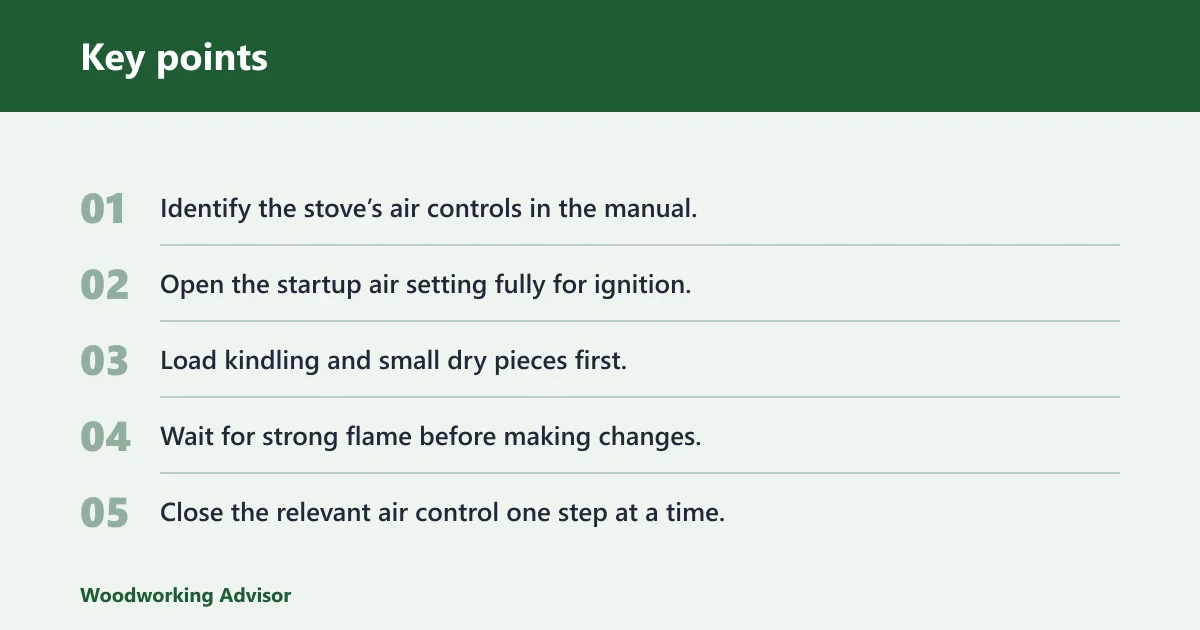
- Identify the stove’s air controls in the manual.
- Open the startup air setting fully for ignition.
- Load kindling and small dry pieces first.
- Wait for strong flame before making changes.
- Close the relevant air control one step at a time.
- Recheck flame behavior after each change, then adjust again only if the fire stays clean and active.
No-Damper burn control matrix
| Stove condition | Draft strength | Wood size | Air setting | Expected flame behavior |
|---|---|---|---|---|
| Startup with kindling | Any | Small dry pieces | All controls fully open | Bright, lively flame that catches quickly |
| Weak draft, smoky ignition | Low | Small splits and kindling | Keep air fully open; verify door seal and chimney path | Flame should sharpen before smoke thins |
| Strong draft, fast spread | High | Small to medium splits | After ignition, reduce the main combustion control one step | Flame shortens but stays active |
| Overheating | High | Any active load | Stop adding fuel, then reduce the relevant air control one step | Flame should settle, not flare harder |
| Smoky smolder | Low to moderate | Wet or oversized splits | Open the combustion air fully; switch to drier, smaller fuel | Lazy smoke should give way to cleaner flame |
| Overnight burn | Moderate | Large seasoned splits | Build a compact load, then step air down after the fire is established | Steady flame with slower charcoal burn |
| Reload on a coal bed | Moderate | Medium seasoned splits | Open air for relight, then reduce in stages | Quick flame recovery, then a controlled burn |
| Still runaway after adjustment | High | Any | Check the manual, stop adding wood, and inspect draft causes | Fire should not keep climbing |
How do you light the stove?
Open the startup air setting fully, then build the fire with kindling and small dry pieces. Do not start closing controls before the kindling is burning well. Once the firebox is hot enough to hold flame cleanly, step the air down in stages rather than all at once.
- Set the startup air control fully open.
- Place dry kindling with enough gaps for airflow.
- Add small dry splits only after the kindling burns strongly.
- Wait for a stable flame pattern before reducing air.
- Close the main combustion control one increment, then recheck.
Suppose the stove has one lever under the firebox and no separate secondary control. Leave it fully open until the fire is established, then close it only partway. If the flames go lazy or smoke thickens, reopen the lever before adding more wood.
How do you slow a fast fire?
Stop adding fuel, then reduce the air control that affects combustion on your model one step at a time. If the stove is already very hot, do not open the air further. Keep enough flame to avoid smoldering, because smoldering makes smoke and creosote more likely.
- Stop loading wood.
- Check the manual to identify the control that changes burn rate on your stove.
- Reduce that control one step, not all at once.
- Wait several minutes for the stove to respond.
- Only after the fire settles should you make the next change.
Picture a stove with a strong draft and one fresh hardwood split that is taking off too fast. The right move is not to feed more air. Stop loading, trim the active air setting, and let the flame stabilize before you decide on another change.
What if the fire still will not slow down?
- Stop adding wood immediately.
- Check for a control that is still fully open.
- Verify that the stove manual does not list a specific startup-only position you left engaged.
- Inspect for unusually strong draft, door gasket issues, or an open ash pan path if your model has one.
- If the stove keeps racing, contact a chimney professional and do not reload until the draft problem is checked.
What makes a stove burn too fast or too smoky?
Too much speed usually comes from strong draft, overly dry small fuel, or a load pattern that exposes too much surface area. Too much smoke usually comes from wet fuel, a weak start, or air that was closed before the fire was ready. Hardwoods are denser and often burn longer per log or per volume. Softwoods are less dense and can light more quickly. For a general overview, see (Wikihow).
Wood moisture matters more than calendar time. Green wood often has moisture content above 50%. Seasoned wood has been air-dried to 20% moisture or less. The practical target range is 15-20% for optimal burning. The best wood to use is seasoned wood that’s been drying long enough to reach 20% moisture or less, but species, split size, and storage all affect the result.
Wet wood creates lots of smoke and creosote buildup. Creosote can build up in your chimney and lead to chimney fires. A properly functioning wood stove should not produce persistent visible smoke from the chimney.
What is the difference between a flue and a damper on a wood stove?
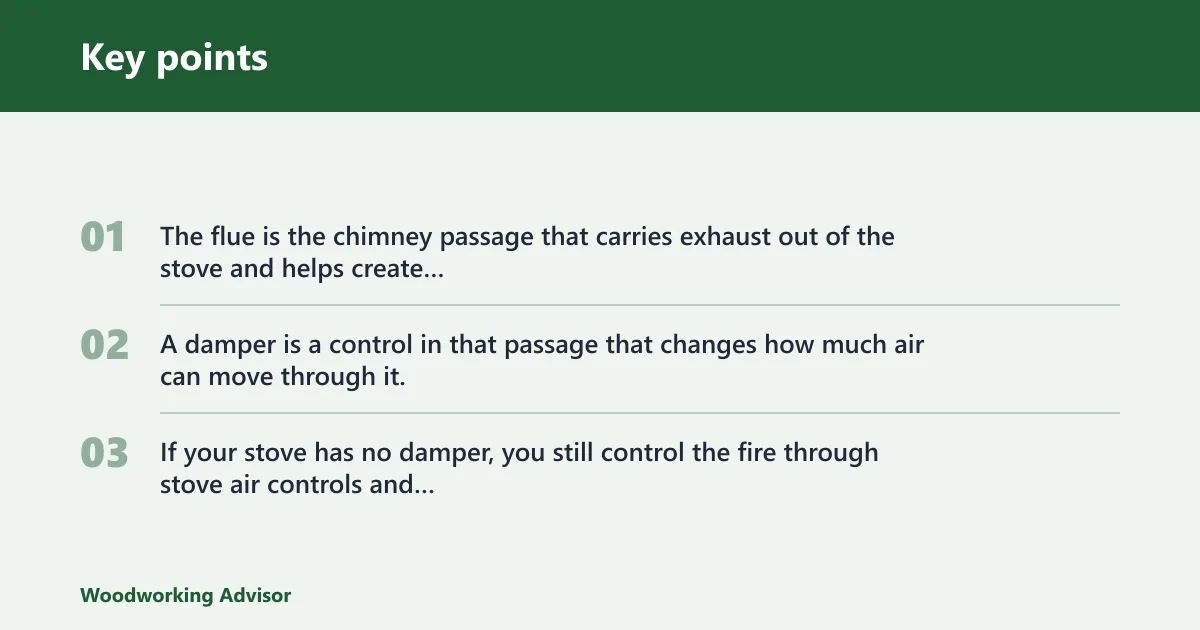
The flue is the chimney passage that carries exhaust out of the stove and helps create draft. A damper is a control in that passage that changes how much air can move through it. A damper can help regulate heat and draft. If your stove has no damper, you still control the fire through stove air controls and fuel arrangement.
How do you reduce smoke from a wood stove with no damper?
Use dry fuel, open the startup air setting fully, and keep the fire active until the load is burning cleanly. Then reduce air only after the stove is hot enough to stay lit without smoldering. If smoke persists, the fuel is often too wet or the draft is too weak for the load you chose.
- Switch to seasoned wood.
- Open the startup air setting fully.
- Use smaller pieces until the fire catches cleanly.
- Reload with a tighter, more compact pattern only after the fire is stable.
- If smoke still spills, stop loading and inspect the chimney path.
A common first-timer mistake is loading two large splits right away and closing the air too soon. The result is a lazy flame, more smoke, and a dirtier chimney. If the fire needs help, give it air first, then adjust the fuel size.
Safety and upkeep
Follow the stove manual for model-specific vent layout and safe operation guidance. Annual chimney inspection helps prevent carbon monoxide problems and lower fire risk. The Chimney Safety Institute of America recommends annual chimney inspection, with cleaning done as needed.
If you see a sudden change in draft, odor, or flame behavior, stop reloading and check for buildup or blockage before you keep firing.
Common mistakes
- Closing air too soon after lighting. Keep it fully open until the fire is clearly established.
- Using wood that is too wet. Wet fuel pushes smoke and creosote upward.
- Confusing a flue passage with a damper. They are not the same control.
- Ignoring soot, odor, or lazy flame. Those signs point to poor combustion.
- Skipping annual inspection. That leaves chimney buildup unchecked.
- Treating every stove the same. Control layout varies by model.
Frequently asked questions
What do I do if my wood stove has no damper?
Check the manual for the exact control layout, then run the stove by air setting and fuel choice. Open the startup air setting for startup, use seasoned wood, and reduce air only after the flames are strong. If the stove still misbehaves, inspect the chimney and draft path.
Can you burn a wood stove safely without a damper?
Yes, if the stove is designed to operate that way and you follow the manual. Many stoves rely on air controls alone. Safety depends on dry fuel, proper chimney draft, annual inspection, and keeping the fire active enough to avoid smoldering.
How do you slow down a wood stove fire without a damper?
Stop adding wood, then reduce the relevant air control one step at a time. Do not close everything at once. Wait for the fire to respond before the next change. If the stove is still racing, check for excessive draft or a control that is still too open.
What air control should I use on a wood stove when lighting it?
Use the startup air control or the controls your manual identifies for ignition fully open at startup. That gives kindling and small dry pieces enough oxygen to catch fast. Once the stove is hot and the flame is steady, step down the control that changes combustion on your model.
Why is my wood stove burning too fast?
Strong draft, small dry fuel, or an overly open air setting can all push the fire faster than you want. First stop adding wood. Then close the relevant control one step and wait. If the burn still runs hot, inspect the draft and confirm the stove is set up per the manual.
Sponsored / affiliate links. As an Amazon Associate I earn from qualifying purchases. I may earn additional commission from eligible campaigns.