3-Ply vs 4-Ply Plywood: The Sanding vs. Stability Tradeoff
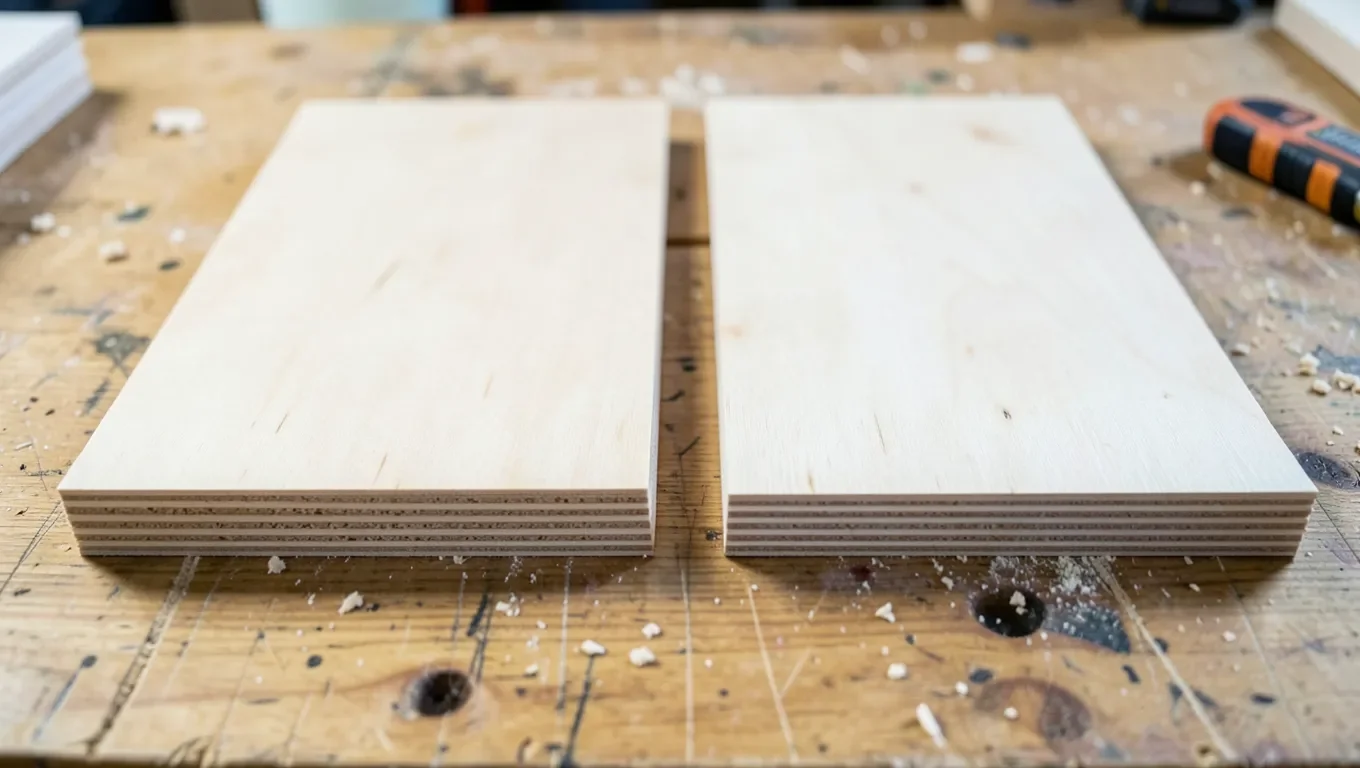
A sheet of plywood isn’t just a thickness number on a shelf tag — it’s a stack of thin wood veneers, and how many layers are in that stack changes how the panel behaves under a sander, a saw, and a season of humidity swings. 3-ply and 4-ply plywood of the same overall thickness aren’t built the same way: fewer plies means each individual layer has to be thicker, and more plies means each layer is thinner. That single fact drives a real tradeoff between sanding margin and dimensional stability that most comparison pages skip in favor of a flat “more layers, more strength” claim. Here’s what actually changes, and which one fits your project.
Quick Answer: Is 4-Ply Really Stronger Than 3-Ply?
Not automatically. 4-ply plywood generally resists warping and twisting better because it has more cross-grain layers working against each other. But 3-ply plywood has thicker individual veneers, which gives you more forgiveness when sanding, planing, or leveling a surface before you sand through the face into the layer beneath. Neither one is a strict upgrade — pick based on whether your project needs dimensional stability or sanding/finishing margin. If you’re shopping for a multi-ply cabinet-grade sheet to see this tradeoff for yourself, here’s a solid, verified pick:
Best Multi-Ply Cabinet-Grade Pick
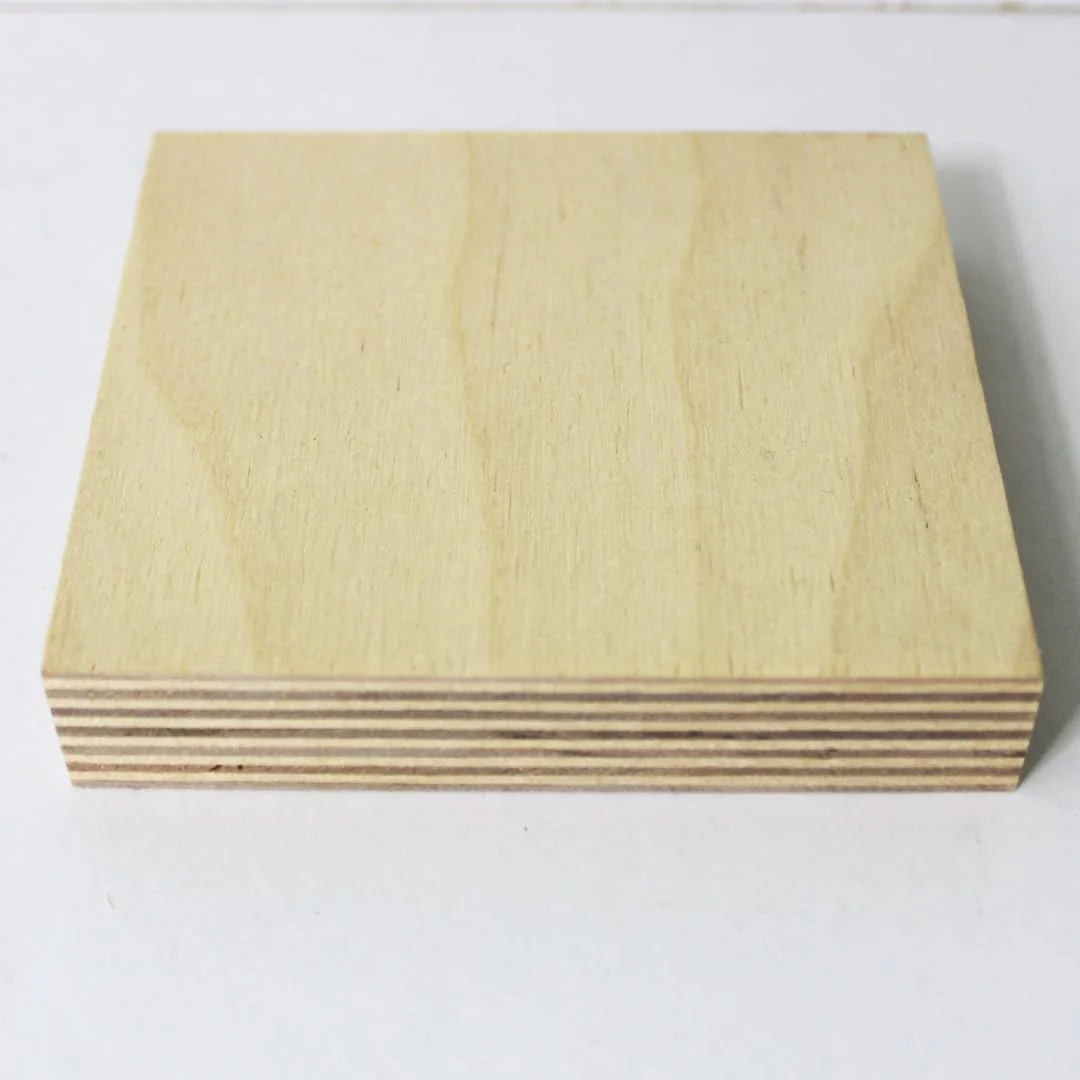 |
MakerStock 3/4″ Baltic Birch Plywood (24″ x 48″) – $81.45 A void-free, multi-ply Baltic birch panel — a good real-world example of the “thin veneers, more plies” side of this comparison, with a clean edge you can inspect layer by layer.
|
What “Ply Count” Actually Means
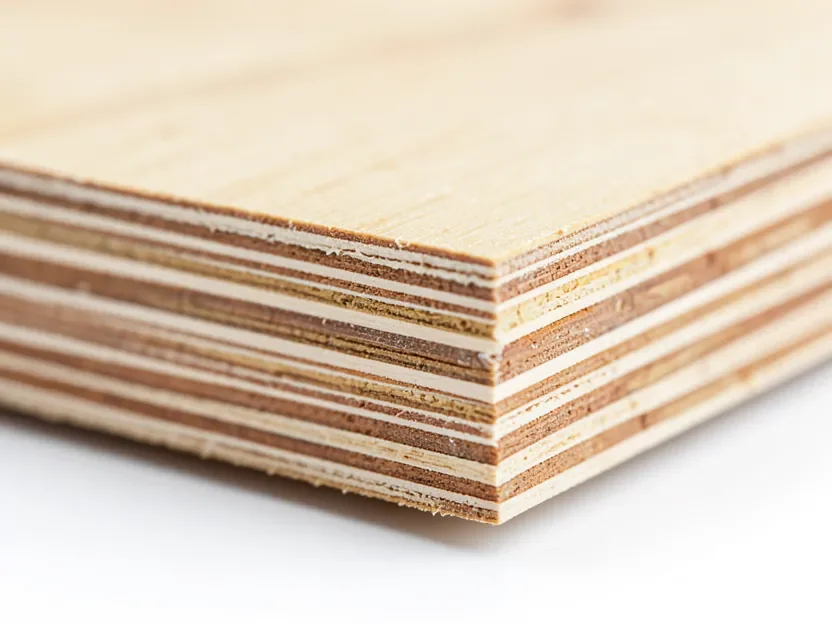
Plywood is built from thin wood veneers glued together with the grain of each layer rotated 90 degrees from the layer next to it. That cross-graining is what makes plywood resist splitting and warping better than a solid board of the same thickness — stress that would run straight along solid wood’s grain instead gets spread across two directions. “3-ply” and “4-ply” simply describe how many of these veneer layers are stacked to build the panel.
Same Thickness, Different Recipe
Here’s the part most comparisons leave out: if you compare a 3-ply sheet and a 4-ply sheet of the same overall thickness, the 3-ply sheet’s individual veneers have to be thicker, because there are fewer of them splitting up the same total thickness. The 4-ply sheet packs more, thinner layers into that same space. Neither recipe is automatically “better” — they just trade strength characteristics in opposite directions.
There’s also a construction quirk worth knowing: standard plywood is traditionally built with an odd number of plies (3, 5, 7…) so the face and back veneers run grain in the same direction, keeping the panel balanced and less likely to cup. A true 4-ply panel is an even-numbered exception — manufacturers typically balance it by laminating two center plies with parallel grain direction, so those two inner layers function together like a single thicker core. That’s also part of why 4-ply is less common on hardware store shelves than 3-ply (thin underlayment, luan) or 5-ply (standard cabinet-grade) — it’s a less standard build.
The Real Tradeoff: Stability vs. Sand-Through Margin
This is the tradeoff most “more plies = always stronger” articles skip entirely, and it matters every time you pick up a sander:
- Fewer, thicker plies (3-ply): Each veneer has more material to work with. That gives you a wider margin when sanding, leveling, or lightly planing a surface before you cut through the face veneer and expose the cross-grain layer underneath — which shows up as a blotchy color or grain-direction mismatch. The tradeoff is fewer directional cross-grain layers overall, so the panel is generally more prone to cupping, twisting, or telegraphing unevenness under humidity changes.
- More, thinner plies (4-ply and up): More cross-grain layers per inch of thickness generally means better dimensional stability — the panel resists warping and holds flat more reliably over time. The tradeoff is that each individual veneer is thinner and more fragile to sand through. A few extra passes with 80-grit that would barely matter on 3-ply can burn through a thin face veneer on a higher-ply-count sheet of the same thickness.
This is also why a hardware-store 1/2″ sheathing panel can feel noticeably springier than a 1/2″ cabinet-grade or Baltic birch panel of the same nominal thickness — the cheaper sheathing grade is often built with fewer, thicker plies to cut manufacturing cost, while the cabinet-grade sheet packs in more, thinner layers for a flatter, more rigid panel. Same thickness number on the tag, genuinely different internal construction.
Where Extra Plies Help, and Where They Don’t
Match the ply count to what the project actually needs, not to a “more is better” instinct:
- 3-ply is a good fit for: Cabinet backs, drawer bottoms, backing boards, and thin underlayment where the panel is fully supported and won’t be sanded aggressively. Lighter and cheaper, with plenty of sand-through margin for a coat of paint or light leveling.
- 4-ply (or 5-ply) is a better fit for: Shelving, tabletops, jigs, and anything that spans an unsupported gap or sits somewhere humidity swings — a mudroom, a garage, near a door. The added cross-grain layers keep it flatter over time.
- Either works for: Small furniture parts and interior cabinet construction, where the deciding factor is usually cost and how visible the edge grain will be, not raw strength.
Plywood pricing generally tracks ply count and grade together, so a higher-ply-count sheet at a given thickness usually costs more than a lower-ply-count sheet of the same nominal size.
3-Ply vs 4-Ply Plywood at a Glance
| Feature | 3-Ply Plywood | 4-Ply Plywood |
|---|---|---|
| Individual veneer thickness (at equal panel thickness) | Thicker per layer | Thinner per layer |
| Sand-through / finishing margin | More forgiving | Less forgiving |
| Dimensional stability (warp/twist resistance) | Lower | Generally higher |
| Typical availability | Common (thin underlayment, luan) | Less common (odd-ply builds like 5-ply are more standard) |
| Best-fit uses | Backing, drawer bottoms, light cabinet work | Shelving, tabletops, humidity-exposed spots |
Which Should You Buy?
If you’re not sure which way to go, ask two questions: will this panel see aggressive sanding or leveling, and will it face humidity swings or an unsupported span? Heavy sanding favors the thicker veneers of a 3-ply build; humidity exposure or a long unsupported span favors the extra cross-grain layers of a 4-ply or 5-ply build. If your project is really about picking between wood species rather than ply count, our BC plywood vs. Sande plywood comparison and birch vs. pine plywood comparison cover that separate decision. And if you want the full mechanics of why cross-graining works at all, see our guide on whether plywood has a grain.
Frequently Asked Questions
Is 4-ply plywood always stronger than 3-ply?
Not in every sense. 4-ply generally resists warping and twisting better because it has more cross-grain layers, but 3-ply has thicker individual veneers, which gives more margin before you sand through the face veneer. “Stronger” depends on which property matters for your project.
Why does 3-ply plywood have thicker layers than 4-ply of the same thickness?
Because the total panel thickness is fixed. Fewer plies means each one has to be thicker to add up to the same overall dimension, while more plies means each one can be thinner.
Can I sand through the face veneer more easily on 4-ply plywood?
Yes, generally. Because a 4-ply sheet’s individual veneers are thinner at a given overall thickness, there’s less material to remove before you cut through the face layer into the cross-grain layer beneath it. Sand a little more conservatively on higher-ply-count sheets.
Why is 4-ply plywood harder to find than 3-ply or 5-ply?
Standard plywood construction favors an odd number of plies so the face and back grain run the same direction, keeping the panel balanced. A 4-ply build is an even-numbered exception that requires pairing two center plies with matching grain direction, which makes it less common on hardware store shelves than 3-ply or 5-ply.
Which should I use for a shelf that needs to span a gap?
Favor a higher ply count (4-ply or 5-ply) for shelving that spans an unsupported gap. The extra cross-grain layers make it more resistant to sagging and twisting over time compared to a thicker-veneer 3-ply sheet.
Final Thoughts
The 3-ply vs 4-ply plywood decision isn’t a simple “more layers wins” call — it’s a real tradeoff between sanding and finishing margin on one side and long-term dimensional stability on the other. Match the ply count to how the panel will actually be used: aggressive sanding and light-duty backing favor 3-ply’s thicker veneers, while humidity exposure and unsupported spans favor the extra cross-grain layers of 4-ply or 5-ply. Check the edge of the sheet before you buy — the layer count is usually visible at a glance, and it tells you more about how the panel will perform than the thickness number on the tag.
Sponsored / affiliate links. As an Amazon Associate I earn from qualifying purchases. I may earn additional commission from eligible campaigns.
 Baltic Birch Plywood 1/8'' x 12'' x 18'', 6 Pack, B/BB Grade, Void-Free Core, Laser Cutting Ready, Flat Sheets for CNC, Engraving, DIY Crafts, Art Painting, Wood Burning, Staining
 Baltic Birch Plywood Sheets Box of 45 - Laser Engraving Cutting, Scroll Saw Nature Veneer Color, Stronger Than Basswood, A/A Grade,12 x 12 x 1/8”, 3mm Thickness Perfect for Wood Burning