Are Oak Cabinets Out Of Style? Expert Guide
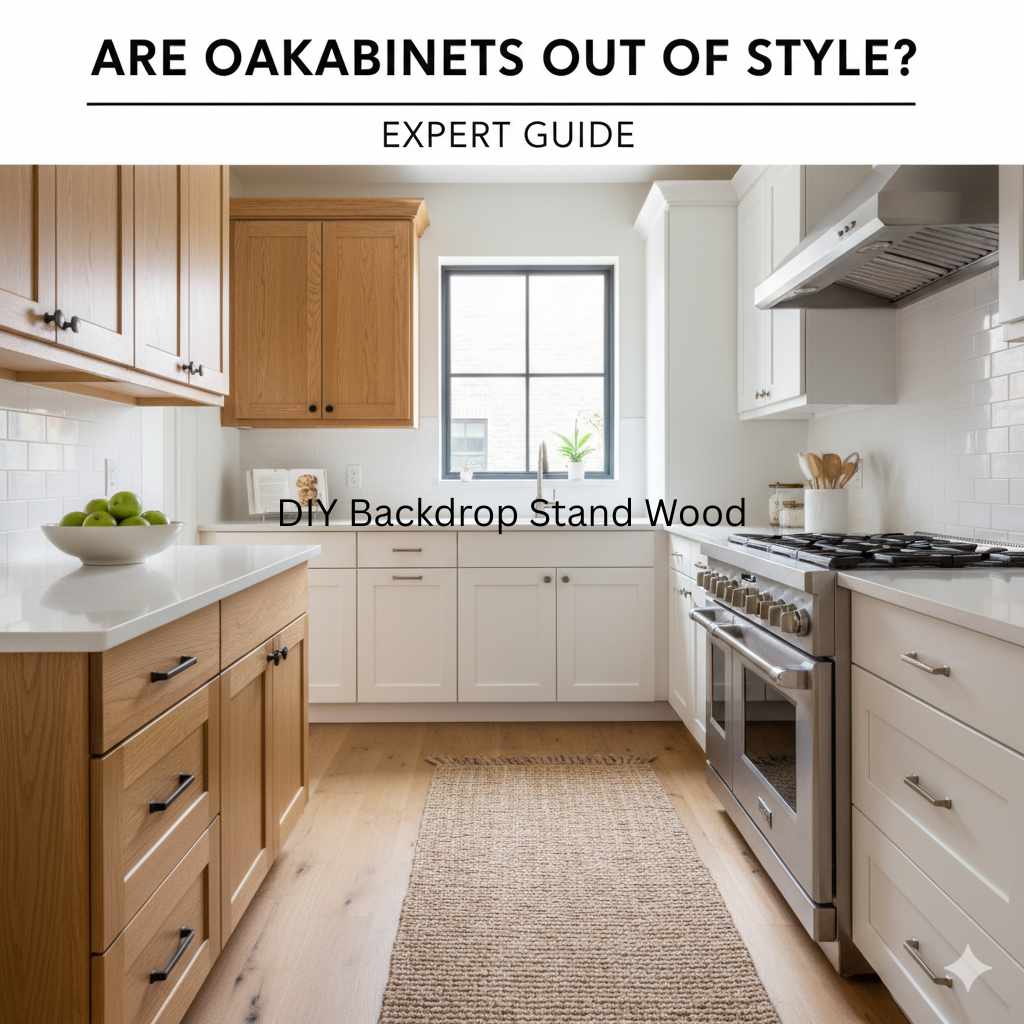
Oak cabinets are not out of style, but their look can be updated! While darker, stained oak was very popular, lighter, more natural finishes or painted oak can look fresh and modern today. The key is choosing the right finish and style to fit your kitchen’s overall design.
Hey there, woodworking friends! Md Meraj here. Have you ever walked into a kitchen and thought, “Wow, those oak cabinets look a bit… dated?” You’re not alone! For a long time, oak was the go-to wood for kitchen cabinets, especially those with a warm, honey-toned stain. They’re super strong and durable, which is why so many of them are still around. But sometimes, trends change, and we start wondering if our trusty oak cabinets have seen their best days. If you’re looking to refresh your kitchen and aren’t sure if your oak cabinets are holding you back, this guide is for you. We’ll break down what makes oak cabinets feel current or dated, and explore simple, effective ways to make them shine again.
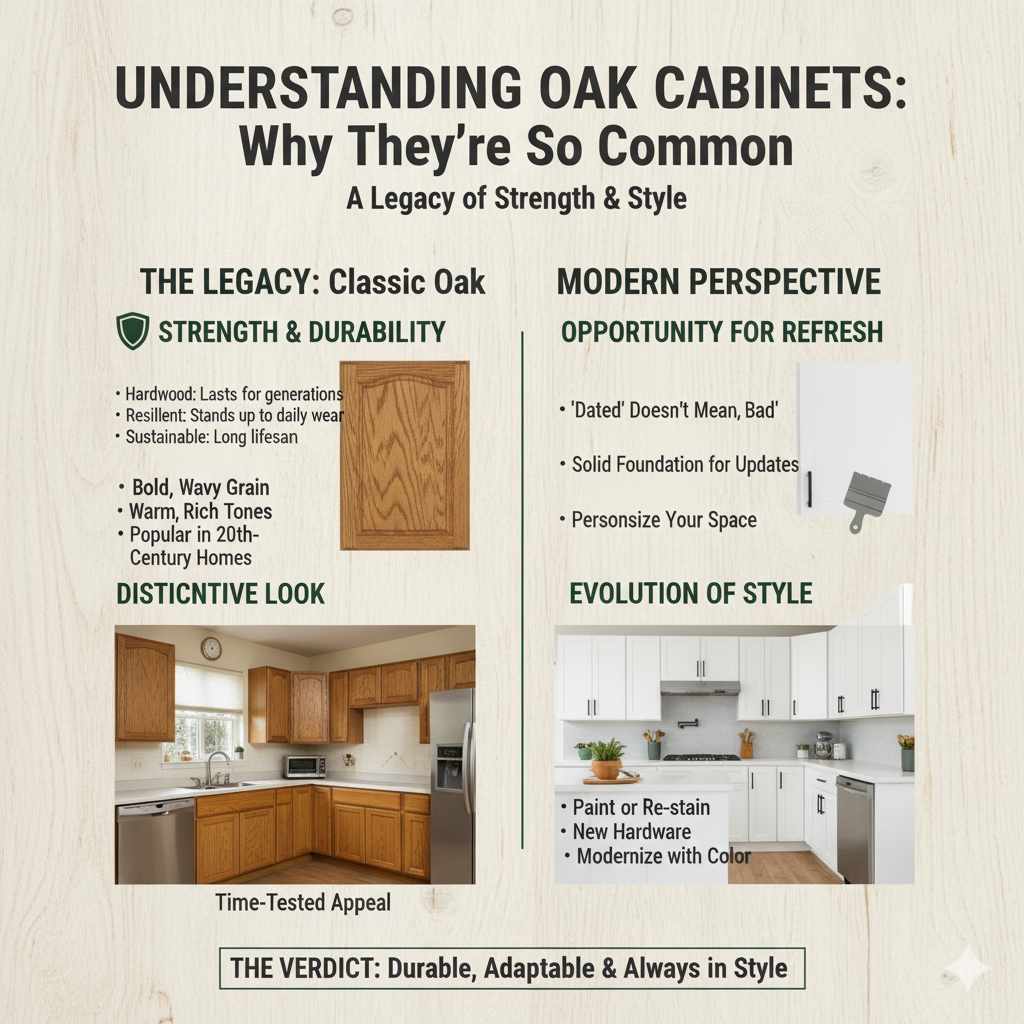
Understanding Oak Cabinets: Why They’re So Common
Oak has been a favorite for cabinet makers for decades, and for good reason. It’s a hardwood known for its strength, durability, and beautiful grain patterns. This natural strength means oak cabinets can last for generations, which is fantastic for your wallet and sustainability! Historically, oak cabinets often featured a medium to dark stain that highlighted the wood’s prominent grain. This look was incredibly popular in the late 20th century, making it a staple in many homes. Because they’re so well-made, you’ll find them in countless kitchens, from older homes to those that haven’t been updated in a while.
The distinct, often wavy or striped grain of oak is one of its most recognizable features. While some people love this natural texture, others find it can make a kitchen feel a bit busy or old-fashioned, especially if the stain is a strong, golden-honey color that was common in the past. The good news is that “dated” doesn’t mean “bad.” It often just means it’s time for a little refresh!
Are Oak Cabinets Out of Style? The Expert Take
Let’s get straight to the point: no, oak cabinets are not inherently out of style. Instead, the way oak is used and finished has evolved. The style that dominated the 80s and 90s – think heavy, dark stains and sometimes ornate detailing – can indeed feel dated. However, this doesn’t mean your oak cabinets need to be replaced. They can be incredibly versatile! Modern design trends favor different finishes and styles for oak that bring it right up to date.
Think about it like fashion: a classic jacket might style itself differently depending on the accessories or the cut. Oak cabinets are similar. The material itself is timeless and strong. It’s the finishing touches that can make them feel current or a bit behind the times. Designers are now embracing oak in new ways. Instead of deep, opaque stains, we’re seeing lighter washes, natural finishes that let the grain show through, or even painted finishes. The focus is often on showcasing the beautiful, natural texture of the wood in a simpler, more refined way. So, if your oak cabinets have that classic, 90s look, don’t despair! There are plenty of ways to give them a modern makeover.
What Makes Oak Cabinets Look “Dated”?
Several factors can contribute to oak cabinets appearing out of style. Understanding these elements is the first step to transforming them.
- Stain Color: The most common reason oak cabinets look dated is the stain color. A strong, yellow-toned or reddish-brown stain that was extremely popular in previous decades can make cabinets look heavy and old-fashioned. These deep, warm tones don’t always blend well with today’s lighter palettes.
- Grain Prominence: Oak has a very distinctive and often prominent grain pattern. While beautiful, if the grain is extremely pronounced and the stain is intense, it can sometimes overwhelm a kitchen design and make it feel busy or dated.
- Cabinet Door Style: The design of the cabinet doors also plays a big role. Very traditional raised-panel doors with ornate details, or styles like the “cathedral” arch, can lean towards a more traditional, and thus potentially dated, aesthetic. Modern styles often favor simpler, cleaner lines like Shaker or flat-panel doors.
- Finish Sheen: An overly glossy or high-sheen finish can sometimes look a bit dated, reminiscent of older finishes that were meant to be very protective but now appear less sophisticated. Matte or satin finishes are generally more current.
- Hardware: Outdated hardware, like brass knobs or pulls with traditional designs, can significantly contribute to a cabinet’s dated appearance.
How to Modernize Oak Cabinets: Beginner-Friendly Solutions
Don’t worry if your oak cabinets fall into some of those “dated” categories. As your woodworking mentor, I’m here to show you that with a little effort, you can give them a fantastic, modern facelift. These methods are designed to be approachable for beginners, focusing on achievable results and building your confidence.
1. Refinishing or Restaining
This is often the most impactful change you can make. If your cabinets are structurally sound, refinishing them can give them a whole new life. This involves sanding down the old finish and applying a new one.
Option A: Lightening the Stain
- Sanding: This is crucial. You’ll need to prepare the surface by sanding. Start with a medium-grit sandpaper (like 120-grit) to remove the old finish and then move to a finer grit (like 180 or 220-grit) for a smooth surface. Always sand in the direction of the wood grain. For detailed areas, using a detail sander or sanding sponges can be very helpful. If you’re unsure about power tools, a good old-fashioned sanding block works great!
- Applying a Lighter Stain: Choose a stain color that complements your kitchen’s current decor. Popular modern choices include natural oak finishes, light grey stains, or even a whitewash. Apply the stain evenly with a brush or cloth, wiping away excess according to the product’s instructions. Multiple thin coats are better than one thick one.
- Sealing: After the stain has dried, apply a protective topcoat, like a polyurethane or lacquer. A satin or matte finish tends to look more current than high gloss.
Option B: Painting
Painting is a fantastic way to completely transform oak cabinets and hide that prominent grain if you prefer a smooth look. This is a bit more involved but very rewarding!
- Preparation is Key: Thoroughly clean the cabinets with a degreaser. Then, sand them well (180-220 grit). Fill any holes or imperfections with wood filler and let it dry.
- Priming: Apply a high-quality deglossing primer. This is vital for painted cabinets, especially on oak, as it helps the paint adhere better and seals in any tannins from the wood that could bleed through. You might need two coats of primer.
- Painting: Use a durable paint designed for cabinets, such as a cabinet enamel or a high-quality latex paint. Apply thin, even coats. Rolling with a high-density foam roller and using a good quality brush for edges often gives the smoothest finish. You’ll likely need 2-3 coats.
- Topcoat (Optional but Recommended): For extra durability, especially in a kitchen, consider a clear protective topcoat over the paint.
Important Note on Oak Grain: Oak’s open grain can sometimes show through paint, even with primer. If you desire a perfectly smooth, grain-free finish, you’ll need to use a wood filler specifically designed for filling grain (sometimes called grain filler) before priming and painting. This is a more advanced step, but achievable with research and patience. For a more rustic or natural look, letting the grain show through a lighter stain or a sheer paint can look very stylish!
2. Updating Hardware
This is the easiest and most budget-friendly way to make a big difference! Swapping out old knobs and pulls for new ones can instantly modernize your cabinets.
- Style Choices: Look for sleek, modern styles like brushed nickel, matte black, or brushed gold. Simple bar pulls, minimalist knobs, or geometric designs are great choices.
- Measurement: If you’re replacing pulls, measure the distance between the screw holes (this is called the “center-to-center” measurement) to ensure the new ones fit without drilling new holes.
- Easy Swap: Typically, it’s just a matter of unscrewing the old hardware and screwing on the new. It’s a DIY project that takes minutes but has a significant visual impact.
3. Refacing Cabinet Doors
If the style of your cabinet doors is what bothers you most, refacing is an option. This involves removing the existing doors and drawer fronts and replacing them with new ones. You can choose styles like Shaker or flat-panel doors to give your kitchen a contemporary look.
This process can be done by a professional service or as a DIY project if you’re comfortable with precise measurements and installation. It’s important to order doors that are the exact size of your existing ones, or to properly adjust your cabinet frames if you’re changing the door size. You can often buy new doors unfinished and stain or paint them yourself to match your updated cabinet boxes.
4. Painting the Cabinets Only (A Hybrid Approach)
Sometimes, the cabinet boxes themselves might be a bit older or have a less desirable finish than the doors. You can update the look by painting just the doors and drawer fronts while leaving the cabinet frames as they are (especially if they are in good condition and have a neutral finish). This can be a quicker way to refresh the look, focusing the effort on the most visible parts.
Popular Finishes for Oak Cabinets Today
The finish is everything when it comes to making oak cabinets look current. Forget those old, heavy honey tones. Today’s trends are all about showcasing the wood’s natural beauty in a refined way.
Clear Coat / Natural Finish
This is all about letting the oak’s natural color and grain take center stage. A clear coat (like a water-based polyurethane) in a satin or matte finish allows the light, natural tones of the wood to show through. It provides protection without altering the color significantly. This approach works best if your oak cabinets don’t have a heavy, dated stain to begin with, or if you’ve already sanded them down to the natural wood.
Light Stains
- White Oak Wash: This lightens the oak considerably, giving it a soft, airy feel. It often softens the grain pattern too.
- Grey Stain: A light to medium grey stain can give oak a contemporary, sophisticated look. It’s a neutral that pairs well with many countertop and backsplash materials.
- Greige (Grey-Beige) Stain: This combines the warmth of beige with the coolness of grey, offering a versatile, modern neutral for oak.
- Natural Tones: Stains that mimic the color of natural, unstained wood, or slightly deepen it without adding yellow or red undertones.
Painted Finishes
Painting oak is a wonderfully versatile option. The color you choose will drastically affect the final look.
- White: Crisp and classic, white painted oak cabinets offer a clean, bright look that never goes out of style.
- Off-White / Cream: Softer than stark white, these shades offer a warm, inviting feel.
- Light Gray: A popular neutral that pairs beautifully with wood tones and other colors.
- Navy Blue or Deep Green: For a bolder statement, these darker, richer colors can provide a dramatic, sophisticated finish.
- Two-Tone: Consider painting the island a different color than the perimeter cabinets for added visual interest.
DIY vs. Professional Services
When it comes to updating your oak cabinets, you have a couple of paths you can take: DIY or hiring professionals. Both have their pros and cons, and the best choice depends on your budget, time, and comfort level.
DIY (Do It Yourself)
Pros:
- Cost Savings: This is usually the biggest advantage. You save on labor costs significantly.
- Sense of Accomplishment: Transforming your kitchen yourself can be incredibly rewarding and boost your confidence for future projects.
- Customization: You have complete control over every step, from the exact shade of paint to the type of finish.
Cons:
- Time Commitment: Refinishing or painting cabinets can take a lot of time, especially the prep work. Be prepared for your kitchen to be out of commission for a while.
- Learning Curve: While many projects are beginner-friendly, there’s still a learning curve. Mistakes can happen, and they might cost you time and money to fix.
- Tool Investment: You might need to buy or rent specific tools for sanding, painting, or hardware installation.
- Physical Effort: Sanding, priming, and painting require physical labor.
Professional Services
Pros:
- Expertise and Quality: Professionals have the experience, tools, and knowledge to achieve a flawless, durable finish.
- Time Savings: They can often complete the job much faster than a DIYer.
- Less Stress: You don’t have to worry about the prep work, the application process, or potential mistakes.
Cons:
- Higher Cost: This is the trade-off for convenience and quality. Professional cabinet refinishing or painting can be a significant investment.
- Less Control: While you choose the colors and finish, you have less direct involvement in the day-to-day process.
- Scheduling: You’ll need to schedule their availability, which might not align perfectly with your timeline.
Recommendation: For beginners wanting to modernize their oak cabinets, starting with a less intensive DIY project like updating hardware is a great first step. If you feel confident after that, tackling refinishing or painting can be very achievable. If you’re aiming for a factory-perfect finish on a large kitchen, or if your cabinets need significant repair, hiring a professional might be the wiser choice.
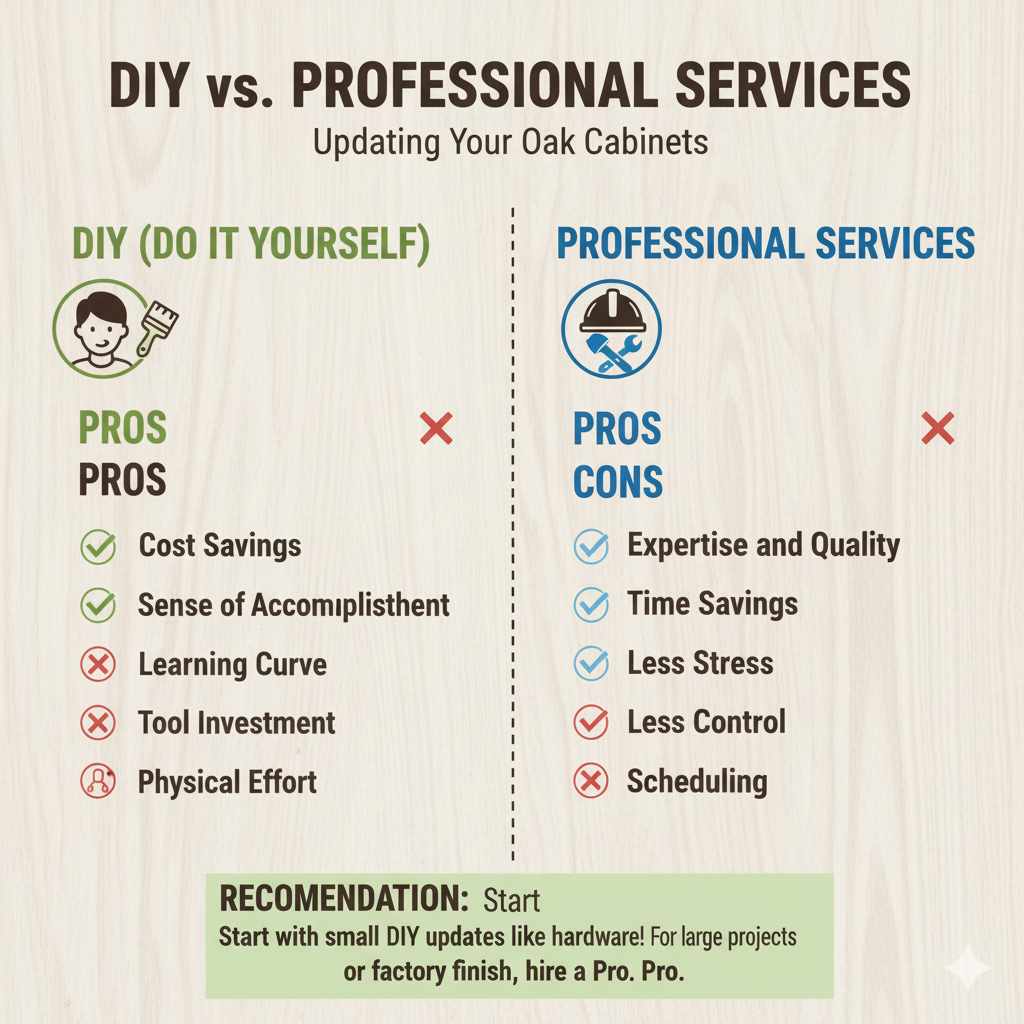
Table: Pros and Cons of Oak Cabinet Finishes
Here’s a quick look at some popular finishes and what makes them great:
| Finish Type | Pros | Cons | Best For |
|---|---|---|---|
| Natural / Clear Coat | Highlights wood grain, natural beauty, versatile. | Can show wear more easily, might still look dated if the underlying wood tone is too “golden”. | Modern farmhouse, Scandinavian, minimalist styles. |
| Light Stain (Grey, Greige, Blond) | Modernizes oak, offers a neutral palette, hides some grain intensity. | Requires thorough sanding and staining, color matching can be tricky for DIYers. | Contemporary, transitional, modern farmhouse. |
| White Paint | Brightens space, classic and clean look, hides imperfections well. | Shows dirt and scuffs more easily, requires rigorous prep and multiple coats for a durable finish. | Farmhouse, modern, coastal, traditional styles. |
| Colored Paint (e.g., Navy, Green) | Bold statement, unique aesthetic, hides grain well. | Can make a kitchen feel darker, color choice is significant, may not appeal to all buyers if selling. | Glam, modern, or eclectic styles. |
FAQs About Oak Cabinets
Q1: Will painting my oak cabinets decrease their value?
A1: Not necessarily! While some collectors might prefer original finishes, a beautifully painted kitchen is very appealing to most buyers. A high-quality paint job can actually increase your home’s appeal and saleability. The key is a professional-looking finish. Poorly painted cabinets, however, can detract from value.
Q2: How do I deal with the prominent grain of oak when painting?
A2: Oak has a “open grain” structure. To minimize grain showing through paint, thorough preparation is essential. Use a deglossing primer, and consider using a wood filler specifically designed for grain filling before priming. Applying multiple thin coats of paint with a high-density roller will also help create a smoother finish.
Q3: Can I refinish my oak cabinets to a completely different wood tone, like cherry or walnut?
A3: You can stain oak to look like other woods to some extent, but you won’t truly change the grain pattern. Darker stains like walnut can be achieved, and they can look very modern. However, oak’s distinct grain will still be visible, so it won’t look exactly like solid cherry or walnut.