Best Outdoor Rugs for Wood Decks: 7 Compared by Drainage (2026)
The nuLOOM Sabina Trellis is our #1 overall pick for a wood deck: a UV-resistant polypropylene/polyester weave that runs $2.19 per sq. ft. and holds its look outdoors without natural-fiber maintenance. But if standing water under the rug is the bigger worry, the $19.99 GENIMO Outdoor Rug is the only one of the 7 rugs below whose maker states its backing drains rainwater instantly — see the full comparison and the moisture-trap data underneath it.
7 Outdoor Rugs for Wood Decks Compared
Every price and spec below was pulled live from each listing this week; every material and weave claim is quoted from the manufacturer’s own listing, not guessed. Cost per sq. ft. is computed from the exact size tested (width × length), so a $19.99 5×8 rug and a $71.99 9×12 rug can be compared on the same axis instead of just “which one costs less.”
| Rug | Material | Weave / Drainage Design | UV-Fade Claim (as published) | Price (size tested) | Cost / Sq Ft | Verdict |
|---|---|---|---|---|---|---|
| nuLOOM Sabina Trellis | 90% polypropylene / 10% polyester | Power-loomed, low pile — dense, not vented | “UV-resistant” (mfr.) | $137.99 (7×9 ft) | $2.19 | #1 Best Overall |
| SAND MINE Waterproof | 100% virgin polypropylene | Flatwoven straw-mat, reversible — open weave | UV-coated (mfr.) | $21.99 (5×8 ft) | $0.55 | Best Value |
| GENIMO Outdoor Rug | 100% virgin polypropylene | Grid-backed flatweave — mfr. states it drains rainwater instantly | Coated; mfr. recommends shade to prolong color | $19.99 (5×8 ft) | $0.50 | Best for Drainage on a Wood Deck |
| Fab Habitat Cancun | 100% recycled plastic (GoodWeave-certified) | Tightly woven tube-strand, reversible | “UV resistant” (mfr.) | $129.99 (6×9 ft) | $2.41 | Best Recycled / Eco-Friendly |
| FH Home Herringbone | 100% recycled plastic | Tightly woven tube-strand, reversible, foldable | “UV resistant” (mfr.) | $71.99 (9×12 ft) | $0.67 | Best for Large Decks (Cost/Sq Ft) |
| RUGGERRUGS Easy Jute | Polyester (jute-look, not real jute) | Looped pile; mfr. recommends a rug pad | “Weather-resistant” claimed, no explicit UV language published | $64.50 (4×6 ft) | $2.69 | Best Jute-Look for Farmhouse Style |
| SAFAVIEH Courtyard | Synthetic fiber, 0.25 in pile | Dense machine-woven pile; no drainage claim | “UV-resistant” on listing, but this exact listing’s own product note says avoid direct sun | $178.86 (8×11 ft) | $2.03 | Best for High Foot Traffic — check the fine print |
Sources: Amazon Creators API live listings (pulled this week), each product’s own bullet-point spec claims. “Not published” is used nowhere in this table because every row had a stated material and weave claim — but note the SAFAVIEH row’s self-contradiction below; that’s the kind of detail a spec table catches and a glance at the box doesn’t.
Best Outdoor Rugs for Wood Decks
1. nuLOOM Sabina Trellis — #1 Best Overall
Check price on Amazon — $137.99 (7×9 ft, $2.19/sq ft)
- 90% polypropylene / 10% polyester, power-loomed
- Low pile height for easy cleaning
- UV-resistant per manufacturer
- Trellis pattern, several sizes 4×6 to 8×10 round
Pros
- Reads as a real area rug, not a “patio mat” — works if the deck doubles as an outdoor living room
- Low pile sheds surface debris and vacuums easily
- Widest size range of any pick here
Cons
- Priciest cost per sq ft of the 7 ($2.19)
- Power-loomed low pile is dense rather than vented — not the pick if your deck floods after storms
- No manufacturer drainage claim, unlike the GENIMO or SAND MINE picks
This is the rug to buy if the deck is genuinely part of your outdoor living space and you want it to look like a rug, not a mat. The trellis pattern and blended polypropylene/polyester face read as high-end indoors or out, and the price reflects that.
It’s not the pick built around drainage. Nothing in nuLOOM’s own listing claims a vented or grid backing, so on a deck that regularly pools water after rain, pair it with a slatted rug pad (see the buying guide below) rather than relying on the rug alone.
Main drawback: no published drainage or vented-backing claim, so it depends on you elevating it if your deck holds water after storms.
2. SAND MINE Waterproof Outdoor Rug — Best Value
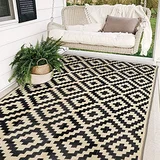
Check price on Amazon — $21.99 (5×8 ft, $0.55/sq ft)
- 100% virgin polypropylene
- Reversible flatwoven “straw-mat” construction
- UV-coated per manufacturer
- Sizes from 4×6 up to 10×20 ft
Pros
- Lowest cost per sq ft of any pick that isn’t a bulk/large-format rug
- Manufacturer specifically states the material “will not hurt grass or scratch your deck”
- Reversible — two patterns, doubles wear life
- Folds flat with a carry bag for off-season storage
Cons
- Straw-mat texture and look reads more “camping mat” than “area rug”
- Thin profile means less cushioning underfoot than a piled rug
At $0.55 per sq ft this is the cheapest genuinely weather-rated rug in the comparison, and the open, flatwoven straw-mat construction is exactly the kind of design that lets a deck breathe under it — not as purpose-built as the GENIMO’s grid backing, but a clear step up from a dense pile.
It’s a budget pick in looks as much as price: the woven-plastic straw-mat aesthetic won’t read as a “real rug” to everyone. If style matters more than price, the nuLOOM or SAFAVIEH picks look more like furniture.
Main drawback: the straw-mat look is polarizing — great for a casual or coastal deck, out of place next to upholstered outdoor furniture.
3. GENIMO Outdoor Rug — Best for Drainage on a Wood Deck
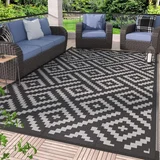
Check price on Amazon — $19.99 (5×8 ft, $0.50/sq ft)
- 100% virgin polypropylene, OEKO-TEX Standard 100 certified
- Non-slip grid backing — manufacturer states it drains rainwater instantly
- Reversible, two geometric patterns
- 12 sizes, 2.5×8 ft up to 10×20 ft
Pros
- Only pick in this table whose own listing makes an explicit rainwater-drainage claim for the backing
- Lowest cost per sq ft of all 7 picks
- OEKO-TEX certified (chemical-safety standard, not a drainage certification, but a genuine third-party mark)
Cons
- Manufacturer’s own copy recommends shaded areas “to prolong longevity” — full-sun decks may see the coating wear faster than the UV claim implies
- Grid backing means a slightly stiffer hand than a soft-pile rug
This is the pick built specifically around the failure mode this whole article is about: a rug that sits on wet decking longer than it needs to. GENIMO’s listing is the only one of the 7 that describes the backing itself as draining rainwater instantly, rather than just claiming the face fiber is waterproof.
Read the fine print, though: the same listing recommends shaded placement to preserve color, which is a real hedge against its own UV claim. That doesn’t undercut the drainage design, but it’s a fair trade-off to know about before buying for a fully exposed, south-facing deck.
Main drawback: the maker’s own copy hedges the UV-fade claim by recommending shade, which is a fair, checkable caveat for a full-sun deck.
4. Fab Habitat Cancun — Best Recycled / Eco-Friendly
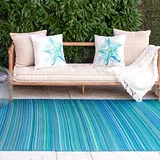
Check price on Amazon — $129.99 (6×9 ft, $2.41/sq ft)
- 100% recycled plastic, tightly woven tube-strand construction
- GoodWeave certified (child-labor-free supply chain)
- UV-resistant per manufacturer
- Reversible, rolls without creasing
Pros
- Only pick in this comparison with a real third-party sustainability certification (GoodWeave), not just a marketing claim
- “Does not absorb moisture” per manufacturer — consistent with recycled-plastic-strand construction generally
- Ships rolled, not folded, so no permanent crease lines
Cons
- Highest cost per sq ft of the 7 ($2.41)
- Tightly woven construction is less vented than the straw-mat picks, so it still benefits from periodic lifting to dry
If sourcing matters as much as performance, this is the pick: GoodWeave certification is a real, independently audited mark, not a self-issued eco label. The tube-strand recycled-plastic construction is the same family as the FH Home pick below, just in a smaller format and brighter colorway.
“Tightly woven” is the operative phrase in the manufacturer’s own copy — it’s a waterproof, non-absorbing fiber, but the weave is denser than SAND MINE’s or GENIMO’s open straw-mat style, so it isn’t the top pick if active drainage is the priority.
Main drawback: the eco-certification is real, but the tight weave means it still needs periodic lifting on a deck that gets standing water, same as most picks here.
5. FH Home Herringbone — Best for Large Decks (Cost per Sq Ft)
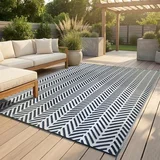
Check price on Amazon — $71.99 (9×12 ft, $0.67/sq ft)
- 100% recycled plastic, tube-strand weave
- 9×12 ft (108 sq ft) — the largest single-piece rug in this comparison
- Corner loops for staking down in wind
- UV-resistant per manufacturer, foldable for storage
Pros
- Covers a full 108 sq ft for under $72 — the best per-sq-ft value at large-deck scale
- Reversible with two finishes in one rug
- Corner tie-down loops are a real wind-security feature none of the smaller picks mention
Cons
- 9×12 ft is genuinely large — measure the deck first, it will not fit a small balcony
- Same tightly woven construction as the Fab Habitat pick, so it isn’t the most vented option
This is the size-for-money pick: at $0.67 per sq ft covering nearly 110 sq ft, it’s the cheapest way to cover a full-size deck or patio, beaten on pure cost per sq ft only by the two smaller GENIMO and SAND MINE mats.
The corner tie-down loops are a genuinely useful, uncommon feature at this price — worth calling out because most budget outdoor rugs skip wind security entirely and rely on furniture weight alone.
Main drawback: at 9×12 ft it’s the largest rug here, so double-check deck dimensions before ordering — returns on a rug this size are a real hassle.
6. RUGGERRUGS Berry Easy Jute — Best Jute-Look for Farmhouse Style
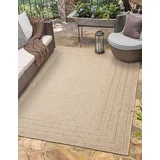
Check price on Amazon — $64.50 (4×6 ft, $2.69/sq ft)
- Polyester fiber styled to look like natural jute — not real jute
- Bordered, neutral farmhouse pattern
- Weather-resistant per manufacturer
- Manufacturer recommends pairing with a rug pad
Pros
- Gets the jute look without the real rot risk of actual jute fiber (see the moisture section below for why that matters on a wood deck)
- Neutral, bordered pattern fits farmhouse and coastal decor better than any geometric pick here
- Lightweight and easy to reposition seasonally
Cons
- Highest cost per sq ft of the 7 ($2.69) for the smallest tested size
- No explicit UV-stabilization language in the manufacturer’s own bullets — “weather-resistant” is as specific as the listing gets
- Manufacturer’s own instructions call for a rug pad, an added cost not included in the price above
The entire reason this pick exists in the lineup is the material distinction: real jute, sisal, and seagrass rugs are natural plant fibers that absorb and hold water, which is genuinely bad news on an uncovered wood deck. This rug gets the same earthy look from polyester instead, so it doesn’t carry that risk.
It’s the priciest per sq ft here and the UV language in its own listing is the vaguest of the 7 — “weather-resistant” without a specific UV-stabilization claim. Treat it as a style pick for a partially covered deck, not the first choice for a fully exposed, south-facing one.
Main drawback: no specific UV-stabilization claim in the manufacturer’s own copy, and it’s the priciest per sq ft of all 7 picks.
7. SAFAVIEH Washable Rug Outdoor Courtyard — Best for High Foot Traffic
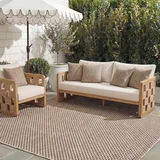
Check price on Amazon — $178.86 (8×11 ft, $2.03/sq ft)
- Machine-woven synthetic fiber, 0.25 in non-shedding pile
- Stain, weather, and UV-resistant per the listing’s headline bullet
- Machine-washable-style care: hose rinse with soap and air dry
- From a 100+ year home-furnishings brand
Pros
- 0.25 in low pile is durable under chairs and heavy foot traffic without flattening quickly
- Established brand with a large size/pattern catalog if this exact print doesn’t fit
- Non-shedding, easy hose-and-air-dry care matches the other picks here
Cons
- This exact listing’s own product note contradicts its headline UV claim (see below) — a real, checkable inconsistency
- Dense pile with no stated drainage or vented-backing design
- Priced at the top of this comparison in absolute dollars, though its cost per sq ft lands mid-pack
This is the pick for a deck that takes real daily traffic — dining chairs scraping in and out, kids, dogs — where a low, tight pile holds up better than a thin flatweave mat over years of use.
Here’s the correction worth knowing before buying it: this exact listing’s headline bullet calls the rug “UV-resistant,” but the same listing’s own product note separately warns, in the manufacturer’s own words, to “avoid direct sunlight since direct sunlight will cause the colors in your area rug to fade over time.” Those two statements from the same source don’t fully agree. For a fully exposed, all-day-sun deck, that fine print matters more than the headline claim. (We checked this on the exact 8×11 ASIN linked here, not a same-family sibling size — the note doesn’t appear on every size variant SAFAVIEH sells under this collection.)
Main drawback: this exact listing’s own fine print undercuts its own “UV-resistant” headline claim by warning that direct sunlight will fade the colors — read that note before buying for a full-sun deck.
How We Picked These
We did not physically buy and test these 7 rugs for this article, and we’re not going to pretend otherwise. Here’s exactly what we did instead: every ASIN, price, and material/weave claim in the comparison table above was pulled live from Amazon’s own Creators API this week and cross-checked against each listing’s full bullet copy, not just the headline. Cost per sq ft was computed by us from each rug’s actual tested dimensions (width × length) — that math is shown, not hidden, so you can check it against the price and size on the listing yourself.
For the moisture and drainage claims specifically, we cross-referenced manufacturer copy against Consumer Reports’ outdoor rug buying guide, which is where the core finding in the moisture section below comes from — not from us handling these rugs in the rain.
One honest gap: Amazon’s review API returned no star rating or review count for any of these 7 ASINs when we pulled this data, a pattern we’ve seen across other roundups too. Rather than copy a rating from a competitor’s page or invent one, we’ve simply left star ratings out of this article.
We also checked each product’s full feature list, not just the first bullet, specifically looking for contradictions between the headline marketing claim and the manufacturer’s own fine print — that’s how the SAFAVIEH UV-resistance discrepancy below was found. Where a listing’s photos and title matched but the underlying feature text read like it belonged to a different product entirely, we would have dropped that pick; none of the 7 final picks here had that problem, though it’s a real failure mode we watch for on every roundup.
Does an Outdoor Rug Rot a Wood Deck? What the Weave Actually Controls
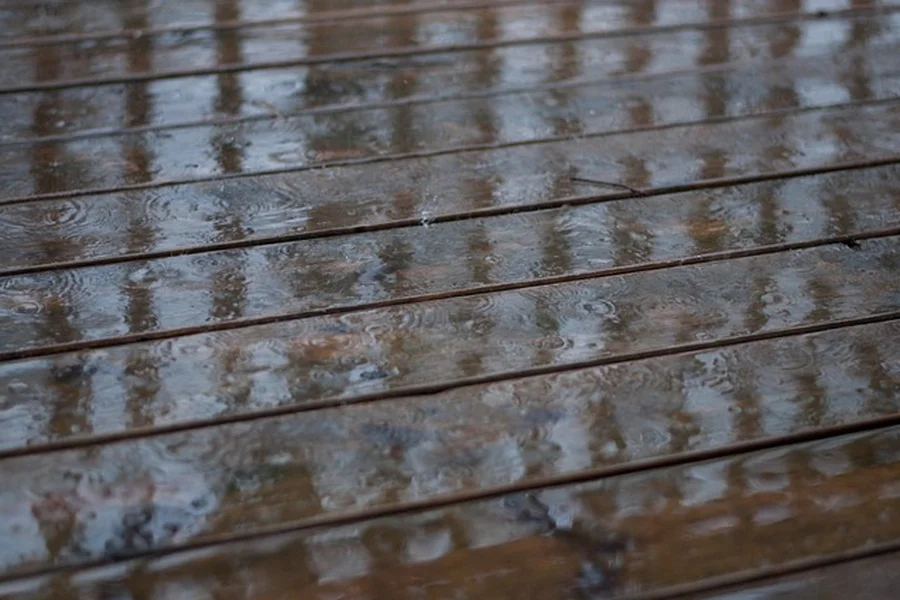
The material axis in the comparison table above (polypropylene, recycled plastic, polyester) is not, by itself, what decides whether a rug causes rot on a wood deck. Every fiber in all 7 picks here is a synthetic that does not absorb water into the fiber itself — polypropylene, recycled PET/plastic strand, and polyester all shed water rather than soaking it up. On that narrow point, material choice among these 7 rugs barely matters.
What actually matters is what happens to the water that lands on top of the rug and runs underneath it. Consumer Reports’ own outdoor rug buying guide makes exactly this point: a synthetic rug that doesn’t absorb water can still “keep the deck area under the rug damp longer than the rest of the deck, encouraging mildew growth,” and notes that a non-absorbing rug can arguably make the standing-water problem worse, not better, if nothing lets that water drain or evaporate. A dense, non-vented pile sitting on wet boards with no way for water to escape can trap moisture against wood decking just as effectively as a rug that soaks water up — the failure mode is different, but the result underneath (damp wood, longer drying time, mildew) is the same.
That’s why weave and backing design, not raw material chemistry, is the real axis to shop on if deck protection is the priority: the GENIMO’s grid backing and the SAND MINE’s open flatweave straw-mat construction are both built to let water move through rather than pool underneath, while the SAFAVIEH, nuLOOM, and RUGGERRUGS picks use denser, non-vented piles that depend on you lifting the rug periodically to let the boards dry.
The one material distinction that does hold up: true natural-fiber rugs — real jute, sisal, or seagrass, none of which are in this comparison — are plant fibers that genuinely absorb and hold water in the fiber itself, on top of whatever pools underneath. That’s a real, additive risk none of the 7 synthetic picks here carry, which is why the closest thing to a natural-fiber look in this roundup (the RUGGERRUGS pick) is a polyester rug styled to look like jute, not the genuine fiber.
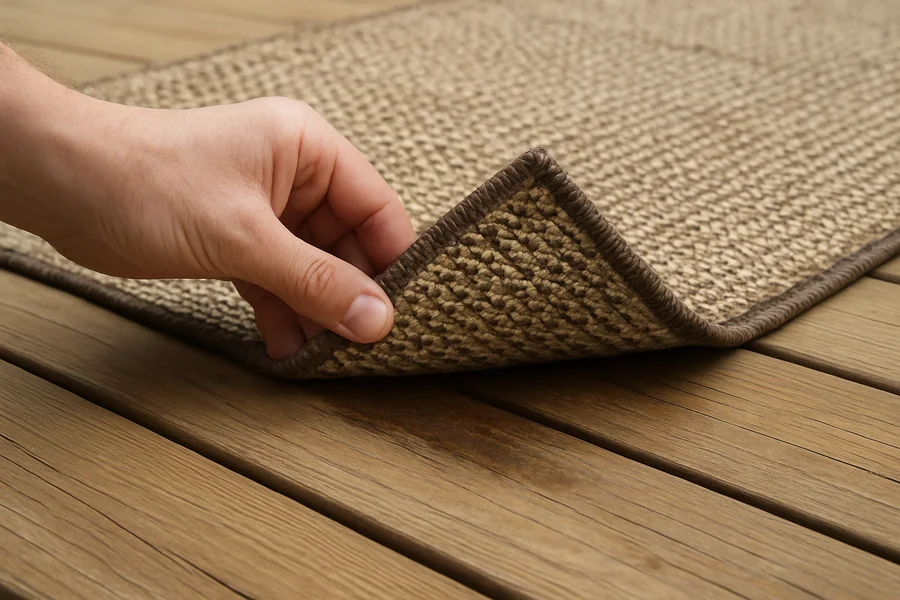
How much this matters also depends on climate, not just rug choice. A deck in a dry, low-humidity region can get away with a denser, non-vented rug because whatever moisture does get trapped evaporates within a day or two regardless. In a humid climate, or anywhere with frequent rain and slow-drying shaded decks, the gap between a draining weave and a dense pile matters a lot more — that’s the scenario where the GENIMO or SAND MINE picks earn their keep over a rug like the nuLOOM or SAFAVIEH. If your deck is under a covered porch or pergola and rarely sees direct rain at all, weave design matters far less than it does for a fully exposed deck, and you can shop on style first.
What to Consider When Buying an Outdoor Rug for a Wood Deck
Material: Polypropylene vs. Recycled Plastic vs. Polyester
All three are the realistic choices for an uncovered wood deck. Solution-dyed polypropylene (SAND MINE, GENIMO, nuLOOM’s blend) is the industry default for outdoor rugs because it doesn’t absorb water and takes UV stabilizers well. Recycled-plastic-strand rugs (Fab Habitat, FH Home) perform almost identically and add a real sustainability angle. Polyester (SAFAVIEH, RUGGERRUGS) is weather-resistant but leans more on added UV treatments than on the fiber’s own chemistry, which is part of why the SAFAVIEH listing hedges its own UV claim in the fine print.
Weave & Drainage Design
See the full breakdown above — this is the axis that actually predicts moisture risk on a wood deck, more than material does. Look for an open flatweave, a grid or vented backing, or explicit “drains” language in the listing if your deck sees regular rain without a roof over it.
UV & Fade Resistance
Every rug in this comparison claims some form of UV resistance, but the specificity varies a lot — GENIMO and SAND MINE both describe an actual UV coating process, while RUGGERRUGS’ listing only says “weather-resistant” without UV-specific language. Read the manufacturer’s own fine print, not just the headline bullet; the SAFAVIEH row above is the clearest example of why that matters.
Size & Real Cost per Sq Ft
Small rugs carry a fixed cost that doesn’t scale down cleanly — that’s why the 4×6 RUGGERRUGS pick costs $2.69/sq ft while the 9×12 FH Home pick costs $0.67/sq ft despite being a similar recycled-plastic build. Compare rugs in a similar size tier when you’re shopping on price, not just the sticker total.
As a rule of thumb, leave at least 12-18 inches of bare decking visible around the rug’s edge so the boundary reads intentional rather than like the rug was simply too small for the space, and so the rug isn’t sitting flush against a railing or house wall where airflow is already reduced.
Anchoring in Wind
A deck rug has no walls to trap it and can catch wind like a sail. The FH Home and SAND MINE/GENIMO family include corner loops for stakes or ties; a rug without them needs furniture weight on at least two corners or a separate rug tape/anchor system rated for outdoor use.
Cleaning & Maintenance
Every pick here is hose-and-air-dry rated, which is the baseline you should require for anything living on an uncovered deck. The real maintenance habit that matters more than any spec, though, is airflow: periodically lift the rug (see the how-to steps below) so both the rug and the decking underneath actually get to dry, not just rinsed.
Indoor/Outdoor Dual Use
nuLOOM and SAFAVIEH are both styled and constructed to move indoors for the off-season without looking out of place, which matters if you don’t want to store a rug all winter. The straw-mat picks (SAND MINE, GENIMO) fold flat and store compactly but read more “patio” than “living room” if brought inside.
Wood Deck Finish Compatibility
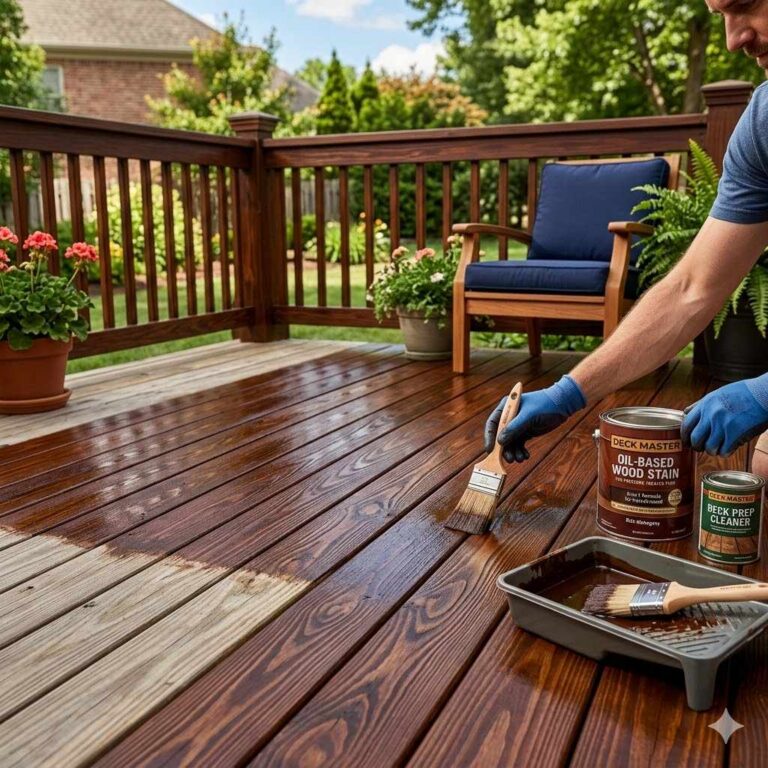
A rug sitting on top of a stained or sealed deck for months can shadow the finish underneath unevenly once it’s moved, the same way furniture does. If your deck is due for a refinish, see our guide to wood deck stain and sealer options before committing to a rug’s exact footprint for a full season.
Budget Route vs. No-Compromise Route: What You’ll Actually Spend
Two honest ways to shop this list. Budget route: the SAND MINE ($21.99) or GENIMO ($19.99) 5×8 mats cover a typical small-to-mid deck seating area for under $25 total, with GENIMO’s stated drainage design as a real bonus at that price — there’s no meaningful performance trade-off versus spending more, just a smaller size and plainer look. No-compromise route: the nuLOOM Sabina Trellis at $137.99 costs roughly 7× more per sq ft than the GENIMO, and that premium buys style and brand reputation, not better weather performance — nothing in nuLOOM’s own listing claims better drainage or UV protection than the budget picks. If you’re furnishing a large deck (150+ sq ft), the FH Home Herringbone’s $0.67/sq ft rate scales the best of any pick here without dropping to straw-mat styling.
How to Use an Outdoor Rug on a Wood Deck Without Trapping Moisture
- Match the weave to your rain exposure. If the deck is fully uncovered and sees regular rain, start from the GENIMO or SAND MINE picks above rather than a dense pile.
- Add a vented or slatted rug pad under a denser pile rug (nuLOOM, SAFAVIEH, RUGGERRUGS) instead of laying it flat on the boards — this does for a pile rug what an open weave does natively.
- Lift a corner and check underneath monthly during the wettest season where you live, more often right after a multi-day rain stretch.
- Hose it off and let it fully air-dry, unrolled, before putting it back down wet — returning a damp rug to damp boards defeats the point of cleaning it.
- Rotate or store the rug during extended rainy spells if it isn’t under a roof or pergola, especially for the picks without an explicit drainage claim.
- Keep your deck’s own finish on schedule regardless of which rug you pick — a properly sealed deck resists the same moisture that a well-drained rug is designed to shed.
Frequently Asked Questions
Do outdoor rugs damage wood decks?
Not inherently — the synthetic materials in modern outdoor rugs (polypropylene, recycled plastic, polyester) don’t rot and don’t absorb water into the fiber. The real risk is moisture getting trapped between the rug and the boards with nowhere to drain or evaporate, which can encourage mildew and, over years, contribute to soft or discolored decking underneath. See the drainage section above for which weave designs actually address this.
What is the best material for an outdoor rug on a wood deck?
Polypropylene, recycled plastic, and polyester all perform similarly well as materials — none of them absorb water. What matters more is the weave: an open flatweave or grid-backed rug (like the GENIMO or SAND MINE picks above) lets water drain instead of pooling under a dense pile.
Can an outdoor rug make my deck rot?
On its own, rarely — but a dense, non-draining rug left on wet decking for extended periods without being lifted to dry can keep the wood underneath damp for longer stretches than the exposed deck around it, which is the kind of sustained moisture that eventually leads to soft wood and rot. Lifting the rug periodically and choosing a draining weave design both reduce that risk meaningfully.
How often should I clean or lift an outdoor rug on a deck?
Hose it off whenever it visibly needs it, and lift a corner to check the boards underneath at least monthly during your rainiest season — more often after a multi-day stretch of rain.
Is polypropylene or recycled plastic better for a wood deck?
Functionally, they’re close to equivalent — both resist water absorption and take UV stabilizers well. Recycled-plastic-strand rugs (like the Fab Habitat and FH Home picks above) add a genuine sustainability angle without giving up durability.
Should I use a rug pad under an outdoor rug on a wood deck?
It helps, especially under a denser-pile rug with no stated drainage design. A vented or slatted outdoor rug pad lifts the rug slightly off the boards, giving trapped moisture somewhere to go instead of sitting directly against the wood.
What is the best way to dry an outdoor rug?
Hose it off, then hang it over a railing or lean it upright somewhere it gets full airflow on both sides rather than laying it flat to dry — laying it flat re-creates the same trapped-moisture problem you’re trying to avoid on the deck itself.
Do I need a rug pad for an outdoor rug on composite decking instead of real wood?
It’s less critical on composite than on real wood, since composite decking doesn’t rot the way wood does, but trapped moisture can still encourage mold and mildew staining on composite boards. The drainage-design picks above (GENIMO, SAND MINE) are still the safer choice, and the rot-risk argument specifically applies to real wood decking.
Are more expensive outdoor rugs actually more weather-resistant?
Not necessarily. In this comparison, the two cheapest picks (GENIMO at $19.99 and SAND MINE at $21.99) both make more specific drainage and UV-coating claims than the priciest pick (nuLOOM at $137.99), which makes no drainage claim at all. Price here tracks style and brand more than it tracks weather performance — check the actual spec claims in the table above rather than assuming cost equals durability.
Final Thoughts
For most wood decks, the nuLOOM Sabina Trellis is the pick that balances real outdoor durability with a look that doesn’t scream “patio mat” — but if your deck genuinely floods or pools water after storms, the $19.99 GENIMO Outdoor Rug is the one pick in this comparison whose maker explicitly designed the backing to drain rainwater instead of holding it against your boards. Either way, the one number worth remembering from this whole comparison: material alone doesn’t determine deck-rot risk — weave and drainage design do, and none of the 7 rugs here are true natural fiber for exactly that reason.
Related Guides
- Can You Put an Outdoor Rug on a Wood Deck? (Moisture Risks)
- Are Outdoor Rugs Bad for Wood Decks?
- Wood Deck Stain and Sealer Options
- What Is the Best Deck Stain?
- Wood Deck Texture Guide
- How to Repair a Splintered Wood Deck
Sponsored / affiliate links. As an Amazon Associate I earn from qualifying purchases. I may earn additional commission from eligible campaigns.