5 Best Outdoor Wood Fillers for Repairs (2026): Research Shows
The best outdoor wood filler depends on depth and exposure: use epoxy filler for deep, weather-exposed repairs, and a paintable exterior filler for shallow, dry repairs before paint. Bad matches crack, shrink, or let water back in, which means the repair fails and you redo the work. This guide compares filler types by damage depth, moisture risk, and finish plan so you can choose the right one the first time.
Quick comparison
| Product | Badge | Best for | Price | ||
|---|---|---|---|---|---|
 |
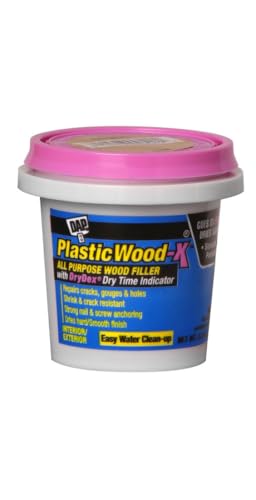
6 Oz. DAP 00585 White Plastic Wood Latex-Based All PurposeDAP | Our pick | 6 oz · latex · white | $7.19
Price as of 31 Oct 2026
|
View |
 |
Minwax 21600000 High-Performance Wood Filler, 12-Ounce CanMinwax | Pair with it | 12 oz · 2 pack · high-performance | $50.00
Price as of 31 Oct 2026
|
View |
 |
Bondo Wood Filler 12 oz with Hardener 0.5 oz | Repairs3M | Also great | 12 oz · stainable · exterior | $16.49
Price as of 31 Oct 2026
|
View |
 |
Abatron WoodEpox Kit – 2 Pint – 2-Part Structural EpoxyAbatron | Upgrade pick | 2 pint · epoxy · structural | $49.75
Price as of 31 Oct 2026
|
View |
 |
Elmers ProBond Professional Strength All Purpose WoodElmer’s | Also great | 32 oz · stainable · interior/exterior | $26.11
Price as of 31 Oct 2026
|
View |
Match the filler to the failure mode first. A shallow nail hole on a dry fascia board needs a different product than a rotted window sill or a deck gap that opens and closes with seasonal movement.
The table below compares the picks by repair depth, moisture exposure, and finish plan so you can rule out the wrong chemistry before you buy.
How we chose
These picks are based on published product details, stated cure windows, and the use cases each brand claims. The shortlist favors products that clearly fit exterior repairs, with separate attention to shallow patching, rot rebuilds, and weather exposure.
Three filters matter most here: repair depth, moisture exposure, and finish compatibility. A filler that sands well can still be the wrong choice if the wood is soft, wet, or expected to move.
Products that only fit one narrow job still make the list if they solve it well. A fast-paint option is useful for trim, while a structural epoxy is the safer call for rot and missing wood.
When a product should not be used, that limitation is part of the recommendation. A filler is not the answer for widespread rot, soft framing, or joints that keep opening and closing.
Which outdoor wood filler is best for general repairs?
For general exterior repairs, Bondo Wood Filler is the strongest all-around pick in this list because it is a two-part polyester filler, it is aimed at doors, fences, and windows, and it moves quickly from application to paint or stain. That makes it useful when you need a durable patch on trim or exterior boards before weather returns.
For paint-only work, DAP Plastic Wood-X is the better timing-focused choice when the repair is shallow and you want a visible cue for dry time. For stain-matched work, none of these products should be treated like bare wood; stainable results are possible, but matching grain and tone is still limited.
General-use decision points
Use epoxy when the damage is deeper than surface checks or when water exposure is part of the problem. Use a water-based exterior filler when the hole is shallow, the board is sound, and cleanup matters more than rebuild strength.
A common first-timer mistake is choosing a filler for a window frame with soft, punky wood around the repair. In that case, filler only bridges the surface unless you remove the rot and get back to firm wood first.
Quick picks
- Best overall: Bondo Wood Filler for fast exterior repairs that need paint or stain soon.
- Best for rot rebuilds: Abatron WoodEpox for missing wood, decayed corners, and structural patching.
- Best for small cracks and holes: Gorilla All-Purpose Wood Filler for shallow exterior patching.
- Best for visible timing control: DAP Plastic Wood-X when you want the pink-to-natural indicator.
- Best for weather exposure: VAN VOTZ Waterproof Wood Filler for humid, rainy, or snowy locations.
- Best for rot repair: J-B Weld Wood Restore Premium Epoxy Putty Kit for rebuilding damaged profiles.
- Best for vertical rot repairs: System Three SculpWood for upright repairs that need to hold shape while curing.
Bondo Home Solutions Wood Filler: best for fast exterior fixes
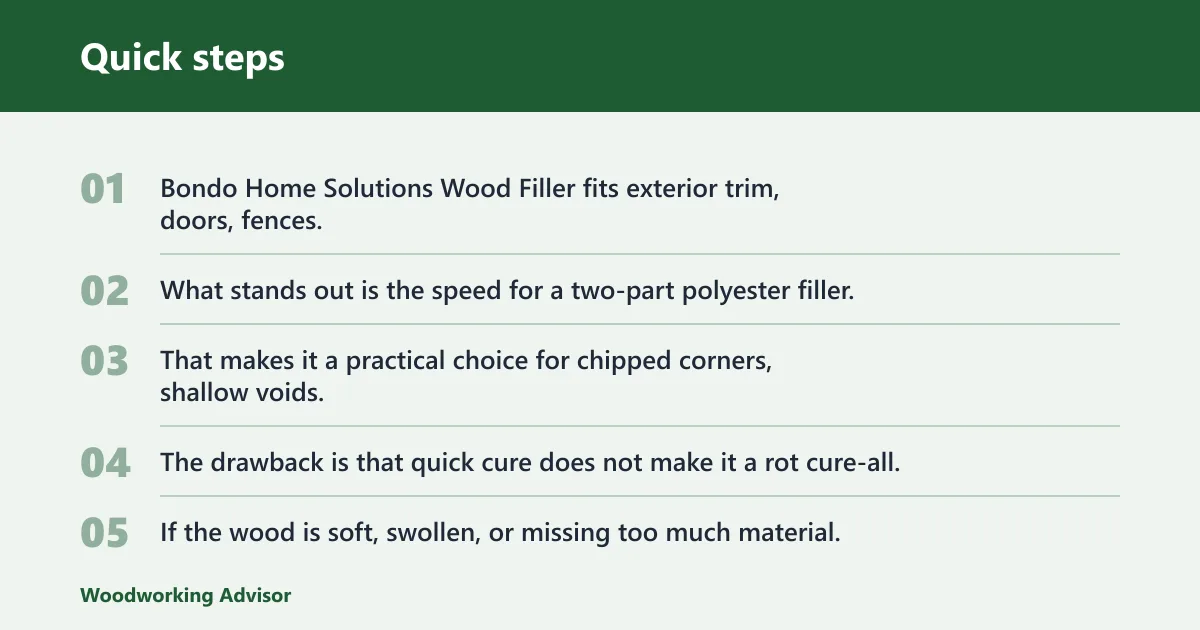
Bondo Home Solutions Wood Filler fits exterior trim, doors, fences, and windows when you need a quick-moving repair. It is useful when rain or dew is close.
What stands out is the speed for a two-part polyester filler. That makes it a practical choice for chipped corners, shallow voids, and damaged edges where you want a hard patch without waiting all day.
The drawback is that quick cure does not make it a rot cure-all. If the wood is soft, swollen, or missing too much material, a surface filler still leaves a weak substrate underneath.
Where it fits best
Use it on exterior boards that still have solid wood around the damage. It is a better fit for chips, trimmed-off corners, and moderate holes than for large, mushy areas.
Dry time, paint time, and use limits
Its timing works well for same-day painting, but dry time is not the same as full cure. If the patch is thick or the weather is cool, give it more time before sanding aggressively or applying a finish coat.
Abatron WoodEpox: best for rotted wood rebuilds
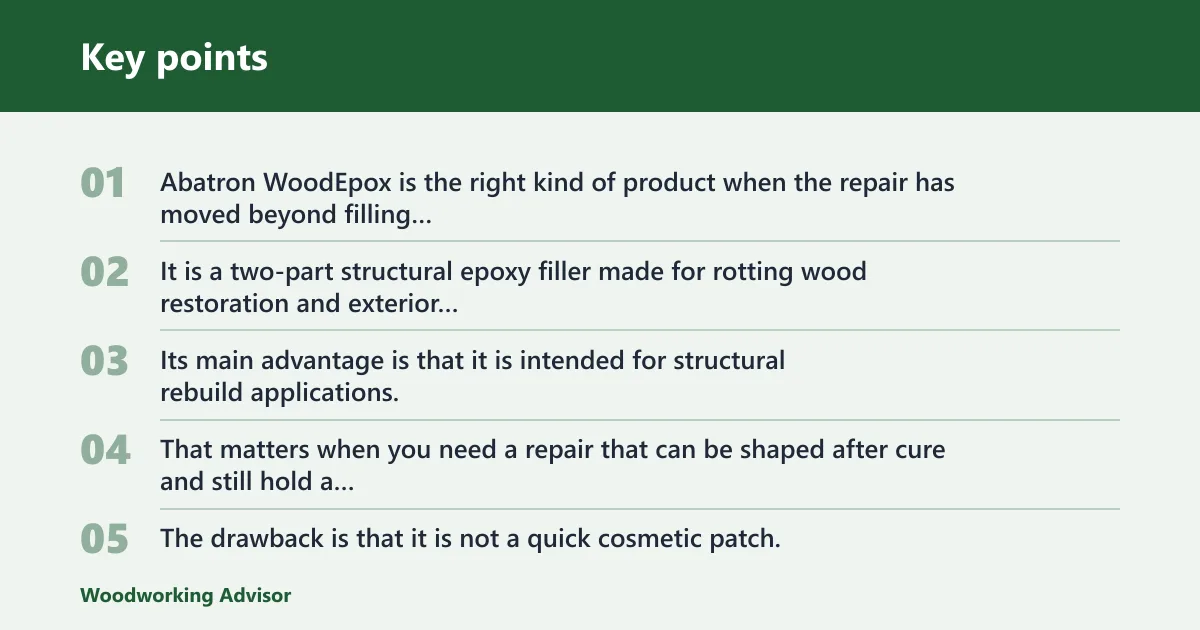
Abatron WoodEpox is the right kind of product when the repair has moved beyond filling and into rebuilding. It is a two-part structural epoxy filler made for rotting wood restoration and exterior use, so it suits corners, sills, and other sections where material is missing.
Its main advantage is that it is intended for structural rebuild applications. That matters when you need a repair that can be shaped after cure and still hold a profile on exposed exterior trim.
The drawback is that it is not a quick cosmetic patch. Structural rebuilds take prep, shaping, and cure time, so this is not the fastest fix for a small nail hole.
When epoxy replacement makes sense
Choose this type when the wood is decayed but not completely beyond repair. It is the better route for localized rot at corners, rails, and frame edges where replacement would be larger and more invasive.
Structural rebuild and cure considerations
Epoxy replacement compounds are stronger than basic filler because they are built to replace material, not just cover it. They can usually be shaped after cure, but the repair should not be rushed into service before the epoxy has fully hardened.
Gorilla All-Purpose Wood Filler: best for small cracks and holes
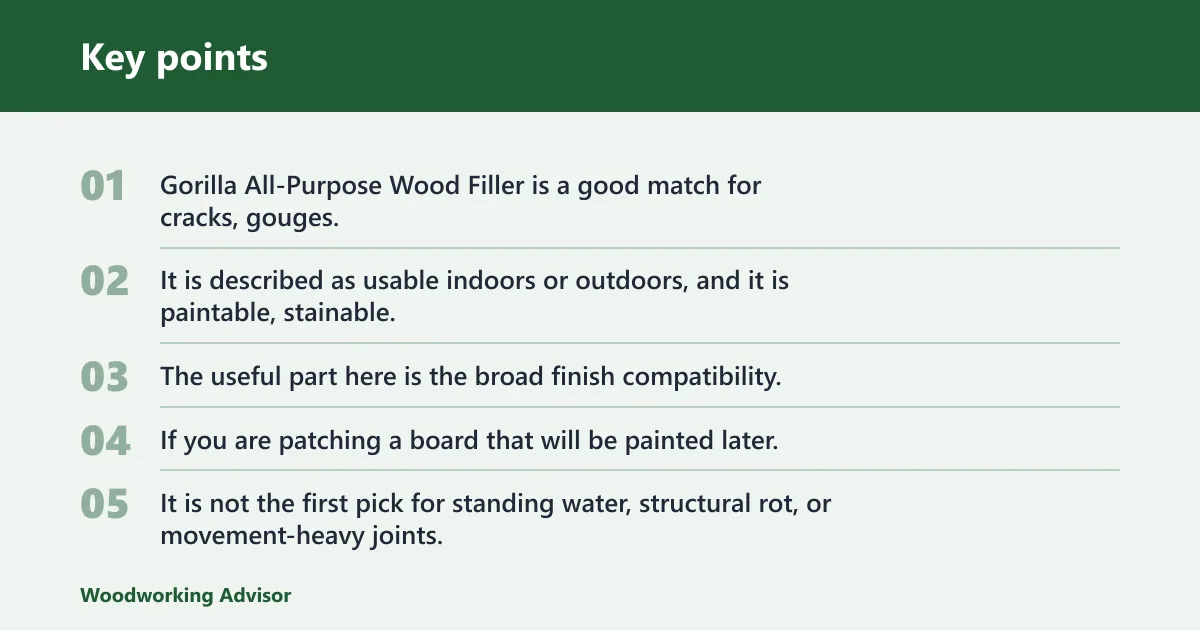
Gorilla All-Purpose Wood Filler is a good match for cracks, gouges, and holes that are still in the shallow-to-moderate range. It is described as usable indoors or outdoors, and it is paintable, stainable, and sandable, which makes it flexible for common exterior touch-ups.
The useful part here is the broad finish compatibility. If you are patching a board that will be painted later, this filler covers the basic prep steps without forcing a specialty epoxy route.
The drawback is exposure limits. It is not the first pick for standing water, structural rot, or movement-heavy joints, where a stronger epoxy or replacement is safer.
Best-use scenarios
Use it for nail holes, minor gouges, and hairline cracks on sound wood. It is a practical option when the surface is dry and the repair is mostly cosmetic before painting.
Paintability, sandability, and exposure limits
Because it is sandable and finish-friendly, it works well when the surface needs to blend into surrounding trim. For stain work, the result may still read as a repaired area rather than a perfect grain match.
DAP Plastic Wood-X: best for visible repair timing
DAP Plastic Wood-X is a good fit when you want a clear visual cue during dry down. The DryDex color-change indicator turns from pink to natural, and the product is described as suitable for interior or exterior wood.
For shallow repairs, it can dry relatively quickly. For deeper fills, the longer cure window makes it easier to plan around weather and topcoating.
The drawback is depth sensitivity. It works better as a surface and shallow-fill product than as a rot rebuild or a gap filler that must span large movement.
Color-change indicator
The color shift is useful because it helps you avoid sanding or painting too early. That matters outdoors, where a patch that still holds moisture can telegraph through finish coats.
Depth limits and cure timing
Use the shorter timing only for shallow repairs. Once the fill gets deeper, the longer cure window becomes the real schedule, not the quick surface dry.
VAN VOTZ Waterproof Wood Filler: best for weather exposure
VAN VOTZ Waterproof Wood Filler is a better fit when the repair needs to handle rain, humidity, and seasonal weather changes. It is available in a range of paintable and stainable colors, and it is described as resisting snow, sun, rain, and humidity.
That color range helps when you want the patched area to sit closer to the surrounding finish before topcoating. It is also a water-based formulation, which usually makes cleanup easier than solvent-heavy systems.
The drawback is that stain matching is still limited by repaired-wood appearance. Even with color options, the patch may not disappear the way a natural wood surface would.
Humidity, rain, and snow resistance
This is the option to look at when the repair is on exposed trim, porch parts, or other weather-facing wood. It suits jobs where moisture resistance is more important than structural rebuild strength.
Color selection and finish planning
The 18 colors help you get closer to the final look before paint or stain. That is useful on visible trim, but you should still plan for a finish coat if you want the repair to blend cleanly.
Wood filler decision table
The table below matches repair scenario to filler type so you can choose by failure mode, not brand hype. If the wood is moving, rotting, or seeing standing water, the risk column matters as much as the filler type.
| Repair scenario | Damage size | Exposure level | Recommended chemistry | Finish compatibility | Red-flag failure risks |
|---|---|---|---|---|---|
| Nail holes | Pinpoint to shallow | Low to moderate | Water-based exterior filler | Paintable; stainable only with limited match | Overfilling, early sanding, weather before cure |
| Hairline cracks | Very shallow | Low, if wood is sound | Paintable exterior filler | Best under paint | Crack reopening from movement, shrinkage, poor prep |
| Deep rot | Large, missing material | High | Two-part epoxy wood filler or epoxy replacement compound | Paintable after cure | Leaving soft wood in place, trapping moisture, undercure |
| Deck gaps | Variable, often wider than cosmetic cracks | High and movement-prone | Usually replacement or structural epoxy, not basic filler | Paintable if the surface is being coated | Fastener movement, standing water, freeze-thaw splitting |
| Fascia boards | Shallow to moderate, unless rot is present | Moderate to high | Exterior filler for sound wood; epoxy if decay is present | Paintable; stainable only where appearance allows | Soft substrate, edge failure, water entry behind trim |
| Window frames | Shallow repair to rebuild-level damage | High | Epoxy filler for rot; exterior filler for minor defects | Paintable after cure | Rot left in place, seasonal movement, paint failure |
J-B Weld Wood Restore is a 32 oz epoxy putty kit built for rot repair that needs shaping after cure. It cures to wood density, and it can be sanded, drilled, tapped, and painted after cure, which makes it useful for rebuilding damaged profiles.
This is the right direction for deep repairs where you need more than a cosmetic patch. The ability to machine the cured repair is a real advantage on trim edges, frames, and other formed surfaces.
The drawback is that it is overkill for small surface defects. The kit size and rebuild focus make it less sensible for a handful of nail holes.
When to choose it
Choose it for rotted corners, edge rebuilds, and missing sections that still belong to a repairable board. It fits work where the final profile matters as much as the fill itself.
Cure and shaping
Allow the repair to reach full hardness before drilling, tapping, or final sanding.
System Three SculpWood: best for vertical rot repairs
System Three SculpWood is an epoxy putty built for vertical rot repair. That longer cure window makes sense for shaped fills that must hold on upright surfaces without slumping.
The solvent-free formula is useful when you want a cleaner epoxy option for repair work on exterior trim and frame details. It is best treated as a rebuild material, not a quick filler for cosmetic blemishes.
The drawback is patience. A longer cure is slower than fast-patch fillers, so it is not the best choice if you need paint on the same day.
Best-use scenarios: use it
Use it where the damaged wood is vertical and the repair must stay in place while it cures. That makes it a logical pick for exterior trim faces, rail ends, and other upright rot repairs.
Cure planning
Because the cure window is longer, weather planning matters. Cold temperatures can slow the timeline further, so avoid assuming the repair is ready just because the surface feels hard.
Which one should you buy?
If you need one general-purpose pick for exterior repairs, start with Bondo Wood Filler. If the wood is rotted or missing in a way that changes the board’s shape, move to Abatron WoodEpox or J-B Weld Wood Restore instead.
If the repair is shallow and you want easier cleanup, Gorilla All-Purpose Wood Filler is a sensible choice. If timing matters most, DAP Plastic Wood-X gives you a visible cure cue. If the repair will face snow, rain, and humidity, VAN VOTZ Waterproof Wood Filler is the weather-focused option.
Budget matters most on small repairs. For nail holes and minor cracks, a basic exterior filler is usually enough; for large holes, the cost-per-repair often favors epoxy because a cheaper filler may fail and need rework.
Say your fascia board has a 3-inch soft spot but the rest of the board is firm. That is a filler job only if you can cut back to sound wood and rebuild a contained area; if the softness runs along the edge or behind the trim, replacement is safer.
Suppose a window frame has shallow checking and the paint is intact elsewhere. A paintable exterior filler can work, but if the wood fibers crumble when pressed, filler alone will not stop future failure.
Wood replacement is the better answer when the damage is widespread, the substrate is soft through the section, or the joint moves every season. Filler can finish a repair. It should not be asked to hold together failing wood.
Frequently asked questions
What’s the best outdoor wood filler
The best outdoor wood filler depends on the repair depth and weather exposure, but Bondo Wood Filler is the best all-around pick in this list for fast exterior repairs. It is a two-part polyester filler, it is aimed at doors, fences, and windows, and it moves quickly from application to paint or stain.
What’s the best exterior wood filler
The best exterior wood filler is usually an epoxy when the repair is deep or weather-exposed, and a paintable exterior filler when the damage is shallow. For general use, Bondo is the strongest all-purpose fit here; for rot rebuilds, Abatron WoodEpox is the safer choice.
What is the best wood filler for large holes outdoors?
For large holes outdoors, epoxy wood filler is the better choice because it replaces missing material more effectively than a basic patch filler. Abatron WoodEpox and J-B Weld Wood Restore are the best fits in this list for rot repair and rebuild work on exterior wood.
What outdoor wood filler is best for decks
Decks are movement-prone and often see water, so filler is often the wrong fix for big gaps or soft boards. For small cosmetic defects, a weather-resistant repair product may work, but for structural gaps, fastener movement, or board edge decay, replacement is usually safer.
What exterior wood filler works for window frames
Window frames need a filler that can handle exterior exposure and be painted cleanly after cure. Bondo works for smaller repairs, while Abatron WoodEpox or J-B Weld Wood Restore is better when rot has removed material and the frame needs rebuilding.
What exterior wood filler works for nail holes
For nail holes, a water-based exterior filler is usually the most practical choice because the damage is shallow and the repair is mostly cosmetic. DAP Plastic Wood-X, Gorilla All-Purpose Wood Filler, or VAN VOTZ Waterproof Wood Filler can all fit that job if the wood is sound and dry.
Sponsored / affiliate links. As an Amazon Associate I earn from qualifying purchases. I may earn additional commission from eligible campaigns.