7 Spray Guns for Polyurethane: Tip Size & Price Compared (2026)
For most furniture and cabinet work, the safest starting tip size for polyurethane is 1.3–1.5mm — that’s the range Fuji, TCP Global and HomeRight actually pair with topcoat work in their own product pages, not the 1.8–2.0mm often repeated online. The Fuji Spray T75G is the strongest all-around gravity-feed pick; the TCP Global 3-gun set is the best value if you want to test more than one tip size before committing.
What Actually Matters When Spraying Polyurethane
Polyurethane is thicker than most things people spray. That’s the whole problem: a gun sized for latex wall paint or a light stain will often clog, spit, or lay down an orange-peel texture on straight polyurethane, and a gun sized for heavy primer can blow so much material that you get runs before you finish one pass.
Four things actually decide whether a spray gun works for this job, and we built the comparison table below around them:
- Tip/nozzle size — too small and it clogs on thicker polyurethane; too large and it lays down too much material for a clean, thin coat.
- Air source and requirement (CFM/PSI) — a compressor-fed gun is only as good as the compressor behind it; a turbine unit sidesteps this but locks you into that system’s own tips.
- Cup/material capacity — a 20oz detail cup means refilling constantly on a set of cabinet doors; a 1-liter or larger cup means fewer stops.
- Price — the spread on this list runs from $60 to $429, and the expensive gun is not automatically the right one for a one-off dresser.
Why This List Exists
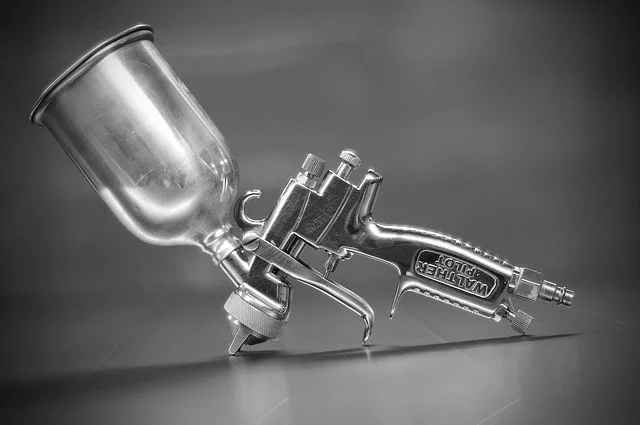
Years ago I tried to spray a clear coat of polyurethane on a walnut dresser with a small airbrush that had worked fine for smaller craft projects. It couldn’t move the material — I thinned the polyurethane heavily just to get it to flow, turned the pressure up, and eventually a glob of wet finish landed square on a drawer front I’d spent an hour sanding. The airbrush wasn’t broken; it just wasn’t built for a coating this thick. That’s the mistake this list is meant to prevent: matching the tool to the material before you buy it, not after.
None of the seven picks below were purchased and physically tested for this article — see How We Picked These for exactly what research went into each one and what didn’t.
7 Spray Guns for Polyurethane, Compared
Every number below comes from the manufacturer’s own listing, product page or spec sheet gathered directly for this article — not copied from another review. Where a spec isn’t published, the cell says so rather than guessing.
| Spray Gun | Type & Power Source | Tip / Nozzle Size | Cup Capacity | Air Requirement | Price | Verdict |
|---|---|---|---|---|---|---|
| Fuji Spray T75G | Gravity-feed HVLP, Fuji turbine-powered (not shop compressor) | 1.3mm factory (additional air caps sold separately) | 600cc (~20oz) nylon | N/A — runs off a dedicated Fuji turbine, not CFM/PSI from a compressor | $429.00 | #1 Best Overall |
| TCP Global 3-Gun Set | Gravity-feed HVLP, compressor-powered | 1.0mm / 1.4mm / 1.8mm (3 guns) | 2×1L + 1×150cc | 29–50 PSI, 3.5–7.1 CFM | $149.99 | Best for Multiple Nozzle Sizes |
| Wagner FLEXiO 595 | Turbine HVLP, self-contained (X-Boost) | Proprietary iSpray + Detail Finish Nozzle — no mm rating published | 20oz (Detail Finish Nozzle) | N/A — self-contained turbine, no compressor needed | $143.79 | Best for Beginners |
| Graco Magnum X5 | True airless, electric piston pump | Ships with 0.015in tip; ~0.011in (≈0.28mm) recommended for thinner poly/stain | None — draws from a 1–5 gal bucket | N/A — hydraulic pressure, not compressor CFM/PSI | $314.00 | Best for Large Projects (Airless) |
| Astro Pneumatic 4008 | Siphon-feed, compressor-powered | Fixed 1.8mm | 1 qt (32oz) aluminum, dripless | 50–60 PSI, 7–12 CFM | $60.00 | Best Budget Pick |
| DEWALT DWMT70779 | Siphon-feed, compressor-powered, convertible to pressure-feed | Fixed 1.4mm | 32oz (converts to 1000cc pressure pot) | 40 PSI max | $59.99 | Best Compact Pick |
| HomeRight Super Finish Max | Turbine HVLP, self-contained (450W motor) | 3 brass tips: 1.5mm / 2.0mm / 4.0mm | 39oz | N/A — self-contained turbine, no compressor needed | Not published (Amazon buy-box withheld at time of research) | Best for Switching Between Stains and Poly |
The Correction: There Isn’t One “Right” Tip Size for Polyurethane
A lot of spray-gun articles — including an earlier version of this one — repeat a single rule of thumb: use a 1.8–2.0mm tip for standard polyurethane. Going straight to the manufacturers who actually publish tip guidance shows that’s not what they say.
- TCP Global’s own product page pairs its 1.4mm tip with topcoat work and reserves its 1.8mm tip for primer — the opposite of using 1.8mm as the default for a clear finish coat.
- HomeRight’s Super Finish Max ships a 1.5mm tip for stains and sealers (the closest published category to a clear polyurethane topcoat) and saves its largest 4.0mm tip for primer/latex.
- Fuji’s T-Series guns (including the T75G in this list) ship with a 1.3mm tip as the factory standard, marketed for “most coatings and fine finishes,” not a larger size.
- Graco’s own tip chart for the Magnum X5 recommends a smaller ~0.011in orifice for thinner materials like polyurethane and stain, well under the 0.015in tip the sprayer ships with by default.
The pattern across every manufacturer who actually publishes tip-to-material guidance: tip size tracks the coating’s role (thin topcoat vs. thick primer), not a single fixed number for “polyurethane” as a category. A properly thinned polyurethane topcoat behaves closer to a 1.0–1.5mm-tip material than a 1.8mm-plus one. The two fixed-tip guns on this list that ship with a single 1.8mm tip (Astro Pneumatic) or 1.4mm tip (DEWALT) illustrate the spread directly — and it’s worth noting the DEWALT’s factory 1.4mm tip lands closer to what TCP Global calls out for topcoat work than the Astro’s 1.8mm does.
The second thing that gets stated as a blanket rule online is that thinning polyurethane before spraying is optional if you buy the right sprayer. Wagner’s own product page for its Detail Finish Nozzle — the nozzle it recommends for fine work like furniture and cabinets, and the one that lists polyurethane by name — states thinning is required for polyurethane specifically, even though the same sprayer’s main iSpray nozzle is marketed to spray latex paint unthinned. The “sprays unthinned” marketing claim on a turbine HVLP or airless unit is almost always about latex paint, not about polyurethane.
Best Spray Guns for Polyurethane
Picks span the real range of how people spray polyurethane at home: gravity-feed HVLP for fine furniture work, a turbine handheld for beginners, a true airless unit for whole rooms of cabinetry, and a couple of inexpensive compressor guns for anyone spraying one project and not building a permanent finishing setup.
1. Fuji Spray T75G HVLP Gravity Spray Gun — #1 Best Overall
Price: $429.00 · Check Price on Amazon
- 100% stainless steel fluid components (needle, nozzle) — won’t corrode from repeated mineral-spirits cleanup
- Side pattern-control knob adjusts fan size from small touch-ups to full panels
- Non-bleed design, so it doesn’t leak air/dust into the shop between passes
- 600cc gravity cup, with 400cc and 3oz cup options sold separately
- 1.3mm factory tip; interchangeable air cap sets available for thinner or thicker material
This is a genuine professional-grade gun, and it’s the one on this list most capable of a true cabinet-shop finish on polyurethane, lacquer, or conversion varnish. The catch that’s easy to miss shopping on price alone: the T75G is the gun, not the whole system. It’s turbine-powered, which means it needs a Fuji turbine unit to actually run — most buyers get it as part of a bundled kit, and the $429 gun-only price above assumes you already have or are separately buying the turbine. Once you’re set up, the payoff is real: the stainless fluid path and adjustable air cap give you far more control over atomization than any fixed-tip gun on this list.
Main drawback: It’s a turbine system, not a compressor gun — if you don’t already own a compatible Fuji turbine, budget for that separately before you budget for the gun.
2. TCP Global HVLP Spray Gun Set (1.0mm / 1.4mm / 1.8mm) — Best for Multiple Nozzle Sizes
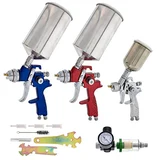
Price: $149.99 · Check Price on Amazon
- Three complete guns: 1.0mm, 1.4mm and 1.8mm stainless steel tips
- TCP Global’s own product page pairs 1.4mm with topcoat work and 1.8mm with primer
- Two 1-liter aluminum cups plus one 150cc cup for small touch-ups
- Adjustable pattern width, fluid flow and air pressure on each gun
- Compressor-fed: 29–50 PSI, 3.5–7.1 CFM
This is the pick that most directly answers the “which tip size” question from the correction above — instead of guessing, you get all three of the sizes manufacturers actually reference (1.0mm for touch-ups, 1.4mm for topcoat-weight material like a thinned polyurethane, 1.8mm for anything thicker like primer or an unthinned batch). At $149.99 for three guns, it’s also the best per-gun value on this list if you’re going to be spraying more than one type of finish over time.
Main drawback: three separate guns to clean after every session instead of one — expect real cleanup time if you use more than one tip size on the same project day.
3. Wagner FLEXiO 595 Handheld HVLP Sprayer — Best for Beginners
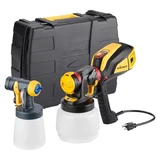
Price: $143.79 · Check Price on Amazon
- Self-contained X-Boost turbine — no compressor or separate turbine unit to buy
- Two nozzles included: iSpray (larger jobs) and Detail Finish Nozzle (fine work, 20oz cup)
- 9 power settings, adjustable spray width and pattern direction
- Wagner’s own Detail Finish Nozzle page lists polyurethane by name among supported materials
- 10% lighter than the previous FLEXiO generation
The FLEXiO 595 is the easiest gun on this list to get spraying a usable pattern on your first try — everything is self-contained, so there’s no compressor sizing or CFM math to do first. For polyurethane specifically, use the Detail Finish Nozzle, not the main iSpray nozzle: Wagner’s own product page for that nozzle names polyurethane as a supported coating but is explicit that thinning is still required, which contradicts the “sprays most unthinned” language on the gun’s main listing (that claim is about the iSpray nozzle spraying latex paint, not this nozzle spraying polyurethane).
Main drawback: the two nozzles are Wagner-proprietary with no published mm rating, so you can’t cross-shop tip sizes the way you can with the TCP Global set or a standard HVLP gun.
4. Graco Magnum X5 Airless Paint Sprayer — Best for Large Projects (Airless)
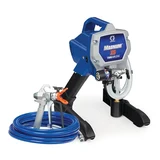
Price: $314.00 · Check Price on Amazon
- True airless: electric piston pump, no shop compressor needed
- Draws straight from a 1–5 gallon bucket via a flexible suction tube — no cup to refill
- Rated for projects up to 10 gallons of material and up to 75ft of hose
- Ships with a 0.015in (515) tip; Graco’s own tip chart recommends ~0.011in for thinner material like poly and stain
- Fully adjustable pressure control
This is the outlier on the list — not a fine-finish HVLP gun at all, but a true airless sprayer built to move a lot of material fast over a lot of surface. That makes it a poor fit for a single small project (it’s genuinely difficult to control on something the size of a jewelry box) and a strong fit for a full kitchen’s worth of cabinet doors or a whole staircase of balusters, where the alternative is hours of gun refills. Note that airless tip sizing (thousandths of an inch, e.g. 0.011in) is a completely different measurement system than HVLP mm nozzle sizing — they’re not directly comparable numbers, just two different industries’ conventions for describing the same underlying thing (the size of the orifice the material passes through).
Main drawback: it’s genuinely overkill, harder to control, and more prone to overspray on small furniture-scale work than any HVLP gun on this list — buy this for volume, not for a single dresser.
5. Astro Pneumatic 4008 Spray Gun — Best Budget Pick
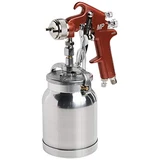
Price: $60.00 · Check Price on Amazon
- Fixed 1.8mm nozzle, siphon-feed, two-piece all-purpose design
- 1-quart dripless aluminum cup
- Fully adjustable wide fan pattern
- Compressor-fed: 50–60 PSI, 7–12 CFM required
- Lowest price on this list
At $60, this is the cheapest way onto this list, and the fixed 1.8mm tip and 1-quart cup make it a reasonable all-purpose gun for a garage that already has a compressor. The tradeoff, per the correction above: 1.8mm sits on the larger end of what manufacturers who publish tip-to-material guidance recommend for a clear topcoat, closer to what TCP Global calls out for primer than for topcoat work. It’ll spray polyurethane, but expect to thin more aggressively than you would with a 1.3–1.5mm tip to avoid a heavier, more textured coat.
Main drawback: the fixed 1.8mm tip has no smaller option if you want a genuinely fine, thin topcoat — you’re stuck compensating with extra thinning instead.
6. DEWALT DWMT70779 Spray Gun — Best Compact Pick for Small Projects
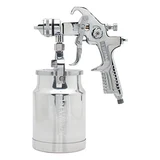
Price: $59.99 · Check Price on Amazon
- Fixed 1.4mm nozzle, siphon-feed conventional design
- 32oz cup, convertible to a 1000cc pressure-feed setup
- 40 PSI maximum air pressure — runs on a smaller compressor than the Astro Pneumatic
- Cam-style aluminum paint cup
- 1/4in air inlet, standard fitting
DEWALT markets this gun for latex paint, not polyurethane specifically — but its fixed 1.4mm tip happens to land in the same range TCP Global’s own page assigns to topcoat work, which arguably makes it a better-matched fixed-tip option for a thinned polyurethane clear coat than the Astro Pneumatic’s 1.8mm. It also tops out at a lower 40 PSI, so it can run on a smaller/quieter compressor than the 50–60 PSI the Astro needs.
Main drawback: it’s not marketed or documented by DEWALT for polyurethane at all, so you’re matching tip size yourself based on what other manufacturers publish, not on DEWALT’s own instructions.
7. HomeRight Super Finish Max — Best for Switching Between Stains and Polyurethane
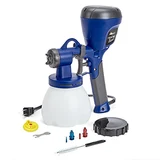
Price: Not published (Amazon buy-box withheld at time of research — typically sold in the $60–$110 range at other retailers) · Check Price on Amazon
- Self-contained 450W turbine, no compressor needed
- 3 brass spray tips included: 1.5mm (blue, stains & sealers), 2.0mm (green, latex/chalk paint), 4.0mm (red, primer)
- 39oz container
- Adjustable air cap for horizontal, vertical or round spray patterns
- One of the only guns on this list to list “polyurethane” by name in its own materials list
HomeRight’s own materials list for this sprayer explicitly names polyurethane, stain, and varnish alongside latex and chalk paints — and unlike most of the other picks, it tells you which of its three included tips to use for which: the 1.5mm blue tip for stains and sealers, which is the closest published category to a clear polyurethane topcoat. That combination (named compatibility + tip-to-material mapping) is unique on this list. The gap is pricing: Amazon’s buy-box price was withheld across every check for this article, which is a documented, reproducible pattern on some listings and not a sign the product is unavailable — other retailers list it in the $60–$110 range.
Main drawback: no live Amazon buy-box price to point to right now — check current price at checkout rather than trusting a number quoted elsewhere.
How We Picked These
None of these seven spray guns were bought and physically tested by us for this article — we want to be upfront about that rather than imply otherwise. What this article is built from instead:
- Manufacturer spec sheets and product pages, fetched directly from Fuji Spray Systems, TCP Global, Wagner SprayTech and Graco for tip size, cup capacity, and air/power requirements.
- Live Amazon listing data (price, buy-box status, published features) pulled via Amazon’s Creators API at the time of writing, not carried over from a previous version of this page.
- Cross-checking tip-size claims across at least three manufacturers before treating a pattern as real, rather than repeating a single source’s rule of thumb — that’s how the correction above was found.
- This site’s own previously-published, independently-written guide on adjusting a spray gun’s air cap, which separately arrived at the same 1.3mm-for-topcoat range without being written for this article.
We did not fabricate star ratings or review counts. Amazon’s review data was not reliably available for these listings at the time of research, so none are shown here — check current ratings on Amazon directly before buying.
What to Consider When Buying a Spray Gun for Polyurethane
HVLP vs. Airless vs. Gravity-Feed
These aren’t interchangeable labels for the same thing. HVLP (High Volume, Low Pressure) guns use a large volume of air at low pressure at the tip, which means less overspray and more control — the right category for furniture, cabinets, and anything where finish quality matters more than speed. Airless sprayers (like the Graco Magnum X5) use hydraulic pressure through a tiny orifice instead of air, moving far more material per minute but with less fine control — the right category for whole rooms, decks, or a full set of cabinet doors. Gravity-feed vs. siphon-feed describes where the cup sits: gravity-feed (cup on top) uses gravity to help push material to the nozzle and wastes less material at the bottom of the cup; siphon-feed (cup below) pulls material up and is common on cheaper guns.
Tip / Nozzle Size for Polyurethane
As covered in the correction above, don’t default to 1.8–2.0mm. Start in the 1.3–1.5mm range for a properly thinned polyurethane topcoat, and size up only if you’re spraying it heavier-bodied or unthinned. If you’re not sure, a multi-tip set like the TCP Global kit removes the guesswork — you can try more than one size on scrap before committing to a finish coat.
CFM and PSI (Compressor Compatibility)
Compressor-fed guns are only as good as the compressor behind them. The Astro Pneumatic 4008 needs 50–60 PSI and 7–12 CFM — a small pancake compressor rated for brad nailers won’t keep up with that continuously. The TCP Global guns and DEWALT DWMT70779 need less (29–50 PSI / 3.5–7.1 CFM, and 40 PSI max, respectively), which is more forgiving for a mid-size home shop compressor. Turbine guns (Fuji T75G, Wagner FLEXiO 595, HomeRight Super Finish Max) sidestep this entirely — check the compressor’s continuous CFM rating, not just its tank size, before assuming it’ll keep up.
Material / Cup Capacity
A 20oz detail cup (Wagner’s Detail Finish Nozzle) means stopping to refill often on a set of cabinet doors; a 600cc-plus cup (Fuji T75G) or a bucket-fed airless (Graco Magnum X5) means far fewer interruptions on a larger project. Match cup size to project size — a large cup on a small project just means more wasted, hardened polyurethane left in the cup afterward.
Does Polyurethane Need Thinning?
Almost always, yes — even on sprayers marketed as capable of spraying material unthinned. That claim, on every turbine or airless unit in this comparison, is specifically about latex paint, not polyurethane. Check the polyurethane can for a recommended thinning ratio (common thinners: mineral spirits or denatured alcohol for oil-based, water for water-based), and test viscosity with a viscosity cup before loading the gun.
Project Size and Type
A small item like a picture frame or jewelry box is often faster to brush than to set up a sprayer for. Furniture and cabinet-scale projects are where a gravity-feed HVLP gun earns its keep. Whole rooms, staircases, or a full kitchen’s worth of doors are where an airless sprayer’s speed starts to outweigh its lower fine-control ceiling.
Your Skill Level
A multi-adjustment gun with separate knobs for fan pattern, fluid flow and air volume (Fuji T75G, TCP Global set) rewards practice but has a real learning curve. A simpler turbine unit with fewer controls (Wagner FLEXiO 595) gets you spraying sooner with less dialing-in, at the cost of some fine control.
Budget
This list runs $60 to $429. For most home hobbyists spraying polyurethane on furniture a few times a year, a $60–$150 compressor-fed gun in the 1.3–1.5mm range covers the job. The $300-plus picks earn their price either through finish quality at a professional level (Fuji) or raw coverage speed on large jobs (Graco).
Cleaning and Maintenance
Polyurethane dries fast and hard, and every manufacturer in this comparison stresses the same thing: clean the gun immediately after use with the solvent matched to your polyurethane type (mineral spirits or denatured alcohol for oil-based; water for water-based), disassemble the needle and nozzle fully, and check the air cap holes are clear. A gun that sits uncleaned overnight with dried polyurethane inside is often ruined.
How to Spray Polyurethane
The same basic sequence applies whether you’re using a $60 gun or a $429 one — the gun changes how forgiving the process is, not the steps themselves. For the full walkthrough on prep, thinning ratios, and coat timing, see our step-by-step guide to spraying polyurethane clear coat.
If you’re spraying a two-component (2K) catalyzed urethane instead of standard single-component polyurethane — common in automotive and higher-durability shop finishing — the mixing ratio, pot life, and respirator requirements are different. Our guide to spraying urethane covers that distinction, including why a plain organic-vapor cartridge mask isn’t enough for catalyzed 2K products.
- Thin the polyurethane per the can’s instructions or a starting ratio of 10–25% thinner by volume, then confirm with a viscosity cup rather than guessing.
- Filter it through a disposable paint strainer into the gun’s cup — even new cans carry small debris that clogs a fine tip.
- Test the spray pattern on scrap or cardboard first. Look for an even, oval pattern with no heavy or light spots before touching the actual project.
- Prep the surface: sand smooth, wipe with a tack cloth, and work in a clean, well-ventilated area with drop cloths protecting anything nearby.
- Spray in overlapping passes, about 50% overlap, holding the gun perpendicular to the surface at a consistent distance — too close causes drips, too far causes a dry, textured spray.
- Let each coat dry fully per the manufacturer’s instructions, then lightly sand with 320 or 400 grit between coats before the next pass. Two to three coats is typical.
- Clean the gun immediately after the last coat — don’t wait, and don’t skip this step.
Frequently Asked Questions
What is the best type of spray gun for polyurethane?
For most furniture and cabinet work, a gravity-feed HVLP gun is the best starting point — it gives high transfer efficiency (less wasted material, less overspray) and enough control for a smooth, even coat. For whole rooms or large batches of cabinet doors, a true airless sprayer like the Graco Magnum X5 covers ground faster, at the cost of fine control on small pieces.
Do I need to thin polyurethane before spraying?
Almost always, yes. Even sprayers marketed as capable of spraying material unthinned are referring to latex paint, not polyurethane — Wagner’s own product page for its Detail Finish Nozzle names polyurethane as supported but explicitly requires thinning. Check the can for a recommended ratio and confirm with a viscosity cup rather than guessing.
What nozzle size should I use for polyurethane?
Start in the 1.3–1.5mm range for a properly thinned topcoat — that’s what TCP Global, HomeRight and Fuji actually pair with topcoat/stain work on their own product pages, not the 1.8–2.0mm figure commonly repeated online (which manufacturers tend to reserve for primer or thicker material). Size up only if your polyurethane is heavier-bodied or you’re spraying it less thinned.
How do I prevent runs and drips when spraying polyurethane?
Thin the polyurethane correctly, keep the gun moving at a steady speed with about 50% overlap between passes, and don’t get too close to the surface. Test your spray pattern on scrap material first, and apply thin coats rather than trying to build full coverage in one heavy pass.
Can I use a non-HVLP spray gun for polyurethane?
You can, but it’s generally not recommended. Higher-pressure conventional guns tend to create more overspray, waste more material, and are harder to control for an even coat than an HVLP gun. HVLP’s combination of high transfer efficiency and better control is why it’s the default recommendation for clear finishes like polyurethane.
How important is cleaning the spray gun after using polyurethane?
Critical. Polyurethane dries fast and hard, and dried polyurethane inside a gun’s needle, nozzle or air cap can permanently clog it. Every manufacturer covered in this article stresses cleaning the gun immediately after use with a solvent matched to the polyurethane type — don’t leave it until the next day.
Do airless sprayers and HVLP guns use the same tip-size numbers?
No, and this is a common source of confusion. HVLP nozzle sizes are given directly in millimeters (e.g. 1.4mm). Airless tip sizes are given in thousandths of an inch combined with a fan-width code (e.g. “515” means roughly a 10-inch fan at a 0.015in orifice). They’re different measurement conventions for different spray technologies — you can’t directly substitute one number for the other.
Final Thoughts
The Fuji Spray T75G is the strongest all-around pick if you’re set up for turbine HVLP and want cabinet-shop finish quality. But the single most useful takeaway from building this comparison isn’t which gun to buy — it’s the tip size. Manufacturers that actually publish tip-to-material guidance consistently point to 1.3–1.5mm for a properly thinned polyurethane topcoat, not the 1.8–2.0mm figure that gets repeated as a default online. Whatever gun you land on, matching the tip to the coating’s actual role — thin topcoat vs. thick primer — matters more than the brand on the trigger.
Related Guides
- Can you spray polyurethane with a paint sprayer? — a deeper look at HVLP, airless and gravity-feed as categories before you shop by product.
- How to thin Rust-Oleum paint for a spray gun — thinning ratios and technique if you’re working with a Rust-Oleum product specifically.
- How to adjust a spray paint gun — air cap sizing and pattern adjustment once you’ve picked a gun.
- Best wood preservative sprayer — a separate comparison for exterior preservatives, a different job than a clear polyurethane topcoat.
- Best inexpensive spray painter — general-purpose budget sprayers if polyurethane isn’t your only use case.
- Does mineral spirits leave a residue? — relevant if you’re using it to clean an oil-based-polyurethane gun.
- Sanding between coats of stain — the same technique applies between sprayed polyurethane coats.
- Floor lacquer vs. varnish — how polyurethane compares to other clear finishes if you’re still deciding on a product.
Sponsored / affiliate links. As an Amazon Associate I earn from qualifying purchases. I may earn additional commission from eligible campaigns.