Polyurethane Over Paint: Which Clear Coat Won’t Yellow or Peel
You finished painting, the color looks great, and now you want a tougher surface on top. Polyurethane over paint is a normal move on tabletops, dressers, trim and cabinet doors, and when it goes wrong it goes wrong in a few predictable ways: a yellow cast on white, a milky haze, or a clear coat that peels off in sheets.
This guide covers the choice that decides most of those outcomes (water-based or oil-based), what the maker data sheets actually say about recoat and cure times, and why the popular belief that water-based poly never yellows white paint is only half true. If you are going the other direction, see our guides on painting over polyurethane and painting over varnish.
Short Answer: Yes, but Match the Clear Coat to the Paint
Polyurethane sticks to properly cured, lightly scuffed paint. The two things to decide are the type of clear coat and the color underneath. Over white, cream, gray or pastel paint, use a water-based clear coat. Over dark colors, oil-based poly is fine because a little warmth will not show.
Best Clear Coat Over Light Paint
|
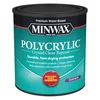
Minwax Polycrylic Protective Finish, Clear Satin, 1 Quart A water-based clear coat that Minwax describes as non-yellowing and non-ambering, with a 2 hour recoat time.
|
Which Clear Coat Goes Over Which Paint
Use this table as a starting point, then check the label on your specific paint.
| Paint underneath | Best clear coat | What to watch |
|---|---|---|
| Latex or acrylic (walls, furniture, trim) | Water-based polyurethane or Polycrylic | Cure first. Behr lists 7 to 30 days for full cure. See our acrylic paint guide |
| Oil-based enamel | Oil-based or water-based poly after a light scuff | If you use one maker’s line, follow its layering rule. General Finishes, for example, says to let oil-based products dry 72+ hours before going over with water-based |
| Chalk-style paint | The maker’s own topcoat or wax | Rust-Oleum sells a Chalked Protective Topcoat for its Chalked paint, and Valspar sells a Chalky Clear Sealing Wax for its chalky finish paint |
| White or light milk paint | Often no topcoat at all | General Finishes warns against any clear coat over its light milk paints because of yellowing, and says its white paints do not require a topcoat |
| Dark paint (navy, black, forest green) | Oil-based poly is acceptable | Amber warmth is invisible on dark colors; oil-based is slower to dry |
What the Maker Data Sheets Say
Product pages and data sheets give real numbers where blog advice usually guesses. Here are the four clear coats most people reach for, taken from the makers’ own pages.
| Clear coat | Recoat | Coats | Coverage | Notes from the maker |
|---|---|---|---|---|
| Minwax Polycrylic (water-based) | 2 hours | 3 recommended | 125 sq ft/qt | Non-yellowing, non-ambering; 24 hours before normal use; not for floors |
| Minwax Water Based Oil-Modified Polyurethane | 2 hours | 2 minimum, 3 for floors | 100-125 sq ft/qt | Warm look; 24 hours before light use; 7 days before cleaning floors |
| Minwax Fast-Drying Polyurethane (oil-based) | 3-4 hours | 2, or 3 for floors | 125 sq ft/qt | Mineral spirits cleanup; 24 hours before light use |
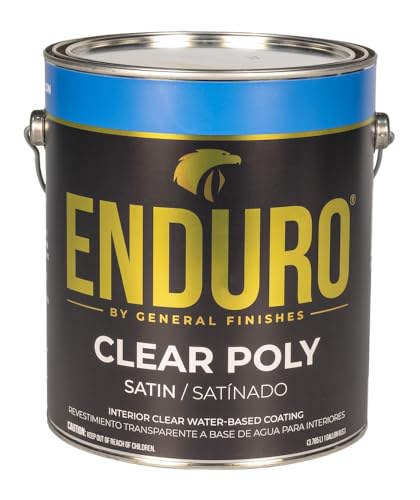
| General Finishes High Performance (water-based) | 2+ hours at 70F, 50% humidity | 3 | Not stated | 21 day full cure; not for light paints such as its milk paint |
Two practical takeaways. First, every one of these says to sand lightly between coats with fine paper (220 grit for Minwax, 220-320 for General Finishes). Second, coverage math is easy: at 125 sq ft per quart per coat, three coats over a 30 sq ft piece of furniture uses roughly three-quarters of a quart, so a quart is enough for most single projects.
The Yellowing Myth: It Is Usually Not the Clear Coat
The common advice is simple: oil-based poly ambers, water-based poly stays clear, so use water-based over white. The first half is well known. The second half is where General Finishes, a coatings maker, adds a caution in its own instructions.
Its data sheet says water-based topcoats dry clear over non-reactive surfaces like plastic or metal, but that white paint on wood is less predictable. Yellowing can come from the topcoat activating tannins in raw wood, or from dyes, stains or contaminants in a pre-existing finish. It is most noticeable with bright white paint and where finish pools in carved details. The same document says oak, pine, mahogany and Douglas fir are especially prone to bleed-through, that it can show up months later with seasonal changes, and that bright white paint yellows slightly with time whether or not it has a topcoat.
What this means for you: on a white-painted pine or oak piece, a water-based clear coat is still the right choice, but prime with a stain-blocking primer before the paint, and test a hidden spot first. Choosing water-based removes the amber from the clear coat. It does not remove the risk of the wood bleeding through.
Wait for Cure, Not Just Dry
Dry to the touch and cured are different. Latex paint is touch-dry in about an hour and ready for a second coat in 2 to 4 hours (Behr and Sherwin-Williams both publish that range), but Behr says full cure takes 7 to 30 days. A clear coat applied over paint that is still releasing moisture and solvents can trap them, which shows up later as cloudiness, softness or peeling. Our paint dry-time guide breaks the wait down by paint type.
If you cannot wait the full month, use General Finishes’ test for the clear coat layers: a dry water-based coat forms a powder when lightly sanded with a fine pad, not a gummy smear. Rushing dry time between coats can cause blush, the milky clouding from trapped moisture, and the risk goes up when humidity is over 80 percent or when you stack 3 or more coats.
Step-by-Step: Polyurethane Over Painted Wood
- Confirm the paint is cured, not only dry. When in doubt, wait longer.
- Clean off dust and oils with a damp cloth, then let the surface dry.
- Scuff lightly with 220-320 grit paper or a fine sanding pad. You want a dull surface, not bare wood showing through.
- Remove all dust with a vacuum and a tack cloth or a damp rag.
- Stir the finish gently. Minwax says do not shake it, because Polycrylic looks milky in the can but dries crystal clear, and shaking adds bubbles.
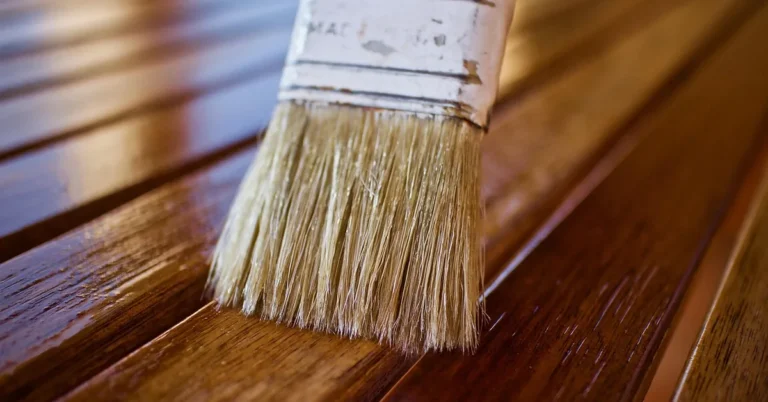
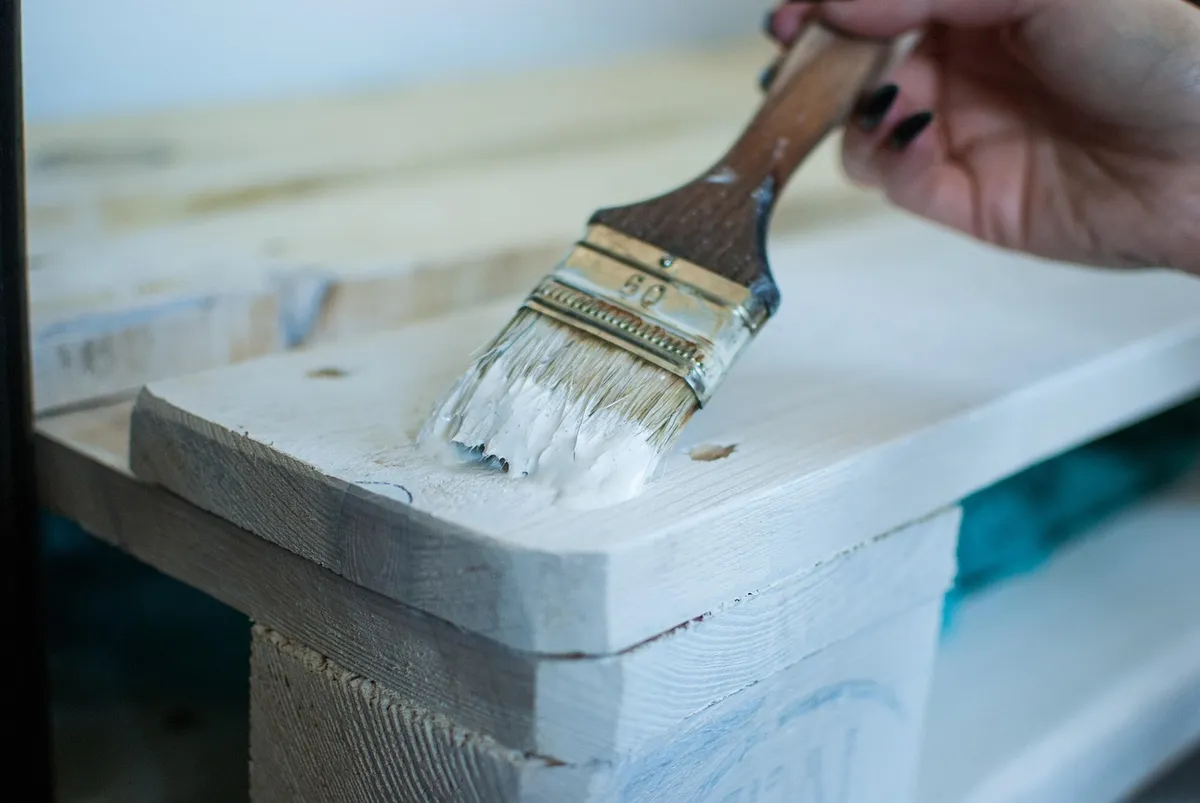
- Brush on a thin coat with the grain using a synthetic brush for water-based finish. Do not overwork it.
- Wait for the recoat time on the can (2 hours for Polycrylic), sand lightly with 220 grit, wipe, and apply the next coat. Plan on 3 coats for tabletops.
- Give it time before use: Minwax lists 3 hours for light handling and 24 hours for normal use with Polycrylic, and General Finishes lists 21 days for full cure.
If you use an oil-based finish, ventilate well and handle used rags carefully, since oil-soaked rags can self-heat. Lay them flat outdoors to dry or store them in a sealed container of water before disposal.
When You Do Not Need Polyurethane
A topcoat earns its keep on surfaces that get touched, wiped and scratched, such as tabletops, desks, stair rails and kitchen cabinets. On a low-traffic wall, a picture frame or a decorative sign, it is often unnecessary, and on bright white paint it adds a yellowing risk for little benefit. Check the paint maker’s guidance first: some paints, including General Finishes’ white paints, are designed to be used without a topcoat. For cabinets specifically, see whether painted cabinets need a topcoat.
Common Problems and Fixes
- Milky or cloudy finish: usually moisture trapped between coats or applying in high humidity. Let it dry fully, sand lightly and recoat in better conditions.
- Streaks: General Finishes notes that flatter sheens contain more flatting agents and streak more. Use semi-gloss or gloss on the first coats, apply a generous amount, and avoid back-brushing.
- Bubbles: caused by shaking the can or overworking the finish. Stir slowly and brush in light, even strokes.
- Peeling: paint that was not cured or not scuffed, especially glossy paint. Strip the failed area back, let paint cure, scuff and recoat.
- Wrong stain underneath: Minwax says Polycrylic should not be applied over red mahogany stains, and to wait at least 24 hours after any Minwax Wood Finish stain.
Frequently Asked Questions
Can you put polyurethane over latex paint?
Yes. Let the latex paint cure first (Behr lists 7 to 30 days for full cure, even though it is dry to the touch in about an hour), scuff it lightly, remove the dust, and apply thin coats of a water-based clear coat. Water-based poly and Polycrylic both work over cured latex.
Does polyurethane yellow white paint?
It can, but the clear coat is not always the cause. Oil-based polyurethane adds an amber tone on its own. With water-based topcoats, General Finishes says yellowing over white paint often comes from tannins, dyes or old finishes bleeding up from the wood underneath, and that bright white paint yellows slightly over time with or without a topcoat.
How long do you wait between paint and polyurethane?
At minimum until the paint is fully dry, and ideally until it has cured. Dry to the touch takes about an hour for latex, but full cure takes 7 to 30 days. If you cannot wait, a fine-sanding test helps: a dry water-based coat sands to a powder instead of gumming.
Can I use Polycrylic over paint on a floor?
Minwax says Polycrylic is not recommended for floors because high-traffic areas would need more frequent recoating. For painted floors, check what the floor paint maker recommends first, and consider a floor-rated polyurethane such as Minwax Fast-Drying Polyurethane, which lists 3 coats for hardwood floors.
Do I need to sand paint before applying polyurethane?
Yes, lightly. A scuff with 220 grit (General Finishes says 220-320 grit on an existing finish) gives the clear coat something to grip, especially over gloss or semi-gloss paint. Wipe away all dust before the first coat.
Conclusion
Polyurethane over paint works when the paint is cured, the surface is lightly scuffed, and the clear coat matches the color underneath: water-based over light paint, oil-based only where amber will not show. Treat yellowing as a wood-and-paint problem too, not only a clear-coat problem, and skip the topcoat when the paint maker says you do not need one. Related reading: polyurethane over acrylic paint, painting over polyurethane and painting over varnish.
Sponsored / affiliate links. As an Amazon Associate I earn from qualifying purchases. I may earn additional commission from eligible campaigns.