Varathane Polyurethane Review: Is It Worth Buying?
Varathane polyurethane is a solid buy for most interior wood projects if you match the formula to the job. Water-based is the best all-around pick for clear color and quick recoats. Oil-based makes more sense when you want a warmer look and can live with longer dry times.
Verdict
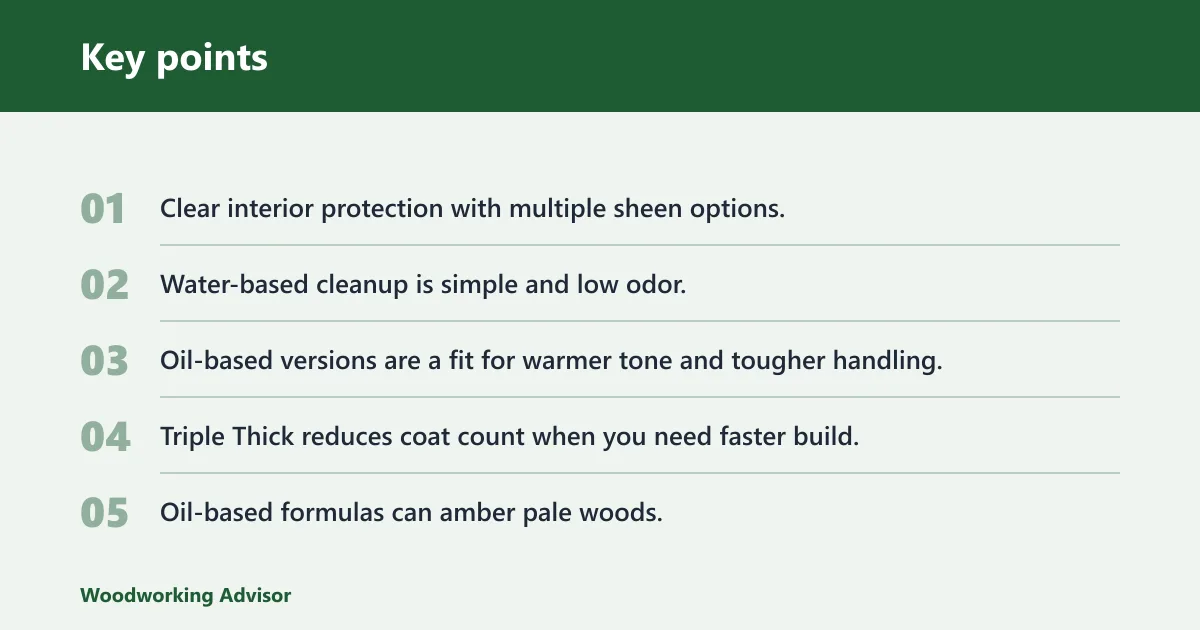

That split matters. On light woods, painted trim, and parts where you want the color to stay close to raw wood, the water-based formula is the better buy. On walnut, cherry, or darker-stained furniture, the oil-based option can help if you want a slight amber tone and can accept the yellowing risk.
Pros
- Clear interior protection with multiple sheen options.
- Water-based cleanup is simple and low odor.
- Oil-based versions are a fit for warmer tone and tougher handling.
- Triple Thick reduces coat count when you need faster build.
Cons
- Oil-based formulas can amber pale woods.
- Fast-drying water-based coats can show lap marks if you work slowly.
- Triple Thick is less forgiving on vertical surfaces and detailed trim.
- Spray format gives less film build per pass.
📊 Brush-on water-based polyurethane can be recoated after 2 hours. Source: Rustoleum.
Specs at a glance
| Formula | Best use | Clarity | Yellowing risk | Dry time | Coat count | Cleanup |
|---|---|---|---|---|---|---|
| Varathane Ultimate Water-Based Polyurethane | Furniture, doors, window frames, cabinets, trim | Crystal-clear | Low | Dry to the touch in 30 minutes; recoat after 2 hours | 3 coats for maximum protection | Soap and water |
| Varathane Ultimate Polyurethane Oil Based | Interior wood surfaces such as furniture, cabinets, and trim | High clarity with warmer tone | Higher than water-based | Longer cure profile than water-based | Commonly 3 coats for full protection | Mineral spirits or similar solvent cleanup |
| Varathane Triple Thick Polyurethane | Projects that benefit from one-coat build | Gloss finish | Depends on base chemistry | Varies by coat thickness | One coat coverage claim | Typically solvent cleanup if brush-on |
| Varathane Water-Based Ultimate Satin Polyurethane Spray | Interior wood where spray application is easier | Clear satin finish | Low | Quick application and fast flash-off | Multiple light passes | Spray can cleanup is minimal; prep the area carefully |
Who it
Varathane is a good fit for first-time finishers who want a familiar polyurethane system without a steep learning curve. The water-based line is especially useful for furniture, cabinets, trim, doors, and window frames where you want a clear film, low odor, and easier cleanup.
It is a weaker fit for anyone who wants one finish to cover every need. If you need deep amber tone, want a very forgiving open time, or are finishing a large vertical surface with lots of edges, the faster-drying water-based product can feel less forgiving.
Good fit for first-time finishers
Say your project is a maple bookcase in a bedroom. Water-based Varathane is easier to live with because odor is lower, cleanup is simple, and the finish stays close to the wood’s natural color. That matters more than brand prestige.
Suppose you are finishing a stained oak cabinet door set and want a warmer, slightly richer look. The oil-based formula is the better match if you can manage the longer wait between coats and the stronger smell.
Best uses on interior wood surfaces
Varathane’s water-based polyurethane is made for interior wood projects and is a strong match for furniture, doors, window frames, cabinets, and trim. The oil-based formula is also aimed at interior wood surfaces, but it suits projects where a warmer cast is acceptable.
When another finish makes more sense
If the piece will take hard use and you want fewer application steps, a different topcoat may be easier to live with. If the project is large, highly detailed, or done in poor dust control, a slower or more forgiving finish can be less stressful than a fast-drying polyurethane.
What works
Varathane does well in the areas most DIY woodworkers care about: clarity, application feel, and finish speed. The water-based formula gives a crystal-clear look, low odor, soap-and-water cleanup, and a self-leveling film that is easier to control than many bargain polys.
The oil-based formula works when you want scratch and stain resistance on interior wood and can accept yellowing risk and a longer cure profile. The Triple Thick version also has a place when you want heavy build in fewer coats, though it is more specialized than standard brush-on poly.
Clarity and color retention
On pale woods such as maple, ash, birch, and pine, water-based Varathane is usually the safer choice because it keeps the color closer to the original surface. The oil-based formula adds warmth, which can be desirable on oak or dark stain, but it can also shift the look more than you planned.
Dry time and recoating speed
Varathane’s water-based polyurethane dries to the touch in 30 minutes, and brush-on coats can be recoated after 2 hours. That speed is useful, but it also shrinks the working window. If you brush too slowly, you can leave lap marks or drag marks where the finish starts to set before you level it.
Application feel and self-leveling
The water-based formula is self-leveling and smooth, which helps on flat panels and tabletops. The brush-on version still rewards light, even strokes and a clean surface. Dust, old finish, and oily residue are the usual reasons a poly job looks rough, no matter how good the label sounds.
Cleanup and odor
Soap-and-water cleanup is a real advantage for the water-based line. Low odor also makes it easier to use indoors without filling a room with solvent smell. The tradeoff is that fast cleanup can tempt people to rush the coat, which is where dust nibs and streaks often appear.
What does not?
The weak point is not the brand itself; it is choosing the wrong formula for the project. Oil-based Varathane can yellow pale wood. Fast-drying water-based coats can become hard to brush out cleanly if you overwork them. Triple Thick can be too much product for detailed trim.
Yellowing risk with oil-based formulas
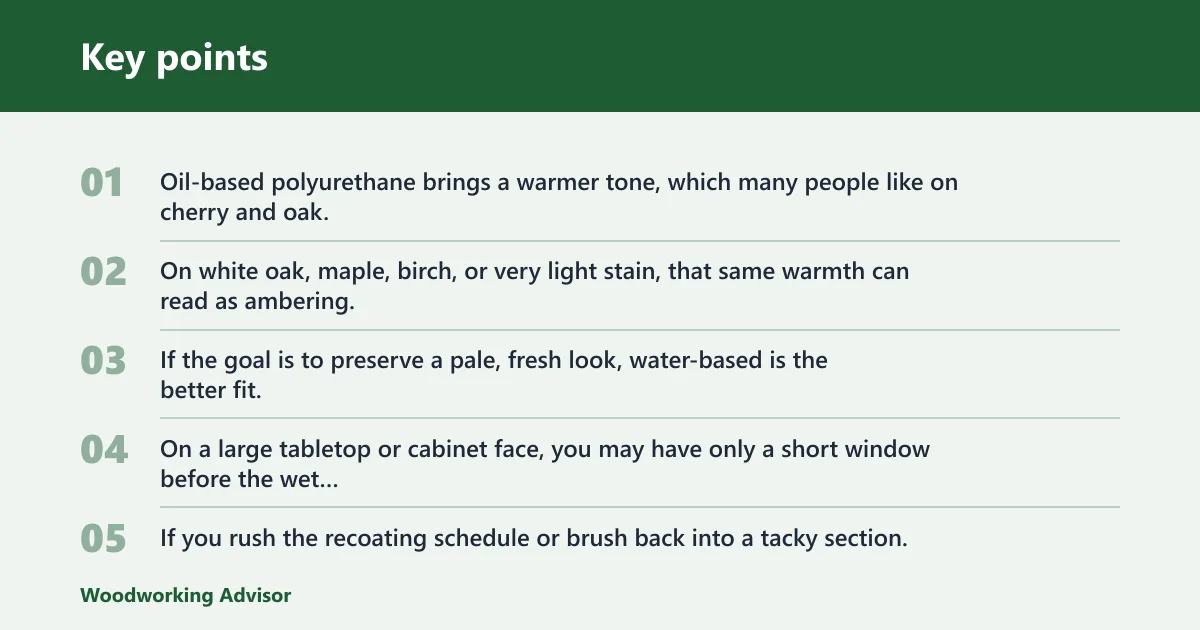
Oil-based polyurethane brings a warmer tone, which many people like on cherry and oak. On white oak, maple, birch, or very light stain, that same warmth can read as ambering. If the goal is to preserve a pale, fresh look, water-based is the better fit.
Fast dry time tradeoffs
Fast dry time is useful, but it is not free. On a large tabletop or cabinet face, you may have only a short window before the wet edge starts to pull. If you rush the recoating schedule or brush back into a tacky section, the finish can show ridges.
Where Triple Thick is the wrong choice
Triple Thick is 3X thicker than traditional poly and is marketed for one-coat coverage, but that does not make it the right answer for every surface. It is less attractive for ornate trim, vertical rails, and pieces where a heavy film can bridge details or pool at edges.
Limits of spray format control
The spray version is useful for quick application on interior wood, especially when brush marks are a concern. The drawback is control: it is easier to apply too little film, miss an edge, or waste product on overspray. It is best when the shape favors spraying.
Polyurethane decision matrix
This decision matrix compares the main Varathane formulas by the factors that matter most on interior wood. Use it to match the finish to the project, not just the price tag or the marketing claim.
| Formula | Clarity | Yellowing risk | Dry time | Coat count | Cleanup difficulty | Furniture | Cabinets | Trim |
|---|---|---|---|---|---|---|---|---|
| Water-based brush-on | Very high | Low | Fast | 3 recommended | Low | Best match | Best match | Best match |
| Oil-based brush-on | High, warmer tone | Moderate to higher | Slower | 3 recommended | Moderate | Good for darker woods | Good when amber tone is wanted | Acceptable if odor is not a problem |
| Triple Thick | High in gloss | Depends on base | Moderate | Often 1 coat | Moderate | Good for simple flat parts | Less ideal for profiles | Not first choice |
| Water-based spray | High, lighter film | Low | Fast application | Multiple light passes | Low on the can, higher in masking setup | Good for detailed parts | Useful for doors and frames | Good when access is awkward |
Water-based vs oil-based
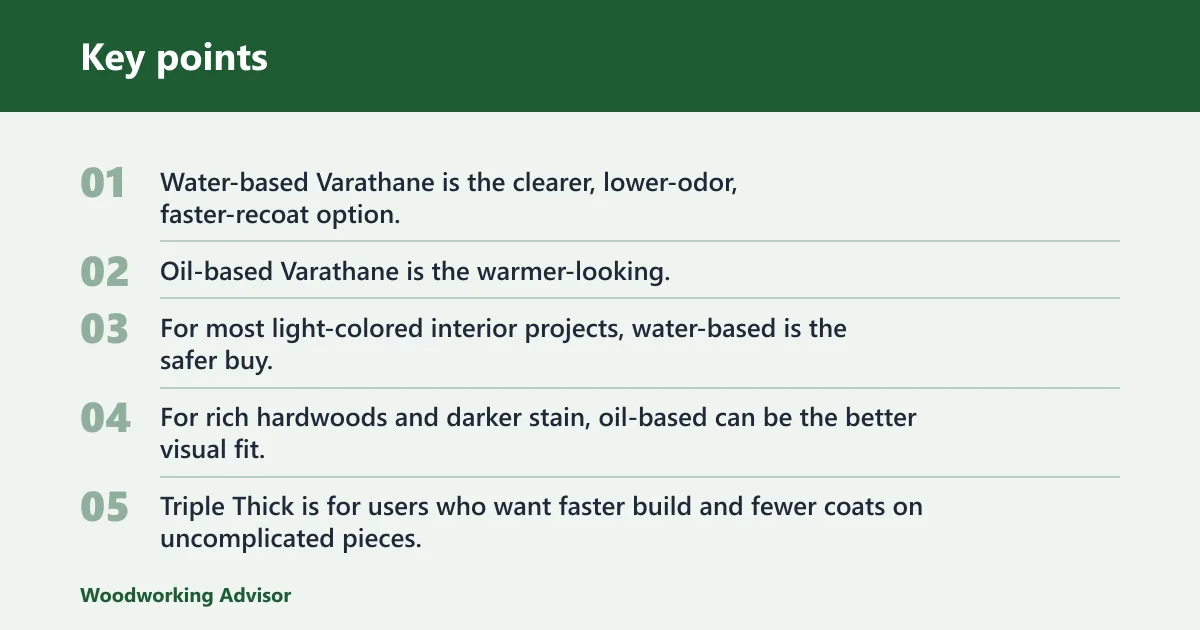
Water-based Varathane is the clearer, lower-odor, faster-recoat option. Oil-based Varathane is the warmer-looking, slower-curing option with a more traditional feel. For most light-colored interior projects, water-based is the safer buy. For rich hardwoods and darker stain, oil-based can be the better visual fit.
Triple Thick vs standard brush-on
Triple Thick is for users who want faster build and fewer coats on uncomplicated pieces. Standard brush-on polyurethane is better when you want more control, better edge management, and fewer surprises on detailed furniture or trim.
Spray formula vs brush-on formula
The spray version is useful when a brush would leave tracks or when the piece has narrow parts that are hard to reach. Brush-on formulas are better when you want thicker film build, easier spot correction, and less masking work. Choose by access and control, not by convenience alone.
Best match for furniture, cabinets, and trim
For furniture, the water-based brush-on formula is the most balanced choice. For cabinets and trim, water-based still leads if the goal is clarity and easy cleanup. If the room needs faster application on door rails or window frames, the spray formula can be a practical backup.
Is Varathane polyurethane actually worth buying?
Yes, if you choose the formula that fits the surface and the look you want. The water-based line is the strongest value for most interior woodwork because it combines clarity, low odor, soap-and-water cleanup, and fast recoats. The oil-based line is worth it when warmth matters more than speed.
It becomes a weaker value when the project is complex and your tolerance for application mistakes is low. In that case, the fast dry time can create more pressure than benefit. The finish quality is good, but the buyer has to manage it correctly.
Value compared with other polyurethane options
Compared with many store-brand polys, Varathane’s value comes from predictable interior use, a clear water-based option, and a wide sheen range. That does not make it the only good finish on the shelf, but it does make the line practical for common woodworking jobs where consistency matters.
Final buy or skip recommendation
Buy Varathane if your project is interior furniture, cabinets, trim, doors, or window frames and you want a known polyurethane with clear formula choices. Skip it if you need long open time, deep ambering control on pale wood, or a finish that is easier to spray without masking.
Prep checklist before you apply
- Make sure the surface is clean and dry.
- Remove old finishes if you need bare-wood adhesion.
- Clear dust and oils before the first coat.
- Do not shake a brush-on can; stir it thoroughly.
- Apply thin coats and let each coat dry fully.
- Plan for 3 coats when maximum protection matters.
Alternatives

General Finishes High Performance Water Based Topcoat is the cleaner alternative when you want a higher-end water-based topcoat and do not mind the price jump. Based on the published product details, it dries between coats in 1 to 2 hours and is interior only, but it lacks the broad formula range that makes Varathane easier to match to different project goals.
The drawback is simple: it costs more, and the listing does not give you the same broad oil-based and Triple Thick path that Varathane offers. If your priority is a straightforward satin water-based topcoat, it is credible. If you want the broader formula menu, Varathane is easier to shop.
Should you buy it?
Buy Varathane if you want a dependable interior polyurethane and you are willing to choose the formula by project rather than by habit. Water-based is the best general pick for clarity, low odor, and fast recoats. Oil-based is better when you want warmth and can accept yellowing risk.
Do not buy it blindly. Match the finish to the wood species, the color goal, and your tolerance for odor and cure time. If you need the most forgiving application window, Varathane’s fast-drying water-based path may feel hurried. If you want speed, clarity, and simple cleanup, it is a solid buy.
Frequently asked questions
How many coats of Varathane polyurethane should I apply?
Rust-Oleum recommends 3 coats of brush-on polyurethane for maximum protection. That is the safest target for furniture, trim, and cabinets. A single thick coat is not a substitute for proper film build, even when the product is marketed as high build.
How long does Varathane polyurethane take to dry and recoat?
The water-based brush-on formula dries to the touch in 30 minutes and can be recoated after 2 hours. That speed helps on same-day projects, but it also means you should keep your brushing consistent so the wet edge does not set too quickly.
Does Varathane polyurethane yellow wood?
Water-based Varathane is the better choice when you want to avoid visible color shift. Oil-based Varathane can yellow or amber over time, which some woodworkers like on darker species and others want to avoid on pale woods such as maple or birch.
Which Varathane polyurethane is best for furniture or cabinets?
For most furniture and cabinets, the water-based brush-on formula is the best all-around choice because it is crystal-clear, low odor, and easy to clean up. If you want warmer tone on a darker cabinet or stained piece, the oil-based formula is the better visual match.
Can I use Varathane polyurethane on stained wood?
Yes, as long as the stain is fully dry and the surface is clean, dry, and free of dust and oils. Water-based poly keeps the stain color closer to true, while oil-based poly can warm it up. Test the look on a scrap piece if color accuracy matters.
What surfaces is Varathane polyurethane recommended for?
Varathane Ultimate Water-Based Polyurethane is recommended for furniture, doors, window frames, cabinets, and trim. The oil-based line is also aimed at interior wood surfaces such as furniture, cabinets, and trim. These are interior products, so avoid treating the label as a general-purpose exterior finish.
Sponsored / affiliate links. As an Amazon Associate I earn from qualifying purchases. I may earn additional commission from eligible campaigns.