Time Between Coats of Polyurethane
Time between coats of polyurethane is usually 2–4 hours for water-based, 6–8 hours for oil-based, 1–2 hours for spray or wipe-on, and 24 hours or more for floors. In rooms below 65°F, a common rule of thumb is to allow at least 50% more time before recoating. Recoat too soon and you can trap solvents, dull the finish, or cause wrinkling and adhesion failure. This guide gives you a decision chart by polyurethane type plus a cold-room adjustment rule for furniture, trim, and floors.
How long between coats of polyurethane?
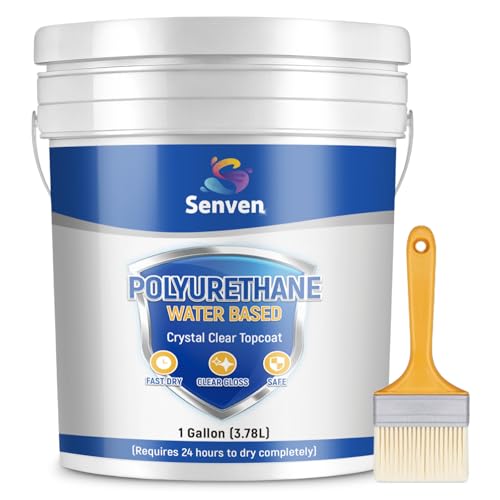

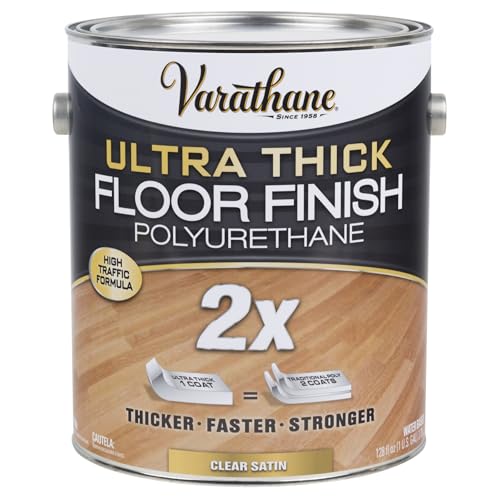
The short answer depends on product type. Water-based polyurethane usually fits a 2–4 hour recoat window. Oil-based polyurethane commonly needs 8–24 hours, with overnight dry time often the safer choice. Spray and wipe-on products are often reported to dry faster. Floor finishes often need more caution because traffic and cure time can matter as much as bare dry time.
Dry to the touch does not mean fully cured. A coat can feel dry on the surface and still be soft underneath. That means it may accept another coat while still needing 24–48 hours before light use, and much longer before heavy use.
Read the label first, then work from there. Generic timing only gives you a starting point, and some fast-drying products have a maximum recoat window that you should not miss.
Polyurethane recoating matrix
Use this chart when you need a quick decision. If the room is warm and dry, start with the usual window. If the room is cold and humid, add time or stop and reset if the coat has already gone past the product’s recoat window.
| Product type | Warm, dry room | Normal indoor room | Cold, humid room |
|---|---|---|---|
| Water-based | Wait | Wait | Scuff-sand |
| Oil-based | Wait | Scuff-sand | Stop and reset |
| Spray | Wait | Wait | Scuff-sand |
| Wipe-on | Wait | Wait | Scuff-sand |
| Floor finish | Wait | Scuff-sand | Stop and reset |
What the actions mean
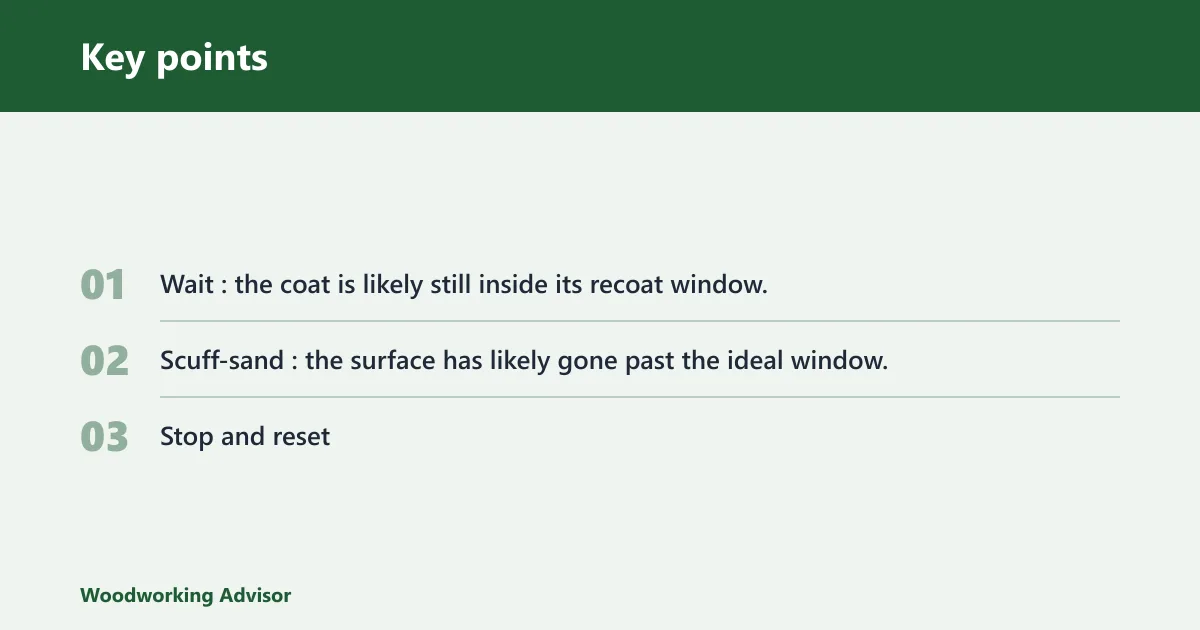
- Wait: the coat is likely still inside its recoat window. Recheck the surface before applying the next coat.
- Scuff-sand: the surface has likely gone past the ideal window, so you need light sanding before recoating.
- Stop and reset: the coat has likely sat too long for a safe recoat, especially on floors or in cold, damp rooms. Clean, sand, and restart the finish schedule per the label.
Water-based vs. oil-based timing
Water-based polyurethane is the faster option. It generally needs 2–4 hours between coats and dries faster than oil-based products, which often need 8–24 hours. Oil-based finishes usually ask for more patience, especially on thicker coats and in cooler rooms.
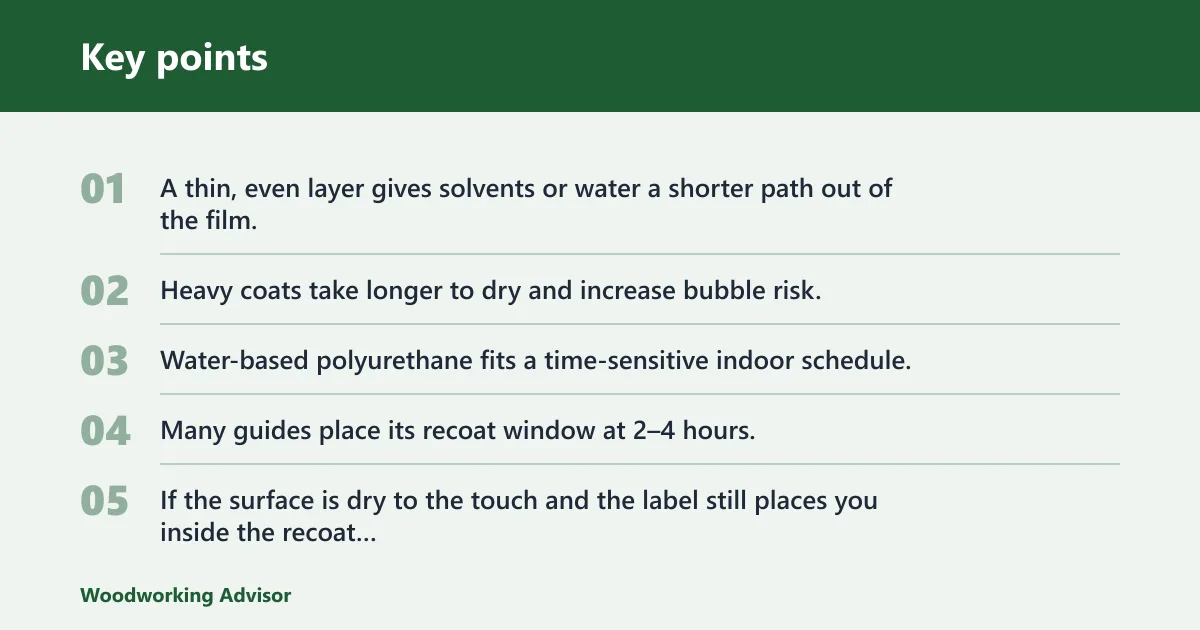
Thin coats matter. A thin, even layer gives solvents or water a shorter path out of the film, so drying is more predictable. Heavy coats take longer to dry and increase bubble risk, which can leave the next coat rough or weakly bonded.
Water-based polyurethane
Water-based polyurethane fits a time-sensitive indoor schedule. Many guides place its recoat window at 2–4 hours, and one source describes approximately two to three hours to dry. Thin coats help keep that timing on track.
If the surface is dry to the touch and the label still places you inside the recoat window, you can usually continue. If the room is cool or the coat was applied heavily, add time before recoating.
Oil-based polyurethane
Oil-based polyurethane dries more slowly, and a common recoat window is 8–24 hours. One guide puts it at around 24 hours between coats. Overnight dry time is common, especially on furniture and trim where a tacky surface would telegraph into the next coat.
Suppose a cabinet door was brushed with a heavy oil-based coat at dusk in a cool basement. The next morning may still be too early. A light touch test is not enough if the film feels soft or grabs dust.
Spray and wipe-on products
Spray and wipe-on polyurethane often dries faster because the film is thinner. Many projects can move again in 1–2 hours, but that shorter window can close fast in a humid room or if the coat was laid on too wet. Check the label for the exact recoat window.
Because these products apply in thinner layers, they usually reward even coverage more than speed. A rushed, wet coat can still trap solvent and leave a soft surface under the next layer.
Why coat thickness changes the clock
Coat thickness changes drying time for every product type. Thick coats slow evaporation, delay sanding, and raise the chance of bubbles or a cloudy surface. Thin, even coats dry more predictably and are easier to recoat on schedule.
Many professionals also limit application pace to two coats per day. That rule helps keep the schedule inside the finish’s recoat window and reduces the chance of stacking coats over a still-soft film.
How do temperature and humidity change dry time?
Temperature and humidity change the clock more than most DIYers expect. A practical target is 60–80°F, and a controlled environment around 70°F with 40%–50% humidity is often cited as ideal. Cooler air slows drying, while higher humidity slows evaporation and can leave the finish tacky.
In a room below 65°F, add at least 50% more time before recoating. That simple adjustment is safer than forcing a normal-room schedule onto an unheated garage, basement, or winter project room.
Why cooler rooms slow recoating
Cooler air slows the release of water or solvent from the film. That delay can push a water-based coat from a same-day recoat into a longer wait, and it can stretch oil-based dry time well past an overnight schedule.
A fan can help move air across the work, but poor ventilation can leave a tacky finish even when the clock says the coat should be ready. Airflow should move through the room, not blast dust onto the surface.
How humidity changes the surface
Ideal humidity is about 40–60 percent. Above that range, evaporation slows and the surface can stay soft longer. Very low humidity does not guarantee a perfect finish either, because the surface can skin over before the film underneath is ready.
Picture a dining table finished in a closed room at 58°F with damp air after rain. The top may feel dry enough by touch, but the film can still be too soft for another coat. In that case, wait longer rather than forcing the schedule.
How long between coats on floors?
Floor timing deserves its own rule because traffic matters. For floors, a common rule of thumb is to plan on about 24 hours or more between coats unless the product label says otherwise. Hardwood floors need more caution than vertical surfaces because shoes, dust, and rolling loads can damage a soft coat.
Light use is not the same as full cure. A floor may tolerate careful walking before it is ready for rugs, furniture, or heavy traffic. Full cure can take 7–10 days, even when the surface is dry enough for the next coat.
Hardwood floors versus furniture timing
On furniture and trim, the main risk is trapping solvent or dust between coats. On floors, the risk includes imprinting and abrasion from traffic. That is why a floor schedule should be more conservative than a cabinet schedule.
If a floor finish reaches the next coat too early, it can stay soft underfoot and mark easily. If it goes too long, light sanding is usually the safer path before recoating.
When light use is safe versus full cure
Dry to the touch may arrive before the finish is ready for normal use. A common guideline is 24–48 hours for light use, but full cure takes much longer. Heavy use, area rugs, and furniture pads should wait until the coating has hardened fully.
That gap matters on hardwood floors. A finish that seems ready for walking can still dent under a chair leg or scuff under a rug.
What if you missed the recoat window?
If the coat has passed the ideal recoat window, do not simply add the next layer on top. Scuff-sand first, remove dust, and then recoat. If the product’s maximum recoat window has passed, especially on a fast-drying finish, stop and reset the schedule rather than forcing a bond that may fail.
Scuff-sand before the next coat
Use fine-grit sandpaper, 220 grit or higher. The goal is to dull the sheen and give the next coat tooth, not to cut through to bare wood. Light sanding also levels dust nibs and small rough spots.
Keep the pressure light. You want a clean, uniformly dull surface, not scratches that will telegraph through the next coat.
Clean off dust and residue
After sanding, remove dust completely. Vacuum first, then wipe according to the finish label. Leftover dust can turn into bumps, and residue can weaken adhesion.
If the surface feels oily, tacky, or contaminated with debris from the room, that is a sign to clean more carefully before recoating. A dirty surface can create the same problems as a missed window.
When to stop and restart the finish schedule
Stop and reset when the coat is far outside the recoat window, especially on floors or on fast-drying products with a maximum recoat time. In that case, the safest path is to let the film cure, sand it properly, and start again per the label.
That reset costs time, but it protects adhesion. Recoating over a tired, glossy, or contaminated surface is how you end up with a weak layer that peels later.
- Check the label for the product’s stated recoat window.
- Confirm the room is near 60–80°F and about 40–60 percent humidity.
- Feel the surface lightly. Dry to the touch is not enough on its own.
- If you missed the window, scuff-sand with 220 grit or higher.
- Vacuum and remove residue before the next coat.
- For floors or far-past-window coats, stop and reset if the label calls for it.
Frequently asked questions
How long between coats of polyurethane on wood
On wood furniture, trim, and cabinets, water-based polyurethane usually needs 2–4 hours, while oil-based often needs 8–24 hours. Spray and wipe-on products are usually faster. If the room is cool or humid, add time and rely on the product label before recoating.
How long between coats of polyurethane on floors
Floor finishes usually need 24 hours or more between coats because traffic and cure time matter as much as dry time. Hardwood floors are especially sensitive to dust, shoe marks, and heavy loads. Follow the label, and be more conservative than you would on furniture.
How long between coats of polyurethane spray
Spray polyurethane often allows recoating in about 1–2 hours because the coat is thin. That window can stretch in cool or humid rooms, and some products have a maximum recoat time. Check the label, then test the surface before adding the next coat.
How long between coats of polyurethane water based
Water-based polyurethane generally needs 2–4 hours between coats. It dries faster than oil-based finishes, which makes it a better fit for time-sensitive indoor work. Thin coats help keep that timing predictable, and cooler temperatures or high humidity can slow the schedule.
How long between coats of polyurethane oil based
Oil-based polyurethane often needs 8–24 hours between coats, and overnight dry time is common. It dries more slowly than water-based polyurethane, but it is often chosen for wear-heavy uses. If the room is cold, expect the longer end of the range.
How long can you wait between coats of polyurethane?
How long you can wait depends on the product’s maximum recoat window. If you stay inside that window, you can usually apply the next coat after confirming the surface is dry to the touch. If you go past it, scuff-sand before recoating, or stop and reset on the label’s schedule.
Sponsored / affiliate links. As an Amazon Associate I earn from qualifying purchases. I may earn additional commission from eligible campaigns.