DeWalt Screw Extractor Set Review: Is It Worth It?
DeWalt screw extractor sets are worth buying if you regularly face stripped screws or rounded bolt heads. They work best with a centered pilot hole and are weakest on rusted, flush, or broken-off fasteners. Bad extraction can scar the part, split thin stock, or leave you drilling and rethreading. This guide covers how the set works, where it beats left-hand bits and pliers, and when another method is cheaper or safer.
Verdict
The exact DeWalt SKU is not verified in the product data provided here, so this review is limited to the DeWalt extractor-set approach rather than a single confirmed model. That matters. Piece count, size range, included drill bits, and any case or adapter can change the value a lot, so confirm those details before you buy. Based on the product type, it is generally a solid choice for common DIY repairs and routine trade fixes, but it is not usually the first pick for hardened, buried, or badly corroded fasteners.
Pros and cons
- Pros: Works on stripped screws and damaged bolt heads when the hole is centered.
- Pros: Fits a methodical repair process: pilot hole, extractor, counter-clockwise removal.
- Pros: Useful when you need one kit for several fastener sizes.
- Cons: Weak on rusted fasteners, broken studs, and shallow access.
- Cons: Poor size matching or crooked drilling can make the damage worse.
- Cons: If the extractor slips or snaps, the repair gets harder fast.
Specs at a glance
| Spec | What to confirm on the DeWalt listing |
|---|---|
| Set type | Screw extractor set for stripped or damaged screws and bolts |
| Piece count | Varies by exact SKU; confirm before ordering |
| Size range | Varies by exact SKU; verify the fastener sizes covered |
| Drill bits | Some kits pair extractors with drill bits; confirm whether yours does |
| Extraction method | Reverse-thread extractor, turned counter-clockwise |
| Drilling requirement | A drill is needed to create the initial hole |
| Storage | Look for a case or metal container that keeps small pieces organized |
| Material | Some premium extractor sets use cobalt alloy steel for heat resistance |
| Extra compatibility | Some extractor kits include an impact adapter for impact drivers |
One practical note matters more than the headline branding: the right extractor size depends on screw diameter and head damage, not just the tool label. A guide that maps extractor size to the fastener size is worth more than a vague “one kit fits all” claim.
Who it
This is for DIYers, maintenance techs, and tradespeople who need a compact removal system for stripped screw heads, rounded bolts, and other damaged fasteners. It is a better fit when you already have a standard drill and can work straight into the fastener. If your work often involves rusted studs, deep recesses, or hardened bolts, another method may be faster and safer.
Best fit
- Home repair jobs with stripped wood screws, sheet-metal screws, or small machine screws.
- Routine field repairs where you need a repeatable process and organized storage.
- Users who want a kit that can sit beside left-hand drill bits, not replace them entirely.
Not the best fit
- Fasteners that are flush, broken off, or deeply rusted into metal.
- Soft surrounding material that can split if you drill off-center.
- Anyone expecting an extractor to solve every seized bolt without backup tools.
Say your cabinet screw has a mangled Phillips head but still sits proud of the surface. A centered pilot hole and a snug extractor often gives you a clean removal. Now change one variable: the same screw is rusted in a steel bracket and buried in a recess. That is where the risk rises and a left-hand bit or replacement hardware may be the better route.
What works
The DeWalt extractor approach works best as a controlled removal system: center the hole, seat the reverse-thread extractor, and turn counter-clockwise with steady torque. That sequence is the whole point. It is most effective when the fastener is damaged, but not seized so hard that the surrounding material gives out first.
How the DeWalt set works
- Prep the area and wear safety glasses while clearing loose chips from the work zone.
- Apply penetrating oil if the fastener is rusted or stubborn.
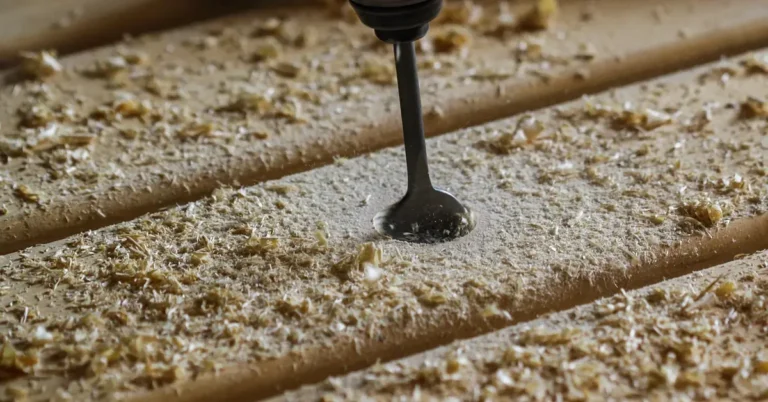
- Use a drill to make a centered pilot hole in the damaged screw head with a low-speed setting.
- Keep the drill straight so the hole stays aligned.
- Seat the reverse-thread extractor; some tapered designs fit snugly into the hole.
- Turn counter-clockwise with steady, controlled force until the fastener backs out.
Hammer seating can help after drilling. A light tap helps the extractor bite without beating up the surrounding material. That matters most on hard fastener heads where the extractor needs a firm start. The goal is contact, not impact damage.
What helps the odds
- Centered drilling: keeps the extractor from camming out.
- Low speed: reduces wandering and heat at the drill point.
- Steady pressure: keeps the bit engaged without forcing it.
- Penetrating oil: helps when corrosion is part of the problem.
- Correct size matching: the extractor must match the damaged fastener, not just the tool family.
Some sets include multiple sizes, which is useful because damaged screw heads do not all fail the same way. A stripped deck screw and a rounded machine screw need different hole sizes and different amounts of remaining head material for the extractor to bite.
What does not?
The weak point is not the idea of extraction. It is the failure case. A stripped screw in soft wood is one problem. A seized bolt in hardened metal is another. If the fastener is flush, broken off below the surface, or frozen by corrosion, the extractor can slip, chew up the hole, or snap under torque.
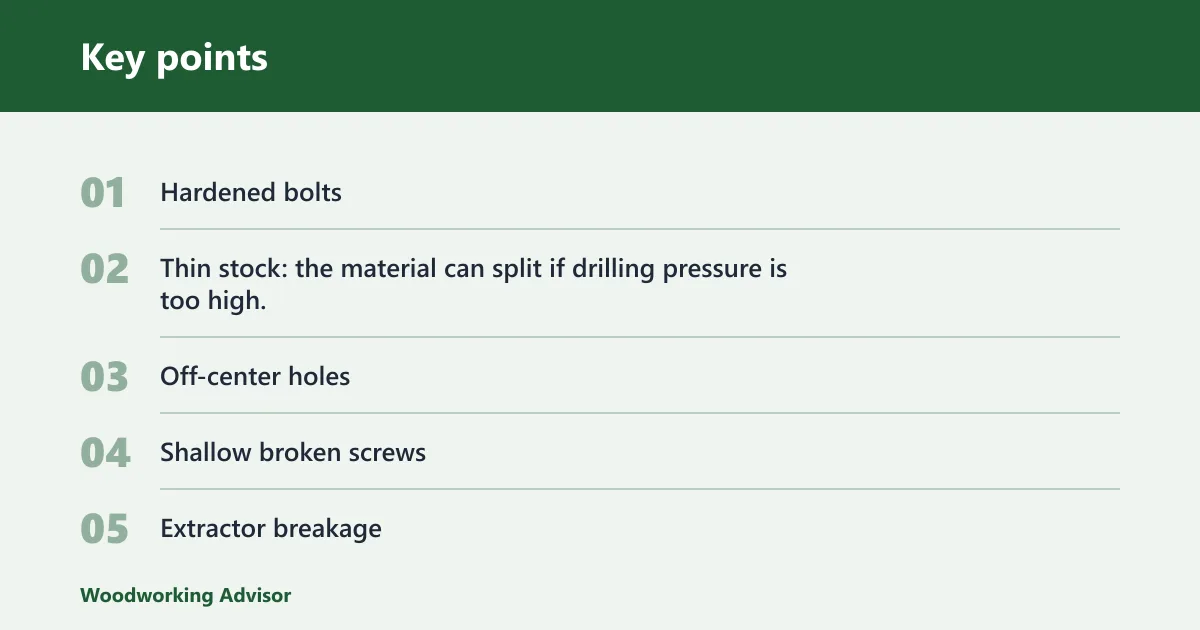
Common failure cases
- Hardened bolts: a standard extractor may not bite cleanly, especially if the hole is shallow.
- Thin stock: the material can split if drilling pressure is too high.
- Off-center holes: reduce grip and increase the chance of breakage.
- Shallow broken screws: leave too little material for a secure seat.
- Extractor breakage: leaves hard steel inside the fastener, which is a much worse repair.
Suppose a rusted 8 mm bolt head is rounded flat in a steel bracket. If the extractor starts to twist without backing the bolt out, stop. More torque is not the answer. At that point, a left-hand drill bit, heat where safe, or replacement hardware planning is usually better than pushing harder.
Soft wood versus hardened metal
In soft wood, the main risk is splitting and wallowing out the hole around the screw. In hardened metal, the risk is tool failure and heat buildup. The same extractor can work in both, but the margin for error is much smaller in metal, especially when the fastener is corroded or already distorted.
DeWalt extractor decision table
This table is the practical chooser. Match the fastener, the damage, and the available room before you commit to drilling. If the warning signs appear, stop and change methods rather than forcing the extractor deeper.
| Screw/bolt material | Head condition | Access space | Recommended DeWalt bit size approach | Backup tool | Stop or abort warning signs |
|---|---|---|---|---|---|
| Soft wood screw, mild steel | Partially stripped | Open, straight-on access | Use the smallest extractor that seats firmly after a centered pilot hole | Left-hand drill bit | Hole starts walking; wood fibers split; extractor skates instead of biting |
| Sheet-metal screw | Rounded but exposed | Moderate access | Match extractor to the screw diameter and damaged head, then seat lightly | Manual pliers if head still protrudes | Head crumbles; drill starts enlarging the surrounding hole |
| Stainless or coated screw | Heavily stripped | Tight recess | Use the smallest extractor that will grab without overdrilling | Right-angle drill plus left-hand bit | Tool cannot stay straight; no room to keep the drill aligned |
| Hardened bolt | Rounded | Open if possible | Only after a precise pilot hole; do not force the largest extractor first | Penetrating oil, then left-hand bit | Extractor twists, squeals, or leaves shiny slip marks without movement |
| Corroded steel fastener | Frozen and damaged | Any access | Size carefully, but expect the extractor to be a last-step tool | Penetrating oil, heat where safe, or replacement hardware | Rust dust keeps building; surrounding part starts deforming |
| Broken-off screw stub | Flush or below surface | Very limited | Usually poor candidate unless the stub can be centered and drilled cleanly | Left-hand bit or drill-out and rethread | No stable center point; drill wanders into the parent material |
How does it compare with alternatives?
Start with a left-hand drill bit if the fastener is only mildly stuck. A reverse bit can back the screw out before an extractor is needed, and it avoids the extra step of seating a separate tool. If that fails, move to the extractor. That order is often safer than starting with the most aggressive option.
Manual extraction still matters. If the head is slightly proud, locking pliers or a manual driver can beat drilling because you preserve the surrounding material. When the head is destroyed or recessed, the extractor becomes the stronger choice. The right tool depends on what is still left to grab.
Against Irwin and REXBETI
Compared with Irwin and REXBETI-style kits, DeWalt’s value depends on the exact set content. Irwin’s larger 35-piece system is broader, but it is also far more specialized and expensive. A smaller kit can be easier to carry, while a larger kit may cover more diameters and repair cases. REXBETI is often positioned as a general damaged-fastener kit, but exact fit, material quality, and included accessories still need checking against the listing.
The honest comparison is this: if you need a broad workshop kit, a larger multi-piece set can be better value. If you need a compact, task-focused removal tool, a smaller extractor set is easier to store and faster to sort through. DeWalt’s strongest case is convenience plus repeatable use, not sheer part count.
When replacement hardware is the better buy
If the screw is cheap, the threads are ruined, or the part is already compromised, replacing the fastener and repairing the mating hole may cost less than fighting it. That is especially true when the extractor would need a right-angle drill, an adapter, and extra time just to remove a single fastener.
A common mistake is to keep forcing the drill once the DeWalt extractor begins to cam out of the stripped bolt head. That turns a ten-minute fix into a drill-out job. If the fastener is already ruined and the part around it is thin, replacement hardware is often the safer decision.
Should you buy it?
Buy a DeWalt screw extractor set if you want a dependable backup for stripped screws, rounded bolt heads, and other common removal jobs. It is a practical addition to a drill-based repair kit, especially if the set includes a carrying case and the sizes are clearly laid out. It is less compelling if your work is mostly rusted hardware or broken studs, where left-hand bits and replacement planning often win.
Value for occasional repairs
For occasional home repairs, the value is highest when the set prevents a larger repair. If one clean extraction saves you from replacing a bracket, cabinet hinge, or machine part, the kit pays for itself quickly. The cost-per-success is better when you buy it before an emergency, not after you have already ruined the first fastener.
Value for regular field work
For regular field work, organize the kit by size and keep it with your drill accessories. A metal case or well-fitted carrying case matters because tiny extractors are easy to lose. A lifetime warranty on a related driver set is useful to know about, but only if the exact DeWalt extractor set you are buying includes that support on its listing.
What to check before buying
- Confirm the exact piece count and size range.
- Check whether drill bits are included or only the extractors.
- Look for case storage that keeps the pieces sorted.
- Verify whether an impact adapter is included if you want impact-driver use.
- Compare the set size against your most common screw diameters.
Alternatives
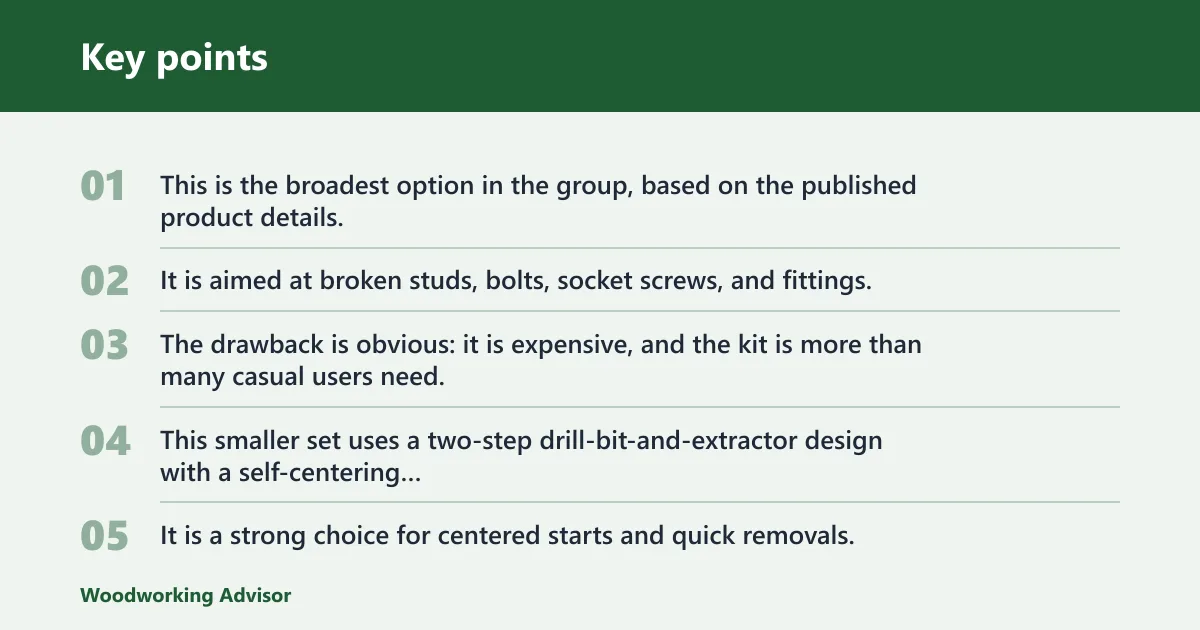

IRWIN Hanson 35-piece set. This is the broadest option in the group, based on the published product details. It is aimed at broken studs, bolts, socket screws, and fittings, and the larger kit size gives you more coverage. The drawback is obvious: it is expensive, and the kit is more than many casual users need.

Alden Pro Grabit 3-piece kit. This smaller set uses a two-step drill-bit-and-extractor design with a self-centering drill tip, which helps when walking is the main problem. It is a strong choice for centered starts and quick removals, but the three-piece format gives you less size coverage than a broader kit.

THOSAF 6-piece damaged screw extractor set. Based on the listed details, it works with any drill and covers screw sizes or bolts from 3-12 mm, which makes it appealing as a budget option. The tradeoff is that the product details are basic, so buyers should be cautious about long-term durability and fit consistency compared with established extractor sets.
Frequently asked questions
What size drill bit do I use for a screw extractor?
Use the size that matches the fastener diameter and the damage level, not a random bit from the box. The hole must be large enough for the extractor to seat, but not so large that it loses grip. A sizing guide is the safest way to choose if the fastener is already badly rounded.
Will a screw extractor work on hardened bolts?
Sometimes, but that is a high-risk case. Hardened bolts resist drilling and can defeat the extractor before it bites. If the bolt is corroded, flush, or already rounded, a left-hand drill bit, penetrating oil, or a different repair path may be safer than forcing a standard extractor.
Can I use an impact driver with a screw extractor set?
Only if the exact kit includes an impact adapter or is specifically listed as compatible. Do not assume every DeWalt extractor set fits an impact driver. Even when compatibility exists, the safer approach is controlled torque. Excessive impact force can break the extractor or worsen the fastener damage.
What do I do if the extractor breaks?
Stop immediately. A broken extractor leaves hardened steel in the fastener, which is much harder to drill out than the original screw. The next steps are usually careful drilling with the correct bit, possible rethreading, or replacing the damaged part. More force is the wrong answer.
Should I use penetrating oil before extracting a screw?
Yes, when corrosion or seizure is part of the problem. Penetrating oil can help loosen stubborn screws and bolts before you drill the pilot hole. It will not fix a bad drill angle or a wrong-size extractor, but it often improves the odds on rusted fasteners.
Sponsored / affiliate links. As an Amazon Associate I earn from qualifying purchases. I may earn additional commission from eligible campaigns.